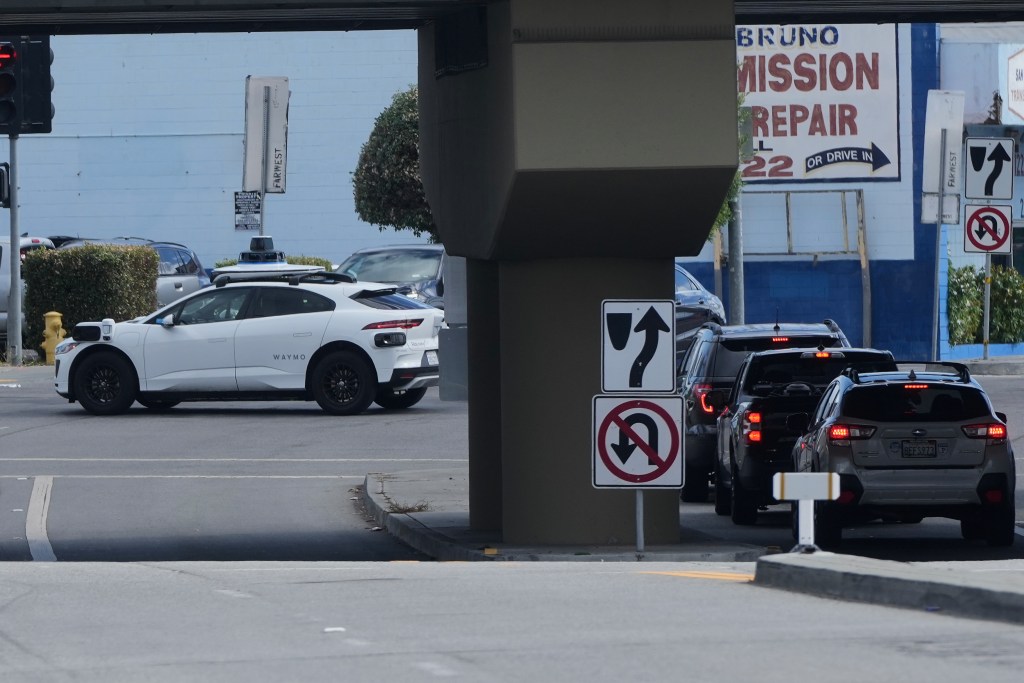

Despite discussions, Minnesota’s recent legislative session came and went without setting any regulations on autonomous vehicles. But with companies like Waymo already testing their fleet of self-driving taxis (albeit with humans in the driver’s seat), officials and activists say the time is now to plan for how to manage them.
At a June 3 panel on autonomous vehicles held at Minneapolis Central Library, moderator and Minneapolis City Council member Robin Wonsley (Ward 2) said she hoped to avoid the road that the city tumbled down with ridesharing apps like Uber and Lyft. It was a view shared by the panel’s members, all of whom were skeptical of the promise of autonomous vehicles.
Related: Why the feds are investigating Tesla’s Autopilot and what that means for the future of self-driving cars
Uber and Lyft started operating free of regulations in 2014. By 2024, they were the subject of a bitter dispute as minimum wage legislation aimed at supporting rideshare drivers had the companies on the defensive, threatening to leave both the city and state.
Waymo had pushed for language in state statute saying specifically that a vehicle could operate with no driver, said State Rep. Samantha Sencer-Mura, DFL-Minneapolis. That didn’t happen, but she expressed concern that the company could still “operate in that murkiness.”
Sencer-Mura, who lobbied unsuccessfully for state regulations that would pause autonomous vehicle adoption pending further research into their safety and economic impact, said there was nothing stopping cities from taking that step on their own.
Eid Ali, the president of the Minnesota Uber/Lyft Drivers Association, cited concerns about the effect of autonomous vehicles on drivers’ jobs.
And Joe Harrington, policy manager for the nonprofit Our Streets, came in with another pro-human take: While Waymo touts its vehicles’ superior driving skills, why add more vehicles to the road at all, he asked. Instead, he called for engineering streets to prioritize safety over speed and to lift options like public transit.
In the catchy “Way-NO to Waymo” position paper, Harrington writes that “people-centered transportation solutions have been overlooked and underfunded for decades.”
Sencer-Mura also noted the significant amount of “deadheading” for Waymo’s fleet – the amount of time that a vehicle was driving with no passengers.
Related: Grand Rapids autonomous transit expanding to nearby cities, tribal stops
An MIT Transit Lab study examining the first 1,000 days of Waymo’s operation in California showed that the vehicles carried no passenger for roughly 44% of their miles traveled, a similar figure to ridesharing apps.
Minneapolis isn’t alone in pushing back against Waymo. Similar skepticism has taken hold in cities like Philadelphia and Boston.
When exactly Waymo could begin operating in Minneapolis isn’t yet clear. The company’s website lists the city as one of 21 cities that are “up next.”
That means Waymos, like Twin Cities drivers, could soon be contending with ice slicks and snowdrifts – something they’d like to assure everyone they can handle.
The post Waymo is on the roads, but some Minneapolitans are hoping to hit the brakes appeared first on MinnPost.