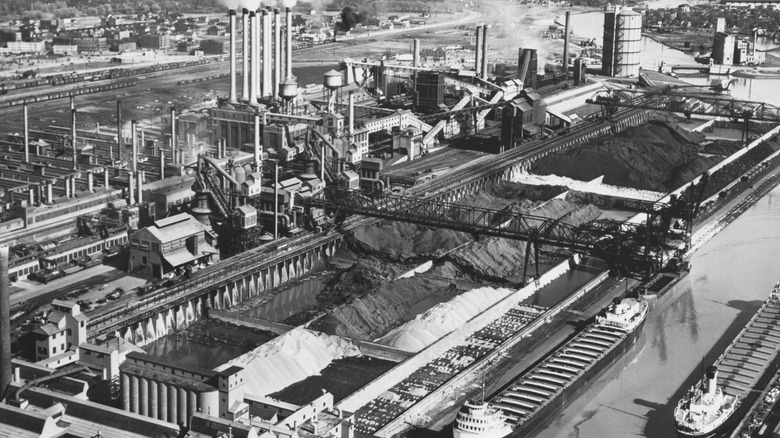

There’s a new book out by author Roland Betancourt, entitled, “Disneyland and the Rise of Automation: How Technology Created the Happiest Place on Earth.” In an extensive article about the book in Smithsonian Magazine, written by the author, Betancourt details the events that led Walt Disney to visit several Detroit-area Ford locations in 1948, following his visit to the Chicago Railroad Fair. Disney and his traveling companion, animator Ward Kimball, saw Ford’s collection of locomotives and antique cars, Ford’s historical Greenfield Village, and finally Ford’s huge, 1200-acre River Rouge assembly plant.
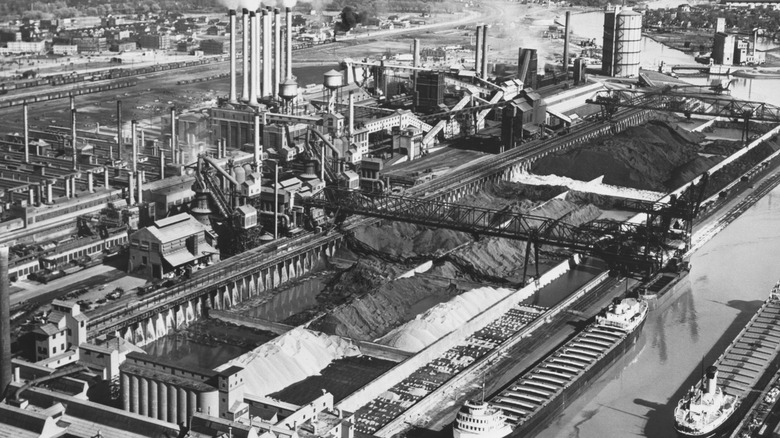
River Rouge was a place where the ore for making steel went in one end and finished automobiles rolled off the assembly line at the other end. The entire process took only 28 hours, from raw materials to completed vehicles.
But there was an additional reality that may not have been lost on Walt Disney and Ward Kimball — the River Rouge plant, built by the man behind America’s first major automotive giant, was also a giant tourist attraction to promote the Ford brand. A full four years before its opening, tours had started going through the plant, moving people from place to place in custom glass-roofed buses. The tour itself started in the Ford Rotunda, a building originally created for an exhibition in Chicago during 1933-34 and moved near River Rouge afterward. The author posits that while Greenfield Village may have inspired Main Street, USA, River Rouge had a direct connection to Disneyland’s Tomorrowland, where future innovations could be showcased.
What else should you know about the Disneyland-Ford connection?
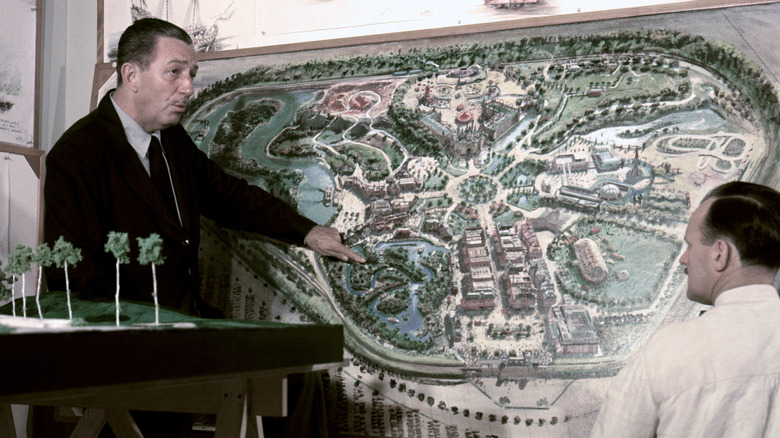
Automation was a hot topic in the postwar U.S., from the period of the late 1940s up until the 1960s, stoking fears of widespread job losses. Roland Betancourt makes the case that the technology underpinning the rides at Disneyland was derived from what Walt and Ward saw in action at River Rouge. It was automation that made it possible for Disney’s dream to come true, with repeatable, consistent results and even special effects provided by the machines behind the scenes.
He explains how the Peter Pan ride was based on a commonly used conveyor system that suspended riders from a rail placed above their heads. Programmable logic controllers from the auto industry to control the Matterhorn Bobsleds, as well as the adaptation of magnetic tape drives used in missile testing to animate the Tiki Room’s macaws, were all implementations of automation that seemed friendlier and less threatening.
Five days after returning to California in 1948, Disney sent a message to a production designer concerning a “Mickey Mouse Park.” It included a railroad, a village with stores, and other features he had seen at Ford’s Greenfield Village. By the time that Disneyland officially opened to the public in Anaheim, California on Monday, July 18, 1955, Disney’s vision had expanded to include attractions like Mr. Toad’s Wild Ride, the Jungle Cruise, Snow White’s Adventures, and Space Station X-1, as well as the Castle and the Stagecoach. More than 70 years later, there are six different Disney-themed parks in the U.S., Europe, and Asia.

Stephan is the sports journalist for the Maple Grove Report.