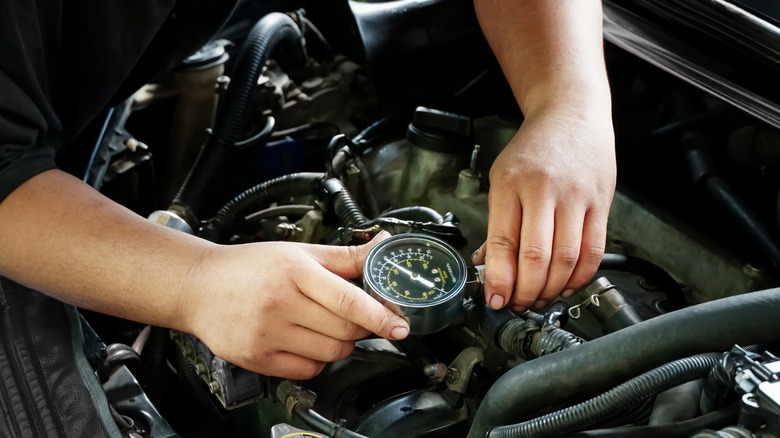

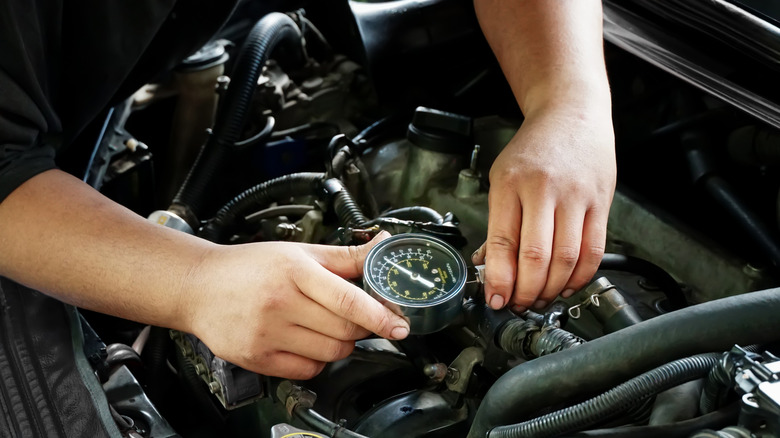
Most engines generate power from an internal combustion system. On the basic level, these engines work by compressing fuel and air into a tight space. Within the cylinders of an engine, pistons pump up and down, compressing this air and fuel mixture and generating heat. This leads to tiny explosions, which push the pistons back down and generates power. Every engine has its own compression ratio, which is the volume of the cylinder when the pistons are pushed down over the volume of the cylinder when the pistons are up. In order to measure this, mechanics use devices know as compression testers.
A compression tester has a special air pressure sensor on the bottom that connects to a gauge. If you screw the sensor into the combustion chamber, the gauge will indicate how high or low an engine’s compression is. Small engines, automotive gas engines, and diesel engines use different PSI ranges, though the sensors themselves function identically. A good compression tester is a vital tool in any DIY mechanic or professional’s arsenal and is particularly useful when looking at used high-mileage cars with unknown histories, diagnosing issues such as the first of your three piston rings breaking, and more. Here’s how to tell the difference between certain testers and why they’re so important.
Why do different compression testers exist?
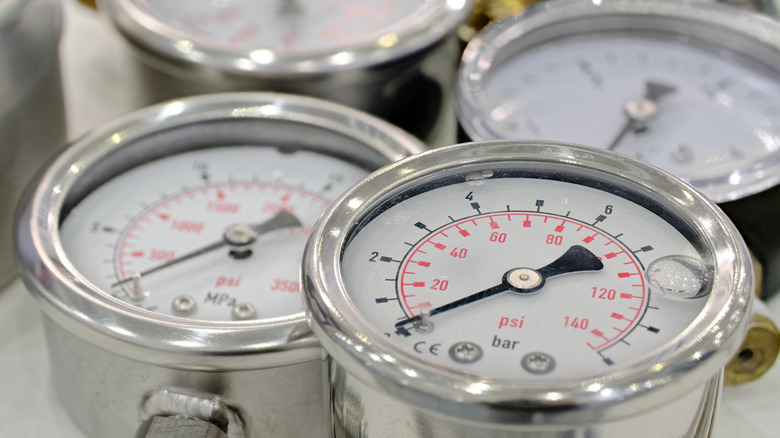
If you are considering buying a compression tester, you could purchase a simple analogue gauge with a single reader and have it work perfectly fine. This might be a particularly appealing option for DIYers who don’t need to take frequent measurements of different cars. On the other end of the spectrum, there are also professional-grade kits like this one by OTC Bosch (which retails for over $200) that have digital readouts and recall functions.
Different testers exist because different fuel types use different levels of compression and means of combustion. The key is to purchase a gauge that matches the specific PSI range you’re expecting. A gasoline engine has a far lower compression ratio than a diesel engine. Moreover, diesels have glow plugs instead of spark plugs, meaning you can’t plug in a gasoline compression tester into a diesel and have it function correctly, or vice versa.
Compression testers are generally specialized for a certain PSI range and engine type outside of just the fuel source. Diesels can hit around 400 PSI, whereas gasoline engines will read around 175-185 PSI with a healthy compression ratio. Lastly, beware that certain engines may require adapters. If you’re not sure what your engine requires, it may be worth getting a multi-piece kit. Some kits also come with special fittings like Schrader valves, which retain the highest PSI number until you manually purge the hose.
Why knowing your compression matters
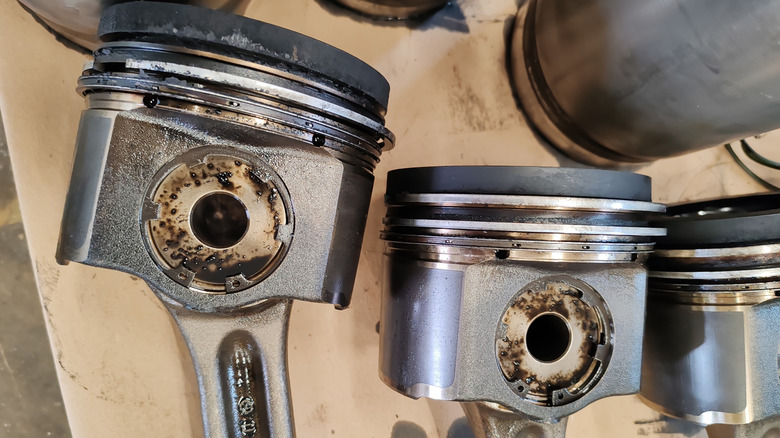
Generally you want a tolerance of around 10% between every cylinder, meaning if your compression is, for instance, 175 PSI on average, you want the minimum to be 157.5 PSI and the maximum to be 192.5 PSI. Anything outside of that general ballpark is usually a sign that something’s wrong. Symptoms of low compression aren’t too dissimilar from bad fuel and may include low power, poor fuel economy, or a burning oil smell. This may stem from leaks in the valvetrain or piston rings.
Getting an improper compression reading may also stem from excessive carbon buildup. This can lead to fuel detonating prematurely, known colloquially as “engine knock.” This stresses elements of the engine that are not designed for such stress and can over time damage engine parts like pistons, valves, or connecting rods.
As long as you do regular maintenance and always use the right fuel for your car (Bigger octane numbers support higher compression ratios.), you should be able to prevent pre-ignition. If you start noticing a drop in performance, strange burning oil smells, or you’re hearing a knocking sound from the engine, you may want to use a compression tester to check your compression.

Stephan is the sports journalist for the Maple Grove Report.