What Does 4WD Auto Mean On A Truck Or SUV?


Four-wheel drive (4WD) can be extremely valuable when driving through harsh winters or navigating off-road environments. But knowing when to engage the 4WD, or even which 4WD mode to use, can be tricky if you’re not accustomed to it. Some trucks and SUVs offer a helping hand, though, and have a 4WD Auto feature that ensures you don’t have to make those decisions yourself.

The 4WD Auto system monitors road conditions and adjusts power between two- and four-wheel drive as needed. Vehicles with a 4WD Auto mode will switch to 4WD automatically when the system detects tire slip or decreased traction. When the truck or SUV hits water, ice, or uneven terrain, the 4WD Auto system kicks in to maintain traction. The system typically does not engage in regular everyday driving conditions.

That’s a good thing, too, as most 4WD systems are not designed to operate constantly. In many 4WD vehicles, the front and rear axles rotate at the same speed when the drive is active. But during normal driving, the wheels need to move at slightly different speeds. So when 4WD is used on dry roads, it can put extra pressure on the drivetrain components. It can also increase wear and tear on parts like the tires, axle gears, and the transfer case.

Modern truck and SUV drivetrain systems explained

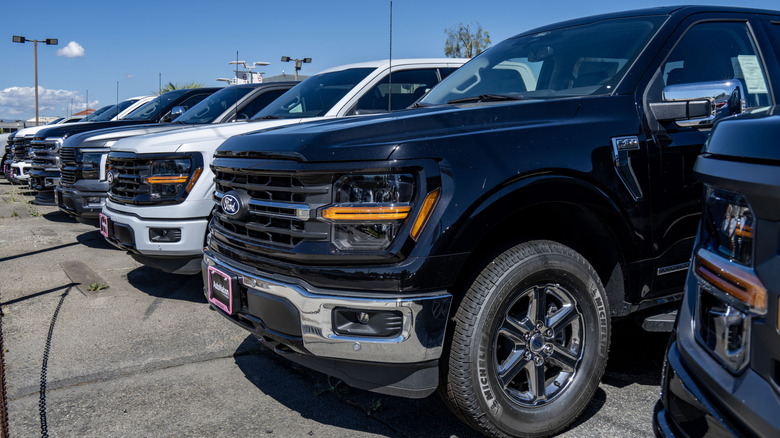
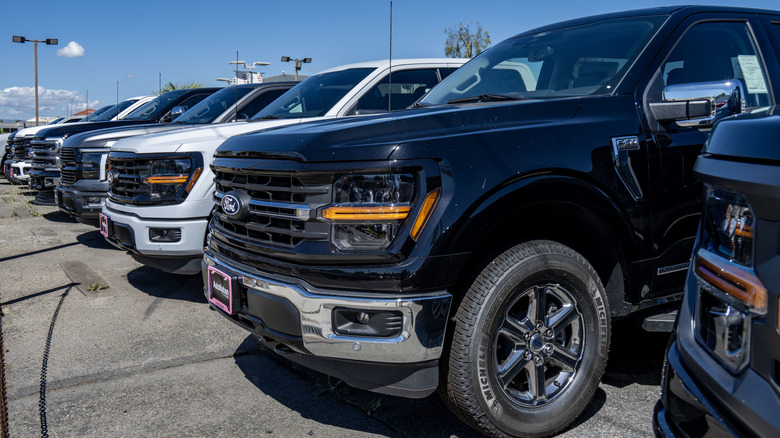
Though 4WD Auto systems are available in many modern trucks and SUVs, including several generations of the Jeep Grand Cherokee, they have not fully replaced traditional, also known as part-time, 4WD systems. In fact, both systems exist alongside each other, and they still serve the same function — namely, to handle demanding, low-traction conditions like off-roading.

Full-time 4WD is a variation that always sends power to all four wheels. It remains active while driving and is designed to operate under a wide range of conditions. This allows the system to keep traction while still functioning smoothly during normal driving. Some vehicles, like the Toyota 4Runner, offer different trims that use either part-time or full-time 4WD systems.

Despite the similar name, all-wheel drive (AWD) operates differently from 4WD. AWD also sends power to all four wheels, but uses hydraulics or electronics to distribute it automatically based on driving conditions and traction needs. AWD is typically used for on-road driving and can improve traction in inclement weather conditions such as rain or snow.


Source link

Leave a Reply

Subscribe to Our Newsletter

Get our latest articles delivered straight to your inbox. No spam, we promise.

Recent Reviews


There are certain engine configurations that are known even to those whose interest in engines is minimal. For instance, most people will know what makes a V-engine a V-engine, and even the differences between an in-line and flat engine

One engine design trait that’s perhaps less well-known is also related to the engine block, but not to with how the cylinders are arranged in the engine, rather with how they’re supported and cooled. When looking at this aspect of engine design, there are really three main types of engine block to look at. At the extremes are closed-deck and open-deck engine blocks, with some modern engines taking a halfway house approach with a semi-closed design. 

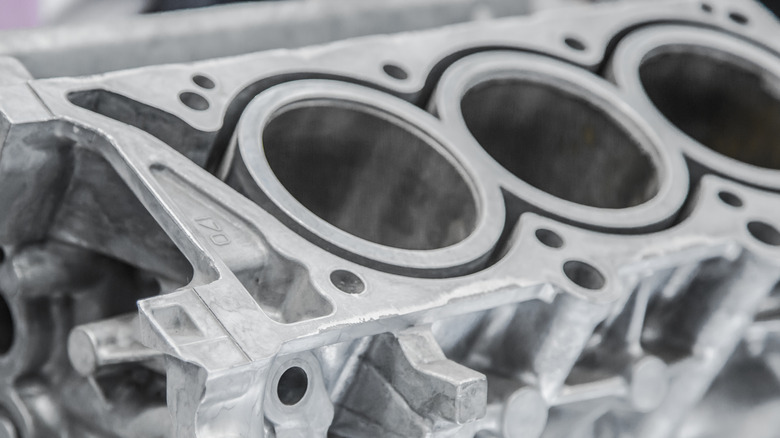
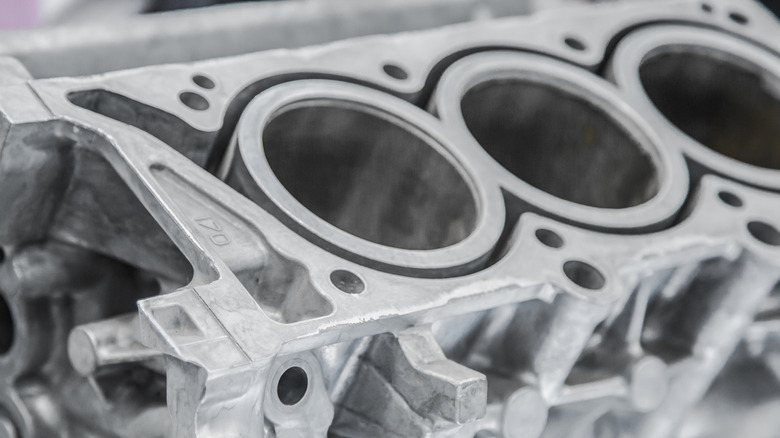
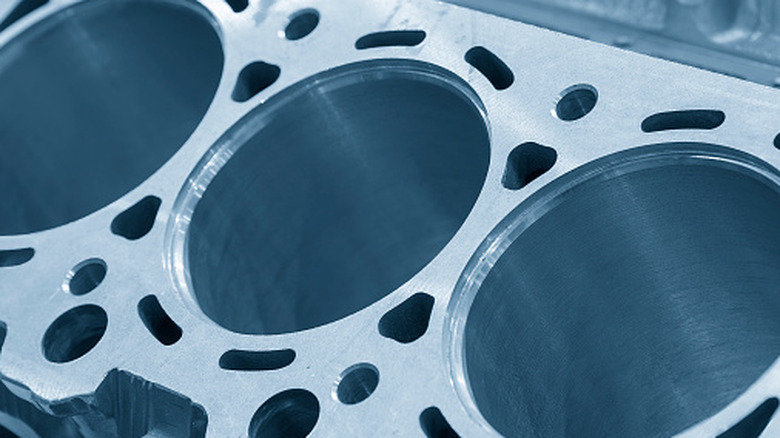
Let’s start by defining what an engine deck is. Essentially, the engine deck is that part of the block that the head gasket sits on, and the engine head attaches to. This means that an inline engine with a single line of cylinders will have one deck, whereas a V-configuration with two banks of cylinders will have two decks. 

Now that we understand that, we can begin to discuss the differences between closed-deck and open-deck engine blocks. In an open-deck engine, there is open space around the top of the cylinders that allows the coolant to circulate more freely. In a closed-deck design, in case you haven’t guessed it by now, the deck features extra material that offers less in the way of cooling, but it does support the cylinders more rigidly. Let’s pop the cylinder head off and have a closer look at these engine block types and why they matter more than you may think. 

Open-deck engines are cool, but flawed

For engine makers, there are definite advantages to open-deck designs — they cost less to manufacture when compared to closed-deck engines, and keep the engine cooler by exposing more of the surface area of the cylinder to the cooling liquid. 

However, all this open space around the cylinders is all very well and good when looking at cooling and manufacturing complexity — but cracks start to appear (sometimes literally) when we look at other aspects of closed-deck engine blocks. While it’s unfair to call open-deck engines unreliable and leave it at that, there are trade-offs in the design, and these become more noticeable in high-performance situations.

Essentially, the lack of material at the top of the engine deck means the engine is less structurally rigid right at the point where it meets some of the most extreme forces engines have to cope with — the combustion point at the top of the cylinder.

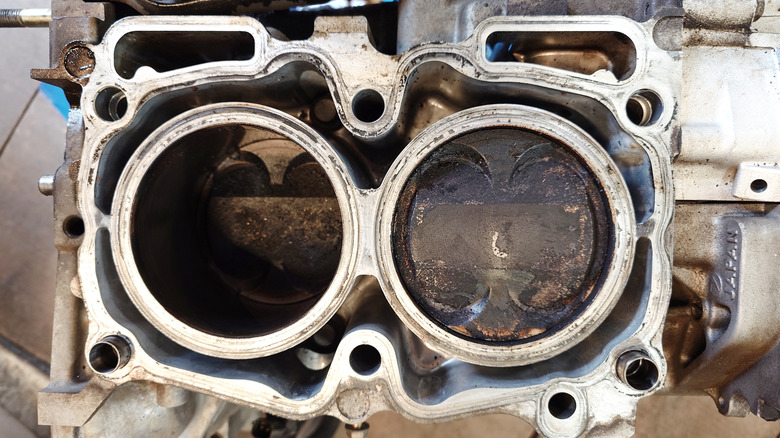
If you removed the head from an open-deck design and look down at the deck, this structural weakness is visible. From this viewpoint, the cylinders look separate from the rest of the engine block, with the gap between the two being used for coolant, as some open-deck designs have limited support at either end of the cylinder bank. While this gives more space for coolant to move freely, the downside is that it also does the same for the cylinder. Over time, even the limited movements of cylinders can weaken the head gasket and bring all the associated troubles that follow such a failure. 

Why some engines use closed- and semi-closed deck designs

Open-deck engine blocks are optimized for cooling and manufacturing efficiency. However, incorporate such a configuration in a high-revving, turbocharged brute of an engine and, well, it could end very badly. This is why such engines will usually use a closed-deck configuration. 

In a closed-deck engine, the open spaces around the cylinders of an open deck are filled with additional material. Obviously, the removal of such space and the flexibility it gives to the cylinders substantially strengthens the engine block. This is why some people fill engine blocks with concrete — it removes the flexibility afforded by the presence of cooling chambers. This is especially important for high-performance engines, but to call it overkill for the family runabout is not overstating the case. 

However, and the more observant among you will be there by now, filling an engine’s cooling cavities with material may add strength — but at the expense of cooling efficiency. This is why many modern turbocharged engines or higher-performance engines use a halfway house design in the form of semi-closed decks. 

Semi-closed decks are a compromise design that offers more rigidity to the cylinders by adding more support points. These supports are usually at the top of the cylinder. For instance, while there are pros and cons to Subaru’s EJ20 engine, the company released a version with a semi-closed deck with four additional support points, which should make it less prone to bore distortion. Ultimately, open-deck and closed-deck engine blocks represent design decisions based on the demands the engine is expected to handle. 


Source link