What Is The 70/30 Brake Rule For Motorcycles?


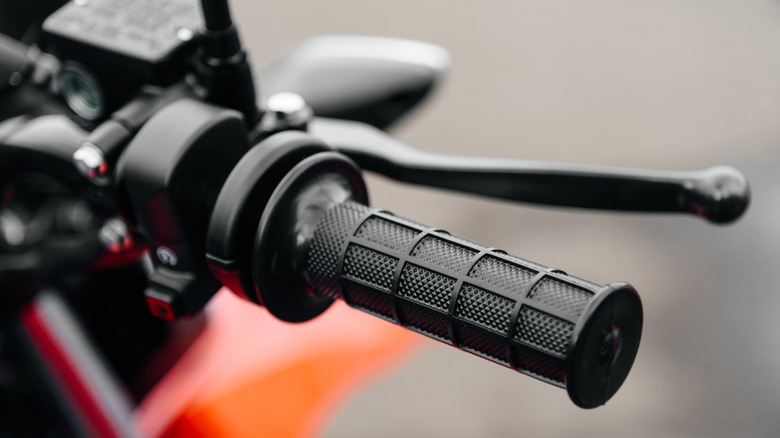
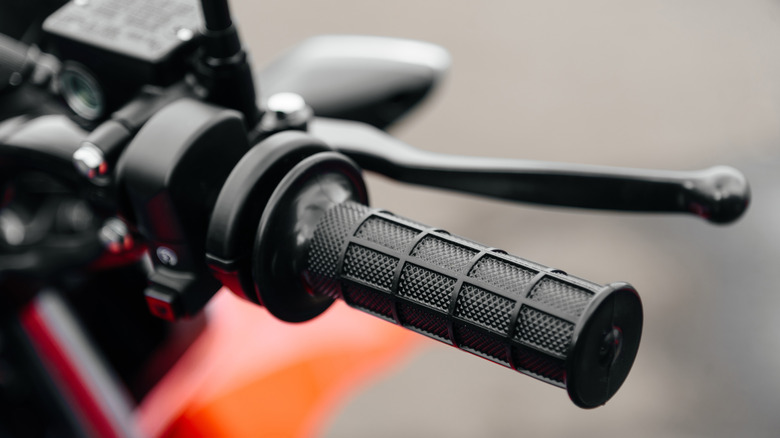
When you hit the brakes on your motorcycle, do you do so using the 70/30 rule? It’s a guideline that helps you know how much stopping power should be distributed between your motorcycle’s front and rear brakes. Under normal riding conditions, roughly 70% of your braking force should come from the front brake while the remaining 30% should come from the rear. Otherwise, you might just lose control of the bike.

As a rider puts on the brakes, the motorcycle’s weight naturally shifts forward. That increases the load and available traction on the front tire while reducing the load on the rear. But because the front tire gains more grip during deceleration, it’s able to generate much more stopping force than the rear tire. To account for all this, the best thing is to use both brakes rather than relying on one alone. That’s where the 70/30 rule comes from. Using the front brakes alone can upset the chassis, giving you less stability and making the motorcycle harder to control. Proper rear-brake use helps stabilize the motorcycle and keeps the chassis balanced.

Applying your brakes properly is all about feel. The bike isn’t designed to apply exactly 70% or 30% — you control manually that by how much pressure you apply to the brakes. It’s a good idea to practice braking in non-traffic situations to learn how your bike is going to react to various amounts of pressure.

Exceptions to the 70/30 rule
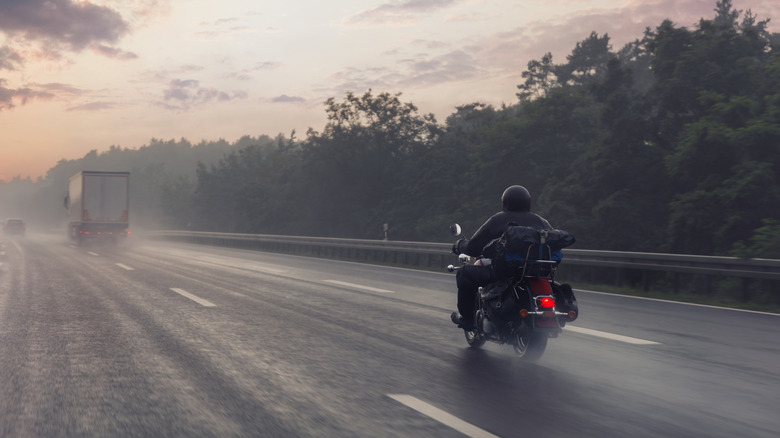
While 70/30 is the standard for normal riding conditions, that ratio can change depending on your circumstances. During emergency stops, for example, your braking force may need to be even more front-focused. Some guidance suggests as much as 90% of stopping power coming from the front brake and only 10% from the rear. Even then, riders probably shouldn’t use 100% of both brakes simultaneously and risk losing control. Anti-lock braking systems can only do so much. Other factors like wet pavement, dirty roads, worn tires, passengers on back, and bad brakes can also affect how much you stick to the 70/30 guideline.

Basically, the 70/30 rule should be treated as a training guideline rather than an absolute rule you have to stick to every time. Each rider’s motorcycle has its own unique characteristics, and braking performance will ultimately depend on more than just a braking ratio. The front brake is nothing to fear, but it should always be balanced out in some capacity with the back brakes.


Source link

Leave a Reply

Subscribe to Our Newsletter

Get our latest articles delivered straight to your inbox. No spam, we promise.

Recent Reviews


There are certain engine configurations that are known even to those whose interest in engines is minimal. For instance, most people will know what makes a V-engine a V-engine, and even the differences between an in-line and flat engine

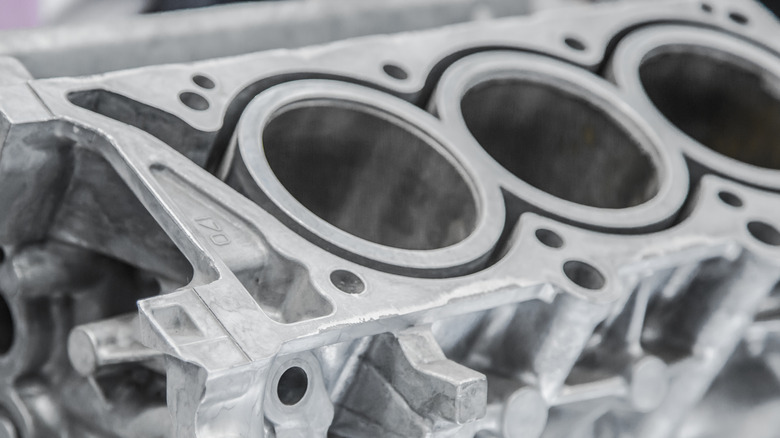
One engine design trait that’s perhaps less well-known is also related to the engine block, but not to with how the cylinders are arranged in the engine, rather with how they’re supported and cooled. When looking at this aspect of engine design, there are really three main types of engine block to look at. At the extremes are closed-deck and open-deck engine blocks, with some modern engines taking a halfway house approach with a semi-closed design. 

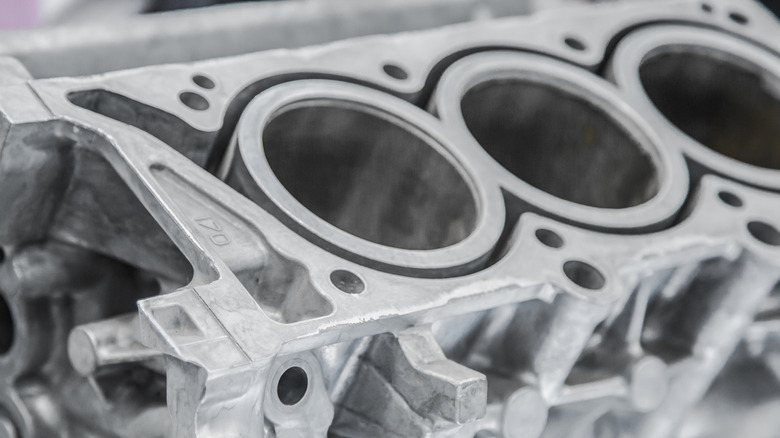
Let’s start by defining what an engine deck is. Essentially, the engine deck is that part of the block that the head gasket sits on, and the engine head attaches to. This means that an inline engine with a single line of cylinders will have one deck, whereas a V-configuration with two banks of cylinders will have two decks. 

Now that we understand that, we can begin to discuss the differences between closed-deck and open-deck engine blocks. In an open-deck engine, there is open space around the top of the cylinders that allows the coolant to circulate more freely. In a closed-deck design, in case you haven’t guessed it by now, the deck features extra material that offers less in the way of cooling, but it does support the cylinders more rigidly. Let’s pop the cylinder head off and have a closer look at these engine block types and why they matter more than you may think. 

Open-deck engines are cool, but flawed

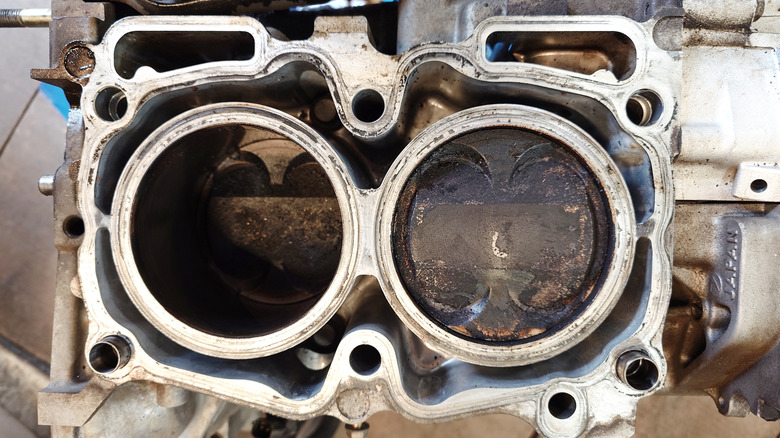
For engine makers, there are definite advantages to open-deck designs — they cost less to manufacture when compared to closed-deck engines, and keep the engine cooler by exposing more of the surface area of the cylinder to the cooling liquid. 

However, all this open space around the cylinders is all very well and good when looking at cooling and manufacturing complexity — but cracks start to appear (sometimes literally) when we look at other aspects of closed-deck engine blocks. While it’s unfair to call open-deck engines unreliable and leave it at that, there are trade-offs in the design, and these become more noticeable in high-performance situations.

Essentially, the lack of material at the top of the engine deck means the engine is less structurally rigid right at the point where it meets some of the most extreme forces engines have to cope with — the combustion point at the top of the cylinder.

If you removed the head from an open-deck design and look down at the deck, this structural weakness is visible. From this viewpoint, the cylinders look separate from the rest of the engine block, with the gap between the two being used for coolant, as some open-deck designs have limited support at either end of the cylinder bank. While this gives more space for coolant to move freely, the downside is that it also does the same for the cylinder. Over time, even the limited movements of cylinders can weaken the head gasket and bring all the associated troubles that follow such a failure. 

Why some engines use closed- and semi-closed deck designs

Open-deck engine blocks are optimized for cooling and manufacturing efficiency. However, incorporate such a configuration in a high-revving, turbocharged brute of an engine and, well, it could end very badly. This is why such engines will usually use a closed-deck configuration. 

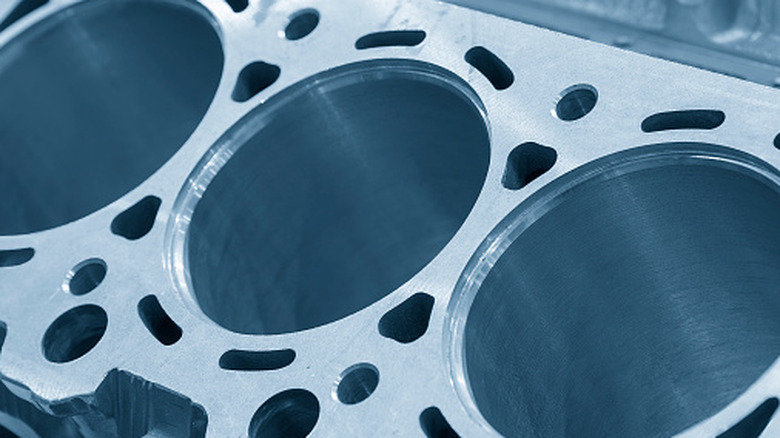
In a closed-deck engine, the open spaces around the cylinders of an open deck are filled with additional material. Obviously, the removal of such space and the flexibility it gives to the cylinders substantially strengthens the engine block. This is why some people fill engine blocks with concrete — it removes the flexibility afforded by the presence of cooling chambers. This is especially important for high-performance engines, but to call it overkill for the family runabout is not overstating the case. 

However, and the more observant among you will be there by now, filling an engine’s cooling cavities with material may add strength — but at the expense of cooling efficiency. This is why many modern turbocharged engines or higher-performance engines use a halfway house design in the form of semi-closed decks. 

Semi-closed decks are a compromise design that offers more rigidity to the cylinders by adding more support points. These supports are usually at the top of the cylinder. For instance, while there are pros and cons to Subaru’s EJ20 engine, the company released a version with a semi-closed deck with four additional support points, which should make it less prone to bore distortion. Ultimately, open-deck and closed-deck engine blocks represent design decisions based on the demands the engine is expected to handle. 


Source link