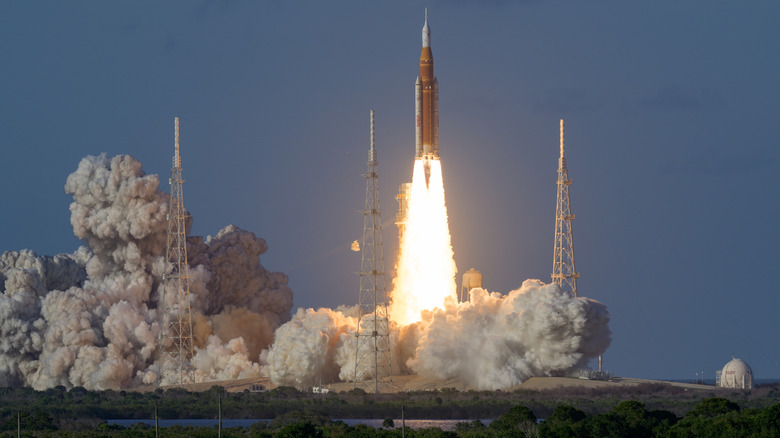

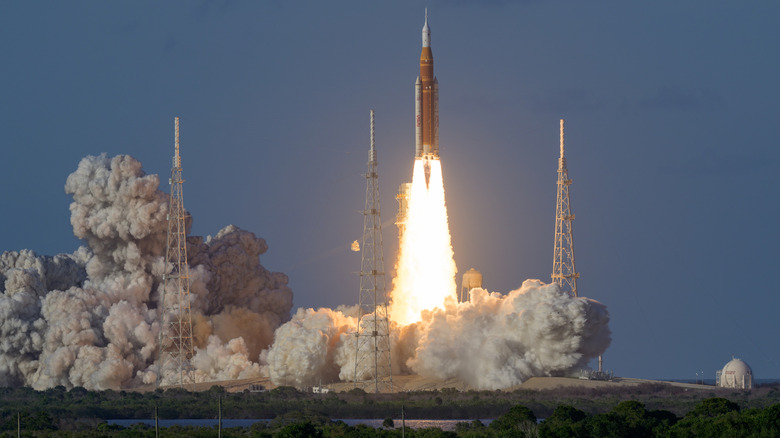
Artemis II’s recent launch filled the public with a sense of wonder and awe on the grandest scale. Not since 1972 (Apollo 17) has man attempted to travel to the moon for exploration, which adds even more excitement to this recent mission. While spectators — both in person in Florida and on TV — surely appreciated the historic nature of the mission, the most immediate takeaway is the raw, visceral punch of the explosive launch. Sending such a massive rocket to break free of Earth’s gravitational pull and punch through the atmosphere into space requires a staggering amount of power.
It takes 8.8 million pounds of thrust to be exact, which violently propelled the 322-foot NASA rocket into space. Just one of the liquid hydrogen and oxygen-powered rockets could power almost a million miles of streetlights. The Artemis II SLS (Space Launch System) topped out at a staggering 24,500 mph, the velocity required to reach the moon. This speed was in line with what the crew of the Apollo 13 mission experienced in 1970, which reached similar top speeds of 24,247 mph.
There were some concerns about the structural integrity of the Orion capsule. Thankfully, its heat shield held up during the reentry phase as the craft safely returned in one piece.
A warp speed win for humanity
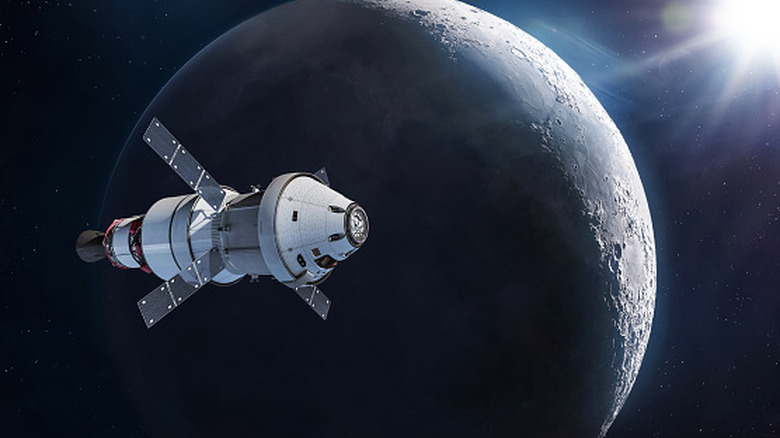
But this wasn’t the whole story. Artemis II didn’t simply thrust to the Moon in a straight line at a constant speed. The flight began with SLS launching Orion into Earth’s orbit, fighting hard against gravity, before passing through the atmosphere’s layers and into space.
As Artemis II ascended, it reached speeds in excess of 24,000 mph, though the exact speed depends on the frame of reference. At its closest approach to the Moon, the rocket hit 60,863 mph relative to Earth. However, relative to the Moon, the speed was measured at 3,139 mph. Either way, these speeds are hard to relate to, as even an F-35 Lightning II fighter jet tops out at around 1,200 mph.
As the Orion spacecraft re-entered Earth’s atmosphere, it reached speeds of roughly 25,000 mph before slowing dramatically in Earth’s atmosphere and safely parachuting into the ocean at splashdown. NASA’s coordination, planning, technical prowess, advanced engineering, and brainpower — to say nothing of the crew’s bravery — speak to mankind’s ingenuity and thirst for exploration.
The crew laid the foundation for future missions and lunar research. Who knows where modern space travel could go next? But what is certain is that we all got to watch history being made by some very brave people, at unbelievable speeds.

Stephan is the sports journalist for the Maple Grove Report.