
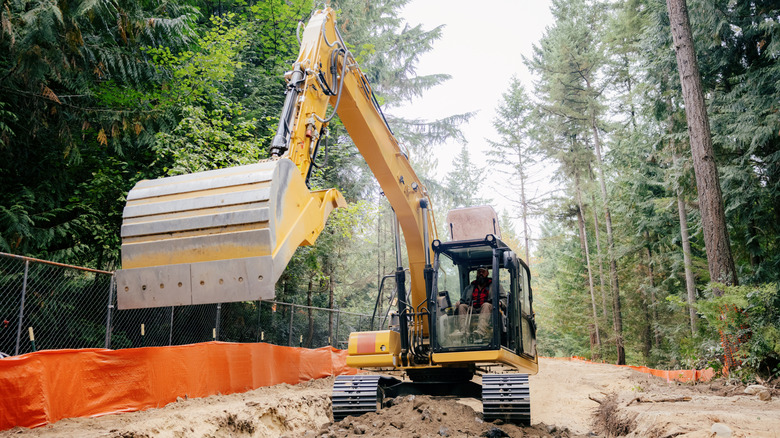
So you’ve got a big job to do. You’re going to need some heavy equipment to get it done. But what kind of heavy equipment, exactly? Which of those big, yellow machines made by Caterpillar is the one for you? Across construction, landscaping, agriculture, and earthmoving jobs, you’ll see excavators and backhoes as the two most common options to get things done.
That being said, these two machines are not exactly interchangeable. Choosing the wrong one can lead to unnecessary expenses, not to mention an unfinished job. While both can dig and move material, their size, design, and performance capabilities are the main things that set an excavator and a backhoe apart. Understanding which is which is the key to a job well done.
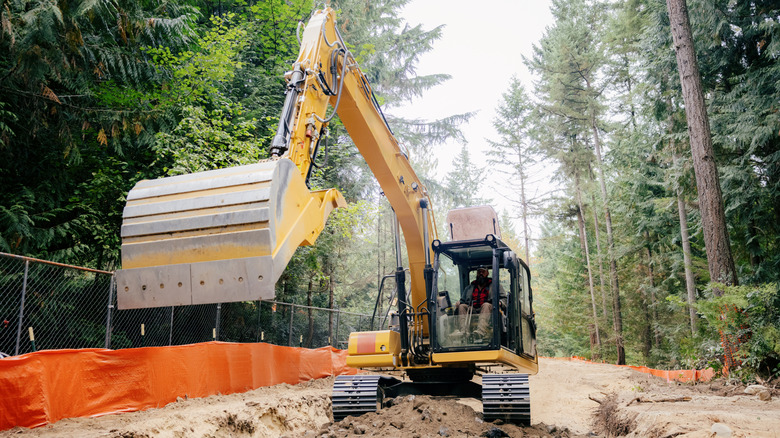
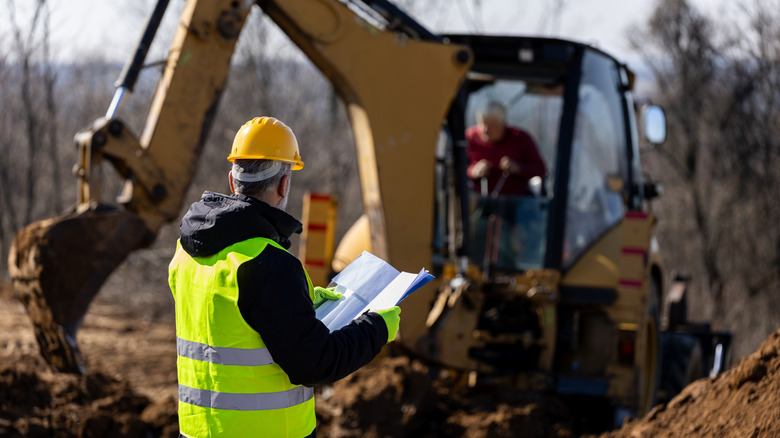
An excavator consists of an undercarriage, an operator cab, and a boom with a dipper arm and bucket. It can rotate a full 360 degrees and can often be equipped with other attachments like buckets, breakers, augers, rippers, hydraulic thumbs, or other specialized tools. A backhoe, by comparison, features a front loader bucket for pushing and carrying material and a rear digging arm for excavation tasks. These also give you a smaller swing range of about 200 degrees rather than full rotation.
Knowing which machine is best for the job
The choice between a backhoe and an excavator is ultimately going to depend on the scale of your project, not to mention your jobsite conditions and your workload intensity. Excavators do a great job in more demanding environments that require deep digging, heavy lifting, demolition work, mining operations, or large-scale earthmoving. Their powerful hydraulic systems, larger operating weights, and unrestricted rotation make them much better equipped for more extensive excavation jobs.
Backhoes, on the other hand, are better suited for residential properties or confined worksites. They combine loading and digging capabilities into one machine with smaller dimensions than a massive excavator machine. Because of their wide range of attachments, backhoes are also useful beyond excavation alone. They’re typically reserved for smaller infrastructure projects, agricultural improvements, landscaping jobs, and routine digging work.
Broadly, excavators are your best bet for heavy-duty projects with deeper digging depth or heavier lifting capacity. Meanwhile, backhoes are going to be more appropriate for smaller jobs with more flexibility. Of course, specifics such as terrain and transport might also come into play, so think about these things before you rent the equipment from Home Depot or elsewhere. Excavators are going to be better suited for more extreme terrains, but can be harder to transport to the job site than backhoes.

Stephan is the sports journalist for the Maple Grove Report.