When Should You Actually Start Braking To Stop Your Car? Here’s What The Physics Says


If you’ve ever ridden in a car with someone that waits until the very last moment to apply the brakes, you know how stressful it can be. You may have even hit an imaginary brake of your own, just out of pure instinct. But how much distance should you leave before actually starting the braking process? There are some common break myths out there, but this isn’t one of them. A simple formula explored by HyperPhysics can give you a good idea of where to begin.

The formula utilizes the work-energy principle, where a vehicle’s kinetic energy is converted into heat through friction in the tires and brakes. The stopping distance can then be estimated using the vehicle speed and the coefficient of friction between the tires and the road’s surface. For example, if you’re driving in good conditions on a dry road, the common coefficient value you can use is 0.8. Working from that model, a vehicle traveling 60 mph has a stopping distance of about 394 feet, before it comes to a complete stop.

However, if you’re going that speed under wet conditions, things can change drastically. That’s because the friction coefficient drops lower than the basic value of 0.8. So if you’re going 60 mph on wet roads and the coefficient is around 0.5, the distance increases to just over 629 feet. This shows just how much the stopping distance is impacted under less than ideal conditions, even when speed remains the same.

How reaction time affects stopping distance

Physics provides a useful baseline for vehicle stopping distance, but things can get a bit more complex in the real world. That’s because how a driver perceives stopping distance, and the time it takes to respond, can vary, adding another element beyond just braking performance. It also depends not just on weather conditions, but tire quality as well. A distracted driver with good tires may not respond the same as an alert driver with worn tires. This is why, even with the best measurements, real world driving is not an exact science.

Because of this, total stopping distance must include the driver’s reaction phase, as well as the actual braking phase. So every time a vehicle slows down or stops, these two elements come together. This means even a car with one of the best braking systems cannot make up for the distance traveled before the brakes are applied. This also means that speed has a major effect on just how much ground is covered from the moment a road hazard is seen by the driver and the moment that the vehicle comes to a full stop.

Fully understanding stopping distance can help determine how much space drivers should leave between vehicles as well. This is why every driver should know the three-second rule, as it can ensure that enough distance is maintained from the vehicle in front. This allows for the proper amount of braking time, so drivers can safely come to a stop when needed.


Source link

Leave a Reply

Subscribe to Our Newsletter

Get our latest articles delivered straight to your inbox. No spam, we promise.

Recent Reviews


We may receive a commission on purchases made from links.

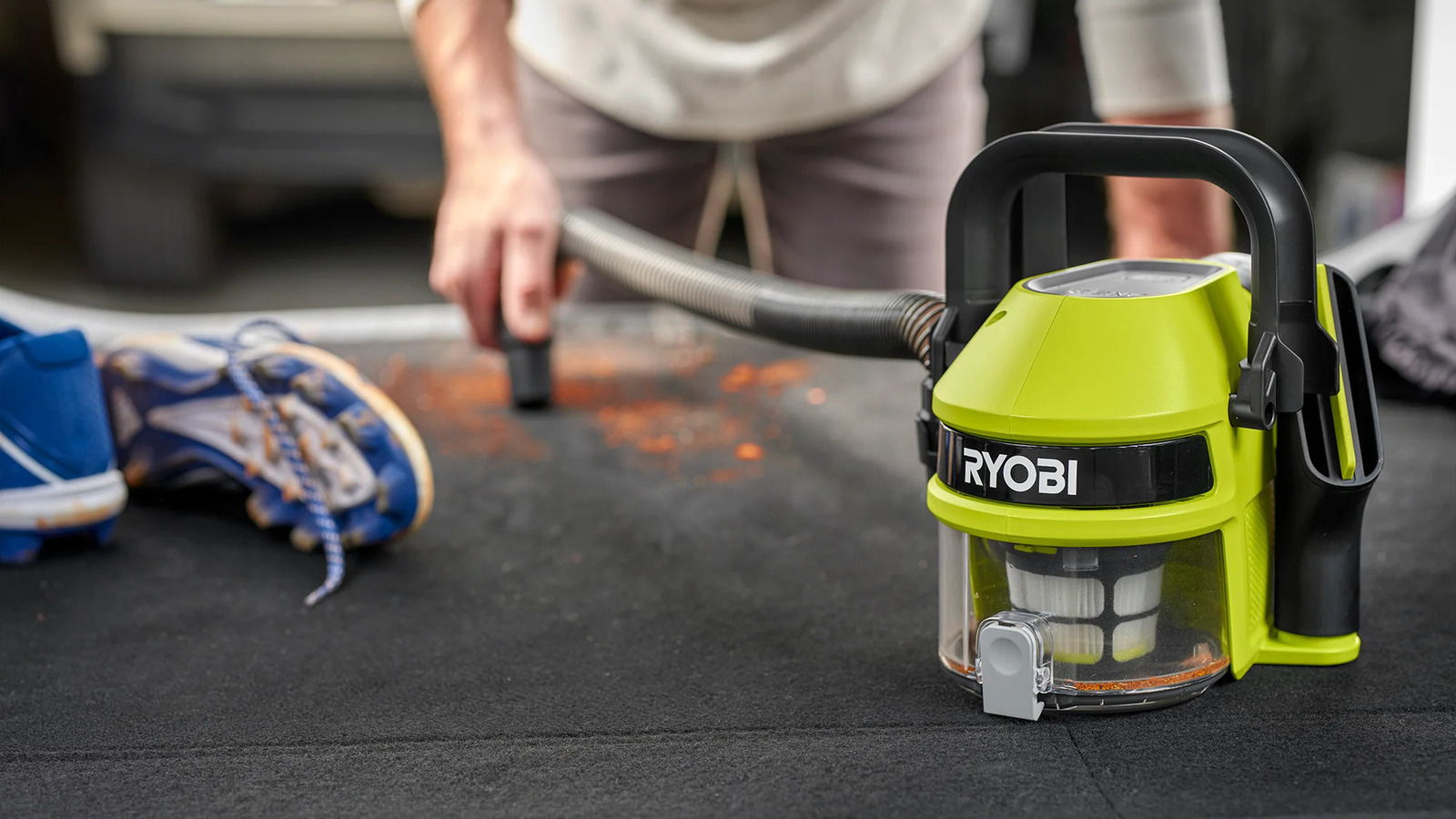
Ryobi regularly updates its lineup of cordless cleaning products with fresh additions, and one of the latest is the brand’s new 18V One+ GoGoVac. It’s available in tool-only form at Home Depot for $79, and will soon be available as part of a kit with a 2Ah battery and charger for $129. The GoGoVac is designed to combine the portability of a small handheld vacuum with the convenience of a flexible hose and crevice tool, and it looks noticeably different from the other handheld vacuums in Ryobi’s range.

A chunky handle at the top of the vacuum lets you carry it around with one hand while using the other to control the position of its hose and nozzle. The extendable hose is four feet long, helping it to reach into crevices and awkward corners that the brand’s other handheld vacuums might struggle to fit into. Ryobi also includes a pet hair tool to help remove embedded fur from furniture or flooring.

Thanks to its compact design and easy-to-grip handle, the GoGoVac is suited to a wide variety of jobs, both around the house and inside the car. Its dustbin can hold up to 16 ounces of dirt and debris, so if there are multiple smaller jobs you need to get done, you should be able to complete them without needing to repeatedly return to the trash bin. Thanks to its small size, it can also be a convenient cleaning companion for road trips and weekends away.

It’s part of Ryobi’s 18V One+ range

For Ryobi fans, a big part of the brand’s appeal comes from the fact that there are so many products that can be powered by the same 18V One+ battery packs. As well as the new GoGoVac, Ryobi’s 18V cordless tool range includes plenty of cleaning essentials, as well as a few cleaning tools you might not have realized existed. Among many other things, its current products include a carpet washer and even a submersible pool vacuum.

Another key selling point is Ryobi’s generous three-year warranty, which is included as standard with almost all of the brand’s new 18V One+ tools. The GoGoVac benefits from the same warranty, and when the GoGoVac kit launches, the included battery and charger will also receive the same period of coverage.

Compared to other Ryobi cordless vacuums, the GoGoVac packs an impressive amount of power. Its 45 inches of water (IOW) of sealed suction is almost double that of the 18V One+ powered brush hand vacuum, and slightly higher than its 18V One+ performance hand vacuum. It’s even more powerful than some of Ryobi’s range of stick vacuums, such as the classic 18V One+ stick vacuum, which has 25 IOW of sealed suction.

The removable filter promises to trap particulates collected by the vacuum’s powerful suction, but it will only be able to do its job for so long. Ryobi recommends changing the filter every 3-6 months, adding an extra cost to factor into the purchase price.


Source link