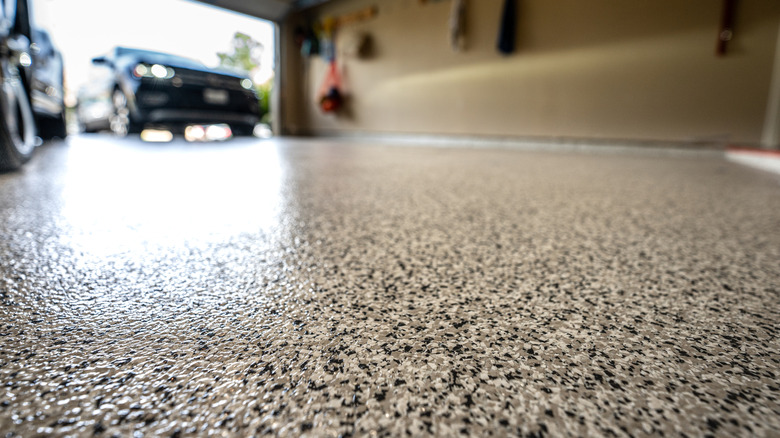

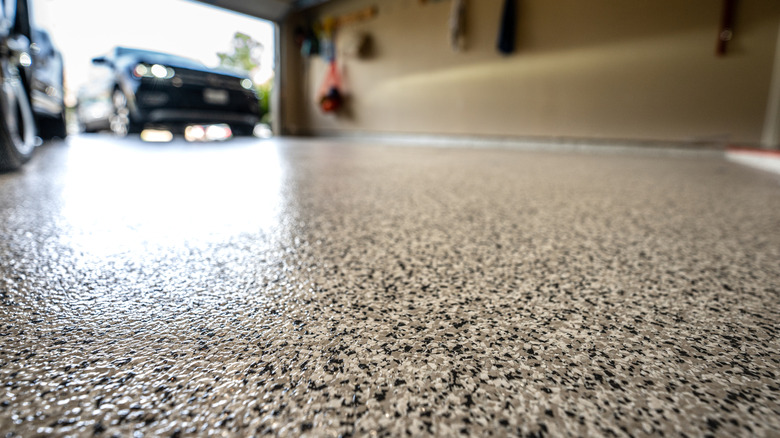
For many, the garage isn’t just a place to store their vehicle but an extension of livable square-footage. Some even add entertainment setups in these spaces -– a garage upgrade many homeowners might not think to add. However, depending on your plans, flooring is something you might want to consider addressing. Some of the available options, like polished concrete and epoxy, provide that reflective visual appeal that takes things to another level.
However, while both of these choices look and perform far superior to your standard garage flooring, they each feature pros and cons. Epoxy flooring is essentially a coating of resin over the concrete surface, which includes a hardening agent for a durable finish. In general, epoxy floors are easier to install than polished concrete, requiring less effort and considered a manageable project for a do-it-yourself type. Epoxy also excels at protection from spills like oil as its non-porous, allowing you to remove chemicals without damaging the surface. This is why, if you’re a DIY mechanic, this may be worth adding to your garage floor.
Conversely, rather than just a top coating, polished concrete is achieved using a diamond disc grinder sanding away at the surface until an appropriate sheen is produced. It’s tougher, can last longer, is better able to resist moisture damage, and may be less slippery than epoxy, which requires additives to add traction.
Polished concrete is more expensive than epoxy
Your average suburban American two-car garage is around 360 square feet, per JD Power. According to Angi, a polished concrete floor installed by professionals can run up to $16 a square foot. Prices vary though, as there are additional options available that can change the overall appearance. For example, instead of a smooth and shiny look, you can have patterns pressed into the concrete such as those mimicking a wood finish, or add unique stains to complement your design. Speaking of design, the versatile and easy way to organize your garage doesn’t involve pegboards or totes, but something on par with your upgraded flooring, slat walls.
In addition, not every garage floor project is a good candidate for polished concrete. An aged surface that has seen visibly heavy use, including motor oil spills, may not allow the polishing process to work correctly.
Epoxy on the other hand, is markedly cheaper, especially if you do the job yourself. According to Today’s Homeowner, your costs would be materials alone, which would be between $700 and $1,800. Although, if you decide to hire a crew, you’ll be looking at $10 per square foot on the high end, per Home Guide. Like polished concrete, you can also incorporate patterns and color to fit your space. Epoxy might also be a better option for those looking to revitalize an old garage, especially because it may help cover up surface inconsistencies.
Why you might choose polished concrete or epoxy
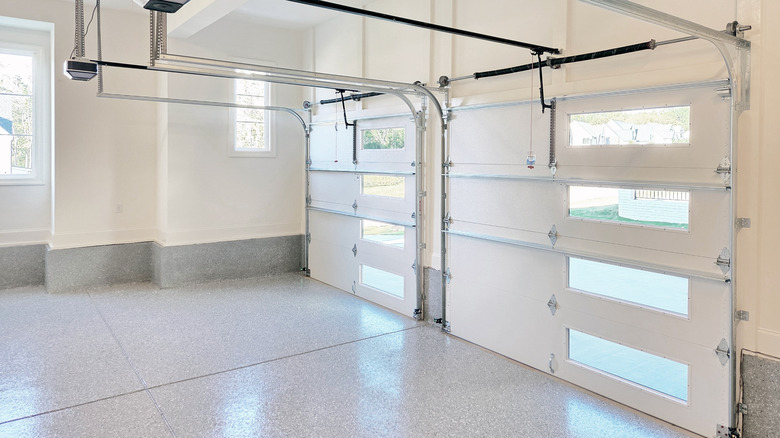
Polished concrete is a great surface for a variety of uses, with the exception of areas that may house chemicals, as this surface doesn’t offer much protection from chemicals that can corrode the surface of the floor. It can, however, handle substantial weight without suffering damage, which is why its often seen in commercial properties such as major retailers and shopping malls. Polished concrete is ideal for new builds and might suit your plans to convert your garage into a family room extension, hobby room, gym, or extended mudroom.
Epoxy might be a better choice for existing structures with flooring that will see vehicle maintenance and repairs, wood working, saltwater, or harsh chemicals. If you want the floor surface to be as reflective as possible, epoxy also beats out polished concrete, providing a mirror like appearance in some cases. Unfortunately, with all of its advantages, epoxy is more sensitive to direct sunlight, may chip or crack easier, and could need to be redone in as few as 3 years.

Stephan is the sports journalist for the Maple Grove Report.