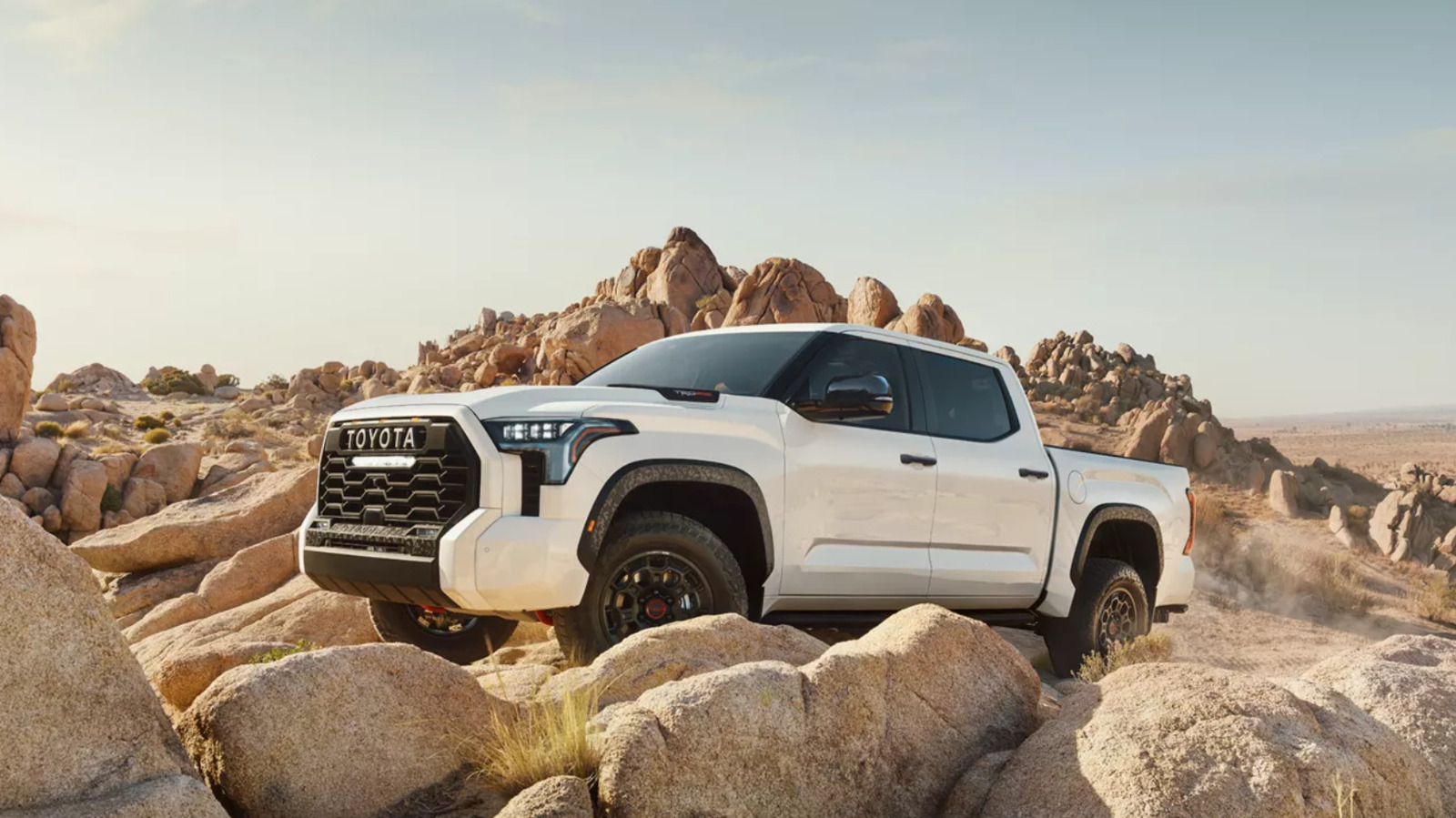

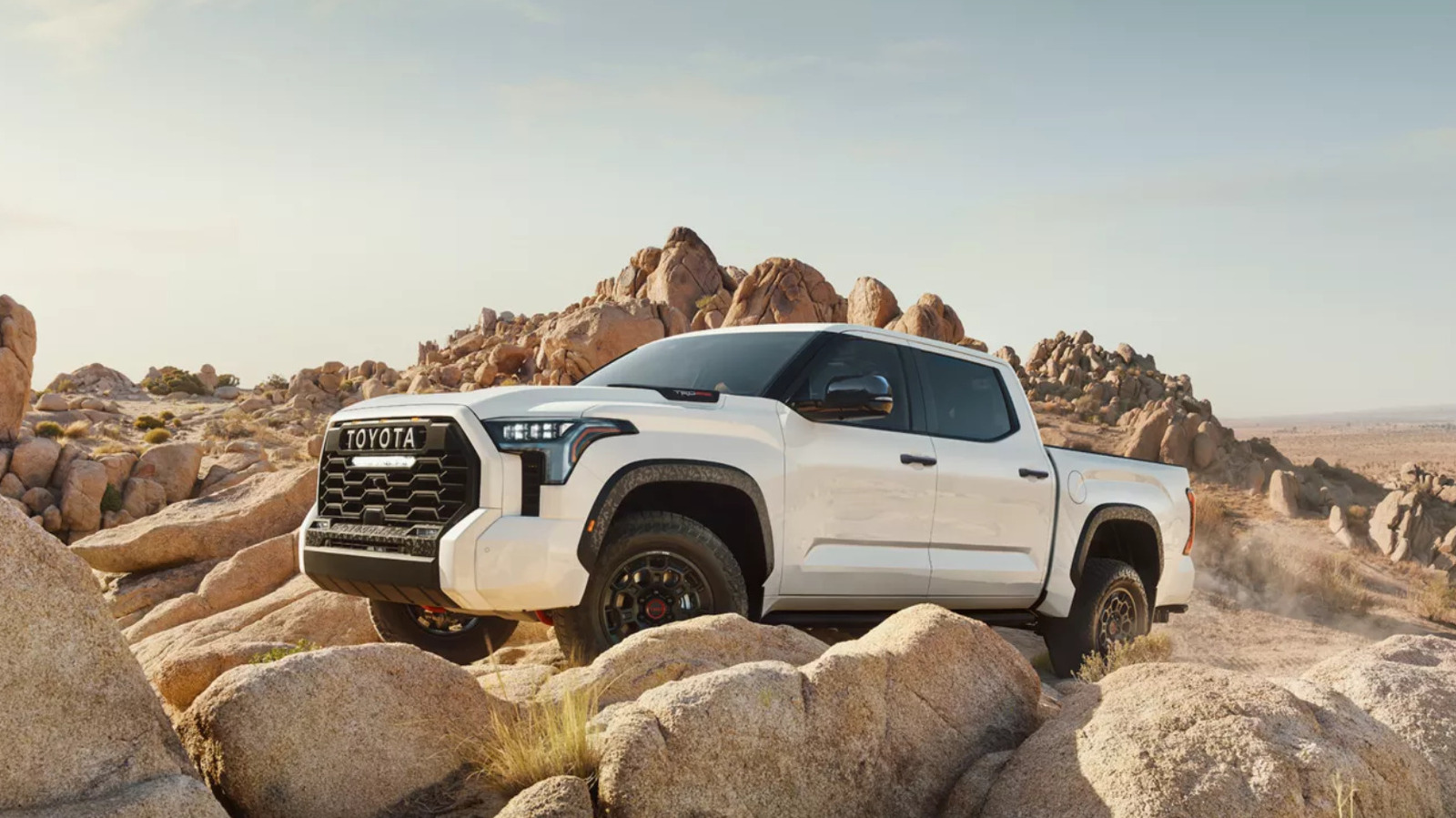
Pickup trucks are getting expensive as the vehicle segment grows in popularity in the U.S. market. The Ford F-150 is one of the best-selling truck models in America, but it isn’t the only option out there. The Ram 1500 and Toyota Tundra are also pickup trucks available at around the same price, starting at an MSRP of $44,820 and $43,455 respectively.
Let’s start with what’s under the hood. The Ram 1500 has three engine options in 2026: a mild hybrid V6, a back-after-popular-demand Hemi V8, or the twin-turbo Hurricane inline-six. With the newly-returned Hemi, you get 395 horsepower and can reach 60 miles per hour in 6 seconds. The turbocharged Hurricane — recommended in our review of the 1500 — makes 420 or 540 horsepower (if you go for the Limited 4×4 Crew Cab), which gets you to 60 mph in either 4.9 seconds or 4.2 seconds. The Ram 1500 also comes with both rear and four-wheel drive.
Meanwhile, the Tundra has a 3.4-liter twin-turbo i-Force V6. The base model’s version has 348 hp and a 60 mph sprint of 6.5 seconds. Every other trim has 389 hp and can reach 60 mph in 6.1 seconds. The most powerful setup is the i-Force Max, a hybrid option that adds an electric motor and battery for a combined 437 hp. This can get you to that 60 mph in as little as 5.7 seconds. This makes the Ram 1500 the more powerful option of the two, but owning a pickup is about more than raw horsepower.
Ram 1500 vs. Toyota Tundra: Towing and payload capacity
This may be the most important comparison between the two pickup trucks — at least if you’re planning to put yours to work. The Ram 1500 has a maximum towing capacity of 11,610 pounds when equipped with the Hurricane I6, while the rear-wheel drive Tundra SR 5 raises that a bit with 12,000 pounds. While this is not much compared to other pickup trucks out there — the Ford F-150 can get up to 13,500 pounds with the right configuration — it’s enough to bring a small camper on a weekend trip or get your boat to and from the water.
The Ram 1500’s total payload depends on its trim and cab configurations. At the top of the list, the 1500 Tradesman Quad Cab has a max payload of 2,370 pounds. This is far more than the top-rated Tundra SR 5, which has a maximum payload of just 1,940 pounds. This limitation could make the Ram 1500 a better choice if you need your pickup to put in some heavy hauling in the truck bed. However, the Tundra — which comes in a choice of 65.6, 77.6, and 96.5-inch bed lengths — offers a wider variety of options, whereas the Ram 1500 only comes in 67.4 and 76.3-inch sizes.
Ram 1500 vs. Toyota Tundra: Fuel efficiency and interior design
Now let’s go over the drive itself. A 2025 two-wheel drive Ram 1500 with the base 3.6-liter V6 has an EPA-rated fuel economy of 20 miles per gallon in the city and 25 mpg on the highway, for a combined 22 mpg. The 2025 Toyota Tundra’s fuel economy — for the 3.4-liter V6 rear wheel drive model — is 18 mpg in the city and 23 mpg on the highway, for a combined 20 mpg.
The Ram 1500 has been praised for its spacious and comfortable interior that feels a bit luxurious for the price. Most trims even have heated and ventilated seats and a panoramic sunroof, making longer road trips a lot more enjoyable. The storage is especially noteworthy, with plenty of room in the cabin for more camping gear. In comparison the Tundra can feel a bit cheaper, but there’s plenty of legroom and storage. It’s more focused on function than fashion, offering extra storage options like a storage bin in the center console and an under-seat box.
While it’s not flashy, the Tundra will likely last longer than the 1500, giving it the edge in the longevity department. However, the Ram 1500 delivers a bit more on engine power, speed, payload capacity, fuel efficiency, and interior comfort. In the end, it depends what you need in a pickup — the 1500 offers more workhorse capability but the Tundra is a trusty pickup for urban living.

Stephan is the sports journalist for the Maple Grove Report.