Why Do Some Speed Limit Signs Have A Red Border?


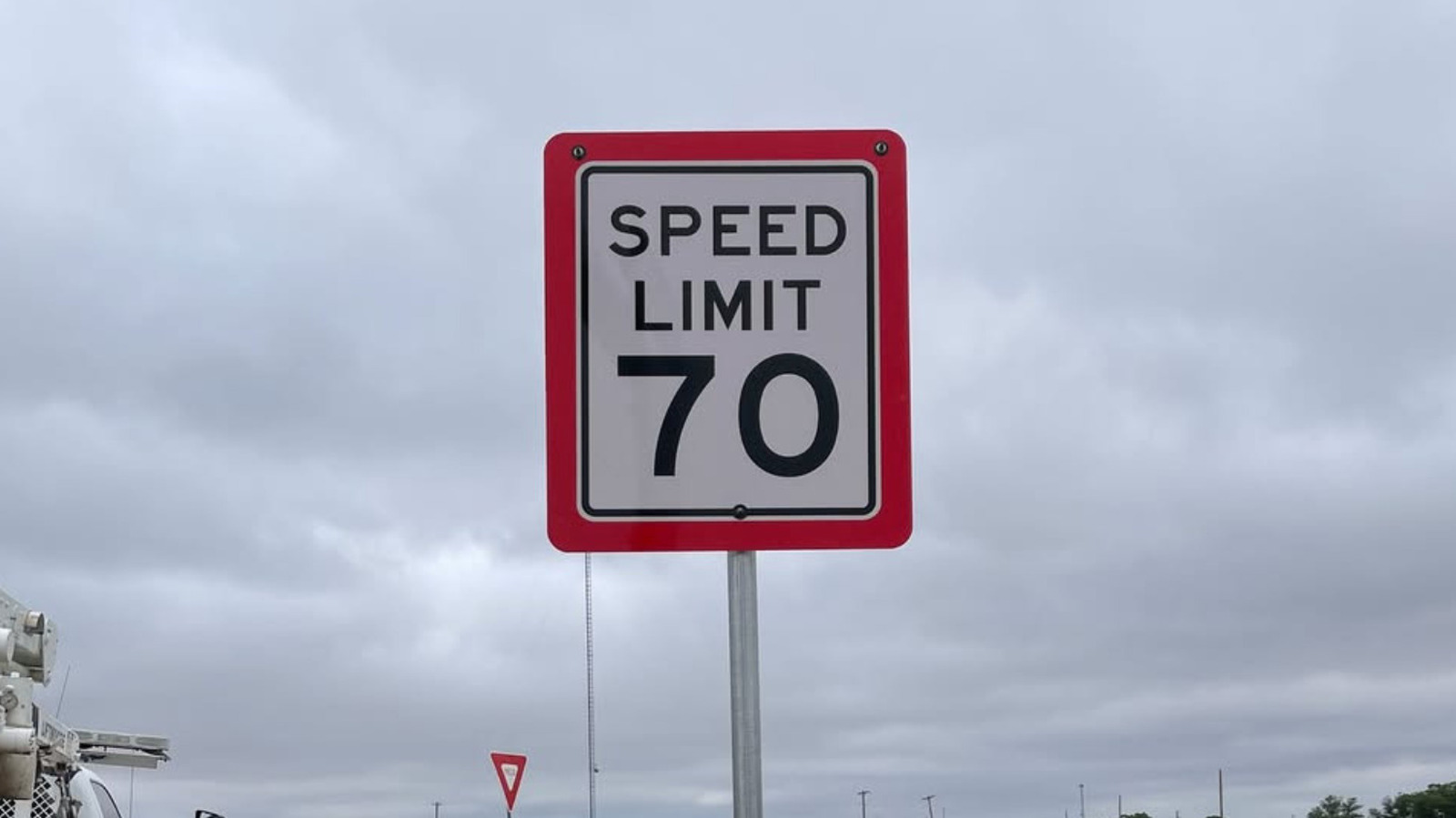
Drivers in the U.S. are accustomed to seeing Department of Transportation (DOT) signs posted with colors specific to the sign type. Stop signs are red, warning signs are yellow, and highway distance signs are green. But some speed limit signs, which are typically always white, have a red border around themin Texas. The reason for that outline is to bring additional attention to the sign as a way to notify drivers that they’re entering a zone with a lower speed limit.

The Texas DOT (TxDOT) is using these red-bordered signs as part of a multi-step approach aimed at getting drivers to notice and respond to lower speed zones on the state’s highways. Standard speed warnings and fluorescent yellow advisory signs typically precede the new speed limit signs, which are being posted in problematic areas where the state has had consistent issues with drivers not reducing speed.

An example of this came in May of 2026, when the TxDOT updated the posted speed limit signs along U.S. Highway 87. The speed limit dropped from 75 to 70 miles per hour and several of the new signs received the red border as a notification to drivers traveling through the area. The modified signage was installed near the east and west ends of Loop 570 where it connects to the highway, and enforcement began taking place shortly after the signs were installed.

Inside Texas efforts to improve highway safety

The red-bordered speed limit signs used in Texas do not carry harsher penalties than standard speed limits throughout the state. However, their exact placement does serve as a final reminder for drivers to slow down immediately. The signs are also deliberately placed where high-speed highways transition into slower rural roads or other populated areas. Texas is just one of the states with the most dangerous roads in the U.S.; however, no other states are using the modified signs as of this writing.

Approval for the red-bordered speed limit signs was first requested by TxDOT back in March of 2003. TxDOT made the written request to the Federal Highway Administration for a modified version of the R2-1 speed limit sign, the standard sign posted on U.S. highways. The move was part of a research project with the Texas Transportation Institute aimed at improving speed limit sign visibility for drivers. The goal was to determine if the sign would ultimately cause drivers to become more compliant.

Beyond their modified signs, Texas is also utilizing modern technology on the highways, including the same types of variable speed limit signs that are popping up across America. Unlike traditional signs, these versions are digital and can be changed in real time. TxDOT makes the changes based on traffic, weather, or road conditions, including to account for construction zones. Early testing of the system showed improvements in both safety and reductions in crashes, which has helped support wider adoption across the state.


Source link

Leave a Reply

Subscribe to Our Newsletter

Get our latest articles delivered straight to your inbox. No spam, we promise.

Recent Reviews


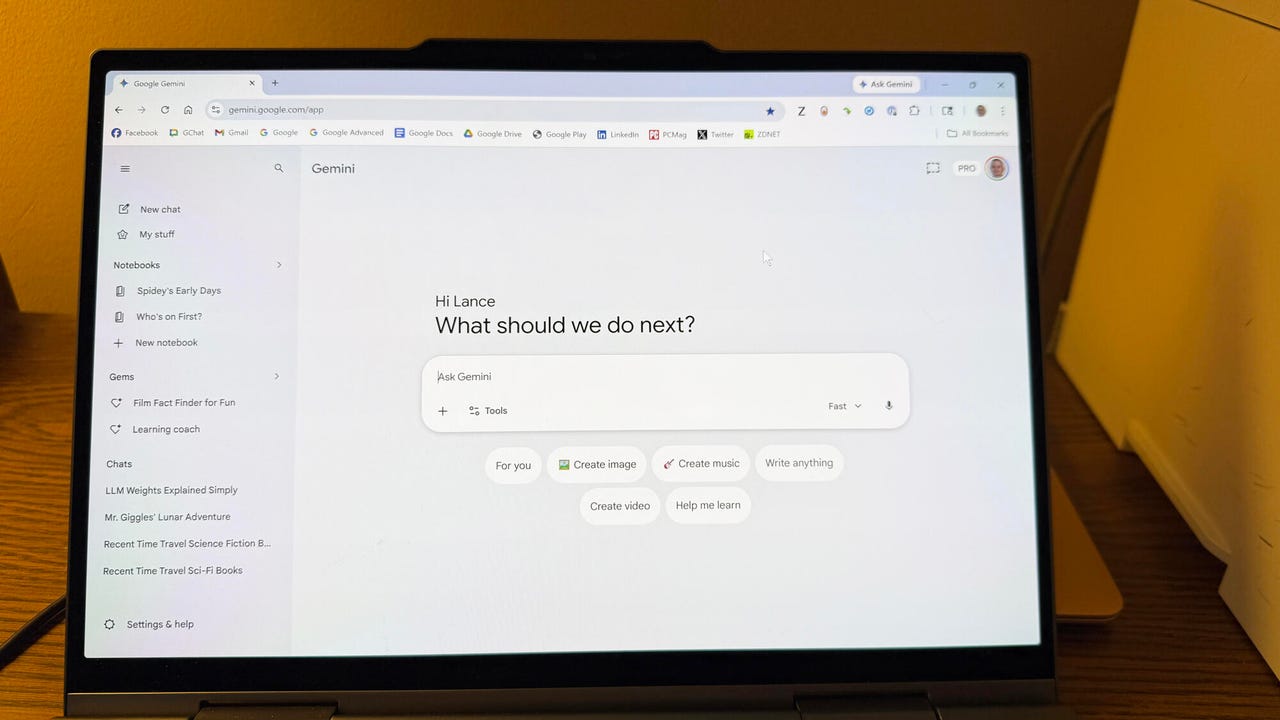
Google Gemini

Lance Whitney/ZDNET

Follow ZDNET: Add us as a preferred source on Google.


ZDNET’s key takeaways

  • Google is downloading a 4GB file to the PCs of many Chrome users.
  • The file is harmless and is used for the Gemini Nano on-device LLM.
  • You’ll see it if you’ve opted into the on-device AI setting in Chrome.

Google is silently saving a Chrome-related file to many computers. That’s nothing earth-shaking. But this file is a hefty 4GB in size, which has caught the attention of some Google watchers. What is the file, why is it being installed, and how can you check for it?

Also: I let Chrome’s AI agent shop, research, and email for me – here’s how it went

In a new blog post, computer scientist Alexander Hanff, aka the Privacy Guy, pulled back the curtain on this mysterious file. Named weights.bin, the file is being downloaded deep within the user data folder of many Chrome users. The file itself is related to Gemini Nano, which Google is using as the on-device AI model for Chrome users.

If you delete the file, it comes back

Though there’s nothing risky or dangerous about the file, Hanff and others have expressed concerns that it’s being downloaded without users’ knowledge or permission. And if you delete the file, it eventually comes back, Hanff said. That by itself is hardly alarming; that’s part of any software update. Rather, some of the criticism centers on the file’s size. If you have ample hard disk space, then 4GB is likely not a big deal. But if you’re running low, that big a file might chew up space you can’t spare.

Traditionally, AI models like Gemini use the cloud to interact with you. Submit a request, ask a question, or kick off a conversation, and the AI taps into its online data and resources to respond. But that method can be slow and naturally requires that you be connected. By traveling between your device and the cloud, your data can also be exposed.

A trend has emerged in which companies are experimenting with locally stored LLMs (large language models). That not only speeds up the process, but it also means you can use the AI offline and more securely. Gemini Nano has already been in play on Google’s own Pixel phones.

That explains why the file is so large; it has to pack in a lot of data. In this case, a weights file contains numbers that measure the level of importance an AI model assigns to your input. The AI uses these values to determine what should come next. For example, let’s say you start typing the phrase “Why did my new phone cost me an arm and a…” at the prompt. The AI assigns weights to your input to help it predict that the next word would be “leg.”

Also: This powerful Gemini setting made my AI results way more personal and accurate

How can you tell if the file has been downloaded to your PC? First, open Chrome, go to Settings, and select System. On the System screen, check whether the On-device AI option is turned on. If so, then you probably have the file or will soon get it.

To double-check, you’ll have to navigate to the user folder on your PC. That location varies based on your operating system. On my Windows 11 PC, I ran a search in File Explorer for weights.bin. The search took a long journey through the following path: C:\Users\lance\AppData\Local\Google\Chrome\User Data\OptGuideOnDeviceModel\2025.8.8.1141. At that final location, the weights.bin file appeared, measuring 4GB.

Since the file is downloaded again if you simply delete it, you’ll have to take an extra step to get rid of it permanently. After you delete the file, go back to Settings in Chrome and select System. Then  turn off the switch for On-device AI.

But as long as you have enough disk space (and if you can’t spare 4GB, then it’s time to clean up your drive), the file is little cause for concern. Just forget about it, especially if you’re keen to try on-device AI, and we’ll see what the future holds for Gemini Nano.


Source link