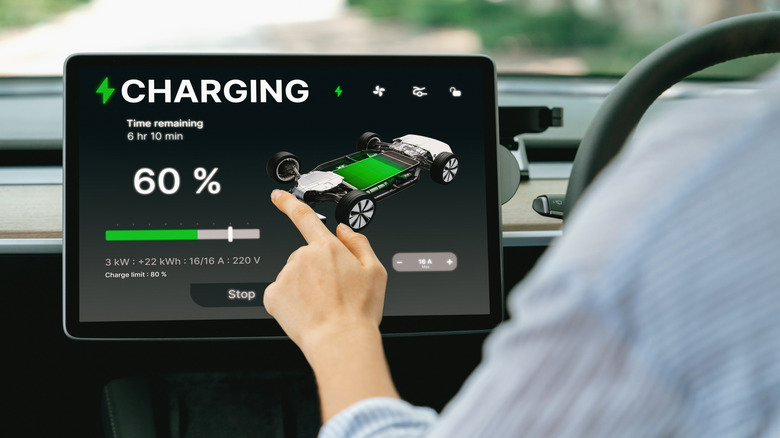

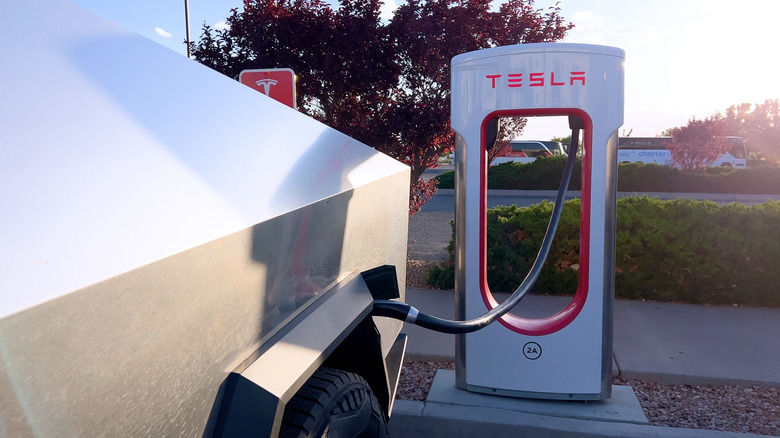
If you regularly fast charge your smartphone — or even an electric car, for that matter — you might have noticed an interesting pattern. These devices charge at breakneck speeds from the 0% to 80% mark, but slow down and take significantly longer to “fill up” the last 20 percentage points. This is precisely why it is common for modern smartphones to reach 80% charge in under 30 minutes, while popular EVs regularly hit 80% charge in around 15 minutes when plugged into a DC fast charger like a Tesla Supercharger.
We have previously discussed how major EV makers like Tesla and phone manufacturers like Apple and Samsung explicitly recommend capping the max charging level at 80%. EV makers market this method as one of the ways to minimize battery wear and tear. What they don’t explicitly state, however, is that waiting for the car to get to a full 100% charge would also mean a car hoarding a charging station for a much longer duration, given how battery charging speeds slow down considerably after hitting the 80% mark.
Now, there are two main reasons why the last 20% of a Li-ion battery takes significantly longer to charge. The first is a deliberate safety mechanism built into modern charging systems, while the second comes down to battery chemistry. As lithium-ion batteries approach full capacity, their voltage rises close to the safe upper limit. At this point, the battery management systems inside modern-day devices detect the same and automatically reduce the current flowing into the battery. This prevents the battery from overheating. Slowing the charging process at high state-of-charge levels helps protect the battery’s internal chemistry and improves long-term durability.
The chemistry behind slower charging after 80%
While manufacturers deliberately slow down charging speeds after a battery reaches 80% charge, it’s only telling half the story. What is also true is that the chemistry of modern-day Li-ion batteries prevents them from charging faster as they approach full charge. Let’s understand why. Like typical batteries, Li-ion batteries also feature a negatively charged anode and a positively charged cathode. When you fast-charge a battery, the process primarily involves the transfer of lithium ions from the cathode to the anode.
When the battery is at a low charge, the anode has plenty of room to accept incoming lithium ions, with enough space for them to move around. However, as more lithium ions reach the anode, there is less space for fresh ions to find a spot inside the anode. This creates a bottleneck, leading to several of these ions getting piled up on the surface of the anode instead and turning into metallic lithium in the process. In battery science terms, this phenomenon is known as lithium plating. Now, if you thought these piled-up ions could just gradually move in sometime later, well that’s not how it works. Lithium plating is permanent in nature, and these ions remain stuck to the surface of the anode for the rest of its life, although efforts are on to mitigate this problem.
Essentially, if you continue fast charging a lithium-ion battery even after the 80% mark, the charger will only find it harder to push these lithium ions into the anode, and it also ends up accelerating the process of lithium plating. This is why all battery manufacturers/EV/smartphone brands either slow down charging speeds after 80% or simply offer consumers the option to turn off charging at the 80% mark.

Stephan is the sports journalist for the Maple Grove Report.