

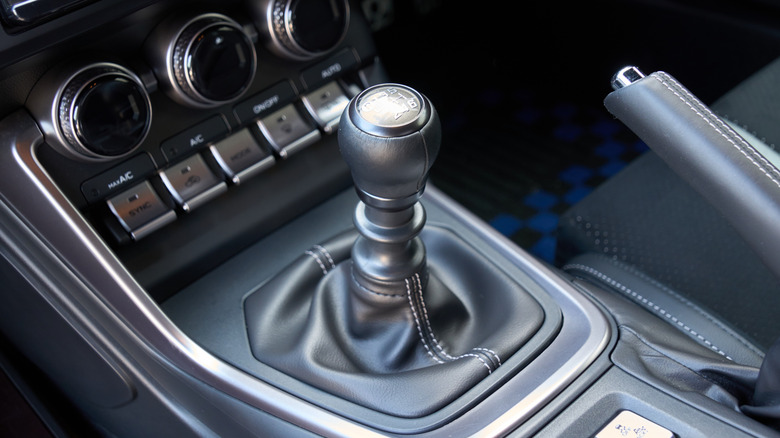
If you’re a fan of cars and enjoy spending time in that world, then you’re probably already familiar with some of the slang that goes along with it. From common hot rod terms to words like “gearhead,” automobile hobbyists often have their own language. That language includes “stick shift,” which is used to describe both the physical shifter in a manual transmission vehicle and the vehicle itself.
The term may be a bit confusing, as the appearance of the shifter can vary based on the vehicle. For example, a modern manual transmission car may have a short shifter compared to an older truck or an American muscle car. Those shifters are typically longer, thus more closely resembling an actual stick. The stick shift moniker has always been a part of car culture, though other terms like “manual gearbox” describe the same shifter as well.
However, “stick shift” is mostly used in the U.S. while other parts of the world just use “manual transmission.” It’s a straightforward definition, as it perfectly describes how the system operates. A manual transmission requires the driver to use the shifter and clutch pedal to physically change gears, which an automatic does on its own as you speed up or slow down. Learning manual transmission shifting can be easier with these tips, but because of the coordination it takes, many people prefer to keep it simple and drive an automatic instead.
The rise, fall, and resurgence, of manual transmissions
Manual transmissions, also known as “stick shifts,” weren’t used in the first vehicles ever produced in America. Early designs included single-speed transmissions, so there were no gears to change. As time went on and multiple gears were developed, the need for manual transmissions became apparent. But those vehicles proved tougher to drive than modern stick shifts because they required precise speed matching in order to change gears. However, those systems eventually evolved as well.
Stick shifts dominated highways across the U.S. for years before the rise of automatics. The reason for the change was to accommodate for demanding driving conditions, and the automatic transmission was meant to simplify the process. Though early automatics were developed in the 1920s, it wasn’t until GM designed the Hydra-Matic, paving the way for automatics to became the preferred transmission for drivers. By 2019, Electric Vehicles (EVs) outsold new manual transmission vehicles in the U.S. Today only about 1 percent of new cars sold in the U.S. come with a manual transmission.
But there has been a major resurgence in manual transmissions, as demand for traditional setups is on the rise. This is especially true in limited edition and higher-end vehicles, where drivers want a more hands-on driving experience. So even though automatics continue to be the transmission of choice, and as EVs steadily increase in popularity, stick shifts are filling a niche market. This means that there may still be room for manual transmissions on America’s roads.

Stephan is the sports journalist for the Maple Grove Report.