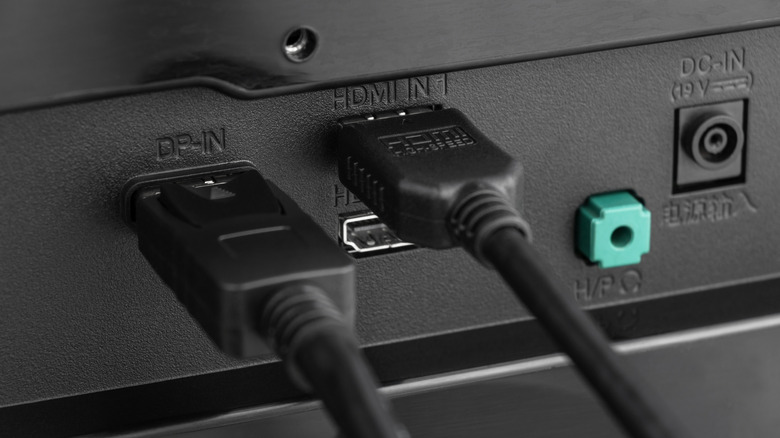
Why Most Smart TVs Don’t Use DisplayPort (Even Though It Beats HDMI)


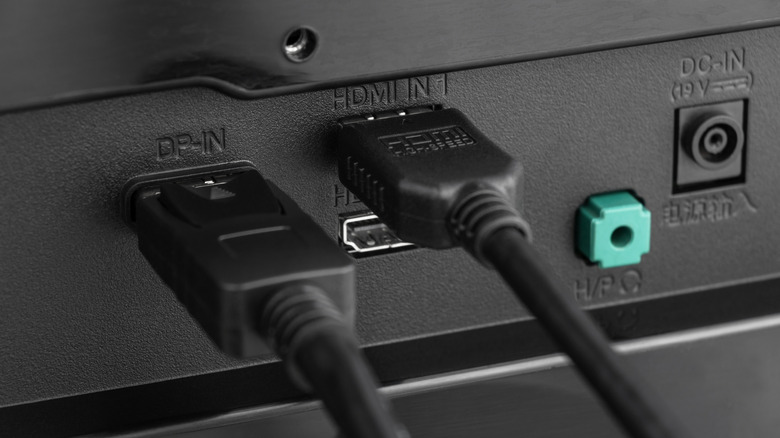
A typical smart TV usually has several HDMI ports for display input, while computer monitors are bound to have at least one DisplayPort connector, in addition to an HDMI port. Both digital interfaces may have started with significant feature distinctions and exclusions at the outset, but two decades after their inception, these competing interfaces have essentially attained feature parity. This is especially true for the HDMI 2.1b ports found in most modern smart televisions, which can display 4K content at 120Hz, support variable refresh rates (VRR), and accept HDR standards like Dolby Vision and HDR10+.

However, DisplayPort had a three-year head-start and began supporting 4K120 video with version 1.3 in 2014. It continues to have an advantage on paper, with DisplayPort 2.1a supporting a maximum bandwidth of 80Gbps, significantly greater than HDMI 2.1b’s 48Gbps cap. That means that HDMI can’t match DisplayPort’s ability to render 8K content at 60Hz with uncompressed colors. DisplayPort also supports both AMD FreeSync and Nvidia G-Sync standards, uncompressed spatial audio formats, display daisy chaining, as well as outputting over USB cables via Alt Mode.

But if DisplayPort is clearly better than HDMI, why is it so rare on smart TVs? The answer is simply because HDMI is so deeply entrenched in televisions and associated devices. Any performance edge DisplayPort has over HDMI likely isn’t significant enough to make up for the cost and complexity of incorporating a new digital interface.

HDMI has the first mover advantage and institutional inertia

HDMI’s stranglehold on the television space rests on its long-standing presence and pedigree. The seven founding companies (including Sony, Panasonic, Toshiba, and Hitachi) banded together to create a modern digital interface in the early aughts, when the TV industry was moving on from bulky analog CRTs to digital flat-screen televisions. The HDMI interface’s specifications are maintained by the HDMI Forum, which consists of over 80 stakeholders ranging from hardware manufacturers like LG, Samsung, and Sony to distribution giants like Netflix. The forum also includes around 2000 companies registered as HDMI adopters that pay thousands of dollars in licensing fees and additional royalties for each hardware device sold bearing the HDMI port and branding.

By the time DisplayPort arrived in 2006, the entire industry was already all-in on HDMI. Not even the lack of per-unit royalties, the relatively nominal one-time membership fee, or the absence of costly compliance or certification testing was enough to tempt television makers to adopt DisplayPort. This was despite the interface outperforming HDMI and being cheaper to integrate.

Given that almost everything you would connect to a TV, including Blu-Ray Players, video game consoles, set-top boxes, and streaming dongles, has adopted HDMI, it’s almost impossible to justify the expensive and complicated process of integrating an additional digital interface that is usually only found on desktop computers. On top of that, while DisplayPort itself is royalty-free, manufacturers will still have to pay fees for digital content protection licenses and patents held by the VIA Licensing Alliance.

TV makers don’t have compelling reasons to integrate DisplayPort

We have already established how DisplayPort does 8K60Hz in all its uncompressed glory, but HDMI 2.1 can also match the resolution and refresh rate, albeit with display stream compression. Having said that, 8K TV demand and penetration are so woefully low that major brands like Sony, LG, TCL, and Hisense have exited the market. Even Sony, which initially marketed 8K output for the PlayStation 5, eventually removed the branding from marketing materials.

There’s no practical reason for TV makers to adopt DisplayPort over HDMI for a niche 8K60Hz application with virtually non-existent user demand. By the time 8K TVs show up in households, HDMI 2.2 will probably have penetrated the market. HDMI 2.2 was standardized in June 2025, and its 96Gbps throughput bests DisplayPort 2.1b.

Even at 48Gbps, HDMI is good enough to play console games at 4K120Hz with full VRR support on your smart TV, with major console players already integrating the experience seamlessly. Unless you explicitly plan on hooking up your monster gaming rig to your TV to play competitive games at insane refresh rates like 360Hz and beyond, there really isn’t enough of a use case for DisplayPort compatibility on a TV. Meanwhile, the HDMI interface offers far more TV and home theater-oriented features like the HDMI CEC protocol that improve the living room experience.


Source link

Leave a Reply

Subscribe to Our Newsletter

Get our latest articles delivered straight to your inbox. No spam, we promise.

Recent Reviews


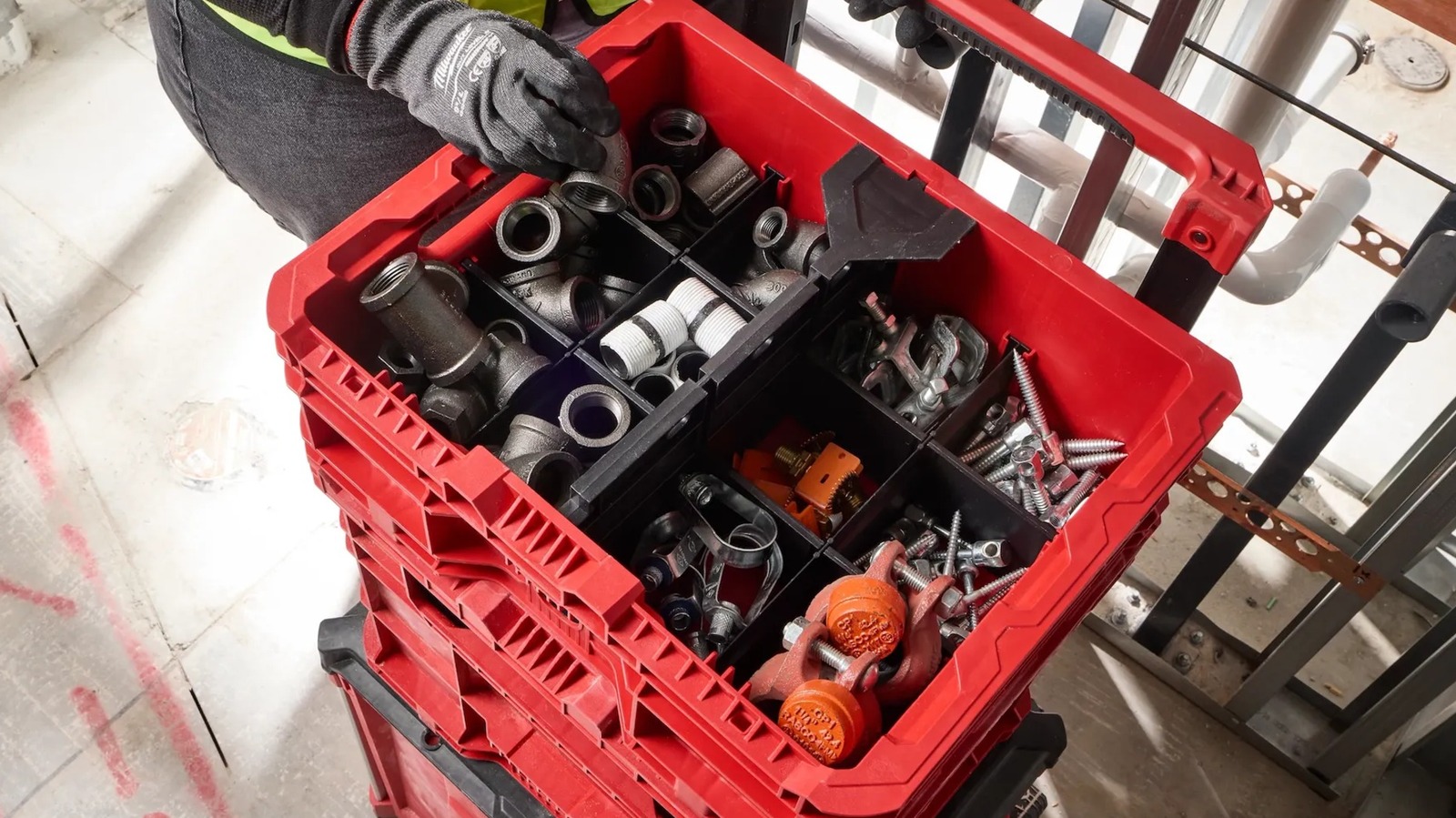
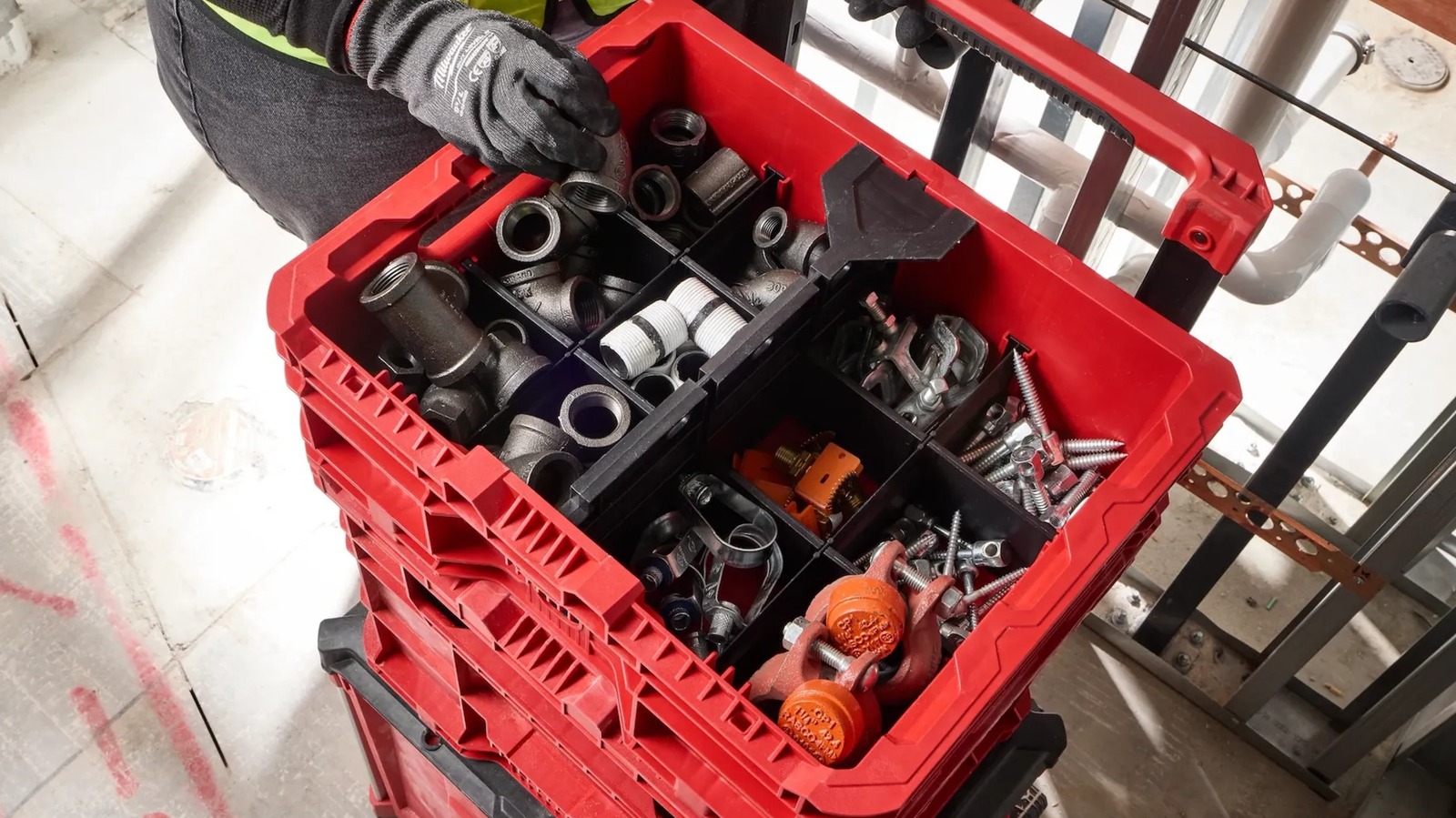
2026 has shaped up to be a big year for Milwaukee, and the company shows no signs of slowing down as it expands its product line. For example, it has announced that some solid new Milwaukee hand tools and organizers will be arriving throughout the summer, but that’s not all. At the end of the day, you need somewhere to put all of this stuff, and while the Milwaukee Packout storage system is deep and varied as is, the company will expand the line in the summer months.

More methods for organizing your tools are on the way, too, with the Milwaukee Packout line set to introduce some new entries this summer. They vary in size, purpose, and price point, but they’re all compatible with the wider Packout line. That means they can connect to each other, making transportation easier. In some cases, they’ll be able to help keep tools and other items secure and organized while on the move. Additionally, all of these new Packout products are covered by Milwaukee’s Limited Lifetime Warranty.

So, what new products does Milwaukee have to offer from its Packout line this summer? Here are the drops you can look forward to throughout June and July 2026.

Milwaukee compact crate

Sometimes, a massive Packout crate isn’t a necessity, which is why the line has its share of smaller options. Yet another will be coming to the Milwaukee catalog in the form of the Milwaukee Packout compact crate, which is set for a June 2026 release and will cost $39.97. It has a 30-pound weight capacity, comes in at 8.75 inches tall, 9.5 inches wide, 15.5 inches long, and 3.75 pounds, and includes two removable dividers to create up to three sections within the crate. The dividers can also be customized by cutting them to size along the pre-made score lines.

This compact crate features a wide front opening for easy access to its contents while on the job, as well as a metal top handle to carry it around on its own. Should you want to add it to your current Packout stack, you can use the connection points at the top and bottom of the crate. Speaking of durability, Milwaukee notes that it has an impact-resistant body along with weep holes to prevent water collection. At the same time, there is some nuance regarding the waterproof nature of Milwaukee Packout products, so keep that in mind before letting this crate get soaked.

Milwaukee Packout low-profile crate

A shorter but equally mighty Milwaukee Packout container is also on its way to customers this summer. The Milwaukee Packout low-profile crate is the shortest of the new releases at just 6.625 inches tall, though it makes up for what it lacks in height with a 15-inch length and an 18.625-inch width. Even though it’s slightly heavier than the compact crate at 4.85 pounds, it wins out in weight capacity with a 50-pound limit. It will be released in June 2026 and will cost $44.97.

For added modularity, the low-profile crate includes three different divider types: eight short, two long, and one for the middle of the container. When combined, they form up to 12 individual sections for tool and accessory organization. In terms of connecting to other Packout containers, it can do so from the top and bottom. Alternatively, built-in side handles are integrated into the design to make it easier to carry the crate on its own. The crate has weep holes for water drainage and an impact-resistant body.

Milwaukee Packout XL crate

Moving on to one of the larger upcoming Milwaukee Packout releases — even if it ultimately lands somewhere in the middle of the smallest and largest Packout containers for sale — there’s the aptly-named Milwaukee Packout XL crate. This release will hit shelves in June 2026 and comes with a $69.97 price tag. The 8.03-pound crate can take on some serious tools with its 75-pound weight capacity. It measures 15 inches tall, 15.75 inches long, and 18.625 inches wide. Despite its size, it can be hung up on a wall like most other Packout containers.

While some may hang this crate in their workshop, many will use it as part of their mobile Packout stack. You can connect it to your existing setup via the top and bottom connection points. It can also be used with Milwaukee toolbox attachments to hold smaller tools and batteries with connection points on the sides. Alternatively, you can move the crate around using its built-in side handles. It’s advertised as having an impact-resistant body along with anti-water collection weep holes. Suffice to say, there’s more to this seemingly simple crate than initially meets the eye.

Milwaukee Packout Wire Pulling XL Crate

For the most part, the Milwaukee Packout line is so popular because of its versatility. While most entries can be used for just about anything, there are those that come with a specialized function. Case in point, the forthcoming Milwaukee Packout Wire Pulling XL crate, which is designed for dispensing wire. This involves inserting and locking in spools of the user’s needed material, threading the wire through the wire retention slots, and using the fold-down panel to keep the end of the wire from rolling back into the box.

Overall, this crate has the same dimensions and weight capacity as the previously covered Packout XL crate, though it is the heavier of the two at 9.85 pounds. It can accommodate up to six spools, can be stacked onto other Packout containers or hung up, and has an impact-resistant body. This is the most expensive of the new Packout releases at a hefty $119.97, and it’s set to release during July 2026. Alongside the best Milwaukee power tools for electrical work, this crate seems like a vital piece for any Milwaukee-enthusiast electrician’s kit.

New Milwaukee Packout inserts are coming, too

That’s it for the new Milwaukee Packout containers set to debut this summer, but there are more new releases yet to cover. To pair with some of these containers and improve their levels of organization and function, come two new insert sets. First is the divider for the Milwaukee Packout XL crate, which splits the container into two sections. It simply slides down the middle of the crate and fits snugly into place, while retaining its ability to connect with smaller Packout attachments. It will be released in July 2026 for $29.97.

Alongside the Packout XL crate divider is the set of Packout wire pulling inserts for the XL crate. You’ll need these if you end up buying an XL crate and later want to use it as a wire-pulling crate. These inserts allow you to convert it instead of having to buy a new designated wire pulling crate. They attach to two of the inner sides of the crate via T-25 screws and include wire puller guards as well. The Milwaukee product listing says these inserts are meant for 1/2-inch EMT conduit. This insert set also comes out in July and will cost $49.97. 


Source link