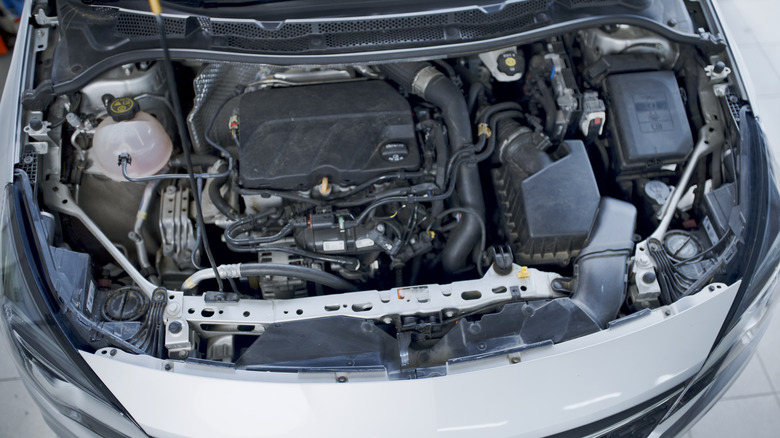

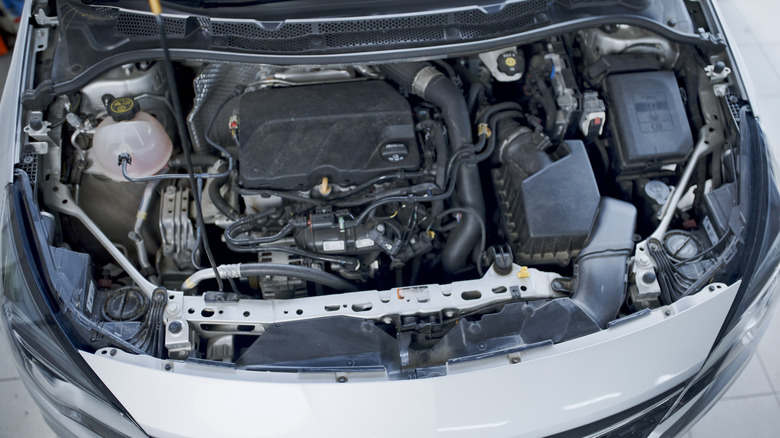
“They don’t make them like they used to” is a phrase that can apply to just about anything. For gear-heads feeling nostalgic about older cars, it’s a phrase that never seems to go away. This is especially true when comparing today’s cookie-cutter engines versus the selection that drivers had in ridiculously overpowered vintage cars. Part of the reason engines have changed and choices have been reduced is due to U.S. EPA standards.
Those standards are set by the Clean Air Act, which gives the U.S. Environmental Protection Agency authority to regulate vehicle emissions. This is done through strict federal requirements that directly influence vehicle design and engine development. As a result, car manufacturers are pushed to produce a more limited range of engine types. Corporate Average Fuel Economy (CAFE) standards are also in play. CAFE requires automakers to meet fleet-wide efficiency targets, which leads to shared engine designs being used across an entire lineup of vehicles.
As automakers worked to satisfy these standards, modern advances like turbocharging and fuel system improvements allowed for engine downsizing. This means smaller engines can produce performance similar to that of larger engines. In fact, there are even small engines with more power than muscle car V8s. So thanks to today’s technology, car manufacturers do not necessarily need to design multiple engine types when fewer can cover the same performance requirements.
Engine size alone doesn’t determine fuel efficiency
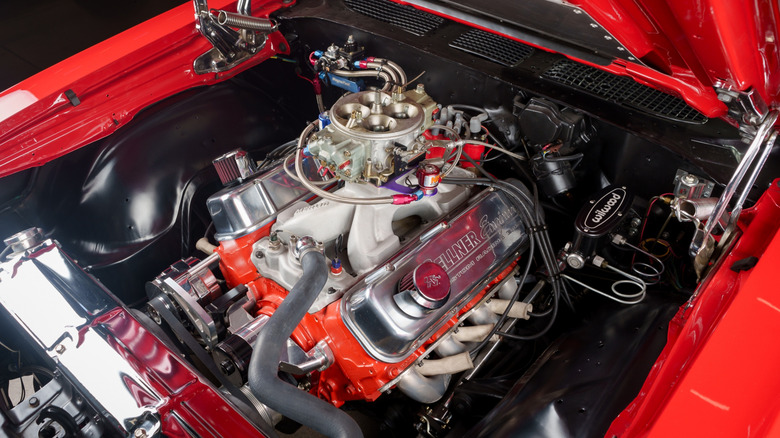
Multiple large-displacement engine types were once the norm in the automobile industry. In fact, these engines were in demand for a variety of different vehicles, like old school muscle cars. This includes the big block V8 engine, which was once a major focus for automakers. It was a standard approach taken by many manufacturers, who were unrestricted by emissions and fuel economy regulations.
There is a common belief that smaller engines get better fuel efficiency than larger engines. After all, those older V8s could get very thirsty, which means you’d be filling up quite often. But fuel economy involves a lot more than just engine size. It’s influenced by several factors, like vehicle weight, transmission, technology differences, and even driving habits. So even if you have a car with a larger engine, it doesn’t mean you’re not getting good fuel efficiency.
There are still some U.S. automakers that give you options, depending on the vehicle. But those options are often restricted to the same model, and not widespread across the board. For example, Ford offers multiple engine choices within the F-150 lineup for 2026, ranging from a 2.7L EcoBoost V6 with 325 horsepower, up to a 3.5L High Output EcoBoost V6 with 450 horsepower. So if you’re interested in finding a car or truck with a bigger engine, it’s a good idea to check the manufacturer’s website first and then go from there.

Stephan is the sports journalist for the Maple Grove Report.