
One of the most important components of your car’s handling is its tires. In an ideal world, the tires are the only part of your car that’ll ever contact any driving surface, so it’s imperative that you have a good set for the conditions you’re expecting. Of course, that raises a simple question: What exactly defines a “good” set of tires? No, it’s not how much they cost, nor is it what brand name is on the sidewall. The answer is equally as obvious: Traction.
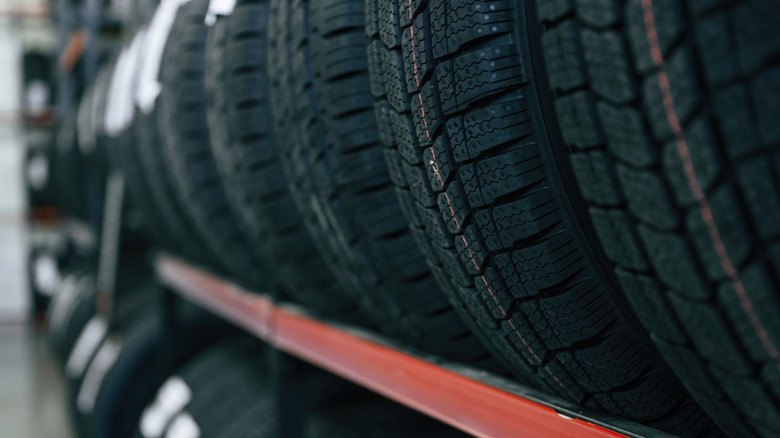
Tires are specialized components, with different features and tread patterns designed to optimize traction based on the road surface. For example, winter tires often have sipes, allowing them to bite into snow better, like a good hiking boot. Meanwhile, racing slicks and semi-slicks are virtually smooth or nearly smooth all the way around, optimizing traction on sticky, smooth track surfaces. Your road tires are generally meant for everything in between — tires that maintain adequate traction over regular pavement, rainy conditions, dangerous potholes filled with whatever loose detritus, and so on. It’s what you drive over every day, and tire manufacturers know this and design their tires accordingly.
But how do they design those tires, exactly? What are the underlying physics behind traction? And what factors influence how a tire behaves? There are actually two main components to discuss here: the design of the tire itself and how that tire is used. Let’s break it down.
How the tire’s design shapes its handling characteristics
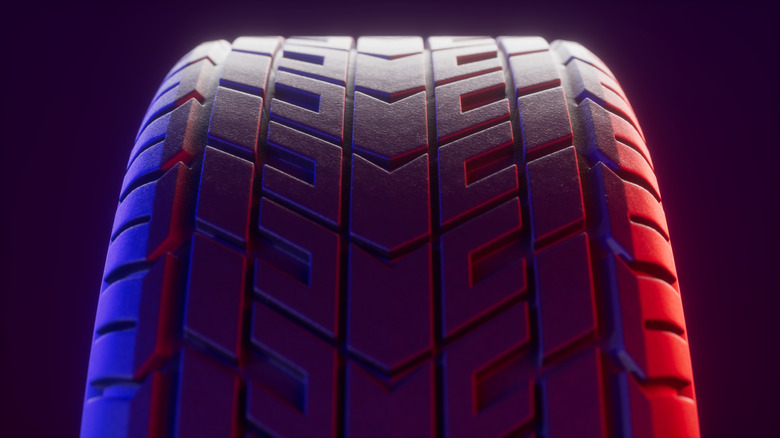
A tire’s performance is dictated by three aspects: the material used in its construction, its tread pattern, and its width.
Firstly, tires aren’t just made of rubber — they’re a combination of several core components including synthetic and metallic filaments. There’s both synthetic and natural rubber, as well as a steel lining running perpendicularly from one sidewall bead to the other. Known as tire cords, these are what defines a tire as a radial, and they’re in the vast majority of tires you see every day. All of these materials work together to provide structure and stiffness.
A tire’s tread acts like an outer shell surrounding the tire carcass — yes, that is the proper term. Modern tires are assembled out of two main components: the carcass and the tread. The two are fitted together and cured inside a machine with the tread pattern on the outside rim. This pattern can provide varying levels of grip depending on the road surface it’s on; virtually every tire manufacturer has its own proprietary tread pattern, so researching what works best for your primary driving surface is vital.
Lastly is the concept of rolling resistance and width. A narrower tire presents less material to the road, which means it’s more efficient. Conversely, a wider tire offers more rolling resistance, so pound-for-pound it’s grippier than a narrow tire, which is why supercars often use such wide tires. Wider tires also lower ground pressure, making them ideal for off-road and agricultural use.
How grip changes depending on tire usage
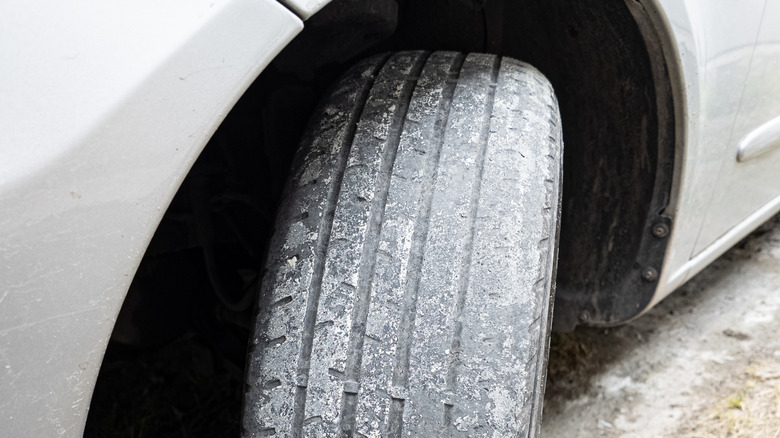
Tire grip isn’t a constant. It fluctuates depending on a number of variables, some of which you can directly control, and others which are mere byproducts of driving. Take tire pressure, for example. This goes back to the concept of rolling resistance; what happens when a tire is flat? The weight of the car squishes it down into the road. The more tire is in contact with the road, the more rolling resistance it has, but it also means the center part of the tread isn’t shaped properly to the road surface and thus may reduce grip.
Another variable to consider, particularly if you’re doing spirited driving or racing on a track, is the tire’s temperature. Cold tires are less pliable than hot tires; that’s just how rubber works. But a road surface isn’t perfectly flat. Look closely and it’s more like a volcanic bed than anything. For the rubber to do its job, it needs to bite into those little crevasses, which is why cold tires are so slow in racing. The hotter a tire gets, the hotter the air inside the tire as well, so your tire’s PSI will go up when it’s hotter which, again, alters handling.
Lastly, there’s tire wear. because the road surface is pitted and designed to excite the rubber material, you’ll experience traction loss as the tire wears out because it can’t dig into all that surface area anymore. That’s not an issue on smooth track surfaces where F1 cars have smooth tires to match, but for regular roads, this means longer braking distances and worse handling in bad weather, among other issues.

Stephan is the sports journalist for the Maple Grove Report.