You Can Preorder Slate Auto’s $25K Electric Pickup Now


Slate Auto’s much-discussed sub-$25K electric truck is one step closer to reality. It’s now available for preorder on the company’s website. However, it could still be a year or two before drivers who preorder a Slate actually get their vehicles.

The base model of the car is priced at $24,950 and there are a number of color and accessory options available. But Car and Driver points out that it’ll end up costing more than $25,000 after factoring in a destination and delivery fee that the company says will be lower than typical. Even so, that fee could still run $1,200 to $1,500.

Even with that fee, however, Slate’s truck would stand apart in a US car market where SUVs rule the land and the average car price rose above $50,000 earlier this year before settling back down, according to Kelley Blue Book. Electric vehicles are typically priced about $5,000 to $7,000 more, making the Slate even more of an anomaly. 

This week, as it opened up preorders for the electric truck, Slate gave more details about its range and capabilities, which have changed since the truck was announced last year. New battery specs have raised the truck’s range from 150 miles per charge to 205. Slate is also banking on the truck’s custom options to draw customers: It’s offering more than 100 wrap colors and different ways to convert the two-seater truck to other builds, even after the vehicle is purchased.

Preordering the Slate truck costs $300 and is nonrefundable. The company says the 180,000 customers who already placed refundable reservations for $50 can put that $50 toward a preorder.  

According to Slate’s website, the first deliveries of the truck will be later this year. But full production of the Slate truck isn’t expected to ramp up completely until sometime in 2027. Slate has raised $1.3 billion and counts Amazon founder Jeff Bezos as one of its investors.

Reviewers have posted new impressions of the Slate

Not everyone is impressed with the concept, or even the pricing of the Slate, with The Wall Street Journal dismissing the company’s updates with the headline, “Will Anyone Buy This Cheap EV Truck With Hand-Crank Windows and No Radio?

But those who’ve actually seen and ridden in the vehicle are singing its praises. Nick Yekikian at Edmunds wrote that the truck “is cute and has real charm in person” and said it has evolved since the last time he saw it. He wrote, “The build quality is generally more solid, and it looks ready to hit the road.” He also posted a video about his experiences with Slate.

Aaron Gold at MotorTrend wrote, after riding in the Slate, that it’s “pretty much what we were expecting, which is a good thing, as we at MotorTrend have high hopes for this cute, inexpensive electric truck.”

David Tracy at The Autopian called driving the truck “insanely fun.” He wrote, “It’s a simple pickup truck, and it’s reasonably cheap. Is it the cheapest? No. Is it the most practical for families? No. But what the Slate has going for it is this: It is, by far, the most soulful new vehicle an American consumer will be able to buy for $25,000.”

At least one other inexpensive EV is in the pipeline

As far as competition for inexpensive electric vehicles, the closest to Slate’s planned price is likely the Chevrolet Bolt at just under $30,000. But other automakers are working on less expensive electric vehicle models. 

Ford is expected to release a low-cost electric truck in the $30,000 range, due out in 2027. And political changes could open up the possibility of Chinese-built EVs, which have their fans in the US but are not widely available due to tariffs and other factors. As Reuters points out, some Chinese EVs are priced below $12,000; for the average cost of an American car, you could buy three or more of the cheapest EVs in China.


Source link

Leave a Reply

Subscribe to Our Newsletter

Get our latest articles delivered straight to your inbox. No spam, we promise.

Recent Reviews


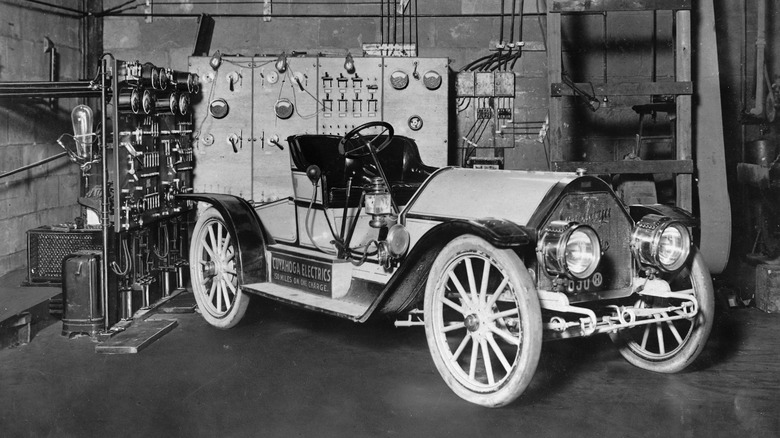
It’s easy to assume that vehicles all had internal combustion engines until very recently. Gasoline and petrol engines were the standard for decades, after all, so why would early vehicles be any different? In reality, the early days of the automobile era were more varied than you might expect, and even featured a range of electric cars. Yes, despite electric vehicles not truly taking off until the 21st century, the first electric vehicles are much older than you think; drivers in the 1900s were going around town in electric vehicles — and where there are EVs, there are charging stations.

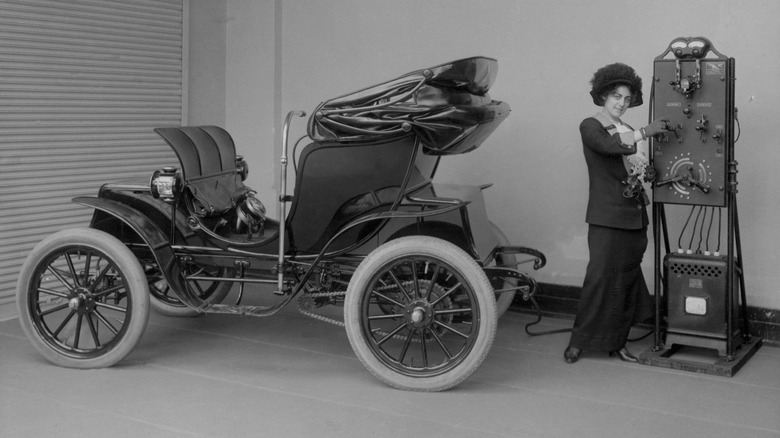
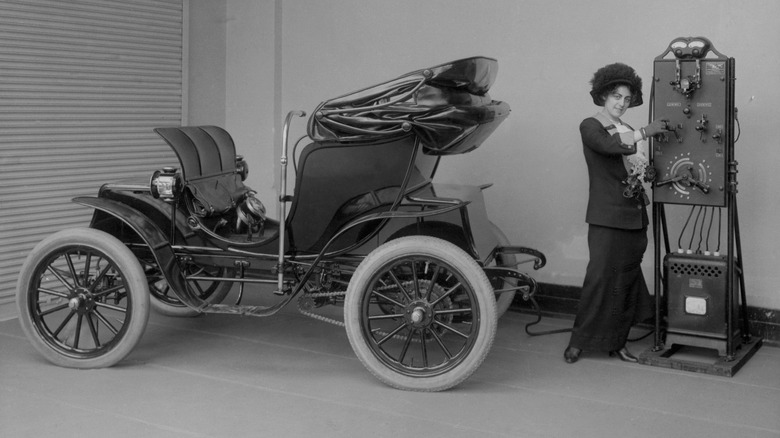
One such station, visible in the image above, was the creation of General Electric. Formally called the mercury arc rectifier, it took alternating current and sent it through vaporized mercury in a glass tube. This converted it into direct current, which powered up the EV’s battery. The woman in the image, who’s charging a Columbia Mark 68 Victrola, is standing at the control panel, which allowed a user to adjust power levels. 

These chargers could be installed everywhere, including homes, businesses, and public parking garages, supporting the electric vehicle boom of the early 20th century. While 21st-century EV chargers have come a long way from where they were, the basic building blocks are all still there, and it’s fascinating to see.

How EV chargers have evolved since the early 20th century

EV charging has changed a lot in some ways — but not in others. At the core of it all is the aforementioned conversion from AC to DC, which still happens when you charge modern EVs at standard charging stations. The difference is that your vehicle’s on-board charger performs the conversion, not the charger. Old EV chargers took between several hours and a day to charge, and current-day units can similarly take a few hours to well over a day from empty, depending on the charger’s speed. Fast chargers, which provide DC directly, can cut this down to around an hour or less.

Old-school and modern EV chargers also differ in how they provide power to the vehicle. Mercury arc rectifiers connected directly to the negative terminal of the lead-acid battery that needed charging. Nowadays, EVs use dedicated charging ports. Battery swapping was also commonplace in the early 1900s, and companies like General Electric tried to cash in by offering to replace drivers’ old, run-down batteries with new ones for a fee. That’s not yet possible with most mainstream EVs, although companies like Stellantis have tried to introduce EV battery swapping with moderate success.

Even if they were unrefined compared to today’s models, early EVs seemed to be on to something. Why, then, did electric cars fail, and how did gasoline end up becoming the predominant power source for vehicles?

What led to the downfall of the original wave of electric cars

EVs were no mere fad in the 1900s and 1910s. According to the 1900 United States census, 1,575 of the 4,192 vehicles sold that year were electric, with the value of these early EVs — $2,873,464 — accounting for more than half of the total market value of $4,899,443. It wasn’t just EVs, either; other sources of propulsion, like steam, were also vying for a foothold in the automobile market. By the 1920s and 1930s, though, these had all been superseded by the internal combustion engine.

One of the major drawbacks of early EVs was the fact that electricity was not yet widely available. Electrical hookups were a rarity outside of major cities, limiting the use of these vehicles. The lead-acid batteries they used also had their fair share of issues. They needed to be inspected, cleaned, and repaired every few days, making them more of an inconvenience than anything. Worse yet, they had poor mileage, and, with chargers possibly out of reach, many likely didn’t want to risk being stranded while out for a drive.

Eventually, price reductions for gas cars and improvements such as electric starters and better reliability prompted buyers and automakers alike to move away from electric rides. Thus, while the best-selling EVs of 2026 show that it’s a good time for EVs, this electric boom plainly isn’t the first of its kind. Early EVs eventually fizzled out, but they still set the stage for our current fascination with electric vehicles.


Source link