
In recent years, 3D printers have become relatively commonplace. And just as there are clever 3D printer projects that can upgrade the home, there are plenty of 3D-printable items that can improve vehicles as well.
Thanks to the fast pace and occasional chaos of everyday life, it can be easy to let a vehicle become messy. Coins, small items, tools, and more can end up all over a car in no time, leaving you to sift through filled cupholders and reach aimlessly underneath seats to find things. This is where the magic of 3D printing can be a huge help, providing guardrails and extra compartments that, with the help of the vehicle owner’s diligence and discipline, can go a long way in preventing these messes from taking hold and becoming uncontrollable in the first place.
If you have a messy car and a 3D printer, you can easily create solutions to help get your vehicle into a neat and tidy condition.
Car trunk cargo holders
As the saying goes, out of sight, out of mind, and this couldn’t be truer for the contents of a vehicle’s trunk. Things can get tossed in and forgotten about in short order, amounting to quite a disorganized mess as they’re thrown around. To prevent this mess from happening, and keep things in the correct spots across various trips, there are organizers and cargo holders by Jonas on MakerWorld. These are relatively simple T-shaped tabs that hold cargo in place with the aid of Velcro or grip tape. This specific model has been printed in two sizes. The smaller variation is specified for lighter cargo like grocery bags, while the larger ones are recommended for larger, heavier items.
As far as how this model has served 3D print enthusiasts so far, it has 121 likes, 317 downloads, and 175 makes with a print star rating of 4.9 out of five. Unsurprisingly, given those stats, the numerous reviews behind it all leaned in the positive direction. Users were more than satisfied with their prints, touting the final products’ durability and effectiveness at keeping things like tool boxes from rolling around while driving. Though the creator recommended ABS for this print, ASA and PETG were mentioned as effective material choices by some of those who printed these holders out.
Velcro car storage pocket
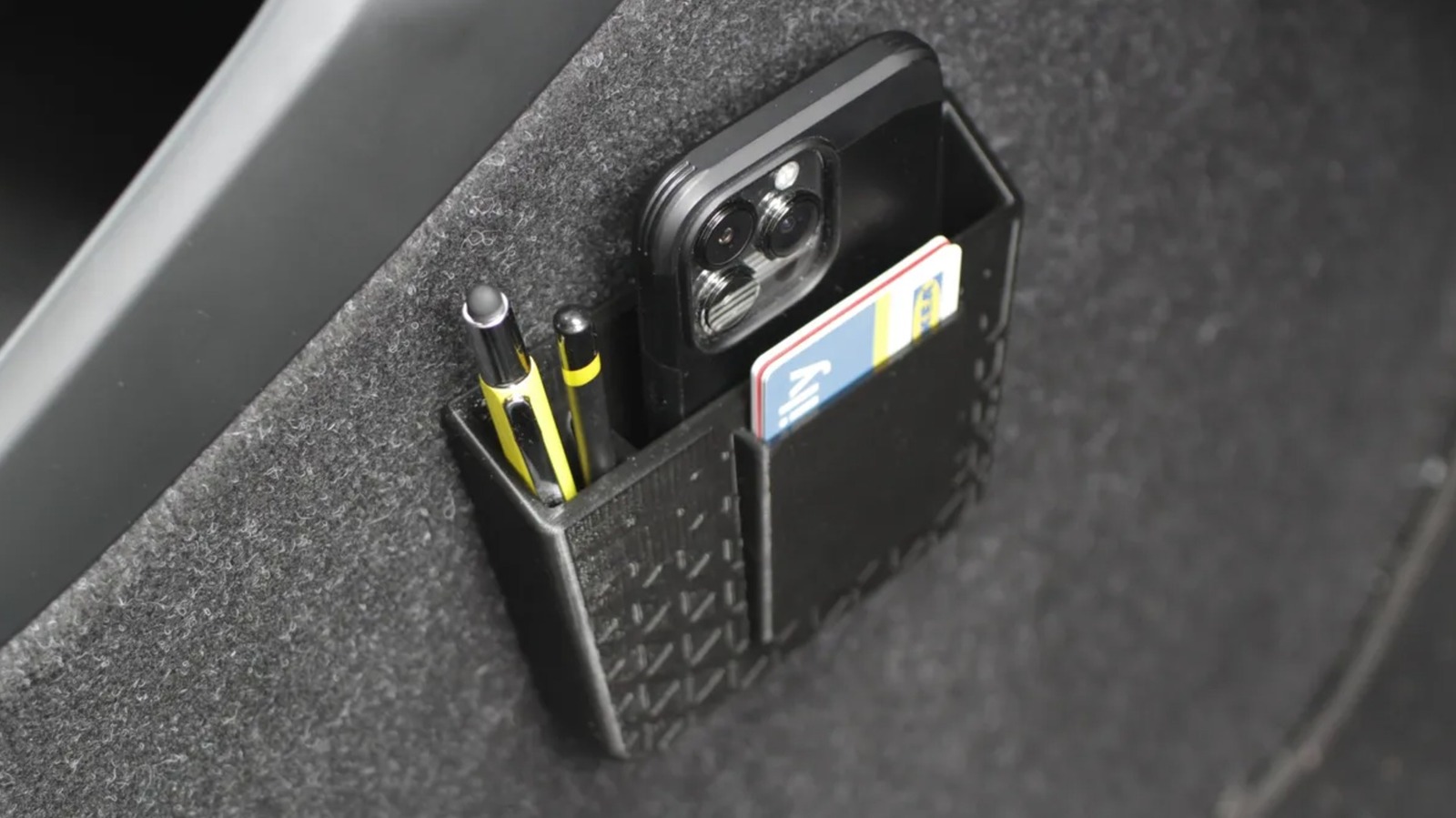
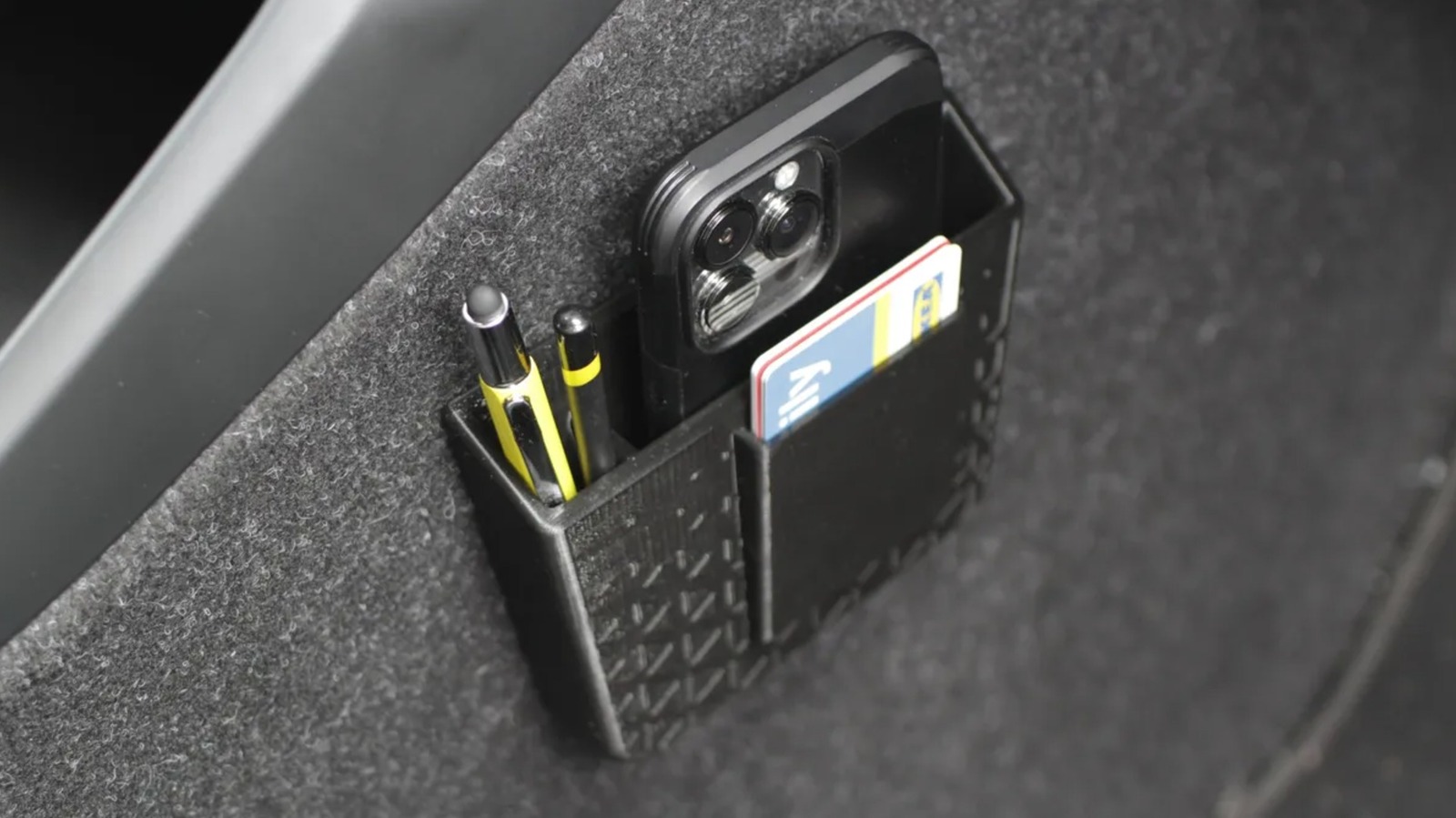
Stable, secure item storage, especially for small things like phones and writing utensils, is limited in a vehicle. Fortunately, this is a problem that a 3D printer can fix in short order. Posted by user PrintedGuy on Printables, the Velcro car organizer pocket is intended to hold onto smaller items while driving. It keeps storage space like cupholders free, and acts as a hub for a few essential items you may need once you’re parked. Once the holder is printed, it’s designed for a strip of Velcro to be stuck to the back, so it can cling to a carpeted portion of a seat or along the edge of the center console, for example.
At the time of publication, this specific Velcro-enhanced car organizer has just under 1,300 likes, 2,300 downloads, and 17 makes, with 14 reviews. The reviews share successful prints that have been installed per the maker’s recommendations without issue. While the poster doesn’t specify which filament users should print this organizer in, those in the reviews mention PLA and PETG as working out just fine for their prints. The post also mentions that it’s compatible with a 10 by 8 centimeter piece of Velcro, though the creator uses three pieces across the back to keep their organizer in place.
Car seat hooks
A large part of car organization is keeping the floor and seats clear so folks can comfortably sit. Frustratingly, these areas are prone to messiness, as they can be covered in items with nowhere else to go. With the aid of a hook, however, something like a bag or a trash container for discarded items can be hung up out of the way, or clothes hangers, umbrellas, and similar hangable items can hold onto them. MakerWorld user, khpa, came up with a series of organization hook designs, which connect to the back of a seat’s headrest. Variants include a shorter hook intended for smaller seats and a thicker version to hold onto heavier loads.
This creation has almost 6,000 downloads, approximately 4,500 prints, and almost 2,700 likes at this point. Digging into the reviews, most printers feel this is an easy print that feels sturdy and is capable of upholding a fair amount of weight. Some even use a pair of hooks for things like tablet holding when kids are sitting in the backseat. It’s specified in the description by the creator that PETG or ABS should be used for this print, as PLA is something you should avoid leaving in a hot car for fear of deformation. The creator also notes that the closed-hole variant is more so intended for permanent use than the one with the open J-hook design.
Cup holder coin holder and sorter
While lots of items are liable to end up strewn about a vehicle’s floor, few are more frequently found than loose change. It’s easy for coins to spill out of passenger pockets and slip through fingers at the drive-thru, hiding under seats and between cushions. To keep them in check, there are car organization-friendly cup holder accessories to buy, or files to 3D print. Designs like MakerWorld user Sairae‘s cup holder organizer seeks to mitigate this issue. This print features multiple slots for different coin sizes, holes for writing utensils, and slots for things like napkins, packs of tissues, paper money, and more.
Looking at the response from MakerWorld users who’ve printed it out — roughly 1,300 with 1,700 individuals having saved it to their accounts and over 1,300 having given it a like — this design is a big winner. The majority of those who printed it had no trouble during the printing process, with it fitting perfectly in their vehicle’s cupholder once it was done. Many also cited the accessibility as a selling point, with it being easy to access coins once they’ve been dropped in. It should be noted that this design is specific to United States coinage and that both the creator and numerous printers seem to agree that PETG is the ideal material for this project.

Stephan is the sports journalist for the Maple Grove Report.