
Leatherman is one of the biggest multi-tool brands. Fans will have their own specific preferences from the range, but Leatherman itself notes that some of its best sellers include the Wave Plus and the Arc, which boast a total of 18 and 20 different tools, respectively. Unfortunately, certain models in their lineup sometimes have to be discontinued.
This isn’t always simply about sales failure. Sometimes the market shifts or technology advances. Other times, a product was only meant to have a limited run. In fact, quite a lot of multi-tools from across the Leatherman range have been discontinued. Some of them, including the Charge Plus, the leather-sheathed Crunch, and the Juice, are immortalized by the Retired Products showcase on the Leatherman website, from which the items on this list have been chosen.
There’s still a chance that certain models could make a comeback at some point in the future. Deciding which ones are worthy of that is a difficult matter, but we’d be very glad to see a new run of these Leatherman classics. Some models were chosen because they had features that wouldn’t really be offered elsewhere in Leatherman’s lineup. Others had a unique idea that didn’t quite pay off at the time, but which could make a real splash if given another chance to.
Leatherman Crunch
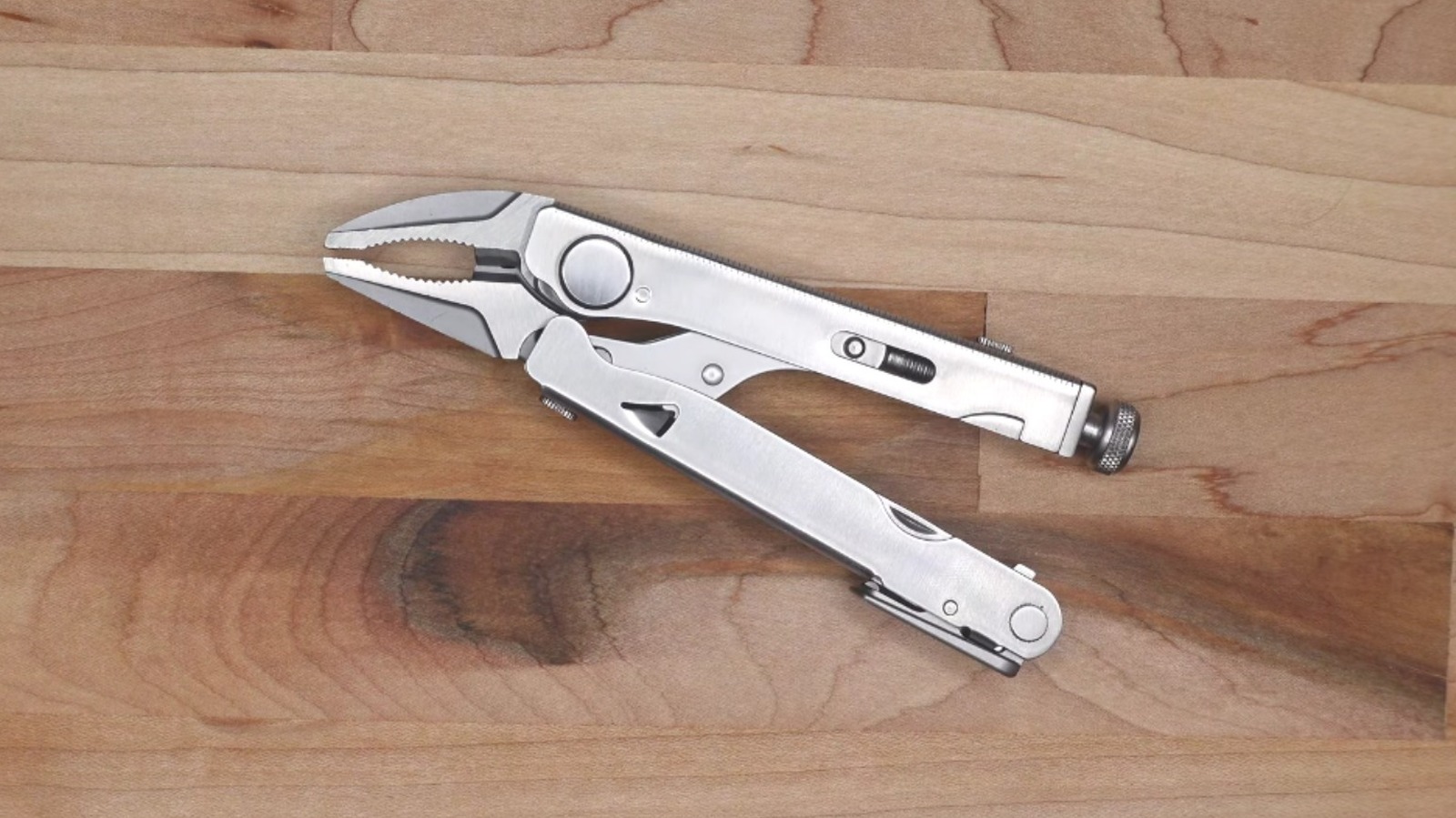
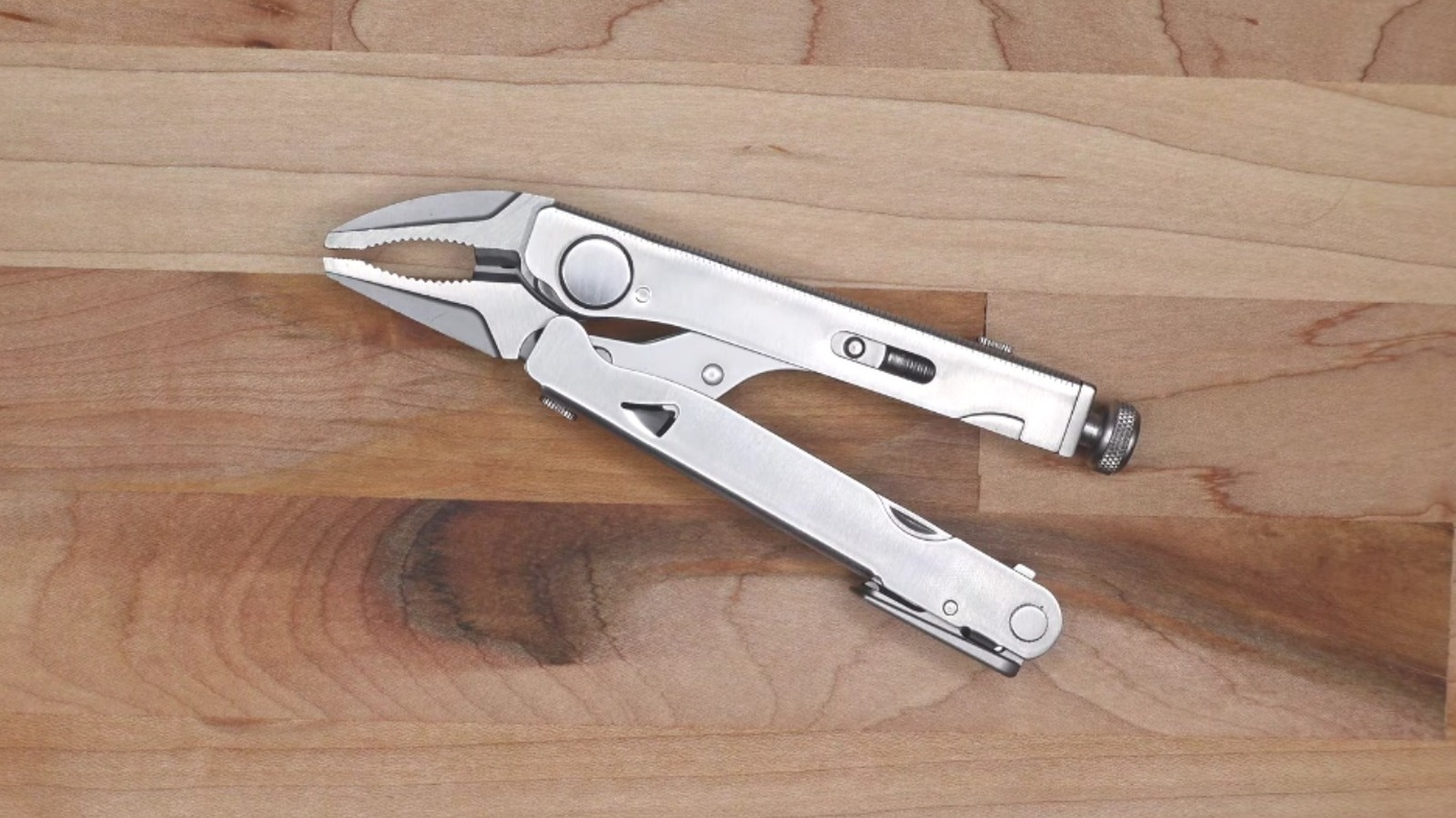
The Leatherman Crunch has some unique traits that weren’t quite fulfilled by other items in the brand’s catalogue, including the standout pliers that can both lock safely and fold away. In a Facebook discussion about the Crunch, users acknowledged the creativity and versatility of its design, though noted that some of its more interesting applications were quite niche. They also mentioned that its unusual shape could potentially make it a bit awkward to work with.
A revised Crunch 2.0 without some of these design limitations could have promise, and would surely be embraced by those who are nostalgic for the model but unwilling to pay the hefty prices second-hand ones can command. With the Crunch, the locking pliers were the centerpiece, and something that can be very difficult to find in a multi-tool. Those who made frequent use of this feature may have found themselves without a suitable alternative.
Actually, Leatherman did temporarily revive this feature in June 2026 as part of its Garage series. These are very limited edition, more experimental takes on Leatherman tools, which are highly sought after. If you were lucky, though, you may have been able to get your hands on a so-called Captain’s Crunch from the revival. It’s not a direct replication of the original, but it is a model that boasts some of its greatest strengths and a sharp Machined Stainless Steel makeover. At a hefty $250, it was quickly snapped up and is now sold out. As with other models on this list, there’s a used multi-tool program that may be able to help if you’re looking for the original.
Leatherman Squirt P4
A common concern with multi-tools is that a single, more heavy-duty item can sometimes be better equipped for a given job. This is based on the fact that multi-tools by their very nature house a dozen or more tools in their slimline cases. This isn’t to say that there aren’t multi-tools that are rugged and hard-wearing, but these words wouldn’t necessarily come to mind on first glance of the Leatherman Squirt.
The P4 variant, in particular, weighs a meager 56.4 grams and is just 2.3 inches long when closed. Perfectly pocket-sized it may be, but the company also emphasizes that it took quite some time to devize a model small and effective enough. According to Leatherman, the P4 stands as “the first miniature pliers multi-tool tough enough to be a Leatherman.” As tiny as it is, it features a generous suite of tools, including a standard Phillips-head screwdriver, an awl, needlenose pliers that work via spring action, and a 420HC Blade.
The Squirt was made from stainless steel and anodized aluminum, meaning that, with care from its owner, it can last for a long time. A popular choice to pack for camping and such, its light weight build and considerable utility make it quite difficult to replace. It left a bit of a hole in the brand’s range (although just a small one), and there’s certainly potential for this little Squirt to be embraced again if it made a return.
Leatherman Free P2 and P4
Another potential multi-tool problem is that the individual tools themselves can be fiddly to access and use. The Leatherman Free family was one creative answer to this long-held issue, as it introducing Leatherman’s Free technology. Leatherman explains that the idea behind Free is to allow operators to smoothly pick out individual tools from the body of the device, which is magnetic. This allows users to click their devices open and shut easily, even with one hand.
The Leatherman ARC, the company’s $249.95 premium multi-tool, fully incorporates this feature, allowing tools to lock in place and be accessed without the need to fully open the device. This was also implemented in the Free P2 and P4 multi-tools, which were also discontinued. The family also includes the Free K2X and K4X, as well as the Free T2. Each has its own specific niche to fulfill, with the latter being a budget option advertised as Leatherman’s smallest multi-tool with Free Technology. The K4X, on the other hand, is a slightly upgraded version of the KX2 with the addition of a pair of spring-loaded scissors.
Meanwhile, the P2 and P4 boasted about twice as many tools with 19 and 21, respectively. Exchanging a knife and serrated knife for a saw in the case of the P4 made one device rather lighter than the other, but left the more fully-featured model with a comparable amount of features to the Arc. A potential return of the P2 and/or P4, then, could fit well in the current Leatherman line-up. As some users discussed in one Reddit thread, such models could offer Free technology at a price point more attractive than the more costly ARC.
Leatherman Blast
Some multi-tools are particularly small and compact, such as the Squirt, while others are considerably larger and more heavy-duty. Manufacturers often want to include as many different functions as possible in one tool in order to emphasize their versatility. The difficult part, though, is ensuring that each part is practical and sturdy enough for its intended use. To help with that, Leatherman tools are often defined by their composition of high-quality metals like stainless steel, titanium, and hard-anodized aluminum.
However, it’s not just about having the sturdiest materials. It’s also important to make sure the tools are designed in a way that makes it comfortable to get the grip you need. The Leatherman Blast had zytel inserts included to ensure users could achieve a tight grip. Essentially, these inserts rounded off the handles and helped to prevent the tools stored inside those handles from hurting the hands of the user. This was not a feature that was exclusive to the Blast, and it is still one that Leatherman fans think fondly of and continue to use today.
Beyond the inserts, the Blast was “loaded with our most requested features,” according to Leatherman. It was also equipped with a 3-inch blade within its 4-inch chassis, pliers capable of doubling the squeezing load over the PST, wire strippers, those spring-loaded scissors seen on some models of the Free, and more. The Blast ticked a lot of boxes for consumers. It’s a real shame that it isn’t manufactured any more.
Leatherman Leap
The Leatherman Leap was designed to help younger users develop their confidence with multi-tools. The user guide for the Leap underscores that it is not intended for children 8 and below, and that children using it should always be supervised by an adult. It’s far from a toy, after all, but a 14-function multi-tool that includes a screwdriver, a Phillips head screwdriver, pliers, and a plain edge 420HC knife. The blade, Leatherman adds, was created to be attached separately by a parent or guardian “when the user is ready for more responsibility.”
The tool was designed to be easier to operate than the standard version, with glass and nylon handles to make it more comfortable to hold. Safety locks incorporated in the handle also give the user more freedom to handle it with less risk. It’s a valuable first multi-tool for users of any age, even if they’re simply not confident with a blade or pliers. Unfortunately, the Leatherman Leap had a defect that made it potentially very dangerous.
As the United States Consumer Product Safety Commission reports, a November 2014 recall concerning the knife affected approximately 8,400 models sold across North America. When added to the device, the lock that held the knife in place was potentially faulty, meaning that when the tool was opened, the blade could release on its own accord. It’s not the most common problem with a Leatherman multi-tool, but one that would be essential to resolve if the Leap concept ever did see a re-release. If Leatherman were to return to the drawing board with it, though, the more accessible and safety-friendly Leap could find a new audience.

Stephan is the sports journalist for the Maple Grove Report.