
Follow ZDNET: Add us as a preferred source on Google
ZDNET’s key takeaways
- Android Auto has several advantages over your car’s own system.
- Not only does it update often, but it has access to far more apps.
- It also makes setup far easier if you’re switching between cars.
In-car infotainment screens are getting bigger than ever, and most modern vehicles have the equivalent of a tablet built into the dashboard. While some manufacturers’ systems run on Android Automotive, or what’s called “Google built-in,” most have their own software specific to that automaker. The majority of that built-in software is walled off and limited.
Also: I’ve used Android Auto with Gemini for 2 months now – it’s transformed my drives in 4 ways
Android Automotive is a robust software platform that takes advantage of the Android ecosystem and functions much like (or even better than) Android Auto. If your car runs on Android Automotive, there’s not a lot to gain by switching to Android Auto. But if you’re using one of the other built-in systems, you’re missing out on a lot.
Here’s a look at a few reasons Android Auto far surpasses your car’s built-in system.
1. Android Auto gets more apps
Perhaps the biggest benefit of using Android Auto over your car’s built-in system is that you get access to many more apps.
Also: 5 Android Auto mistakes you’re probably making – and how to fix them
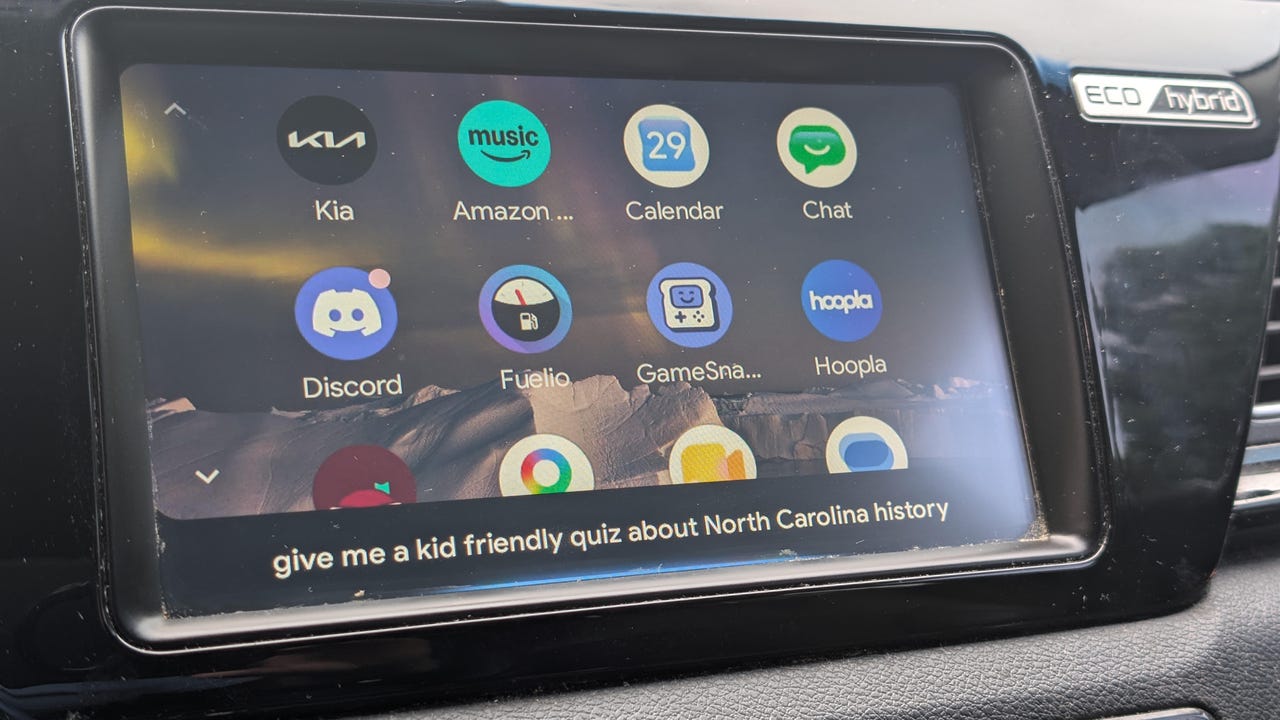
Most car infotainment systems have a limited app catalog. You have apps for things like music, navigation, and communication, but you usually don’t get more than one for each category. Android Auto gets you access to multiple options within each category and even access to upgrades like YouTube and widgets for weather, smart home controls, and a calendar.
2. Android Auto gets more updates
Largely, your vehicle’s built-in infotainment system is going to stay the same as the day you bought it.
Many vehicles might get OTA upgrades for small things like bug fixes or performance improvements, but, especially for older vehicles, you don’t often see entirely new features or interface redesigns.
Also: 4 Android Auto apps I highly recommend for your next road trip – beyond Maps and Spotify
Not only is Android Auto going to get new apps, but it will also get new features, upgrades like Gemini integration, and more.
3. Android Auto works across different vehicles
If you primarily use your car’s built-in system, you’ll be lost when you rent a car on a trip or drive someone else’s car. If you use Android Auto, you don’t need to learn a new system every time.
Also: I’ve used Android Auto with Gemini for 2 months now – it’s transformed my drives in 4 ways
You just connect, and the system is personalized to your apps and information. This is actually a bit of a privacy win, too, in an age where cars are collecting more data on drivers than ever. With Android Auto, all of your personal information lives on your phone.
4. Android Auto requires almost no setup
Built-in systems often require a bit of setup, including logging in to all of your accounts and typing your information on your car’s screen. Android Auto connects and uses your existing login information on your phone. You have virtually no setup with Android Auto, meaning you have access to your apps, your media, your addresses, and more almost instantly.
Also: How I keep my phone cool while running Android Auto – 8 simple yet effective tips
5. Android Auto has much better voice control with Gemini
I avoided voice controls for a long time in my own car because it just wasn’t reliable.
Also: 4 Android Auto developer settings that make driving so much easier – how to enable them
With the introduction of Gemini, though, Android Auto’s voice controls far surpass my car’s built-in controls, both in reliability and usefulness. In fact, Gemini is probably my favorite addition to Android Auto in a long time, and it’s completely changed my drives.