
The Jeep Grand Cherokee is the poster child of American SUVs. It quite literally burst onto the scene in 1992 at that year’s North American International Auto Show, when it came crashing through the glass walls of Cobo Hall in Detroit to show the audience what it was all about. Since then, the Grand Cherokee has been the more sensible side of the Jeep coin, with the Wrangler occupying the other. Its generational evolutions have helped it retain its place in the American SUV hierarchy, but its most recent transformation has brought with it an engine that is as strange as it is impressive.
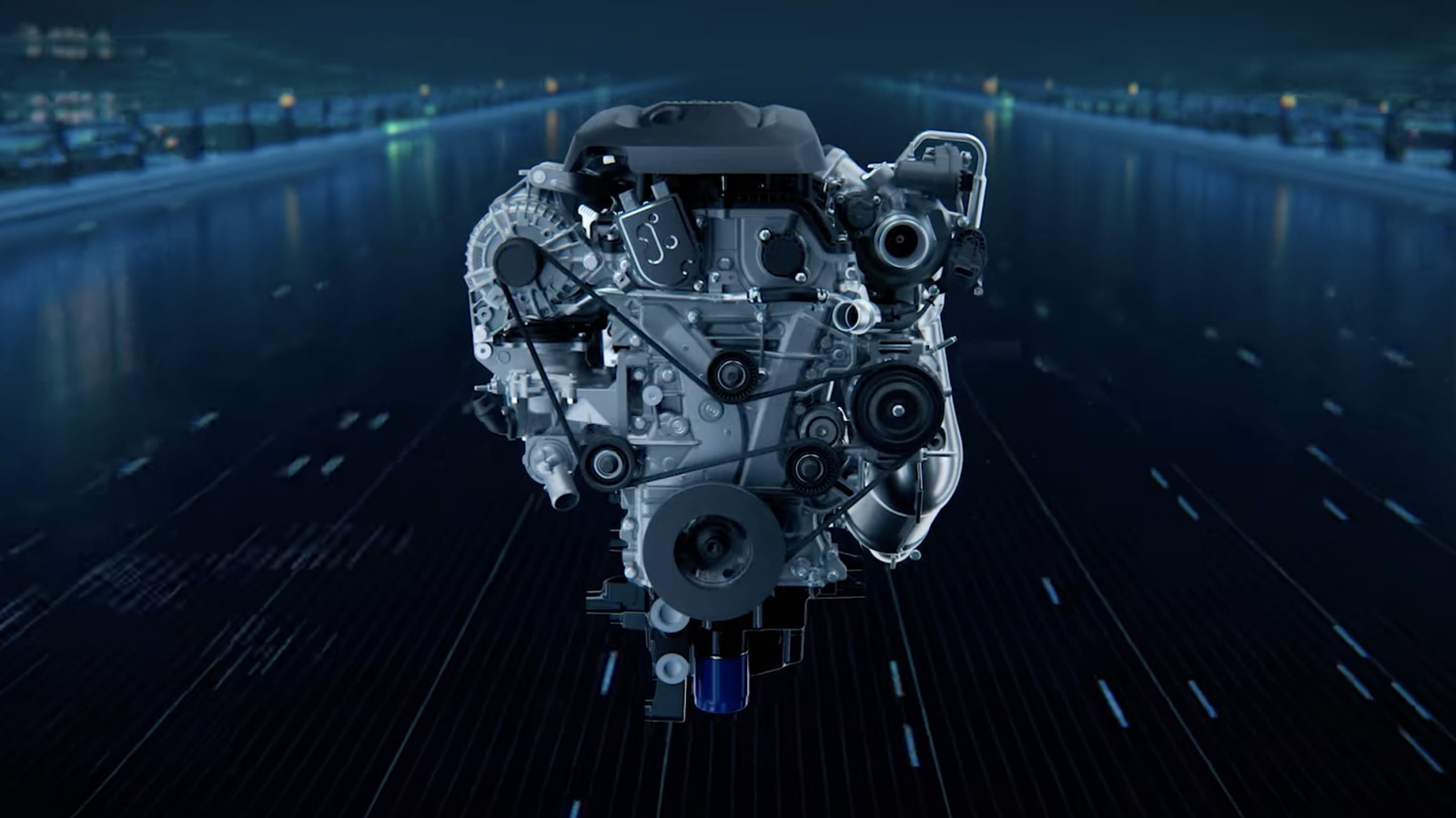
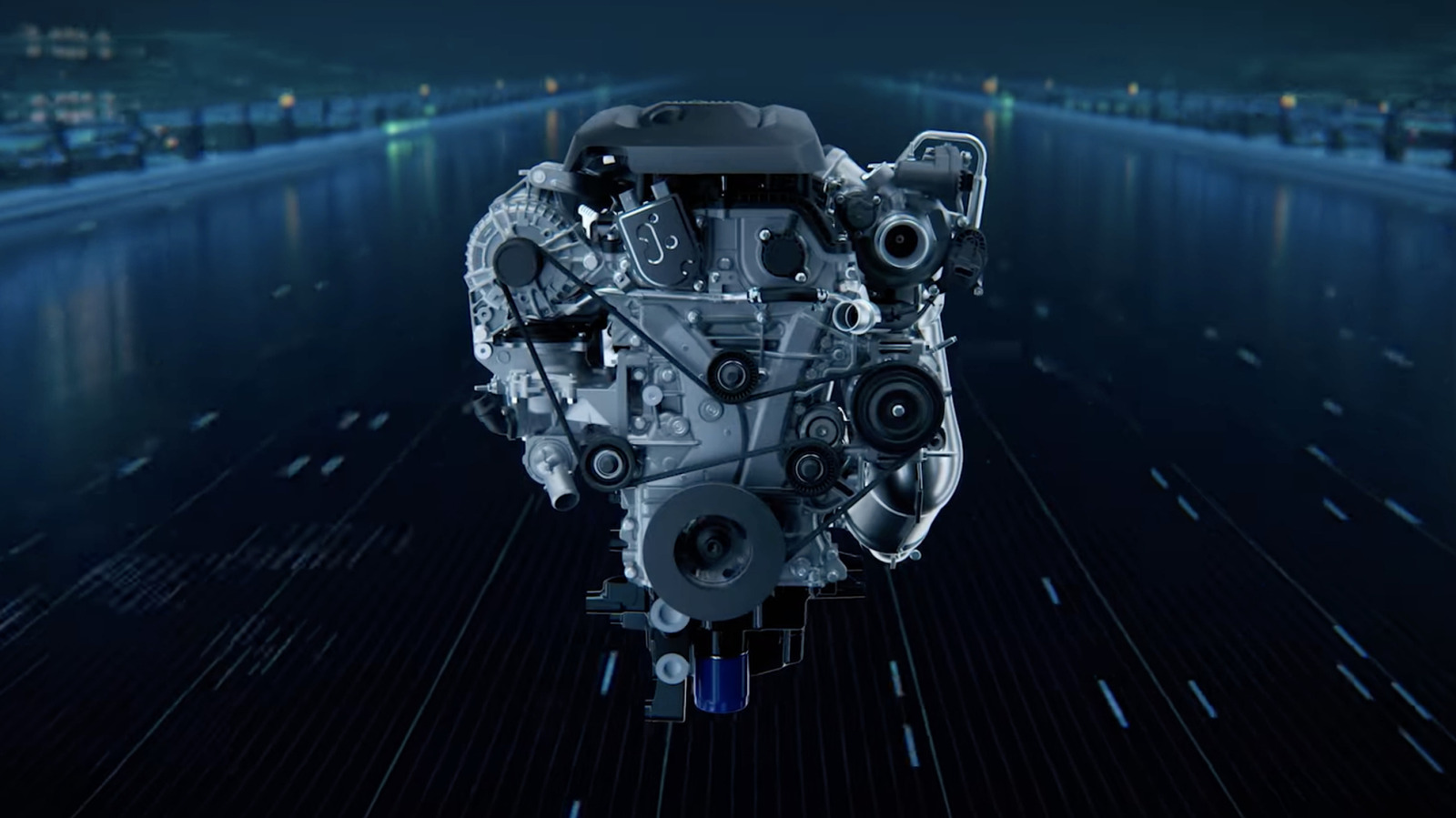
On October 28th 2025, Jeep unveiled the next-generation updates coming to the 2026 Grand Cherokee. Among those updates was its new powerplant, Stellantis’s Hurricane 4. The industry has gravitated towards ever more complex and strange engine designs in the name of efficiency, and the Hurricane 4 is one of the most impressive examples of this new breed. The most surface-level explanation for the Hurricane 4 is that it is an inline four-cylinder with a turbocharger. It puts out an impressive 324 horsepower at 6,000 rpm. However, upon closer inspection, the Hurricane 4 reveals its complexity, and there’s a lot to digest about this engine. Every nook and cranny is stuffed with tech that makes the Hurricane 4 a powerful, efficient, and complicated power plant.
It uses turbulent jet ignition
If you really boil it down, the function of an engine is all about mastering tiny explosions. There are countless ratios of fuel and air to mix and different ways to mix them, all in the name of harnessing the power of controlled combustion. To understand what makes the Hurricane 4’s turbulent jet ignition (TJI) system impressive, we first need to understand the process of ignition. In most combustion engines, the cylinder is filled with a spray of fuel, which is ignited from a single point. The fuel enters wet and is ignited and burned entirely in the cylinder chamber, then pushing the piston.
With turbulent jet ignition, though, the process is very different, and it is often referred to as pre- chamber ignition. In the Hurricane 4, during the compression stroke, a small, thimble-sized copper chamber is filled with fuel vapor before it enters the main cylinder. A port injector ignites this fuel inside the tiny chamber, then sprays it into the main cylinder chamber through a nine-hole array of ports. These jets of already-burning fuel then ignite the waiting fuel in the main chamber more quickly and evenly. Combustion happens faster and more efficiently, reducing engine knock and producing cleaner exhaust, thanks to the port injector’s fewer soot particles compared to traditional spark plugs. This clever feature reaps big benefits for the next generation of Grand Cherokee.
It runs on the Miller cycle
It’s easy to forget how complicated the hearts of our cars are in the modern day, and how different one engine may be from the next in terms of functional philosophy. Every little operation has been adjusted and tinkered with by a long line of engineers who thought their way was better, and the result is a supremely colorful diversity in how each engine does its job. We know that nearly all cars function on a four-stroke cycle made up of induction, compression, ignition, and exhaust. However, there are subgroups of cycle styles in the four-stroke realm, such as the Otto and Atkinson cycles. Most cars run on the Otto cycle, which is characterized by closing the intake valve when the piston reaches full extension during the compression cycle.
On rare occasions, automakers adopt what’s called the Miller cycle, and the Hurricane 4 is one such example. In this version, the intake valve closes early, before the piston reaches full extension on the intake stroke. This early closure of the intake valve reduces the time available to fill the cylinder, requiring a more open throttle. A wider throttle opening allows easier air intake into the engine, reducing pumping losses. This system is complemented by the aforementioned TJI, which allows the engine to run at a relatively high compression ratio of 12:1.
It has great BFSC
The Hurricane 4 is impressive in many ways, from its plethora of complicated technologies to its high power output relative to size, but one of its finest achievements is its efficiency. The American automotive industry has come a long way from enormous and simple V8s with insatiable appetites for fuel. The quest for efficiency has led us to engines like the Hurricane 4 that are smaller and infinitely more complex, but undeniably better for gas mileage.
One of the metrics championed for efficiency is brake-specific fuel consumption (BSFC). BSFC is calculated by dividing the pounds of fuel used per hour by horsepower output, which means it is a ratio (or percentage) of how much fuel is going in versus how much power is produced. The lower the number, the higher the power output while retaining a low fuel consumption. The Hurricane 4 operates at 40.5% BSFC, which is extremely efficient.
To understand just how impressive this is, we can put it in context with some of Jeep’s other current engines. Compared to the 2-liter turbo engine in the Wrangler, the Hurricane 4 makes 20% more power with 10% less fuel. Put it against the Grand Cherokee’s 3.6-liter Pentastar V6, and the Hurricane 4 beats it out with 31 more horsepower, 72 more lb-ft of torque, 1 more combined mpg. The Hurricane 4 is a featherweight engine with heavyweight power.
It uses dual spark plugs and fuel injectors
Returning to the cylinder chambers, we can examine yet another advanced apparatus that helps the Hurricane 4 achieve its impressive efficiency. The engine is fitted with both a dual-spark-plug system and a dual-fuel-injector system. Sometimes, more is just better, and that’s exactly the case when it comes to getting fuel into your cylinders and igniting it.
We can return to the TJI pre-chamber to understand the engine’s dual spark plug loadout. The small copper pre-ignition chamber has a spark plug that is always firing, which is complemented by another spark plug in the cylinder itself. The frequency at which they fire can be adjusted to better suit power demand and efficiency, and having the extra plug-in cylinder ensures no fuel goes unburned. As for the injectors, the Hurricane 4 uses a combination of direct injection and port injection. Both have the same function in filling the cylinder with fuel, but their locations, in the combustion chamber and the intake runner, allow the engine greater flexibility in exactly how the fuel arrives at the combustion chamber. Each injector has its strong areas, which can be used accordingly. Direct injection, for example, is great for late-combustion situations, such as when you first start up, while port injection shines in lower-pressure situations like idling. Combining the two gives the engine the benefits of both without the drawbacks.
It uses a variable geometry turbocharger
As is common with many of today’s economy engines, the Hurricane 4 combines a low cylinder count with the power of a turbocharger. Turbos are typically associated with performance cars, so why have automakers adopted them to help with gas mileage? Take another look at how turbos work, and it starts to make sense. The use of exhaust gases to spool is an effective recycling method, and high-pressure air enables engines to produce more power while remaining compact. However, the time it takes to spool before boost, what’s called turbo lag, delays the benefit and is the blaring Achilles heel of the system.
However, as we’ve seen before, the Hurricane 4 manages to incorporate the benefits of this technology without its drawbacks. The solution here is a variable-geometry turbocharger, or VGT. The core principle of the VGT remains the same in a quest for boost, but some clever architecture helps it eliminate turbo lag almost completely. The secret is inside the shell. Inside the chamber, there is an array of vanes like shark fins, whose angles can be adjusted to modify the exhaust flow within the turbine. This allows the turbine to spool and provide boost effectively across the rev range regardless of power inputs, giving it a predictable and reliable torque curve.

Stephan is the sports journalist for the Maple Grove Report.