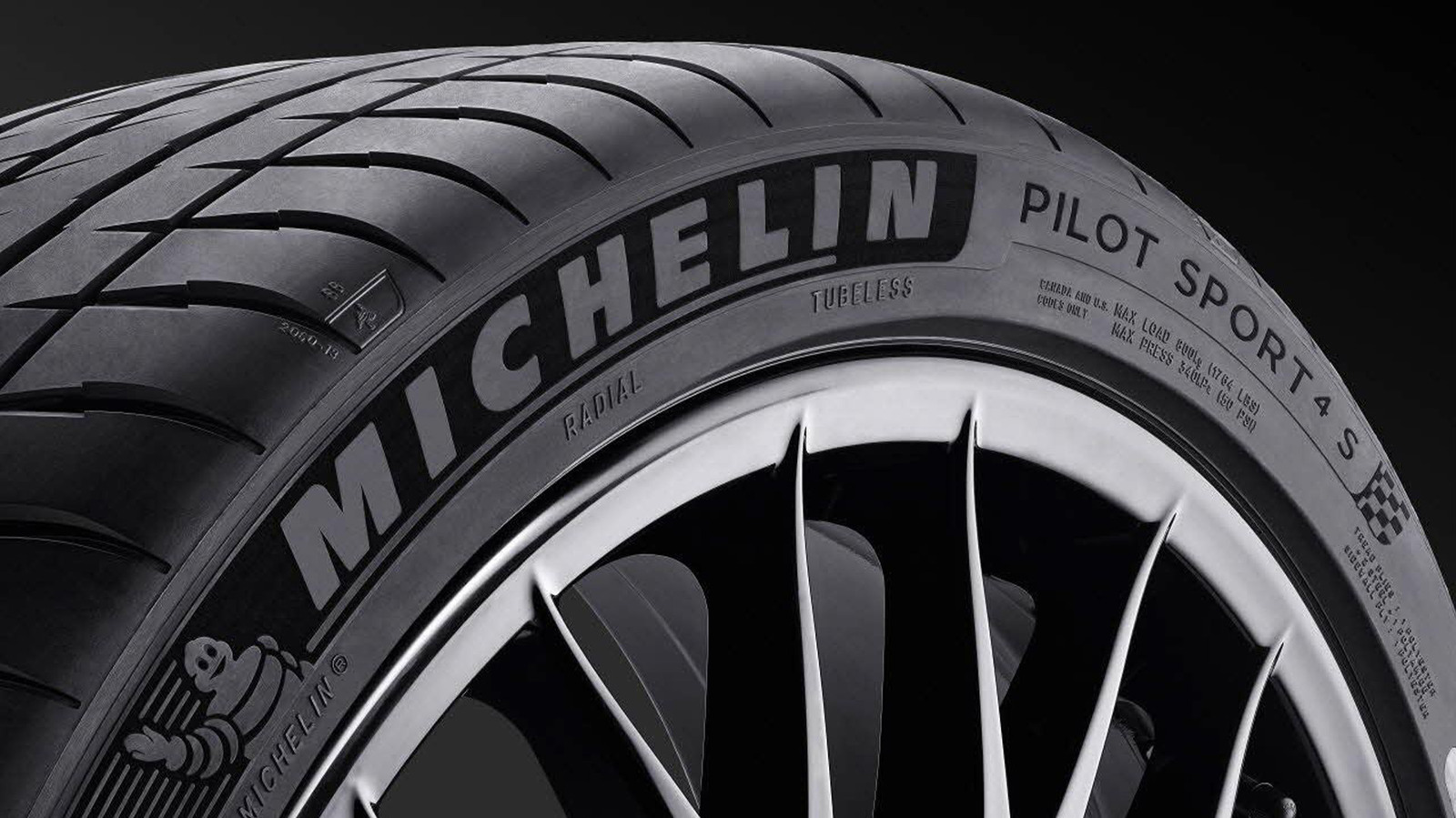

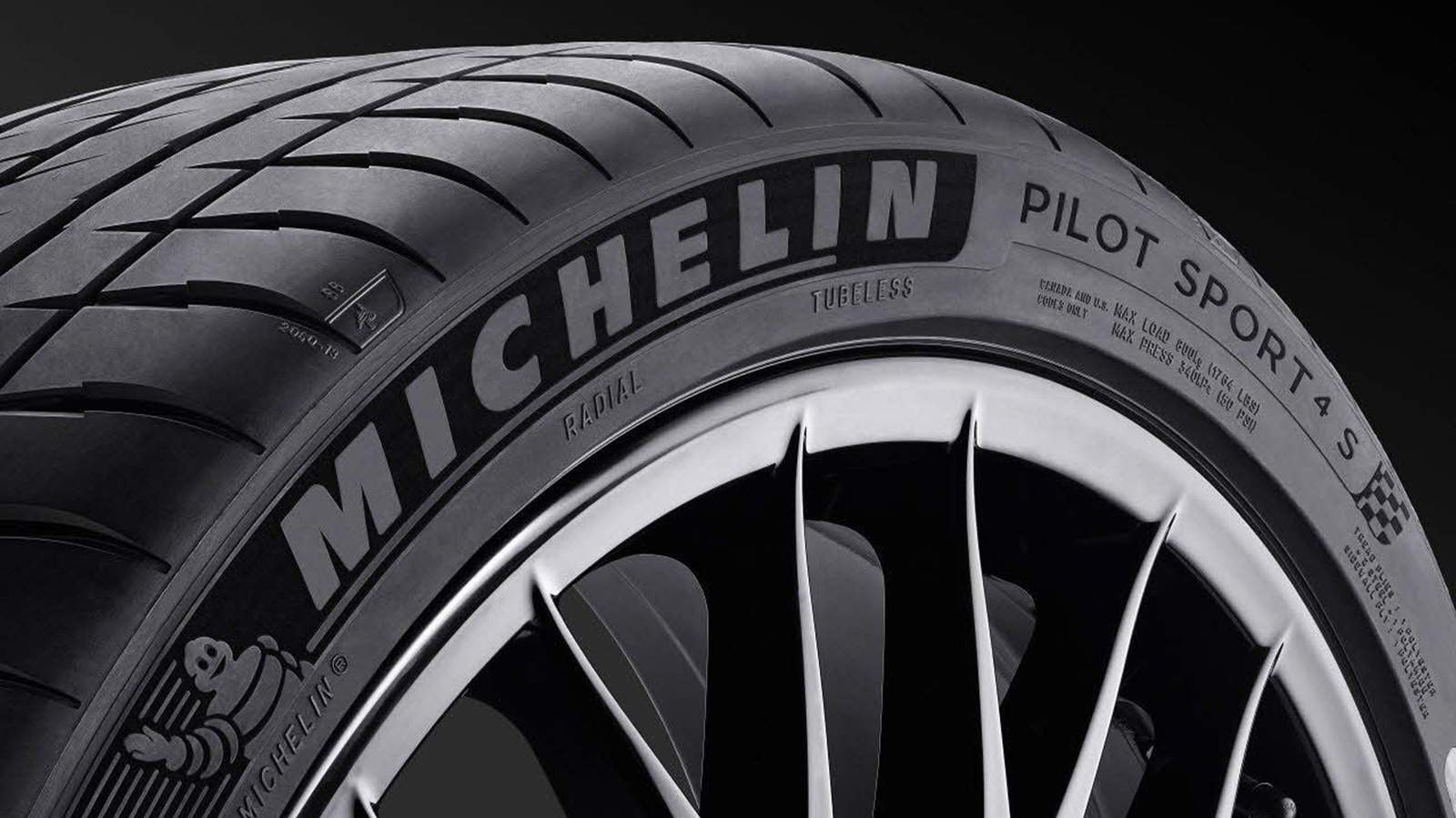
The Michelin Pilot Sport 4S is one of the most popular max performance summer tires on the market. It’s pretty easy to see why. They’re available at most popular tire shopping centers like Discount Tire, Tire Rack, and Costco, although Costco sometimes has the regular Michelin Pilot Sport 4, which is very similar. They also have a sterling reputation, with both customers and pro reviewers alike praising the tire for its excellent traction in both dry and wet conditions along with its decent comfort and treadwear. They’re a bit expensive, depending on where you get them, but these are the kinds of tires you put on sports cars, so it’s not terribly unexpected.
It has a 300 UTQG rating. UTQG is a rating system that judges how long a tire will last based on how long it takes to wear down versus a standard 100 UTQG score, which is tested on a 7,200-mile track. Per Michelin, the tire’s warranty lasts 30,000 miles, which is right around where 300 UTQG is. That’s not nearly as long as the longest-lasting car tires, but it’s decent for a summer tire.
So, if you’re interested in a max-performance summer tire but don’t want to go with the most popular option, what alternatives are there to the Michelin Pilot Sport 4S? We’re glad you asked, because this list highlights some of the best alternatives on the market. They’re all max-performance summer tires and will fill the same use case.
Kumho Ecsta Sport S (PS72)
The Kumho Ecsta Sport S, also known as the PS72, is a reasonable alternative to the Michelin Pilot Sport 4S. It is one of Kumho’s most premium summer tires and is made for gas, hybrid, and EV vehicles. It comes in a metric ton of sizes and is roughly $50 to $100 less expensive than the 4S tires, making it a decent budget alternative. This is also one of Kumho’s newest tires, having just hit the market within the last couple of years. As such, only a handful of reviews exist, and so far, people seem to like what they’re seeing in terms of price versus performance.
Per Tyre Reviews and Tire Rack, the tire scores on par or better than the Pilot Sport 4S in most categories. Tire Rack says the Kumho tire is a touch more comfortable, a touch better with wet traction, and roughly equal on dry traction. Tyre Reviews says the Pilot Sport 4S is more comfortable and better with dry traction, but slightly worse with wet grip. So, between the two, it paints a pretty good picture. This tire will trade blows with the Pilot Sports at a lower cost and look good doing it.
The only downside to the Kumho Ecsta Sport S is its UTQG rating, which sits at 260. That’s not too bad for a summer tire, but it is less than the Michelin Pilot Sport 4S, which means the tire will wear out faster. It does have the same 30,000-mile, six-year warranty as the Michelins, though.
Continental ExtremeContact Sport 02
Continental ExtremeContact Sport 02 is another popular tire in the max performance summer tire segment. It’s also a newer tire, with Continental releasing it in 2022, and with it came some improvements over prior summer tires from the brand. It comes in quite a lot of sizes and also has some of the best longevity ratings of any summer tire on the list at 340 UTQG. It still has the same six-year, 30,000-mile warranty as most other max-performance summer tires, but the higher rating means it should do a better job of lasting longer, assuming you don’t drive like a maniac.
The ExtremeContact Sport 02 is designed for sports cars, performance cars, and muscle cars, making a decent option for that Ford Mustang or Chevy Corvette in your garage. Continental is often compared to Michelin, and while Michelin usually comes out on top, Continental still makes a solid tire. Per Tire Rack, Continental at least matched its cross-town rival’s Pilot Sport 4S, with comparable wet and dry traction and comfort. Since the UTQG rating is higher, the Continentals should last a little longer, making them a very good alternative to the Michelins.
In terms of price, it varies depending on wheel size, but it’s in the same ballpark, give or take around $30 per tire. So, what you’re getting here is a tire that should go toe-to-toe with the Pilot Sport 4S at around the same price. You can choose whichever one you like more.
Pirelli P Zero PZ5
The Pirelli P Zero PZ5 tire has an interesting story. The tire is relatively new, having been released in 2025, at least in North America. It’s the latest max-performance summer tire from the brand. It was also designed with the help of AI. The company used virtual prototype testing, which allowed Pirelli to optimize the tire more quickly, thus cutting development time. It doesn’t have a mileage warranty, but you do get a six-year warranty that replaces the tire if the tread dips below 2/32 of an inch too early.
It’s a very new tire, so there aren’t a ton of customer reviews yet. However, pro reviews agree that this is a pretty excellent tire. It does well with dry grip, wet grip, handling, and comfort. Tyre Review is pretty confident that the traction and comfort are superior to the Michelin Pilot Sport 4S, and that the tire pretty much outperforms it in every way, which isn’t normally how comparisons go between Michelin and Pirelli. You’ll pay for the privilege, though, as the Pirelli P Zero PZ5 is approximately $25 to $50 more expensive per tire than the Michelins.
If you want a tire that performs better, go with this one. The lack of a mileage warranty does give us some pause, but it sports the same 300 UTQG treadwear rating, so it should last about as long. Otherwise, it’s a pretty simple equation. You pay more and get a tire with superior specs.
Michelin Pilot Super Sport
The Michelin Pilot Sport 4S isn’t the only popular max-performance summer tire in the brand’s critically acclaimed lineup. The Michelin Pilot Super Sport is also quite popular, garnering thousands of reviews across the various websites where it’s sold. Pro reviewers are sweet on the tire as well, and it is often compared with its more popular stablemate. Michelin proudly brags that these are original equipment on several big-name sports cars, including the Ferrari 599 GTO, and fit well on other sports cars and performance sedans. It comes with Michelin’s typical six-year, 30,000-mile warranty for its max performance summer tires.
In terms of comparison to the Pilot Sport 4S, the two are almost identical, depending on who you ask. Its Tire Rack scores are virtually identical, and Tyre Review says that the dry grip is better on the Pilot 4S, but that treadwear is much better on the Super Sport. All of its other stats are basically the same. The prices are about the same, give or take about $10 per tire for the same size tire, depending on where you buy it.
While the review metrics are largely the same, there are a couple of reasons why you’d choose one over the other. The Pilot Sport 4S has slightly better dry traction, but the treadwear is slightly more reliable on the Super Sport. Pick your poison or flip a coin. There are no wrong answers here.
Hankook Ventus Evo
The Hankook Ventus Evo is Hankook’s highest-rated max-performance summer tire. Like most tire brands, Hankook is compared to Michelin all the time, and Michelin usually comes out on top. The Ventus Evo does better than most tires in this comparison. It sports a 340 UTQG rating, which means its tread should last a little longer than the Pilot Sport 4S. The brand released the tire in 2025 and is the spiritual successor to the Ventus S1 Evo 2 and S1 Evo 3. So, while those tires would make great fits for the list, we’ll focus our efforts on the newest tire in Hankook’s lineup.
The Michelins and Hankooks trade blows pretty well when comparing scores on Tyre Review. The Pilot Sport 4S has better dry grip and general road feedback and handling scores from the review aggregate website, while the Hankook wins in wet grip and comfort. Both tires have similarly mediocre treadwear, according to users anyway, so you can’t select a winner there either way. Ultimately, like most tires on the list, it’s a coin flip. If you want a slightly better ride quality and better wet handling, get the Hankooks. If it’s dry traction and handling you want, the Pilot Sport 4S is still better.
Hankook matches the Michelins in other areas too, including the same six-year, 30,000-mile warranty. In terms of price, Hankook tires are roughly the same when comparing similar tire sizes, though prices may vary by retailer.
Michelin Pilot Sport 5
It wouldn’t be a list of the best alternatives if we didn’t mention the Pilot Sport 4S’ successor, the Michelin Pilot Sport 5. Despite being a newer tire, it has thousands of customer reviews. This makes sense. The Pilot Sport 4S launched in 2017, and the Pilot Sport 5 was released in 2022. Neither tire is brand-new like some others on the list, so there’s plenty of data available on both. They have some similarities out of the gate, like the same 30,000-mile warranty. However, the Pilot Sport 5 has a 340 UTGQ rating, which means its tread should stand the test of time a little better.
Other than that, the Michelin Pilot Sport 5 appears to be the superior tire in almost every respect. Tyre Reviews gives it a better wet grip, comfort, and treadwear score, with dry grip and road feedback being the only two metrics where the Pilot Sport 4S still reigns supreme. Despite that, reviews still say that the dry grip on this tire is subjectively better, which is a clear indication on why you should never rely solely on numbers when judging a tire.
In short, the Pilot Sport 5 is basically just a newer Pilot Sport 4S. The only downside is the price. The newer tires are about $20 more expensive per tire, or $80 for a full set. That’s not too bad, but if you’re looking for value, the Sport 5 is essentially the same value as the Sport 4S.
Goodyear Eagle F1 Asymmetric 6
The Goodyear Eagle F1 Asymmetric 6 is one of the best max performance summer tires that money can buy, and there’s a reason it’s on the list of alternatives for one of the most popular tires in the same segment. The tire had positive reviews right out of the gate, with pro reviewers citing its excellent handling, traction, and comfort scores. These are backed up by the few user reviews we were able to find. The tire has been around since 2021, but was only just released in North America in spring 2025. It’s also one of the most comfortable summer tires on the market.
Pound for pound, the Asymmetric 6 tires match up with the Pilot Sport 4S quite well, either matching or exceeding it in virtually every category. Tire Rack’s ratings are more generous than Tyre Reviews here, but in general, they agree that the Eagle F1s outperform the Sport 4S in most areas, with dry traction being the only metric where the Pilot Sport 4S still rated higher, albeit only slightly. This brand-new tire is rated as the second-best max performance summer tire on Tyre Reviews’ entire website, and it’s still only scores slightly better than the Pilot Sport 4S, so you can see how tight the competition is here.
The tread warranty should also be just as good. Goodyear doesn’t list a mileage limit on the warranty, but it offers free replacements if the tire wears to 2/32 inches or less too early, up to six years.
Continental SportContact 7
The Continental SportContact 7 has been around for a while, having first been released in 2021. It’s one of the brand’s best tires, and one generally of note when talking about what Continental offers across its various brands. It’s also a darling with pro reviewers, with many stating that tires are sticky, pleasant to drive, and have enough lateral grip to drive aggressively if you want to. The biggest downside to these tires is that they have the lowest UTQG rating on the list at 240. However, the brand offers warranties similar to those of Pirelli and Goodyear, covering the tire for up to six years.
Compared with the Pilot Sport 4S, these do quite well. Most review aggregate websites say that the wet grip is demonstrably better than the Pilot Sport 4S, but it falls ever so slightly short in dry grip. Comfort, wear, and handling are all largely even, although the Pilot Sport 4S appears to be a little more comfortable according to most direct comparisons. All told, these two tires are virtually even, so you need to choose if you want better wet grip, or slightly better dry grip, and more comfort. The choice is yours.
The other thing that Continental has going for it with this tire is the price. The Pilot Sport 4S is roughly $265 per tire when getting a 225/45R18 and the same size for the Continental is $40 less expensive, give or take. So, it performs nearly as well and costs less.
How did we rank these tires?
When you get into the upper echelon of max-performance summer tires, it really is a game of inches. The Michelin Pilot Sport 4S has been toward the top of that leaderboard for a very long time, and as such, most other tires in this segment are usually right around on par. For this list, we used Tyre Reviews and Tire Rack to find tires that shared that upper leaderboard placement and then compared them as best as we could with pro reviews, review metrics from Tire Rack and Tyre Reviews, and customer reviews.
From there, we removed many repetitive tire choices. For example, the Michelin Pilot Sport PS2 and Pilot 3 are available, but we felt adding too many of the same tire maker wouldn’t be productive. Since many of these tires are part of the same overall product lineup (like the Ventus Evo 2 and Evo 3), we chose the newest tires in each lineup for direct comparisons.
Finally, the list is lightly ranked. You could probably shuffle all the tires around to one or two spots and it would still be accurate, but for ranking, we looked at how each tire performed compared to the Pilot 4S Pro, along with warranty, price, and other metrics. It’s not a set-in-stone ranking list, but we think the SportsContact 7 is a better alternative than the Kumho Ecsta Sport S, so one is at the bottom of the list, and the other is at the top.

Stephan is the sports journalist for the Maple Grove Report.