

Maple Grove Daily

Maple Grove Daily

Subscribe to Our Newsletter

Get our latest articles delivered straight to your inbox. No spam, we promise.


Safe driving skills can mean the difference between a mundane morning commute and a potentially serious accident. It’s especially true for motorcyclists, as riding a motorcycle is one of the most dangerous forms of transportation on the road. Taking a motorcycle safety course is a good idea, and many U.S. states, including California, offer such a program. The California Motorcyclist Safety Program (CMSP) is available at a cost of up to $425 for riders 21 and over, and up to $395 for those riders 20 and under.

Built around the R.I.D.E. philosophy (Responsible, Informed, Disciplined, and Equipped), the program’s fee covers student training, including classroom instruction and riding practice on a closed course. Training takes place at one of 87 different locations in the state, and an approved helmet is supplied beforehand. The program even provides motorcycles for training, though students can ride their own, as long as they meet predetermined requirements. Students are encouraged to wear motorcycle gear that makes riding safer, including pants, boots, a jacket, and gloves. Eye protection is also advised.

Expert instructors guide students through real-world situations, helping them to develop their skills along the way. Riders get comprehensive instruction based on the latest safety research. Students may receive insurance breaks once the course is completed, which could help offset the cost. Additionally, riders can get a DMV skills test waiver, saving time in the long run.

What you need to know about the CMSP
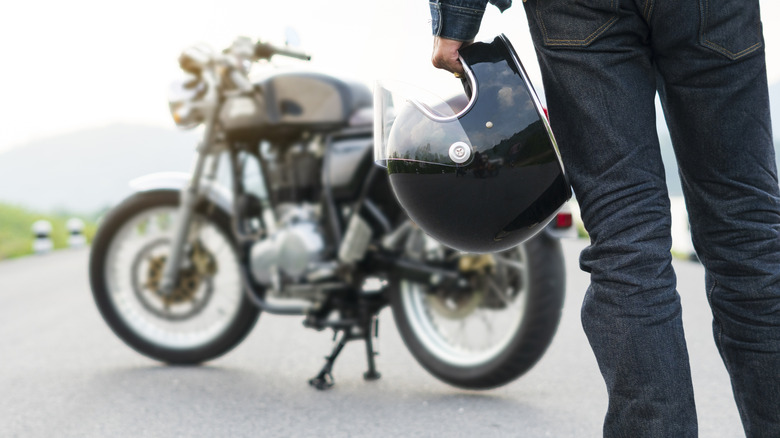
There are some things riders should know before enrolling in the California Motorcyclist Safety Program (CMSP). First, the minimum age is 15 ½, and students need a valid driver’s license, learner’s permit, or DMV ID card. Though self-balancing bikes do exist, you’re required to maintain your balance while sitting on a bike. Of the two courses offered, the 1-Day Premier Course is the shortest and is completed in around eight hours.

The Motorcyclist Training Course (MTC) runs for about 15 hours over a three-day period. Unlike the Premier Course, the MTC is actually mandatory for all riders under the age of 21. This means that even if you do have some experience and want to go straight to the DMV for your motorcycle license, you won’t be able to get it. That’s because the MTC is California’s primary safety and training program, and all eligible riders must successfully complete it to move forward.

But while the CMSP has trained over 1,500,000 motorcyclists since 1987, some online reports seem to contradict the effectiveness of such programs. According to research from the National Highway Traffic Safety Administration, rider education programs yield mixed results. Skill improvement and rider behavior often don’t translate into real-world scenarios, and don’t necessarily reduce the number of motorcycle-related crashes over time. This means that even though the CMSP seeks to prepare students for the road, it’s the experience and knowledge accumulated afterward that makes all the difference.



Source link


There are many unique attributes that have made Subaru such a successful auto brand. One is the company’s signature symmetrical all-wheel-drive system, which comes standard on the majority of Subaru vehicles. There’s also the fact that Subaru was an early player in the now-dominant crossover SUV market, building a brand identity around car-based SUVs like the Forester and Outback beginning back in the 1990s.

Then there are the engines. While many Subaru crossover drivers might not pay much attention to their engine layout, gearheads and enthusiasts know that the Subaru boxer four-cylinder is one of the most distinctive engines in the world. For decades, the horizontally opposed Subaru boxer has distinguished itself from more common inline and V-layout engines with its unique weight distribution, power delivery, and engine sound. 

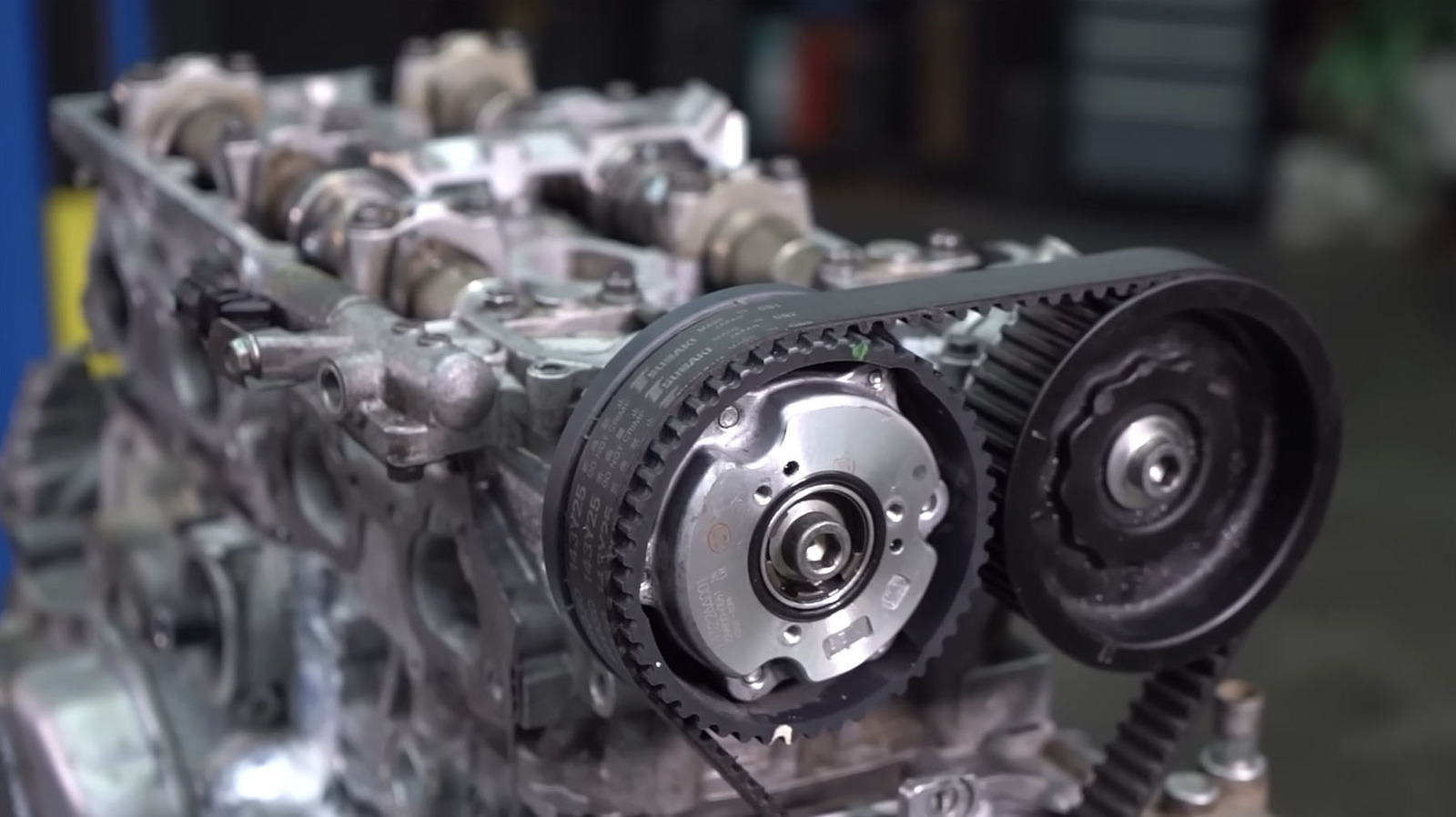
With that in mind, it seems a little insane that someone would try to turn the iconic, unique Subaru boxer engine into a more traditional inline four-cylinder. But that’s exactly what a pair of Russian YouTubers from the Garage 54 channel did in their workshop. While we are still scratching our heads over exactly why someone would want to do this, there’s no denying the uniqueness  — and comedy — of this project.

Don’t try this at home

There are lots of things that separate flat engines from their inline counterparts, and before you question the reasoning of why anyone would want to convert one of Subaru’s unique flat-four engines into the industry-standard inline-four, you have to understand there’s a whole genre of YouTube mechanic content that’s a little off the wall, and done more for the entertainment value and the “what if” factor, rather than any practical application. 

The guys from Garage 54 specialize in these strange projects and experiments, which in the past have included things like putting three turbochargers on a Toyota 2JZ engine and powering a Lada with an engine made of 50 cordless drills. This, however, doesn’t mean there isn’t serious mechanical skill involved.  While the Subaru engine project may have resulted in a “generic” inline-four engine, getting there was no easy task. 

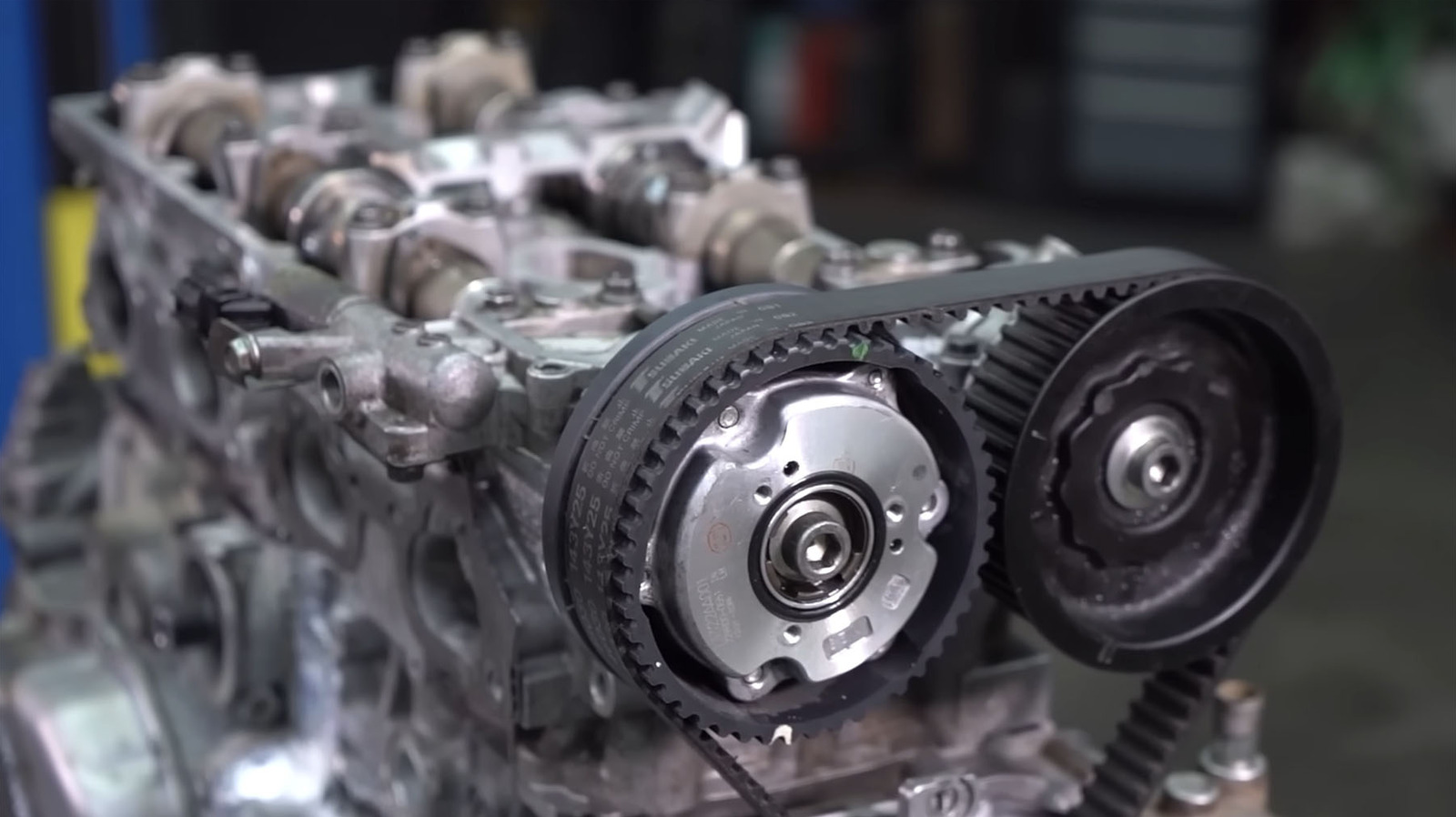
The Subaru engine that the guys started with has two pistons and a cylinder head with two camshafts on each side, so the project required cutting the engine block in half, joining the two sides together, and rearranging the cylinder heads in line with each other. Obviously, this task is easier said than done, as the Subaru engine components and castings were never designed to be used as part of an inline layout — but they pulled it off.

From flat-four to inline-four

Among the engineering hurdles the guys ran into while designing and fabricating the new engine was the need for an extra Subaru engine to donate its crankcase and crankshaft parts for the new motor. Additionally, combining the formerly separate cylinder heads into a single inline head meant welding the camshafts together, and the engine uses two oil pans rather than a single pan, as you find under a normal inline-four engine.

At this point, the guys have basically built their own Subaru inline-four long block engine, complete with a cylinder head, but there’s still a long way to go before the motor is ready to fire up. For starters, the homemade engine still needs exhaust and intake manifolds, plumbing, and a cooling system — but the project is off to an impressive start. Surely Garage 54 will make more videos as they continue the process of completing and running this one-of-a-kind engine in a vehicle.

Yes, this may have been a ton of work just to get the same type of four-cylinder engine found in most mainstream vehicles, but it’s hard to deny the ingenuity and mechanical skills on display here. This also just scratches the surface of what could be done with skilled mechanics and fabricators playing around with Subaru engines. How cool would it be to see two 2.5-liter Subaru boxer fours combined into one 5.0-liter flat-eight?


Source link

Recent Reviews