
After the Supreme Court said “No” to the IEEPA tariffs collected by the Trump Administration, firms lined up to collect their refunds.
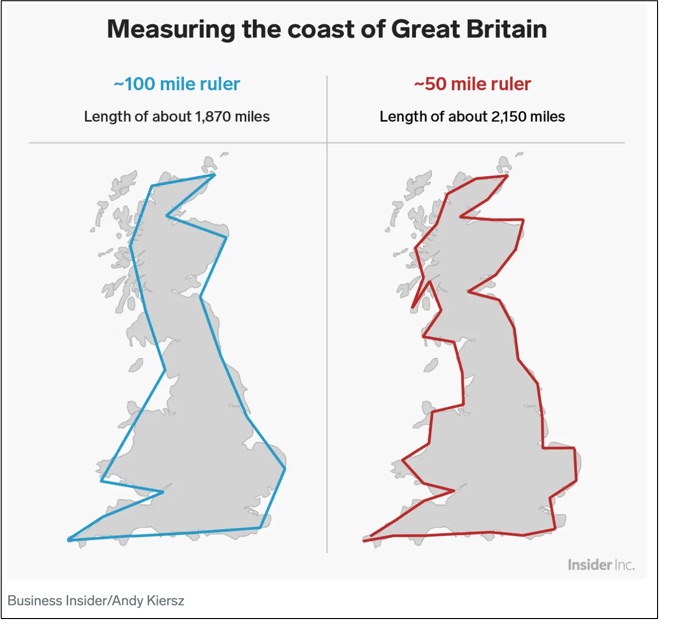
Seemingly simple, the two words–tariff refunds–take us to fractal mathematician Benoit Mandelbrot and the length of the British coastline. From a distance, it appears to be a smooth curve. However, an increasingly closer look reveals countless coves, crannies, and indents that make it much longer:

Similarly, there is so much to see when we look closely at tariff refunds.
Tariff Refunds
Firms
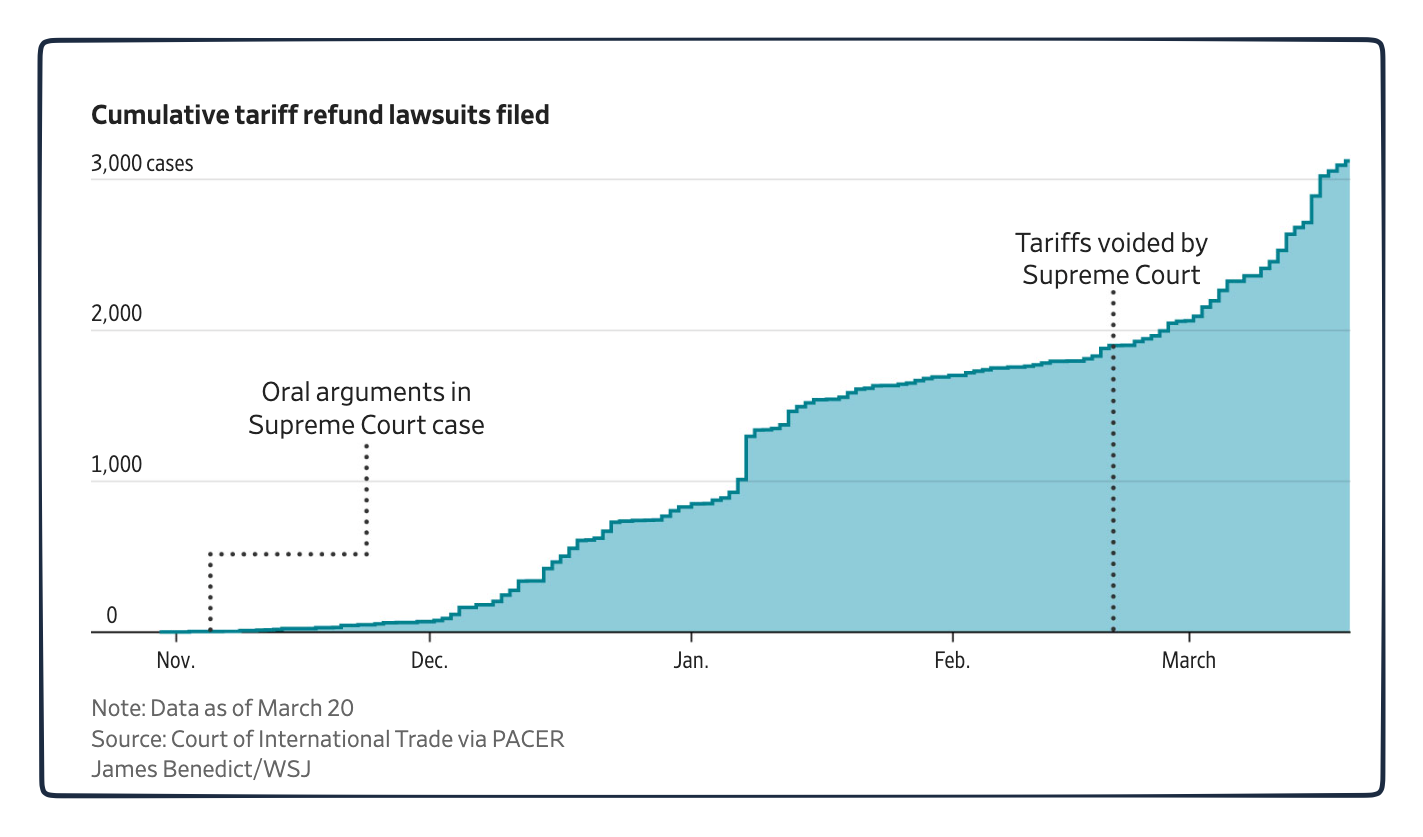
Tariff refunds involve more than 3,000 lawsuits and a whopping 53 million shipments:
 One of the first to file a case, Costco sued the U.S. Customs and Border Protection for dollars it said the government illegally collected from it. The firms that soon joined it include producers like Toyota, Alcoa, Chinese carmaker BYD, and Skechers USA. In addition, Nintendo has said that it should receive interest with its refund. Meanwhile, FedEx and other shippers entered the line with retailers like CVS.
More vulnerable, small firms that cannot afford to litigate hope to be included in a settlement. One small firm importing coconuts from the Philippines said that tariffs cost it an extra $16,000 for every $85,000 container it imported. Similarly at risk, a Miami based eyewear company needs its $300,000 refund to pay for Christmas inventory.
You can see the immense caseload:
Customers
Further complicating the refund process, Costco customers initiated a class action suit. Claiming that Costco should not enjoy “windfall profits” from a flood of tariff money, they demanded restitution. Responding during a March earnings call, Costco said it was committed to finding the best (payback) way through lower prices and better value–a solution that did not appear to satisfy the class action attorneys. Although Costco said tariffs, not fully passed down to customers, were difficult to track, the customers’ representatives expected their slice of the overcharges.
Lenders
Then we also have the importers that sold their (potential) refunds. Those investors will also be clamoring for their money.
Government Revenue
Rarely mentioned, the tariffs were supposed to fund President Trump’s tax cuts. Now, we that $166 billion that might evaporate from the treasury’s coffers.
Our Bottom Line: Transaction Costs
Among the Court’s countless issues, they will have to deal with the transaction costs the government appears to be creating. Defined as the hassle you need to deal with to get something done, the transaction costs for a repayment could require filling out a spreadsheet with all illegally tariffed items and the amount owed. It sounds simple until you hear about all of the purchase orders firms have to access and the myriad of tariff rates they paid.
Indeed, hearing that new tariffs could have already begun, we have a mountain of transaction costs that impede markets from functioning efficiently.
It all returns us to the length of the British coastline.
My sources and more: Thanks to The Journal podcast for inspiring today’s post. From there, we went to the refund spillover here, here, and here.
The post Why Tariff Refunds Are Complicated appeared first on Econlife.

Nicole Byers is an entertainment enthusiast! Nicole is an entertainment journalist for the Maple Grove Report.