
We may receive a commission on purchases made from links.
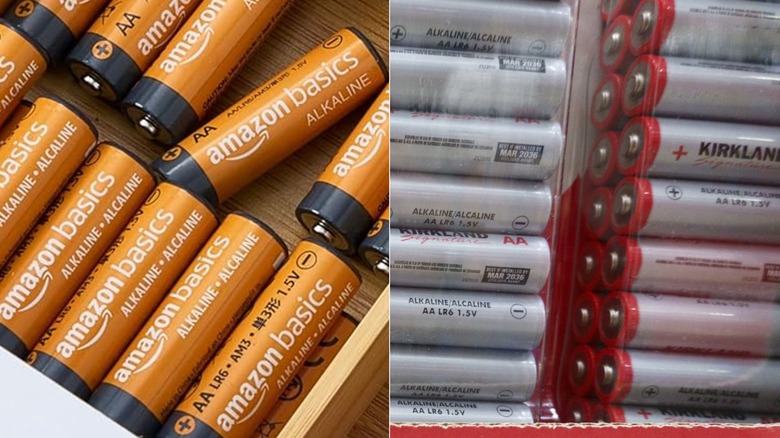
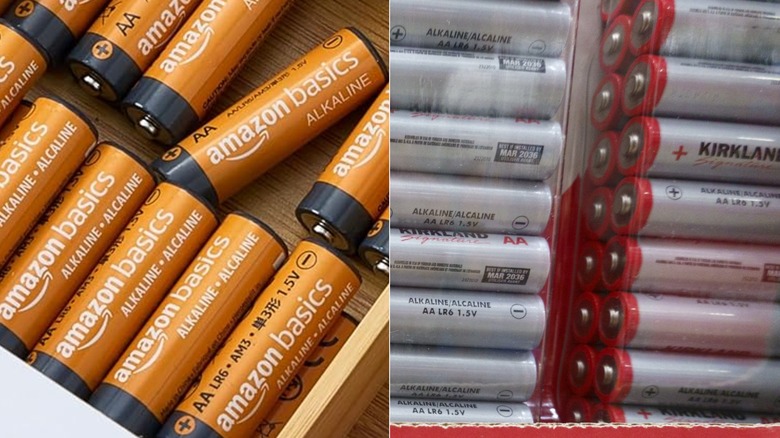
Back in the days before many, if not most, home gadgets could be recharged via USB, alkaline batteries were a household staple. Two brands more or less shadowed the rest, which is why many buyers wanted to know whether Duracell or Energizer batteries ruled the roost. There is still plenty of use for AA batteries, but perhaps the question people should be asking is if Amazon Basics AAs are better than Costco’s. Both are store-brand options from extremely popular retailers and are more inexpensive than the coppertop and pink bunny brands, which is why there’s a decent chance you’ve got batteries from at least one of those retailers in your junk drawer right now.
Unless you’ve got a lot of time on your hands, the best way to truly determine which gigantic store chain makes the best AAs is to find objective results from experts who’ve thoroughly tested them. CNET built a custom rig to test the longevity and power output of batteries from four brands, including Energizer, Duracell, and Rayovac. Of the four, Amazon’s AA batteries performed the worst, and by a significant margin; interestingly, its AAA batteries topped everyone else’s.
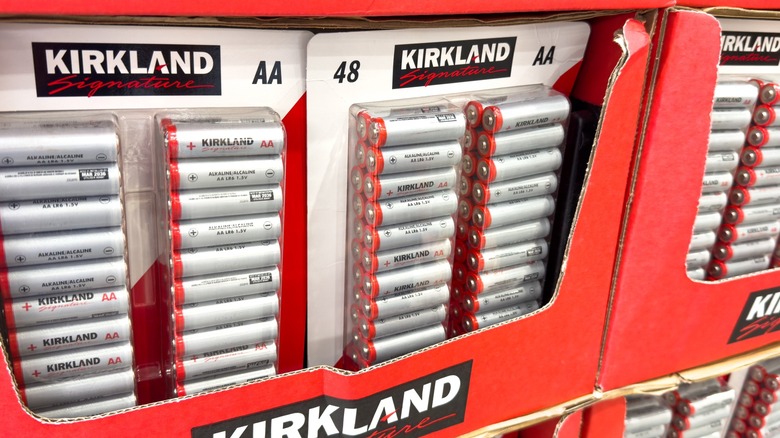
This test raises a red flag over Amazon Basics AAs, but for whatever reason, CNET chose not to include Costco’s batteries, which are under its Kirkland Signature branding. To truly figure out which of the two is the better battery, tests that put them directly head-to-head must be used. Fortunately, at least two reputable YouTube channels with huge followings did exactly that, though in different ways. It’s a shame CNET didn’t include Kirkland in its testing for the best batteries of 2026, because according to both YouTube testers, Costco makes better AAs than Amazon.
Kirkland AA batteries are superior to Amazon Basics in pretty much every way
Project Farm has built a subscriber base of nearly 4 million by performing extensive and well-designed tests between major brands in everything from power tools to denim jeans. To test over two dozen different models of AA batteries from most major brands and then some, Project Farm conducted bounce tests, cold temperature tests, and used a battery analyzer, among other methods. Rechargeable batteries were even tested in solar lights over a period of six years!
Perhaps the most informative test was when each AA was used to power identical fans to determine which would last the longest. Scores were then given out across various metrics and eventually used to determine an overall ranking. Kirkland outperformed Amazon Basics’ alkaline batteries in every single physical test and was able to run its fan for 7 hours and 29 minutes; Amazon Basics could only run the identical model fan for 4 hours and 37 minutes. Of all the alkalines tested, Costco’s AAs tied for second in output and tied for first in 0–degree Fahrenheit testing. For the latter, Amazon Basics tied with several others for last.
Overall, Costco beat all other alkaline batteries other than Duracell and Energizer Max, sitting much higher up the list than Amazon and proving Kirkland belongs near the top of the best battery brands ranked. The YouTube channel Lumencraft came to pretty much the same conclusion, though did its testing using a Convoy T3 flashlight alongside a battery analyzer. The T3 lasted 30.45 minutes using Costco’s batteries compared to 22.67 minutes for Amazon, and Kirkland AAs were able to sustain over 175 lumens for twice as long as Amazon Basics. Lumencraft found that Kirkland also proved superior in efficiency under high-drain loads.
Amazon makes a type of AA battery that Costco doesn’t
Both Project Farm and Lumencraft included other types of AA batteries besides traditional alkaline ones, including disposable lithium batteries. For the most part, the more recent technology underlying lithium AAs proved superior to alkaline batteries in general. In addition to disposable lithium AA batteries, some brands also offer rechargeable ones that can be used in place of alkaline AA batteries over and over again — though there are some devices you should not use rechargeable batteries for like smoke alarms, as the variable discharge rate of a rechargeable battery can cause problems with operation.
Amazon doesn’t have any lithium AA batteries in its Amazon Basics line, but it does have rechargeable nickel–metal hydride (NiMH) models for sale. Two such models (standard and high-capacity) were included in Lumencraft’s tests. Naturally, Amazon Basics High-Capacity Rechargeable Batteries outlasted the standard model by nearly five minutes, as well as maintained over 125 lumens for about five minutes longer. Both sat somewhat in the middle of all the NiMHs tested, with Duracell once again proving to be the best battery maker of them all.
Kirkland wasn’t included in these tests because Costco currently doesn’t make any rechargeable NiMH, giving Amazon Basics an advantage by default. This is why it’s also not included in Project Farm’s rechargeable NiMH testing, which used a dozen different models to power solar lights over the course of six years. Each battery was then tested to see how much it degraded over many seasons and recharge cycles. Amazon Basics High-Capacity Rechargeable Batteries ranked dead last, performing five times as poorly as the top NiMH unit (Eneloop 1900). Kirkland seems to be very good at producing disposable alkaline AA batteries, so maybe it’s about time Costco considers entering the rechargeable market.
How were Amazon’s and Costco’s AA batteries evaluated?
The extensive testing conducted by two popular YouTube channels, Project Farm and Lumencraft, were used as a basis to determine that Costco’s Kirkland batteries are superior when compared to Amazon Basics models. These channels have strong reputations for reliable and meticulous testing of various other products as well. The producers of these tests very clearly put a lot of time and effort into performing the evaluations as well as making them as fair and balanced as possible, while also extensively documenting results for reference. The nature of the tests are described in the article above and you can also watch some of them in real time by checking out each channel’s respective video. Both sets of test results were posted within the last year to ensure that the most up-to-date versions of each brand’s batteries were measured up against one another.

Stephan is the sports journalist for the Maple Grove Report.