
We may receive a commission on purchases made from links.
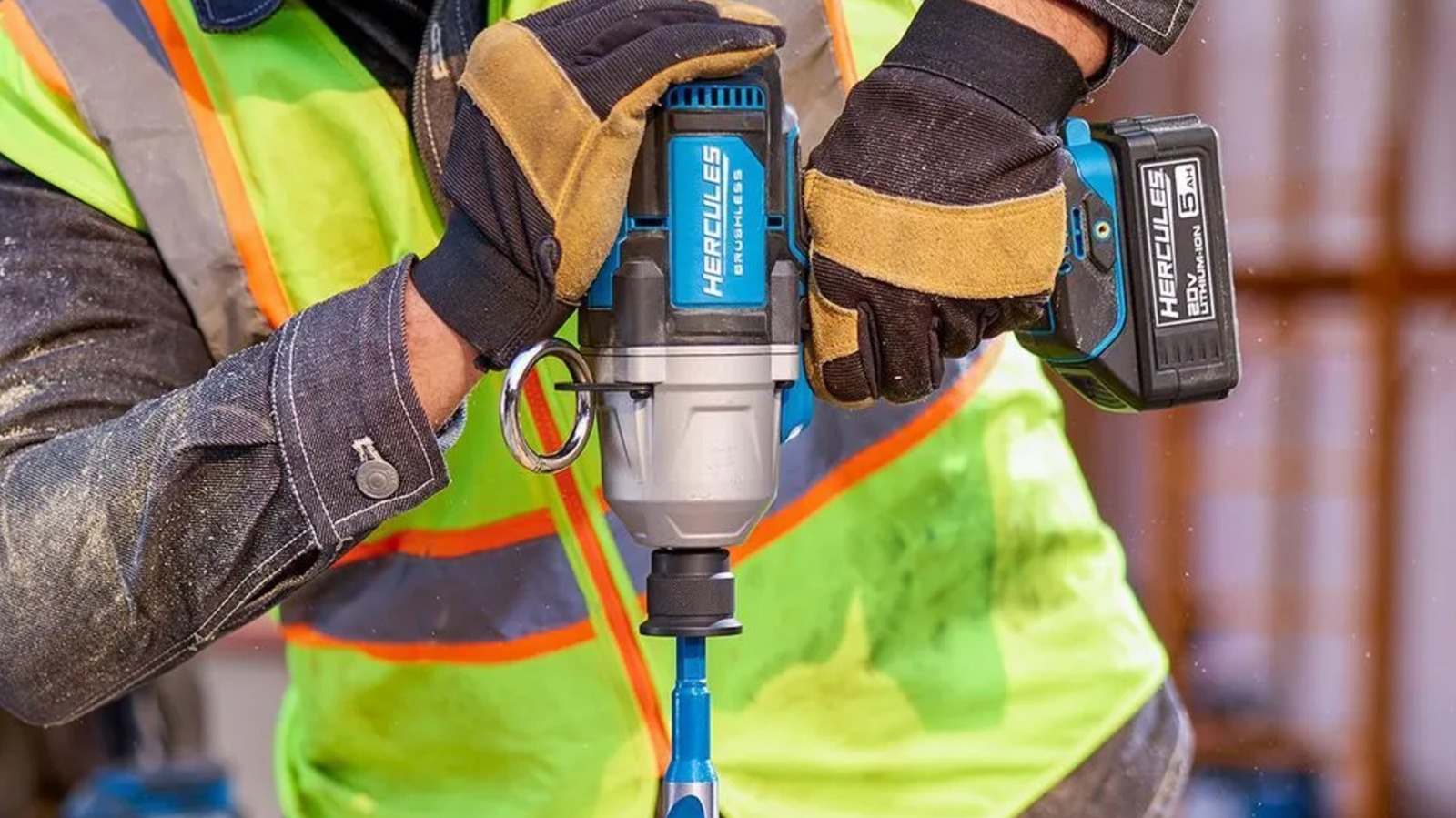
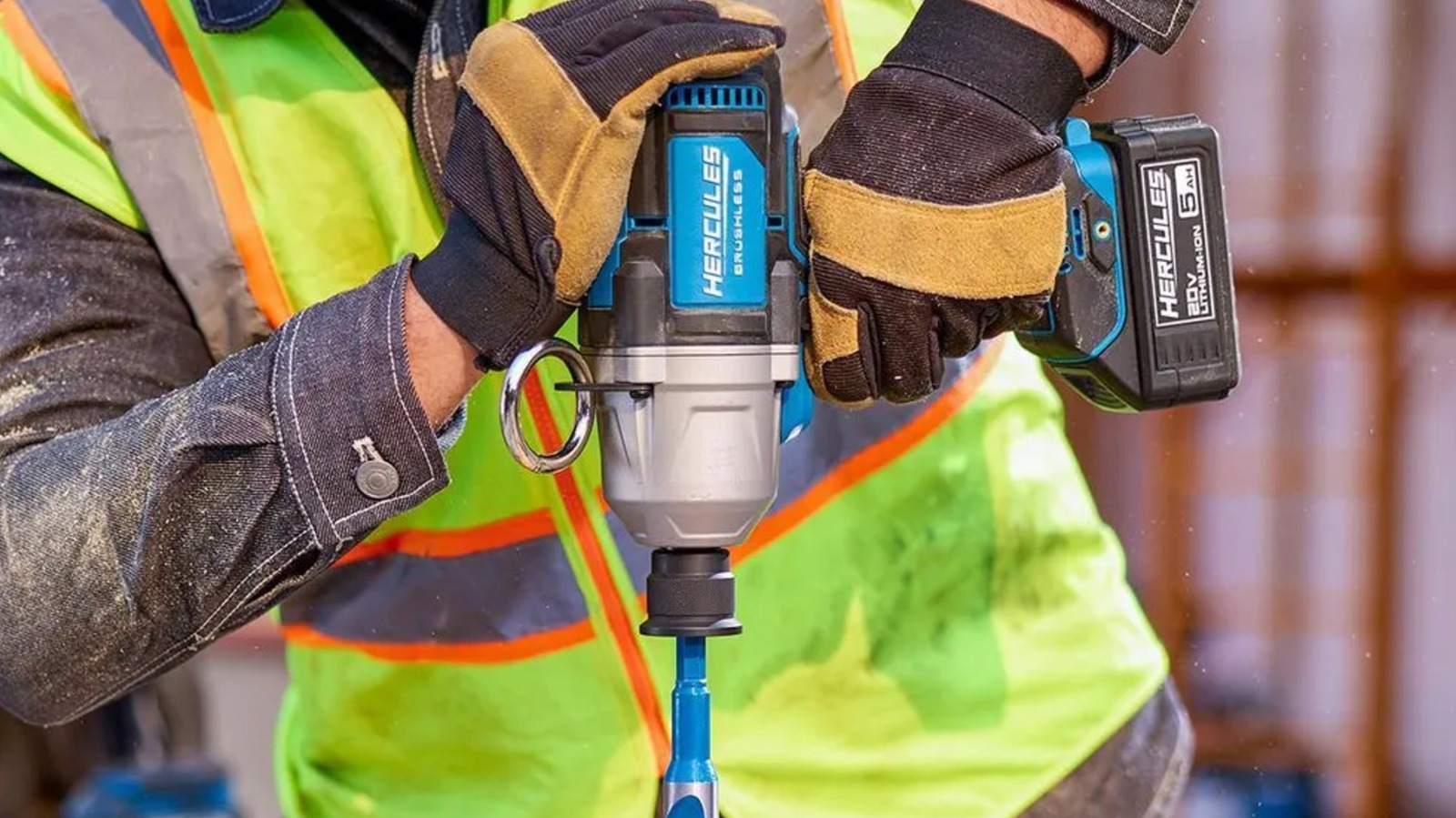
Harbor Freight is far more than a run-of-the-mill hardware store. The chain has plenty of exclusive items for sale, with multiple power tool brands that are actually owned by Harbor Freight. One of these is Hercules, which specializes in power tools, batteries, and jobsite essentials. It’s always making additions to its lineup, too, as evidenced by the new Hercules 20-volt brushless and cordless high-torque impact wrench. Given its affordable price, one has to wonder how it stacks up against a near-equivalent tool from power tool giant Milwaukee.
There is some overlap between the Hercules and its closest Milwaukee rival, the M18 Fuel brushless and cordless high-torque impact wrench. These include the presence of an LED light, variable speeds, and included tethering rings. But there are more differences than similarities. First and foremost is price: Hercules’ impact wrench retails for $229.99, while Milwaukee’s costs $429.00. Hercules’ model requires an 18-volt battery, while Milwaukee’s needs a 20-volt unit. Milwaukee’s impact driver is lighter at 5.85 pounds compared to Hercules’ 6.75 pounds, and also comes with One-Key compatibility for tool tracking and jobsite inventory cataloguing.
Expanding on this tool comparison, it’s important to look at how these two impact wrenches perform on the job. Here’s what users can expect from both the Hercules and Milwaukee impact wrenches.
How the two impact wrenches perform
Fastening torque is one of an impact wrench’s most important stats, and while both products are impressive — if not on par with the most powerful impact wrenches available — there are some differences here. The Powerstate brushless motor in Milwaukee’s impact wrench provides up to 750 foot-pounds of torque. The Hercules model also has a brushless motor, but its torque tops out at 700 foot-pounds. Hercules advertises 1,200 foot-pounds of bolt breakaway torque, while Milwaukee doesn’t provide that particular spec for this impact wrench.
There’s also the matter of speed. While each impact driver offers four variable speed settings, their ranges differ slightly. Hercules promises speeds between 0 and 2,100 RPM, while Milwaukee advertises a 0 to 2,200 RPM range. The latter also comes with Milwaukee’s Redlink Plus technology, which maintains communication between the battery, motor, and charger to mitigate issues such as overheating, overloading, and other potentially dangerous faults.
Additionally, we here at SlashGear ranked Milwaukee at the top of the list of every major cordless impact wrench brand, so there’s some level of reassurance to be had by going with the pricier product. Overall, the two products are quite evenly matched in terms of basic specs. Expanding further, though, it’s worth taking a look at the battery and warranty situations for these tools.
Battery and warranty information
While not directly tied to the tool’s performance, an impact wrench’s warranty is also important to be aware of. Hercules’ impact wrench comes with a 5-year limited warranty. Any faults that arise during that period, not related to user error or abuse, will entitle the user to a free repair or replacement. Milwaukee also offers a 5-year limited warranty for its impact wrench, providing its customers with free repair or replacement should the tool fail due to faults on Milwaukee’s part.
Hercules recommends running its impact wrench with a 20-volt 5 Ah extended-performance battery pack, which retails at Harbor Freight for $74.99, charges in around 90 minutes with a basic Hercules charger, and comes with a 3-year limited battery warranty. Meanwhile, Milwaukee’s impact wrench listing suggests the M18 RedLithium XC5.0 extended capacity battery pack that costs $169.00 and charges in around 105 minutes with a standard charger. Milwaukee’s battery also comes with a 3-year limited warranty.
At the end of the day, both appear to be capable impact wrenches from brands with some time and experience under their belts. Still, which one would be the right choice for you is a matter that only your needs, power tool budget, and feelings about either (or both) brand can fully answer.

Stephan is the sports journalist for the Maple Grove Report.