

Is The Google Pixel 9 Still A Good Buy In 2026?


We may receive a commission on purchases made from links.

Google’s Pixel series turned 10 with the launch of the Pixel 10 in 2025. For the most part, it seems like Google has found its identity in the smartphone space. You get that distinct camera visor look with all Pixel smartphones, the cleanest Android experience, day-one software updates, and a camera system that holds up remarkably well against the Samsungs and iPhones of the world. Priced at $800 for the 128GB model, the Pixel 10 offers a great display, solid performance, and a capable set of cameras.

If you’re looking for a more budget-friendly option, the Pixel 10a that we reviewed is also a great buy at $500. You get all the essentials, including a 120Hz display, but you are relegated to the previous generation Tensor G4 chip of the Pixel 9, so why not just consider that? If you can snag one on discount, the Pixel 9 is still a decent device to purchase in 2026. It’s currently available on Best Buy for the same price as the Pixel 10a.

Last generation’s model still offers a clean software experience, long-term support, and solid cameras. However, if you’re okay with slightly less amazing cameras and open to trying out a different flavor of Android, you can do better for the price, especially if performance and battery life are top priorities.

Why the Pixel 9 still holds up
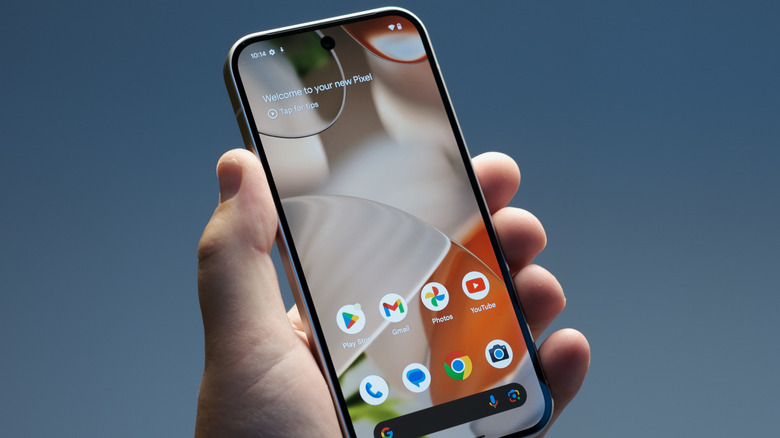
The Pixel 9 was launched in August 2024. That doesn’t seem like that long ago, but in smartphone years, it is still considered last generation hardware. Fortunately, Google’s excellent commitment to software updates makes even older flagships feel relevant for much longer. Like the iPhone, Google’s Pixel smartphones receive up to seven years of OS updates and security patches. This means the Pixel 9 should theoretically be supported all the way up to Android 20 in 2029, given that it launched with Android 14 out of the box.

In our review of the Pixel 9, we mentioned how it still managed to capture impressive photos despite dropping the telephoto lens of the costlier Pixel 9 Pro. While Pixels are typically not known for having the best endurance, we reported decent battery life, with the phone lasting all day with regular use. You also get a sprinkle of AI features with Gemini built-in, which offers a more complete experience compared to Apple Intelligence found on the similarly priced iPhone 17e.

You get a 6.3-inch OLED 120Hz display and a glass sandwich build with an aluminum frame going all around. Compared to the Pixel 10a, you are getting a more premium experience here. Unfortunately, the base variant comes with 128GB of storage space, but considering even the newer Pixel 10 ships with the same capacity, the compromise doesn’t sting quite as much.

Features the Pixel 9 is missing
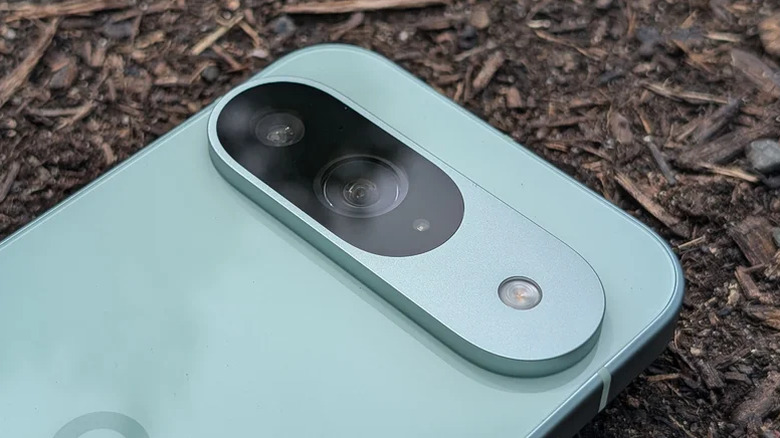
There are certain things to consider when picking up a previous-generation smartphone. For starters, the Pixel 9 doesn’t have built-in magnets for wireless charging. Pixelsnap is a hardware addition available on newer Pixel smartphones that lets you use MagSafe-compatible accessories without a specially designed case. However, the Pixel 10a also doesn’t have Pixelsnap, so it shouldn’t be a deciding factor at this price point.

You are also losing an extra camera sensor with the Pixel 9. The Pixel 10 sports a 5x telephoto lens that will yield better zoom shots. While we’ve touted long-term software support as a reason to pick up a Pixel 9, it’s worth noting that Google launched it with Android 14, despite Android 15 being unveiled the same year. It’s unclear if Google will count Android 14 as one of the Pixel 9’s seven promised OS upgrades, which would technically mean the phone would receive one fewer Android update than what buyers might have anticipated.

Lastly, while the Tensor G4 is a capable chip, its prowess fades in comparison to what the latest from Snapdragon or even MediaTek has to offer. To add insult to injury, some of the most powerful smartphones around don’t even cost that much more than a brand-new Pixel. The bottom line is that the Pixel 9 is a good buy, as long as you’re not looking for the latest features or planning to put it through intensive workloads.


Source link

Leave a Reply

Subscribe to Our Newsletter

Get our latest articles delivered straight to your inbox. No spam, we promise.

Recent Reviews


A recent decision from an Indiana federal court underscores that the principles behind what makes “clickwrap” assent enforceable are not limited to websites and apps found through smartphones and laptops. In Beckett v. Bitcoin Depot, Inc., No. 25-01450 (S.D. Ind. Feb. 26, 2026), the court granted a Bitcoin ATM operator’s motion to compel arbitration, finding that the plaintiff—who had fallen victim to a cryptocurrency scam—assented to the company’s clickwrap terms before completing the transactions.

The ruling is notable because most electronic “clickwrap” contracting cases focus on the issues involving websites or mobile apps. While there was no reason to expect a different analysis in the context of a kiosk, Beckett clarifies that those familiar principles extend into the physical world of kiosk screens and self-service terminals.

The takeaways are clear:

  • First, contracting rigor matters just as much in kiosk environments as it does online. Providers should implement thoughtfully designed user flows that mirror best practices from ecommerce: clear and uncluttered interfaces, conspicuous presentation of terms, affirmative assent mechanisms, and reliable audit logs.
  • Second, and specific to the fact that this was a crypto case, robust anti-fraud warnings can serve a dual purpose. Beyond helping protect consumers, they may also strengthen litigation defenses, particularly on issues of notice, assumption of risk and causation.

The Facts

Bitcoin ATMs (or “BTMs”) are kiosks that allow users to purchase—and sometimes sell—cryptocurrency. Rather than dispensing cash, they typically accept cash or debit card payments and transfer cryptocurrency to a wallet specified by the user, often via QR code.

The plaintiff, a retiree, was targeted in a “tech support” impersonation scam. He was persuaded to withdraw cash from his bank accounts on three separate occasions and use a BTM operated by Bitcoin Depot to transfer funds to a third-party digital wallet controlled by the scammers. This type of scam is common and was the subject of a September 2024 Federal Trade Commission (FTC) consumer alert.

In the end, the funds could not be recovered, and the plaintiff brought suit asserting tort and consumer protection claims and alleging that Bitcoin Depot failed to implement adequate safeguards.

The Contracting Flow

Before completing each transaction, the plaintiff was required to accept Bitcoin Depot’s terms and conditions on-screen. The process included multiple layers of warning and verification:

  • A prominent red-text warning cautioned: “If someone else sent you to this machine and provided you with a QR Code or wallet ID to send funds to, it is most likely a scam.”
  • A follow-up text message warned against sending funds to purported government officials, law enforcement or tech support, and against using third-party QR codes.
  • The user was required to enter a PIN sent via text message.
  • The interface then presented a direct prompt: “ARE YOU BEING SCAMMED?” along with examples of common fraud scenarios and advising users that losses due to fraudulent transactions may not be recoverable.
  • Finally, the user had to confirm that the destination wallet belonged to them; selecting any other option would cancel the transaction.

Despite these warnings, the plaintiff confirmed—incorrectly—that the destination wallet was his own.

The Court’s Ruling

Bitcoin Depot moved to compel arbitration under its terms of service. The court granted the motion, emphasizing that the plaintiff did not dispute that he had assented to the arbitration agreement on three separate occasions. Arguments regarding unconscionability and other enforceability issues were left for the arbitrator to decide.

Final Thoughts

This case reinforces a straightforward but important point: enforceable digital contracting principles apply wherever transactions occur, including at physical kiosks.

At the same time, the case hints at future litigation risk. While Bitcoin Depot secured a procedural win, different facts could lead to closer scrutiny of a provider’s safeguards. Plaintiffs may increasingly attempt to move beyond contract formation and challenge the reasonableness and adequacy of provider’s risk controls and safety messaging. For example, the complaint in Beckett outlines several allegedly “inadequate safeguards,” such as claims that Bitcoin Depot failed to implement transaction limits for first time elderly users, monitor large sequential deposits, or flag certain scenarios like repeated maximum value deposits to the same digital wallet.


Source link