Hate the right-click menu in Windows? Microsoft just promised to let you tweak it – soon


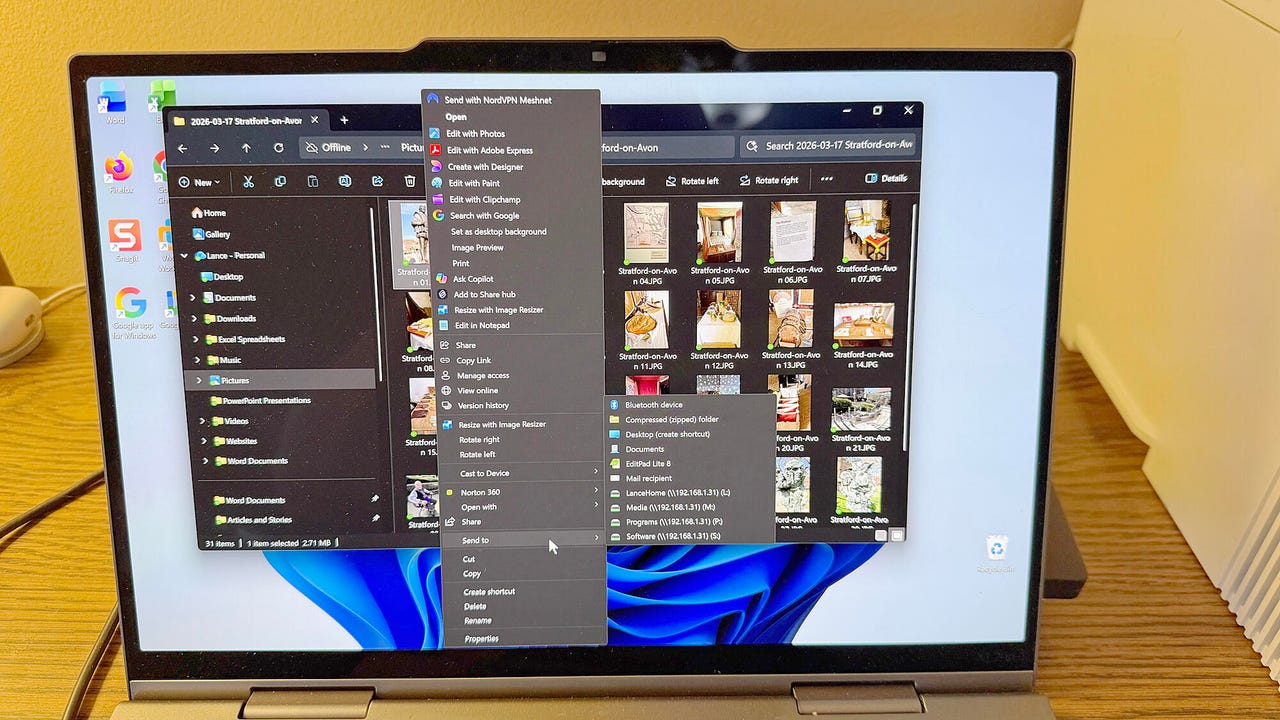
windows 11 right-click context menu

Lance Whitney/ZDNET

Follow ZDNET: Add us as a preferred source on Google.


ZDNET’s key takeaways

  • A Microsoft VP is promising a refresh of the Windows right-click menu.
  • The menu is supposed to become faster, simpler, and more configurable.
  • Microsoft will hopefully share more details soon.

The menu that pops up in Windows when you right-click in File Explorer or on the Desktop has always been problematic. In prior versions of Windows, the menu could easily balloon out of control with dozens and dozens of entries, making it almost impossible to navigate.

Also: How to check your Windows PC for expiring security certificates – a big one ends in June

With Windows 11, Microsoft pared down the menu with a smaller, simpler, and modern layout. But this approach doesn’t work well either, as it often excludes features and commands you frequently use. With another mouse click, you can view the older style menu, but that brings us back to the original problem.

‘Faster, simpler by default, configurable’ 

Well, Microsoft seems to feel your right-click pain, as the company is apparently working on a major refresh of the menu. In a post on X, as spotted by Windows Latest, Marcus Ash, a corporate VP of Design and Research for Windows + Devices, shared a promising tidbit.

Responding to a complaint in which a user displayed a screenshot of a lengthy right-click menu, Ash said: “Working on making context menus faster, simpler by default, configurable to what you use most. More will be shared on our approach soon.”

If true, this is certainly good news for all Windows users who struggle with the context menu. Yes, the menu often feels slow, so it could definitely use a speed boost. Yes, it can get too complicated and cumbersome, even with Windows 11’s modern design, so it needs to be simpler. But the third promised item — “configurable” — is the one that makes me sigh with relief.

Also: My new favorite Windows app made my PC safer and more reliable – and it’s free

My experience with the menu has also been frustrating. Right-clicking on a file, folder, or other item in the Windows 11 File Explorer opens the new modern menu. That’s fine if all I need to do is copy, paste, or delete an item. The menu also suffices if I need to run a common command, such as opening a file with a different app or compressing a group of files. But far too often, I have to segue to the older style menu, and that’s when I get lost in a virtual forest of commands.

Back in 2021, Microsoft acknowledged the many flaws of the old-style context menu, pointing out that it had grown excessively long, included rarely used commands, placed similar commands too far apart, and made commands added by apps hard to identify. The solution was the modern menu unveiled in Windows 11. But again, the problem here is that this pared-down menu may omit commands you regularly use, forcing you to revert to the older style menu.

Instead of this convoluted two-menu approach, we need to go back to a single menu. But that has to be one we can add and remove items from, depending on what we want and don’t want to see.

It’s all about the context

Yes, you can try to edit the menu yourself. But that currently requires grappling with complex Registry entries, which can do more harm than good. There are several third-party utilities that let you tweak the context menu. One tool I’ve played with is Context Menu Manager. But the challenge here lies in why this is called a context menu.

Also: I’ve been studying Windows telemetry for a decade – here’s the only setting I turn off

Context means that the menu changes depending on the item on which you right-click. Select a disk drive, a network location, a folder, a file, or a group of files, and the menu is different for each of those. That makes it difficult to edit the menu to cover all the bases.

I look forward to seeing more details from Microsoft on this revamp of the context menu. Hopefully, the days of navigating a lengthy, cumbersome, and confusing menu will soon be a distant memory.





Source link

Leave a Reply

Subscribe to Our Newsletter

Get our latest articles delivered straight to your inbox. No spam, we promise.

Recent Reviews


The Argentine markets took a beating last week, but US Treasury Secretary Scott Bessent has rushed to the rescue with a remarkable promise: America will provide what amounts to unlimited support to prop up Argentina. His declaration that “all options for stabilization are on the table” – including swap lines, direct currency purchases, and buying Argentine government debt – represents an extraordinary blank check.

But here’s the real kicker: Bessent claims Argentina is “systemically important” to the United States. This is financial fiction at its finest.

The Systemic Importance Fairy Tale

Let’s be brutally honest: Argentina poses zero systemic risk to the US financial system. US banks have minimal exposure to Argentine debt. Trade between the two countries is negligible in the context of the US economy. If Argentina defaulted tomorrow, would Bank of America collapse? Would JPMorgan need a bailout? Of course not.

The “systemically important” label is being stretched beyond recognition. If Argentina qualifies, then virtually every country in Latin America – including those the Trump administration just hit with massive tariffs – should qualify too.

This isn’t about systemic risk; it’s about political preferences dressed up as financial necessity.

The Moral Hazard Machine

By offering essentially unlimited support to Argentina, the US is creating a massive moral hazard problem.

The message to Milei’s government is clear: Don’t worry about the hard work of building political coalitions or passing sustainable reforms through parliament. Uncle Sam will catch you if you fall.

This is precisely the wrong incentive structure. Argentina has defaulted on its sovereign debt nine times since independence. Nine times!

The country’s political economy is fundamentally broken, cycling through periods of populist spending followed by crisis and austerity. US financial support doesn’t fix this cycle – it enables it.

The Real Threat to US Financial Stability

Here’s the irony: While Argentina poses no systemic risk to the US, this bailout policy might. Not directly through financial contagion, but through the precedent it sets.

If the US Treasury is willing to provide unlimited support to a serial defaulter like Argentina simply because its president is friendly with Trump and speaks the MAGA language, what’s to stop other countries from playing the same game? Elect a Trump-friendly president, make the right noises about being an ally, and wait for the bailout when things go south.

This transforms the US Treasury into a global lender of last resort – not for genuine systemic crises, but for politically favored regimes. That’s a commitment the US cannot afford, especially when federal debt is already approaching dangerous levels.

The Buenos Aires Reality Check

The timing of Bessent’s announcement is telling. It comes right after Milei’s party got hammered in regional elections in Buenos Aires. The political message from Argentine voters was clear (rightly or wrongly): Milei’s policies aren’t working, and he lacks popular support for his reforms.

Rather than forcing Milei to build political consensus and pursue genuine institutional reforms, the US bailout allows him to double down on rule by decree. This is not sustainable governance. It’s political theater subsidized by American taxpayers.

Where’s the “America First”?

This is where the contradictions become absurd. The Trump administration came to power promising “America First” – putting American workers and taxpayers first, being tough on countries that don’t pay their fair share, and ending the era of the US playing global policeman.

Yet here we are, with a Trump-appointed Treasury Secretary promising unlimited support to a country that has stiffed international creditors nine times. How exactly does bailing out Argentine bondholders put American workers first? How does propping up a foreign government that can’t even win local elections serve US interests?

The Unlimited Commitment Problem

Perhaps most troubling is the open-ended nature of Bessent’s commitment. “All options are on the table” with no conditions, no limits, no requirements for structural reform. This isn’t a rescue package – it’s a blank check.

What happens when Argentina needs another injection in six months? Another one in a year? At what point does the US Treasury say “enough”? And when that moment comes as it inevitably will won’t the withdrawal of support trigger an even bigger crisis?

The Alternative Nobody Wants to Discuss

Here’s what should happen: Argentina should be allowed to face the consequences of its political and economic choices.

Yes, this means potential default. Yes, this means economic hardship. But it also means the country would finally be forced to confront its fundamental problems rather than papering them over with foreign money.

The IMF learned this lesson the hard way after multiple failed bailouts. Now the US seems determined to repeat the same mistakes, but with even less conditionality and oversight.

Conclusion

This isn’t about whether one likes or dislikes Milei. It’s about the dangerous precedent of the United States providing unlimited financial support to a country that poses no genuine systemic risk to the US financial system (or to the global financial system).

The moral hazard is obvious: Why should any country pursue painful but necessary reforms when they can simply wait for a bailout? Why should Argentina fix its institutional problems when the US Treasury stands ready to finance its dysfunction?

Ultimately, this policy doesn’t just threaten US financial stability through the direct cost of supporting Argentina.

It threatens the entire architecture of international financial responsibility. When “systemically important” becomes a political designation rather than an economic reality, and when bailouts come with no strings attached, we’re not promoting stability. The US taxpayers will be subsidizing instability.

The world is indeed upside down when an “America First” administration puts Argentine bondholders before American taxpayers.

PS Back in July I warned about Milei not being the miracle maker that some was making him up to be in my blog post Classical Liberals, Let’s Be Honest About Milei


Source link


