The DIY era of smartwatches has begun – Google and Apple already have me hooked


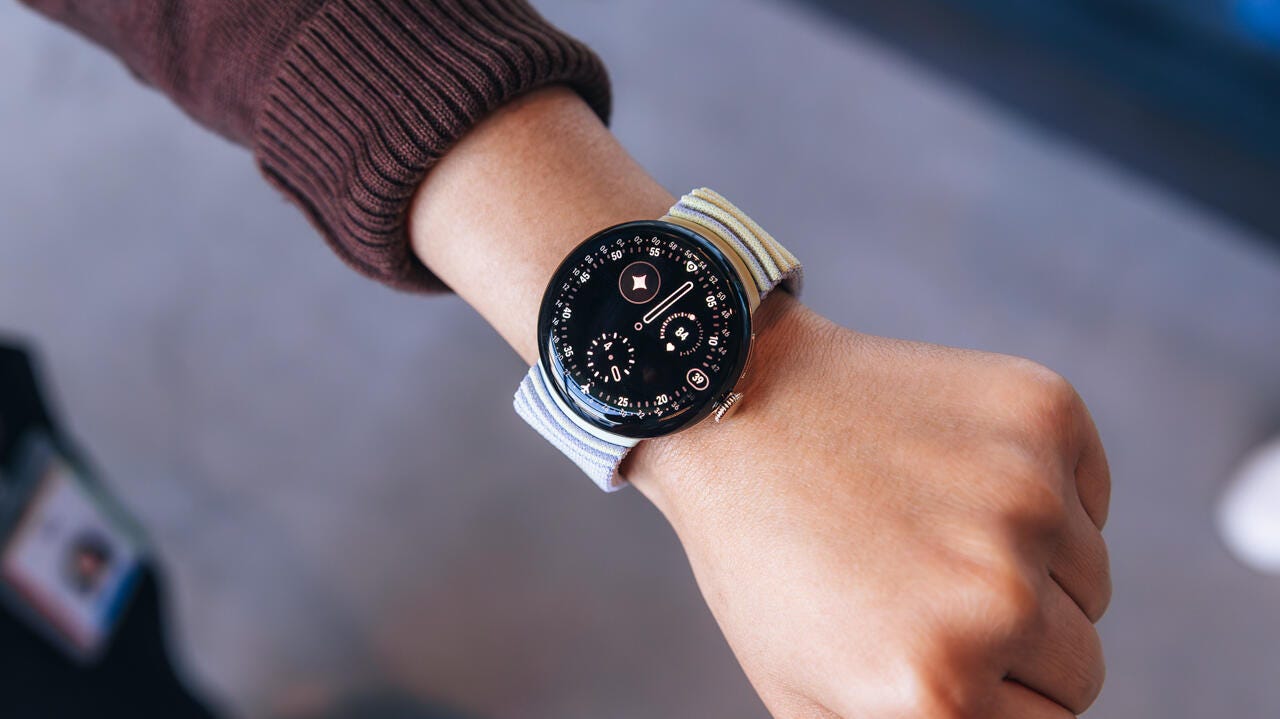
EMBARGOED - Google Pixel Watch 4

Joseph Maldonado/ZDNET

Follow ZDNET: Add us as a preferred source on Google.


ZDNET’s key takeaways 

  • Two new software updates make automating device tasks easier. 
  • Google announced Create My Widget for its smartwatches. 
  • Apple unveiled Describe a Shortcut last week. 

There are tasks, chores, and activities we do each day that require repeating a certain set of annoying steps. Take going to the gym, for example. When I go to my gym, I have to ride the subway a few stops and pull up a barcode on my phone that the front desk scans to let me in. 

Also: 10 useful smart home gadgets that make life so much easier (and are affordable)

A few months ago, I got sick of fumbling with my phone as I left the subway, so I created a Shortcut on my iPhone to open my gym’s app. This was the first time I used the Shortcuts app, and while creating a custom shortcut for my specific need wasn’t difficult, it wasn’t easy or intuitive for someone unfamiliar with automation either.

First, you have to create a “Do” command. For this purpose, my command was to open my gym app. Then you have to go into the Automation tab, add a new Shortcut, and link a “When” (When I arrive at my gym’s location) to a “Do” (Open my gym’s app). Again, not difficult but not seamless. 

Google Pixel Watch 4, Apple Watch Series 10, Samsung Galaxy Watch 8

Kerry Wan/ZDNET

Apple has seemingly acknowledged Shortcuts’ stickiness. At its software developer conference last week, the tech giant unveiled a new feature coming to iOS 27 that eliminates some of the tedium of creating Shortcuts. Now, all a person has to do to create a Shortcut is describe it, and Apple’s AI does the bulk of the brunt work. The feature arrives alongside Apple’s revamped, more capable Siri. 

Also: iOS 27’s Shortcuts upgrade makes automations easy to build – and will save me so much time

Apple follows Google’s lead with this descriptive feature. Earlier this month, Google unveiled Create My Widget for Android phones, and on Tuesday, it announced that the feature is coming to its lineup of smartwatches, as well. Create My Widget is launching alongside Wear OS 7, the company said. 

Creating a widget becomes as simple as describing what you’d like to see on your smartwatch. All of this is powered by Gemini Intelligence. 

Pixel Watch Wear OS 7 update

Google/ZDNET

“With multi-step app automation, Gemini navigates tasks directly from your watch, whether it’s reserving a front-row bike for your spin class or ordering your usual from your favorite restaurant,” Google said in a blog post. 

Wear OS 7 also brings live updates to your Pixel Watch from your phone app, improved multi-device functionality to make way for intelligent eyewear and headphones coming soon, and a 10% increase in battery life. 

Widgets and Shortcuts are two ways to simplify getting information and accomplishing tasks. I have four widgets on my iPhone with live updates, including one for hourly weather checks, one for subway arrival times, one for easily accessing my Spotify app, and one for checking how many Citi Bikes are available at my nearest dock. I love these Widgets because they make my most important apps even easier to access with as few taps and touches as possible. The same goes for Shortcuts. 

Also: How to download the iOS 27 developer beta (and which iPhone models support it)

By reducing the workload on the phone or smartwatch user, both Google and Apple are leaning into the DIY era of automation, marked by vibecoding and agentic AI. I appreciate that these small yet helpful automation features will make the user experience of technology’s biggest device even more useful. 


Source link

Leave a Reply

Subscribe to Our Newsletter

Get our latest articles delivered straight to your inbox. No spam, we promise.

Recent Reviews


The Argentine markets took a beating last week, but US Treasury Secretary Scott Bessent has rushed to the rescue with a remarkable promise: America will provide what amounts to unlimited support to prop up Argentina. His declaration that “all options for stabilization are on the table” – including swap lines, direct currency purchases, and buying Argentine government debt – represents an extraordinary blank check.

But here’s the real kicker: Bessent claims Argentina is “systemically important” to the United States. This is financial fiction at its finest.

The Systemic Importance Fairy Tale

Let’s be brutally honest: Argentina poses zero systemic risk to the US financial system. US banks have minimal exposure to Argentine debt. Trade between the two countries is negligible in the context of the US economy. If Argentina defaulted tomorrow, would Bank of America collapse? Would JPMorgan need a bailout? Of course not.

The “systemically important” label is being stretched beyond recognition. If Argentina qualifies, then virtually every country in Latin America – including those the Trump administration just hit with massive tariffs – should qualify too.

This isn’t about systemic risk; it’s about political preferences dressed up as financial necessity.

The Moral Hazard Machine

By offering essentially unlimited support to Argentina, the US is creating a massive moral hazard problem.

The message to Milei’s government is clear: Don’t worry about the hard work of building political coalitions or passing sustainable reforms through parliament. Uncle Sam will catch you if you fall.

This is precisely the wrong incentive structure. Argentina has defaulted on its sovereign debt nine times since independence. Nine times!

The country’s political economy is fundamentally broken, cycling through periods of populist spending followed by crisis and austerity. US financial support doesn’t fix this cycle – it enables it.

The Real Threat to US Financial Stability

Here’s the irony: While Argentina poses no systemic risk to the US, this bailout policy might. Not directly through financial contagion, but through the precedent it sets.

If the US Treasury is willing to provide unlimited support to a serial defaulter like Argentina simply because its president is friendly with Trump and speaks the MAGA language, what’s to stop other countries from playing the same game? Elect a Trump-friendly president, make the right noises about being an ally, and wait for the bailout when things go south.

This transforms the US Treasury into a global lender of last resort – not for genuine systemic crises, but for politically favored regimes. That’s a commitment the US cannot afford, especially when federal debt is already approaching dangerous levels.

The Buenos Aires Reality Check

The timing of Bessent’s announcement is telling. It comes right after Milei’s party got hammered in regional elections in Buenos Aires. The political message from Argentine voters was clear (rightly or wrongly): Milei’s policies aren’t working, and he lacks popular support for his reforms.

Rather than forcing Milei to build political consensus and pursue genuine institutional reforms, the US bailout allows him to double down on rule by decree. This is not sustainable governance. It’s political theater subsidized by American taxpayers.

Where’s the “America First”?

This is where the contradictions become absurd. The Trump administration came to power promising “America First” – putting American workers and taxpayers first, being tough on countries that don’t pay their fair share, and ending the era of the US playing global policeman.

Yet here we are, with a Trump-appointed Treasury Secretary promising unlimited support to a country that has stiffed international creditors nine times. How exactly does bailing out Argentine bondholders put American workers first? How does propping up a foreign government that can’t even win local elections serve US interests?

The Unlimited Commitment Problem

Perhaps most troubling is the open-ended nature of Bessent’s commitment. “All options are on the table” with no conditions, no limits, no requirements for structural reform. This isn’t a rescue package – it’s a blank check.

What happens when Argentina needs another injection in six months? Another one in a year? At what point does the US Treasury say “enough”? And when that moment comes as it inevitably will won’t the withdrawal of support trigger an even bigger crisis?

The Alternative Nobody Wants to Discuss

Here’s what should happen: Argentina should be allowed to face the consequences of its political and economic choices.

Yes, this means potential default. Yes, this means economic hardship. But it also means the country would finally be forced to confront its fundamental problems rather than papering them over with foreign money.

The IMF learned this lesson the hard way after multiple failed bailouts. Now the US seems determined to repeat the same mistakes, but with even less conditionality and oversight.

Conclusion

This isn’t about whether one likes or dislikes Milei. It’s about the dangerous precedent of the United States providing unlimited financial support to a country that poses no genuine systemic risk to the US financial system (or to the global financial system).

The moral hazard is obvious: Why should any country pursue painful but necessary reforms when they can simply wait for a bailout? Why should Argentina fix its institutional problems when the US Treasury stands ready to finance its dysfunction?

Ultimately, this policy doesn’t just threaten US financial stability through the direct cost of supporting Argentina.

It threatens the entire architecture of international financial responsibility. When “systemically important” becomes a political designation rather than an economic reality, and when bailouts come with no strings attached, we’re not promoting stability. The US taxpayers will be subsidizing instability.

The world is indeed upside down when an “America First” administration puts Argentine bondholders before American taxpayers.

PS Back in July I warned about Milei not being the miracle maker that some was making him up to be in my blog post Classical Liberals, Let’s Be Honest About Milei


Source link