
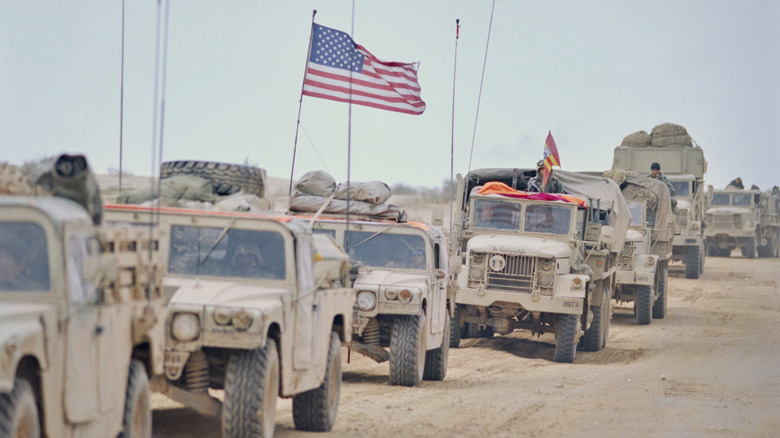
The American war machine has long maintained close ties to its domestic automotive industry. From the venerable Willys MB Jeep — the chosen ride of General George S. Patton — to the ever-present GMC CCKW Deuce-and-a-half, and the armored hulks of the Chrysler-produced M4 Sherman, Buick-built M18 Hellcat, and General Motors-constructed M10 Wolverine; how the army goes rolling along is as intrinsic to its operations as where and why.
Recently, American military production has fallen below demand. Within the last five years, support to Ukraine’s defense, the ongoing delivery of military materiel to Israel, and the costs and losses of a major conflict with Iran has drawn down billions of dollars’ worth of munitions, systems, and platforms. To rectify this, a scale of industrialization not achievable by organic military functions alone is demanded.
In April 2026 the Trump administration requested an expansion of the U.S. military budget, raising the budget ceiling $500 billion to $1.5 trillion to address procurement shortfalls and restock military inventories. To ensure this new funding can catalyze the required scale of replenishment, the U.S. has implemented a call for local industry and domestic innovation to modify or increase production in direct support to military requirements, reminiscent of the War Production Board of the Second World War.
Once again, the U.S. military is turning to America’s automotive industry for the vehicles and transport systems needed to project combat power wherever it is required.
Willys-Overland and Jeep
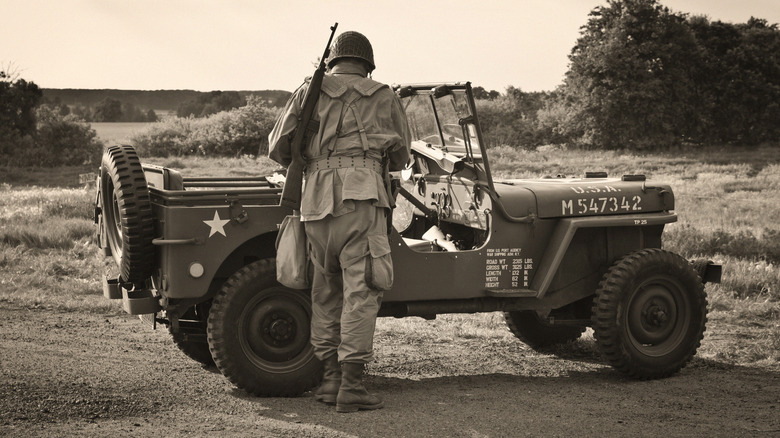
Today a subsidiary under the Stellantis brand, Willys-Overland (later Jeep) gave the world perhaps the most recognizable military vehicle of the 20th century, the Willys MB Jeep.
Praised by General Dwight D. Eisenhower as vital to the Allied victory, it directly addressed U.S. military demands for a light reconnaissance vehicle tailored to strict Army specifications. From its 1940 prototype, the Quad, the military favored its robust and powerful 60-horsepower Go Devil engine and its selection ultimately led to the development of the venerable MB design.
An enormous success in addressing the demand of adaptability and modularity in war, the MB was famously shipped in crates and could be assembled on the battlefield using simple manpower and hand tools. Across the Second World War and post-war era, it filled numerous roles, serving as a troop carrier, mobile artillery mount, ambulance, and communications vehicle.
At the conclusion of the Second World War, and capitalizing on its wartime reputation, Willys-Overland transitioned to producing Jeeps for the civilian market. This lineage paved the way for the consumer SUV market and birthed the modern Jeep series products we see today.
While changing military requirements and corporate evolution have displaced the Jeep as the U.S. military’s primary light utility vehicle, Jeep’s products and lineage are still present on modern battlefields.
Through strategic partnerships and supplier contracts, Jeep-derived powertrains and platforms continue to be integrated or offered as solutions to military requirements. This has included platforms like the Jeep Gladiator XMT, a light reconnaissance and rapid-response vehicle, and AM General’s HMMWV, which traces its mechanical ancestry back to the original Willys MB.
The Ford Motor Company
The Ford Motor Company, or simply Ford, has been a major supplier of military vehicles to the U.S. military since the early 20th century.
A powerhouse of industrialization, upon America’s entry into the First World War, Ford quickly adapted its assembly lines to support the Allied war effort. Tens of thousands of Model T general-purpose trucks rolled off Ford’s production lines and into service.
In February 1942, at the behest of the U.S. Government, Ford again pivoted production to exclusively wartime manufacturing. Ford plants built roughly 280,000 Ford GPWs, a Ford branded version of the Willys MB. Alongside the GPW, roughly 400,000 larger trucks were built to support troop and cargo movement of allied forces. Additionally, in addressing America’s need for a mass-produced heavy bomber, Ford established the Willow Run Bomber Plant. At its peak efficiency, Willow Run was able to produce B-24 Liberator bombers at a rate of one per hour.
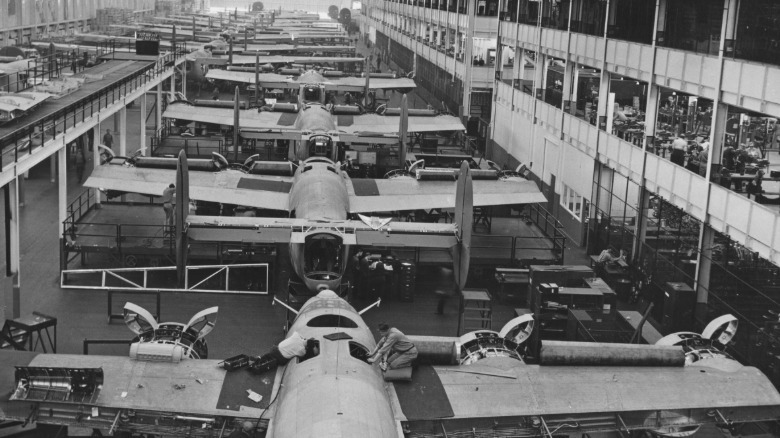 Archive Photos/Getty
Ford continued to support U.S. military efforts throughout the post-war and Cold War era, engineering and supplying utilitarian vehicles and hardware during the Korean and Vietnam wars. Including the iconic M151 Military Utility Tactical Truck, or the MUTT.
Today, Ford holds no contracts for the production of any military specific vehicles or platforms. However, Ford has reportedly held discussions with Pentagon officials to determine the feasibility of once again routing commercial production into national security and military requirements.
AM General
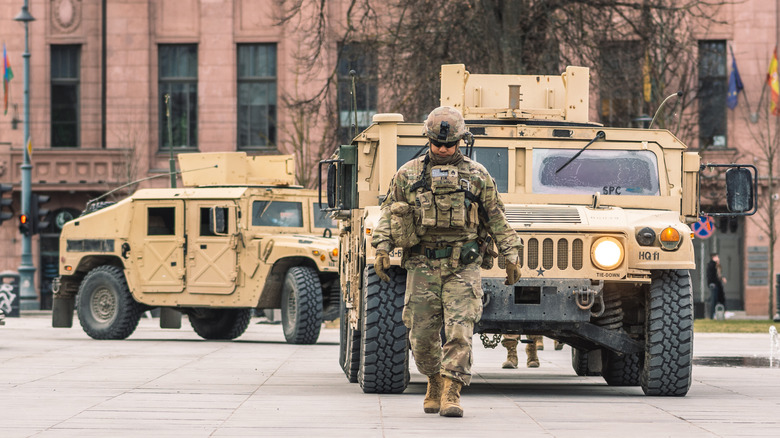
AM General has maintained a relationship with the U.S. military since 1981, however its roots run much deeper. Its predecessors, the Willys-Overland Jeep Company, and Studebaker, reach back as far as 1861 where they provided the U.S. military with horse-drawn carriages and wagons.
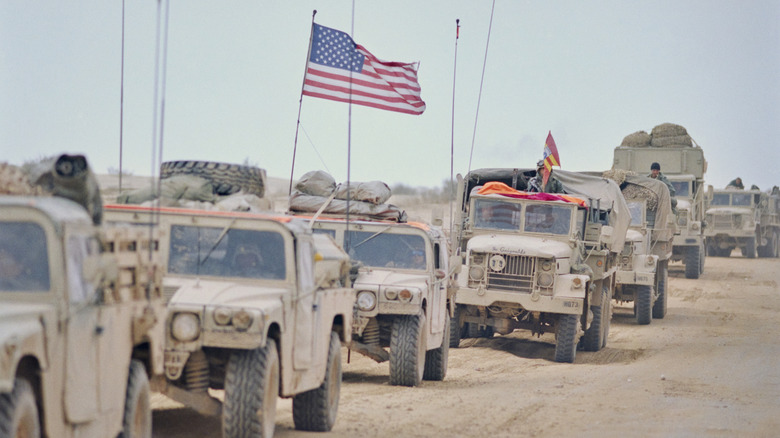
Best known for producing the vehicle often singularly attributed to the U.S. military, the High Mobility Multipurpose Wheeled Vehicle (HMMWV) or Humvee. AM General has continued to develop and produce the Humvee platform from its initial 1983 production contract, through today.
Notably, the HMMWV remained restricted to military employment until, in 1990, while filming Kindergarten Cop, Arnold Schwarzenegger spotted a military Humvee convoy and immediately lobbied the manufacturer to make a street-legal version. This request catalyzed the transition from HMMWV to the civilian Hummer brand.
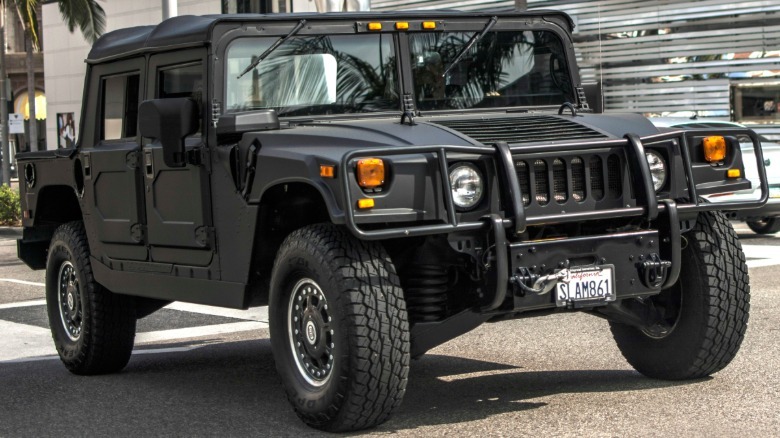 Johnnie Rik/Shutterstock
Drawing on a combination of Schwarzenegger filling the role of brand ambassador, and the persistent presence of the HMMWV in news media coverage of the ongoing Operation Desert Storm, the H1 Hummer became a niche status symbol and laid the groundwork for the brand’s SUV boom through the 2000s.
Today, U.S. Department of Defense orders have indicated an imminent end to the AM General designed and produced HMMWV, describing the design as obsolete. However, AM General is likely to remain present in future U.S. military formations through production of the Joint Light Tactical Vehicle, the forecasted replacement of the HMMWV and the probable next era in the evolution of American light tactical vehicles.
Chrysler
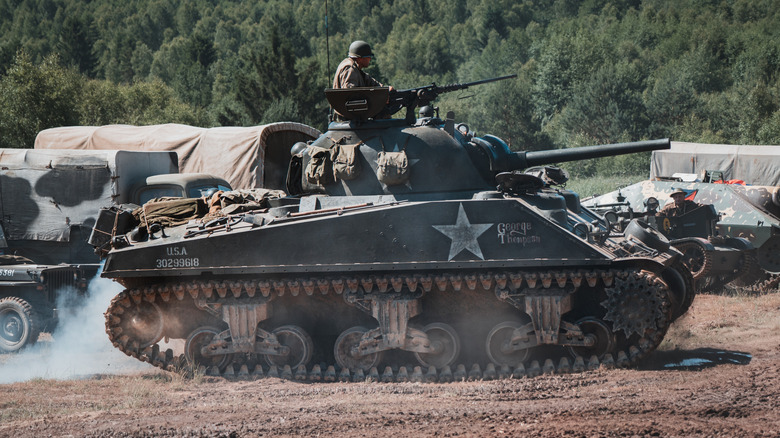
Chrysler’s first major collaboration with the U.S. military took place on August 15, 1940. Anticipating the U.S. entering World War II, the American government approached Chrysler as a solution to demand for the mass production of tanks. In response, Chrysler delivered its first M3 Lee tank to the U.S. Army in April 1941.
Chrysler continued to develop its designs, driven by the lessons and requirements learned and demanded by U.S. forces partaking in battles across Europe and the Pacific. From the M3 Lee, to the M4 Sherman, and M26 Pershing, Chrysler quickly became a critical supporter of America’s armored capabilities.
Building from its successes in World War II tank development, and in direct support to the American pivot to counter-Soviet strategic design, Chrysler continued its production of armored vehicles. The Chrysler built Patton series, made up of the M46, M47, M48, and M60, represented the backbone of postwar American armor up until the early 1970s, when Chrysler produced a design and prototype that would become one of the most identifiable tanks in existence, the M1 Abrams.
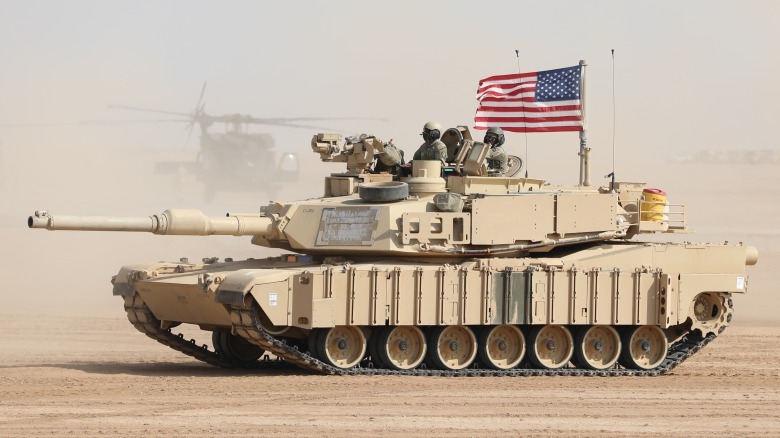 Faizinraz/Shutterstock
Chrysler was awarded the contract for production of the Abrams in 1976, and had produced roughly 1,000 Abrams by February 1982, when Chrysler Defense was acquired by General Dynamics Land Systems. Like Ford, Chrysler does not currently have an in-house defense or military manufacturing division.
GM Defence LLC
General Motors represents the largest commercial provider of military vehicles in U.S. history. Beginning in 1916, the U.S. Army officially selected the GMC Model 16 as the standard three-quarter ton truck for military service. These trucks served as vital logistical and ambulance vehicles near the front lines of America’s First World War battlefields.
At the outbreak of World War II, GM completely halted civilian vehicle production to serve the military. GM would produce a number of iconic vehicles of the era, including the GMC DUKW and the Chevrolet and Canadian Military Pattern trucks. Though these paled in comparison to the legendary GMC CCKW.
The original 2.5-ton Deuce-and-a-half, the CCKW was a wildly popular and highly successful logistics support truck, and remains a favorite with fans of military history today.
In later years, GM was a driving force in the Commercial Utility Cargo Vehicle (CUCV) era, producing militarized versions of standard Chevrolet K-series, Tahoe, and Suburban platforms for military needs. GM’s Defense division also assisted in the initial integration and manufacturing of the Stryker Light Armored Vehicle, before selling its defense assets to General Dynamics Land Systems in 2003.
Following the sale of its major defense programs to GDLS, GM Defense LLC’s current products are relatively limited and draw substantially from GMs commercial line of civilian light utility vehicles. This is best seen in GM Defense LLCs primary product line, the Infantry Squad Vehicle (ISV) series. The ISV is an all-terrain light squad mobility vehicle built upon the Chevrolet Colorado ZR2 chassis. Notably, the ISV is manufactured using 90% commercial-off-the-shelf components drawn directly from GM civil production lines.

Stephan is the sports journalist for the Maple Grove Report.