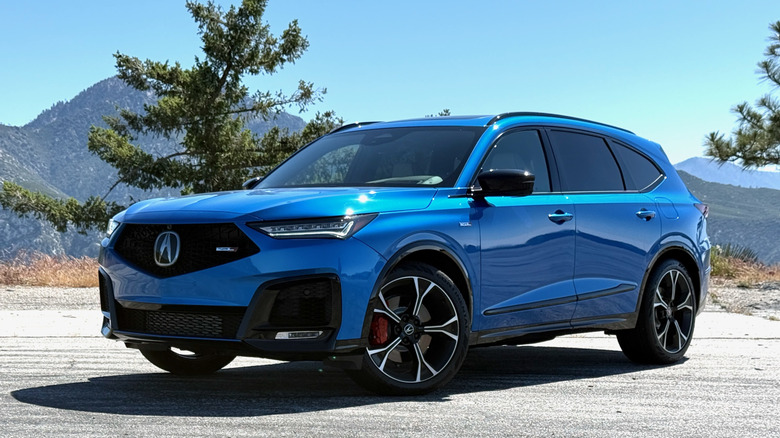

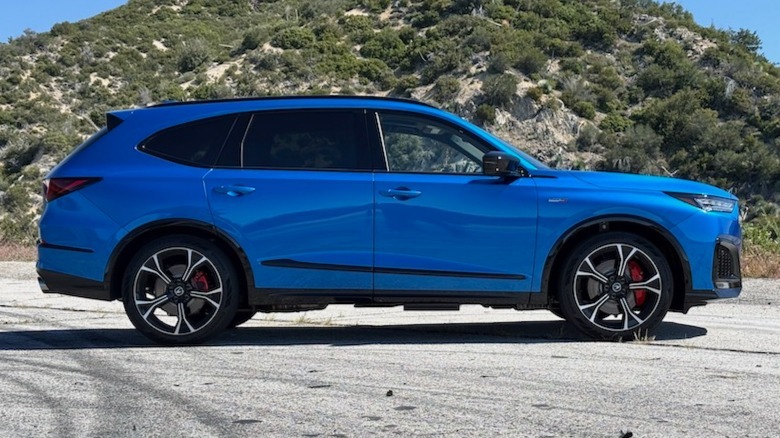
Driving the MDX Type S around Los Angeles for a week, I had a realization. With the NSX long gone from their lineup (the last NSX was built nearly four years ago), the MDX has been the flagship vehicle for Acura for quite some time. The NSX was fantastic, and totally wouldn’t fit in Acura’s lineup today. The MDX, however, is their biggest SUV and their most expensive vehicle, with added performance coming via the Type S trim, and it reps the brand in a big way.
Smaller Acura vehicles like the Integra Type S offer compact-hatchback performance and an ambitious entry point for brand enthusiasts, but the three-row MDX is a much better seller. The MDX typically sells double the number of units in a given year than the entry-level Integra, so no matter how much we enthusiasts love the Integra, it’s the MDX that holds up the brand name.
 Travis Langness/SlashGear
The MDX, while it certainly isn’t a brand-defining flagship like the NSX, or a speedy hatchback with decades of name cachet, has the weight of lofty expectations resting on its shoulders. Along with entertaining driving dynamics, the MDX needs to be fairly premium. It represents the storied luxury brand, offering the latest tech they can muster up in the most family-friendly package. Thankfully, it’s big enough and strong enough to carry the load of a demanding luxury market, and it even goes a bit further by being genuinely fun to drive.
Some pep in its step
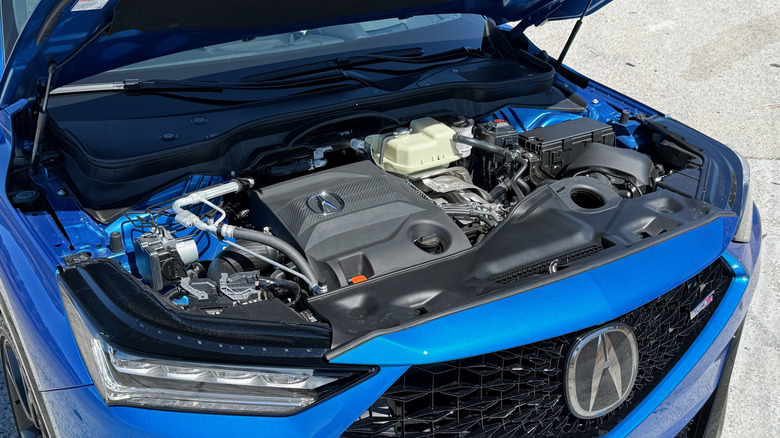
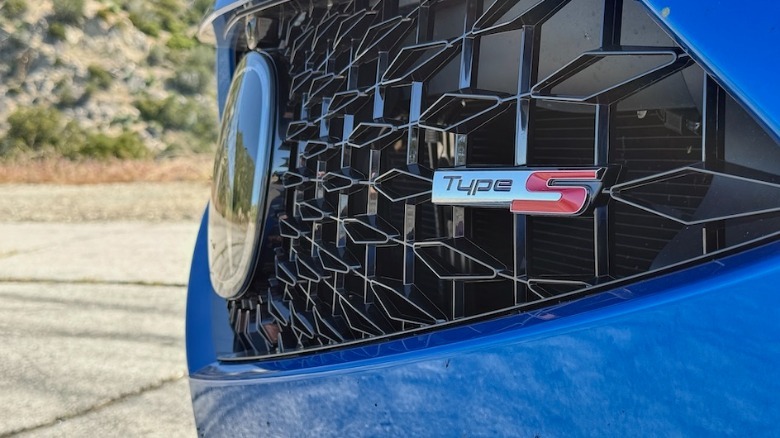
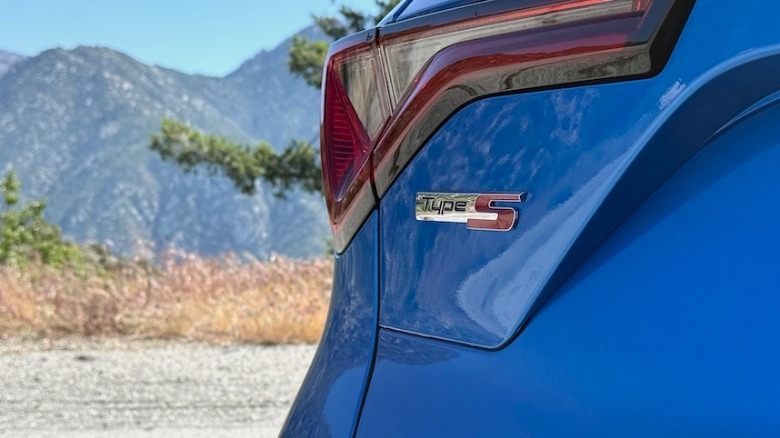
The standard MDX is powered by a naturally-aspirated SOHC 3.5-liter V6 that makes 290 horsepower and 267 lb-ft of torque. It’s adequate, but not exactly the entertaining choice. The Type S gets its own unique engine, with some spicy turbocharging thrown into the mix.
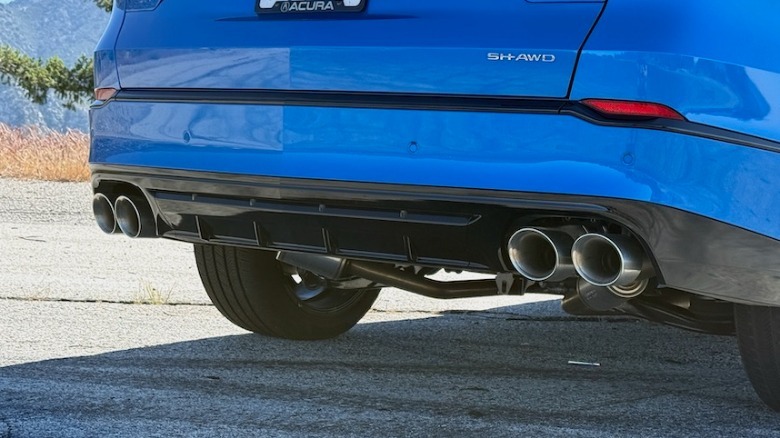
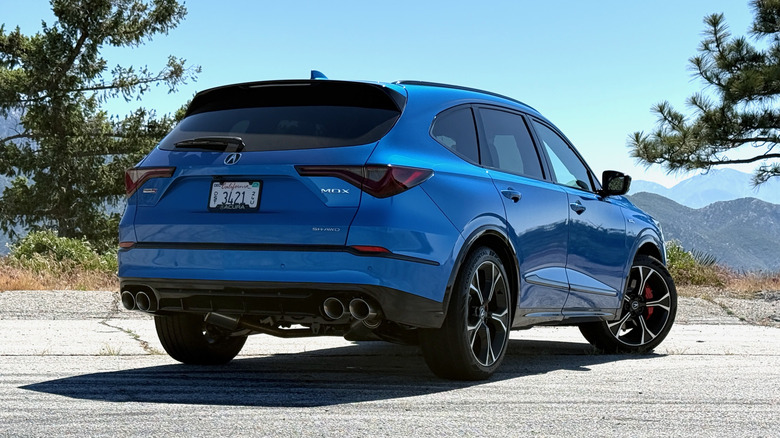
Specifically, the MDX Type S gets a turbocharged 3.0-liter V6 (yep, it’s technically smaller displacement) that produces 355 hp and 354 lb-ft of torque, paired with a 10-speed automatic transmission. While that might not be impressive compared to some of the luxury SUV V8 models out there, it’s certainly adequate for all your family-hauling needs and much more.
 Travis Langness/SlashGear
Slam your right foot to the floor and the Type S heads forward in a hurry, with snappy upshifts from the 10-speed and a bit of growl from the boosted V6 and the quad pipes. It’s not aggressive or rowdy, but it’s powerful enough to feel purposeful on the right stretch of road — it’s a big upgrade in entertainment over the standard model. Fuel economy drops between the two engines, with the standard MDX getting an EPA estimate of 22 mpg combined, and the Type S returning an estimate of 19 mpg combined (much less when you’re driving for a bit of fun), but that loss in efficiency is worth the added smiles per mile in my mind. I found myself going a few extra miles in the MDX for no reason at all, just to enjoy the drive, and that’s high praise for a three-row SUV — even if it did cost me a bit at the pump.
Smooth maneuvers
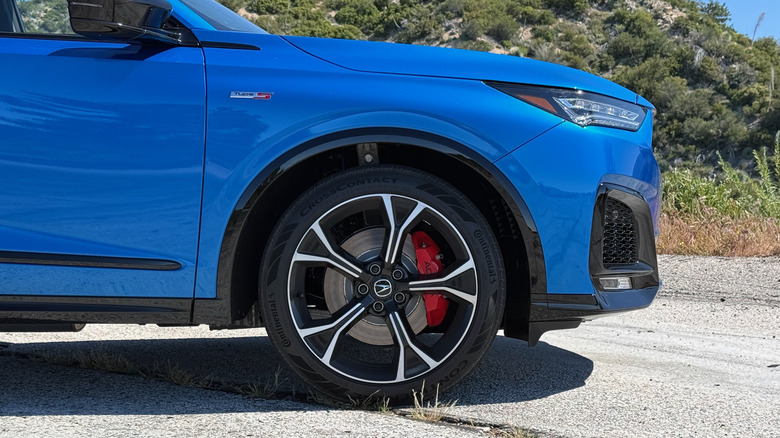
One of the MDX Type S’ other high-performance personality traits is its excellent suspension. The double-wishbone front and multi-link rear suspension, paired with the Type S’ adaptive air suspension, make for an impressive ride and better-than-you-might-expect handling capabilities. Steering isn’t exactly razor sharp, but it’s well-weighted enough for a vehicle of this size and it feels reasonably responsive. The big SUV changes direction quickly, and while I wouldn’t call it sports-car nimble, the MDX Type S is fearlessly stable.
With a curb weight of 4,776 lbs, the MDX would have every right to wallow a bit through corners, but it doesn’t. It remains flat, tracks extremely well, and the steering feels properly weighted. Few SUVs in this price range are as entertaining to drive at speed, and the MDX provides that entertainment without sacrificing comfort.
 Travis Langness/SlashGear
On the highway, in the city, and on beaten-up back roads, it has an excellent ride quality to go along with its enthusiastic demeanor. Send any lengthy road trip my way, and I’d be happy to drive the miles behind the wheel of an MDX Type S. Mix in some curvy back roads, and I’ll be even happier.
An interior that doesn’t disappoint
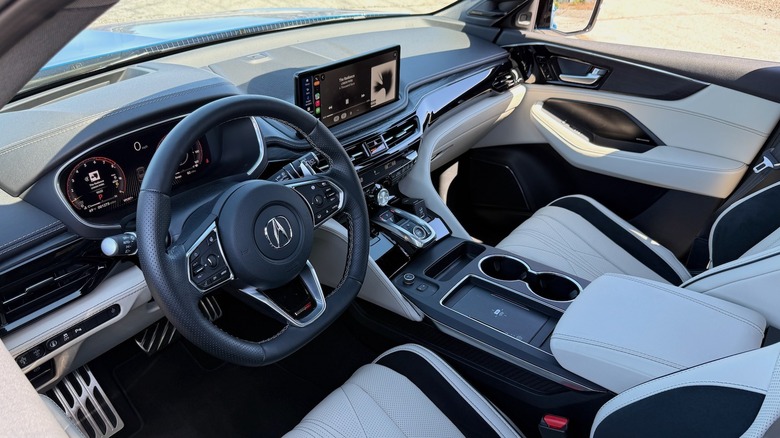
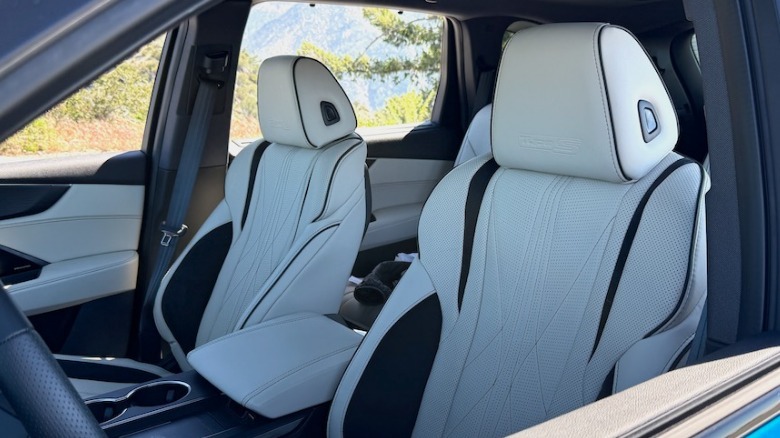
The overall experience in the MDX is one of simple luxury. There aren’t a lot of ostentatious bits or overwhelming design details, just simple, easy-to-use features and a well-built cabin. The seats are comfortable, but, at least for the driver and front passenger, they’re well bolstered enough to provide stability on a winding mountain pass. Spend your winters taking the kids to the local ski lifts? You’ll enjoy the journey without being tossed from your seat in a corner.
 Travis Langness/SlashGear
Comfort features like the Type S’ standard heated and ventilated seats work quickly — excellent news for your impatient teenagers or your impatient self. More than just some small air bladders slightly pressing against your back, the seat massagers dig in a little bit, no doubt helping to relieve stress on your upcoming road trip or your stop-and-go daily commute.
 Travis Langness/SlashGear
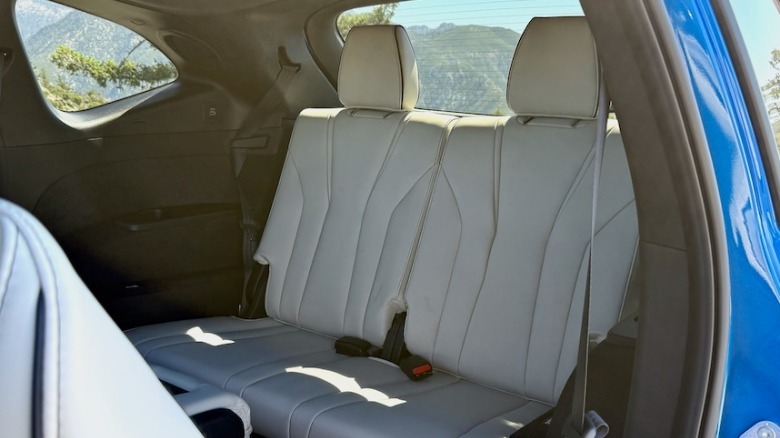
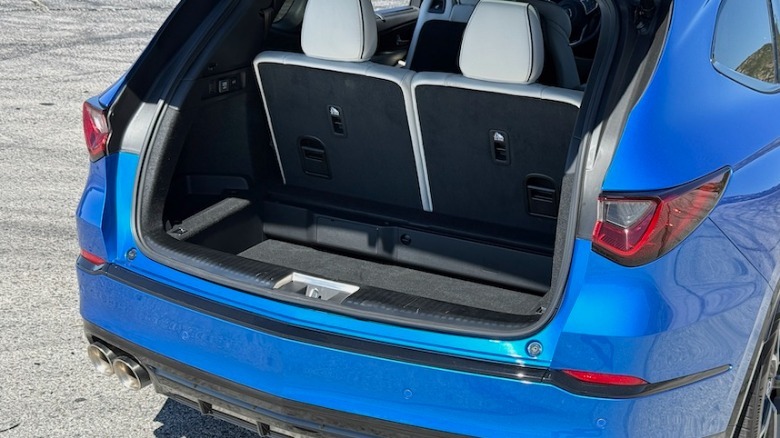
In the mid-size three-row class, there aren’t too many SUVs that offer massive space in the back, and the MDX doesn’t buck that trend. Space is at a premium in the third row, and I wouldn’t want to be stuck back there as an adult for any significant period of time, but it should be enough for the kids. Rhe second row is certainly spacious enough for an average adult. The trunk is a similarly average-sized space, offering 18.1 cubic feet of storage behind the rear seats, as well as a handy drop-down floor for groceries.
The tech scratches all the itches
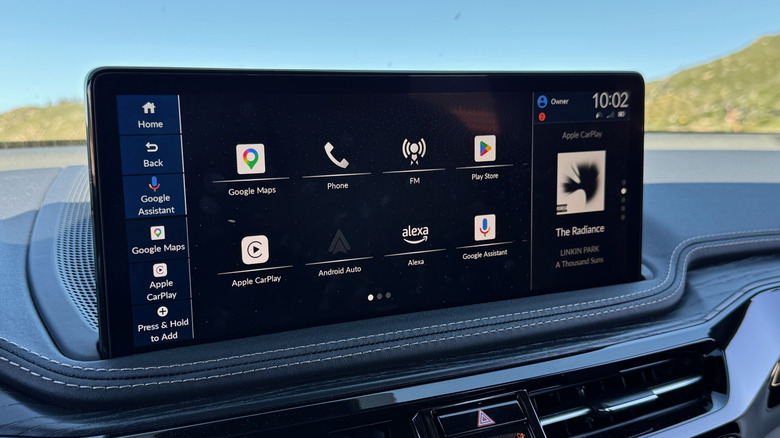
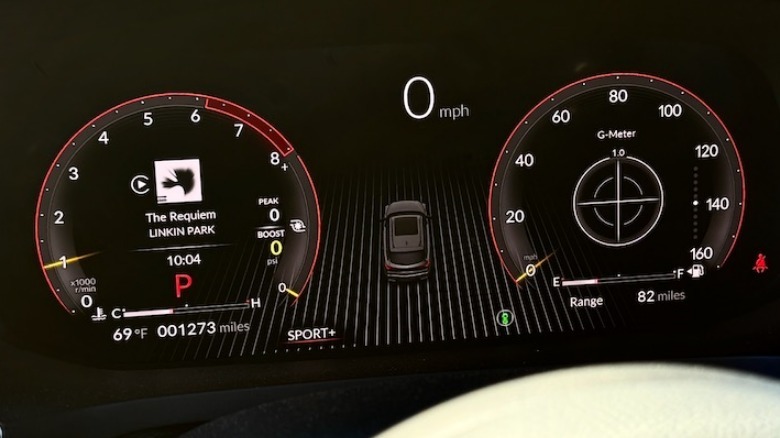
Two screens are in charge of the interface for all the MDX’s tech. There’s a 10.2-inch digital gauge cluster, and a 12.3-inch center touchscreen for all the various infotainment tasks. Neither screen is particularly high-resolution or sharp, especially if you compare them to the screens currently gracing dashboards in high-class German luxury SUVs, but the Acura’s screens are relatively easy to use. Figuring out the various controls happens in a hurry, as does connecting your smartphone. During my week of driving the MDX, wireless Apple CarPlay booted up quickly every time I started the SUV and never dropped out.
 Travis Langness/SlashGear
While it doesn’t quite provide the volume and intensity I’d expect from something with such a high component count, the 31-speaker Bang & Olufsen “Ultra” sound system is properly impressive. Audiophiles will be pleased, and it’s a big upgrade over the standard 9- and 12-speaker stereos offered in the lower trims of the MDX.
 Travis Langness/SlashGear
Acura calls its set of driver safety aids AcuraWatch, and most of the features in that set come standard on every MDX. Adaptive cruise control, forward collision warning, lane-keep assist, blind-spot monitoring, and road-departure mitigation are all part of the deal. The Type S gets some added tech as part of the upgraded AcuraWatch 360, like a lane-change assist, blind-spot intervention with steering avoidance, and a forward cross traffic warning. All these systems, basic ones included, are great additions and made the driving experience better, but they were a bit conservative for my taste. Adaptive cruise control, for instance, left a pretty lengthy gap between the MDX and the car ahead — one that had other cars sneaking in front of me on a regular basis.
It’ll cost more to go fast
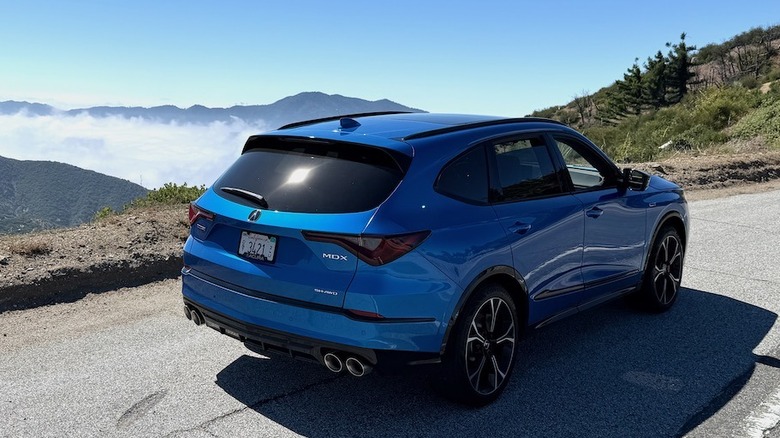
Your basic, run-of-the-mill version of the MDX has a starting price of $53,250 (including $1,450 destination fee). It comes standard with front-wheel drive, and some pretty basic amenities: it’s a nice place to be, but not really the flagship vehicle you’ll see on the front page of all the brochures.
Heated seats, leatherette upholstery, tri-zone climate control, an 11-speaker stereo, and wireless smartphone connectivity are all part of the basic package. For $58,650, the Technology Package gets closer to the Type S and adds features like a 19-speaker Bang & Olufsen stereo, front and rear parking sensors, and premium leather upholstery. All-wheel drive is a $2,200 add-on for base and Technology Package models.
 Travis Langness/SlashGear
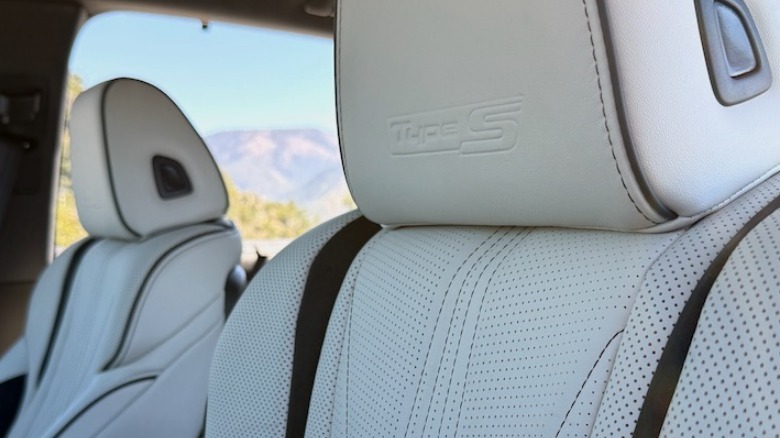
In the middle of the lineup, there’s the MDX A-Spec, the MDX with Advance Package, and the A-Spec with Advance Package, all of which offer increasing levels of equipment like a 360-degree camera, head-up display, extra USB ports, and upgraded upholstery via materials like Ultrasuede and Milano leather.
 Travis Langness/SlashGear
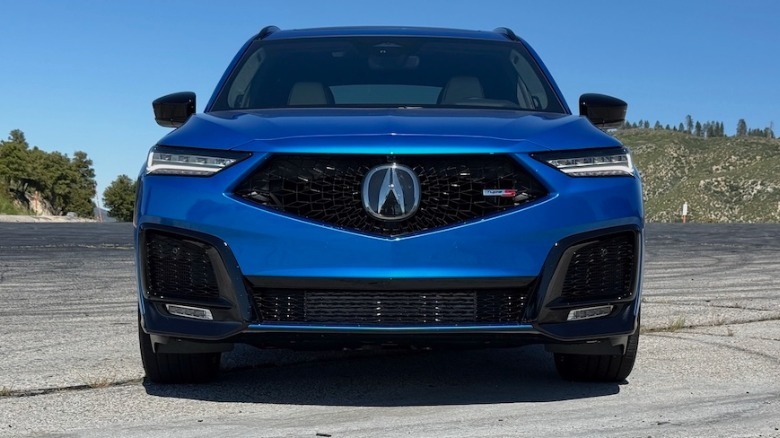
At the very top of the heap, though, the MDX Type S I drove around for a week — with the spicy engine and the Advance Package and Double Apex Blue paint — has an MSRP of $77,300 (plus $600 for the blue paint). And while that’s a considerable price tag, it’s worth noting that it’s only $700 more than last year’s model. There are some accessories available for the Type S, but it’s mostly a come-as-you-are deal. So, is it worth it?
2026 Acura MDX Type S verdict
At nearly $80k, the MDX Type S is in an interesting space: it straddles the line between a few different vehicles. In terms of performance SUVs it’s a bit of a bargain, but if you want the most luxury bang for your buck, it’s a bit costly. The Lexus TX, for example, offers similar luxury for a similar price to the MDX Type S, but the Lexus doesn’t feel quite as sporting.
The new Kia Telluride is just about as luxurious as the MDX, especially on top trim levels, but it’s significantly less pricey. The Telluride lacks the performance punch of the Type S, too, even if it is more spacious.
 Travis Langness/SlashGear
One of the best pound-for-pound rivals for the MDX is the Genesis GV80, which has an immaculate interior, but a very snug (optional) third row of seating. German rivals like the BMW X5 and the Mercedes-Benz GLE are also worth checking out, though their performance variants get pricey in a hurry. Whatever you put it up against, the MDX Type S has a strong showing. It represents the Acura brand well, giving shoppers a place for all their stuff and a healthy splash of entertainment along the way.

Stephan is the sports journalist for the Maple Grove Report.