
I may live in California, but I consider myself to be a Baja expert, living just 15 minutes away from the tip-top of the Baja peninsula and making monthly visits at the very least for cheap tacos and margs.
That’s why I was a long-time contributor to The Cabo Sun, though this story doesn’t reflect Cabo — quite the opposite, actually.
Los Cabos has more than enough tourists, even with a slower-than-expected summer thus far.

As such, the Travel Off Path team felt that it was all the more reason to explore more of Baja’s delights, a paradisal region of Mexico that locals often claim feels like its own country.
Sounds a little Californian if you ask me…
Scattered between Tijuana and Cabo are a plethora of worthwhile destinations offering a myriad of vacation styles from epic wine country stays to postcard coastline and aquatic thrills often overshadowed by the peninsula’s southernmost vacation spots, now that Todos Santos and La Paz have earned a seat at the table.
But we dug up 4 under-the-radar destinations, all with their own unique flair, practically begging for more tourists to find them.
Mexicali: A Cultural Melting Pot In The Desert

Did you know Tijuana has a direct flight to/from China?
It’s true — and somehow, that’s one more nonstop than Tijuana currently has to the U.S. after American dropped Phoenix and Volaris cut Las Vegas.
But Chinese travelers aren’t flocking so much to Tijuana; they’re going down the highway to Mexicali, a city so far off most Americans’ radar, they don’t know this surprising cultural hotspot with arguably Mexico’s most enticing “Chinatown” exists (no offense, Mexico City).
Mexicali isn’t just a border-hop to score sensational dim sum on a budget — its bigger claim to fame is its rolling dunes, calling adventurers to sandboarding and off-roading, just maybe not in the heat of summer.

As such, Baja California’s tourism board has launched a campaign to showcase Mexicali’s cultural draw that makes for a great road trip just across the California and Arizona state line.
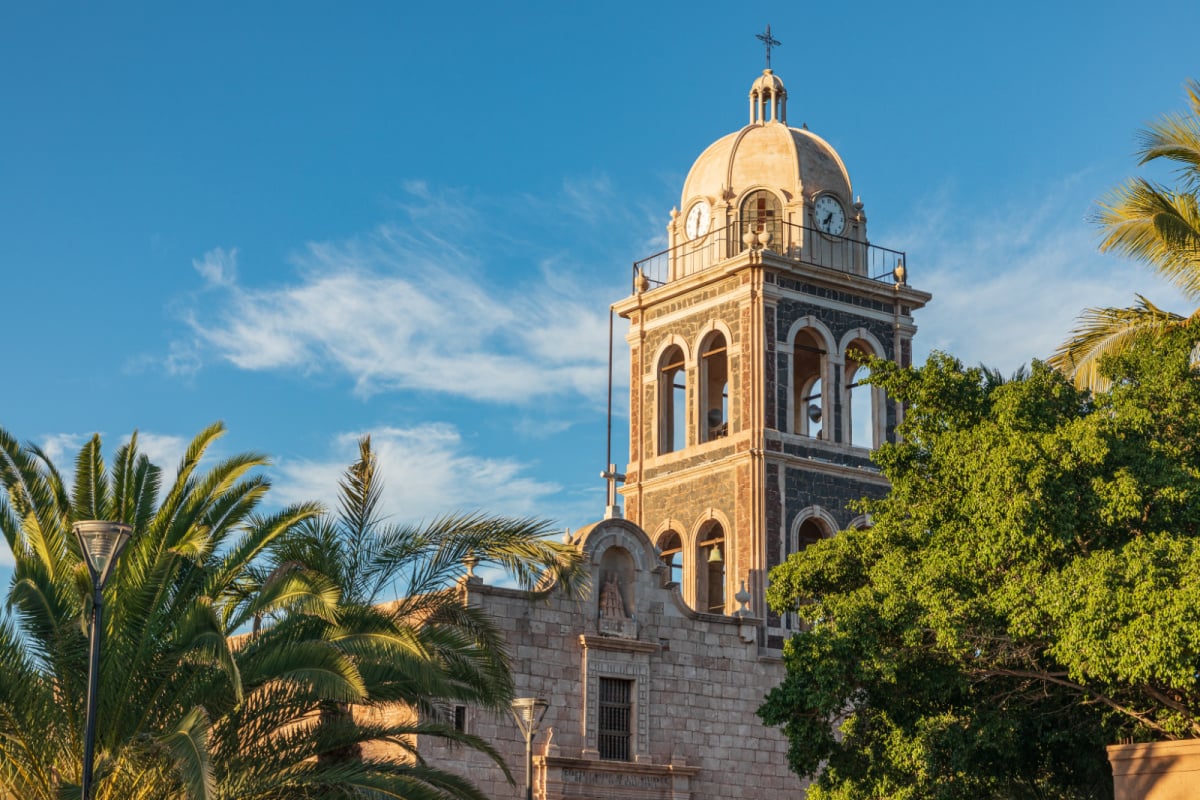
Loreto: The Sleepy Coastal Town Asking Tourists To Stay Awhile
Loreto has been one of the biggest surprises in all my travels of 45 countries.
Nestled on the Sea of Cortez, this turquoise “Pueblo Magico” offers visitors everything from a charming townscape that feels safe to explore at all hours to quite possibly the most translucent waters I’ve ever seen, speckled with dolphins, manta rays, and sea turtles.
The food is just as memorable.
Loreto has long been tied to its Chocolate Clam Festival, now rebranded simply as the Gastronomic Festival as the region works to protect its clam population.

Nearly every menu in town still seems to make room for fresh ceviche, but my favorite meal wasn’t even within the city limits.
It was up in San Javier, a nearby map-dot mountain village far removed from the quick-stop tourism Loreto has been trying to leave behind.
There, a centuries-old mission anchors the single-lane town, and San Javier Farm turns the surrounding land into the kind of farm-to-table meal you plan a whole trip around, proving Loreto isn’t just a cruise stop like it used to be.

Now, Loreto has rolled out a welcome mat for the come n’ stay crowd — travelers who day trip to San Javier, book a boat tour to Coronado Island to snorkel with sea lions, and check into timeless boutique stays like Hotel 1697, where the aesthetic was striking enough to set the scene for a Sports Illustrated Swimsuit shoot of A-list stars with its sparkling pool waterfall and all.
To put the icing on the cake, Loreto is one of Mexico’s safest destinations, backed by our real-time Safety Index with a score of 84/100:
Make sure you double check travel alerts and tourist fees before your trip.
Valle de Guadalupe: Mexico’s “Napa” Has Rooms To Fill

Starting in the beer town of Tecate, travelers can begin their journey down the La Ruta de Vino with a cold beer and finish a relaxing weekend sipping decadent wine at renowned wineries such as Monte Xanic and Adobe Guadalupe.
This sprawling region of wine country is known as the Valle de Guadalupe, essentially Mexico’s “Napa” that begins inland at the border and stretches to the Pacific.
Home to gorgeous hotels, surprisingly modern Airbnbs and a scenic drive worth the trip alone, you’d think this region might be more popular, but it’s largely visited by “locals” in Southern California because they believe the border in general — especially nearby Tijuana — is too sketchy to justify an unforgettable trip.

Since Napa and plenty of other small-town hideaways with boutique vineyards feel safer and aren’t exactly far-flung, Valle de Guadalupe is hard at work luring more tourists.
That includes opening a new bus terminal aimed at keeping border-crossing headaches to a minimum, where the logistical work is done for you, so you can sit back, relax, and enjoy the ride all the way to your resort of choice — such as one I hope to check out soon, El Cielo Resort.
Ensenada: The End-Cap For Wine Lovers & Starting Point For Cruisers
Those wine-country roads don’t end in the vineyards — they eventually lead to the Pacific.
Well, that would be Ensenada, a charming coastal town more known for its cruise port than its wine bars.

Struggling with safety perception as of late, especially with Tijuana’s border-city baggage following travelers down the coast, Ensenada has become somewhat separate in the eyes of wine enthusiasts who turn around after Valle de Guadalupe rather than continuing all the way to the water.
But here’s the kicker: locals are actually pushing back on the very tourism push being promoted by the mayor, saying basic needs like reliable water, trash collection, and road repairs are being neglected — not exactly the most welcoming sight for cruisers stepping off their ship for the day.
With lofty goals of opening its own airport, Ensenada still has work to do to repair its image beyond a hop-on, hop-off cruise stop, especially as locals make it clear tourism is fine — but their own quality of life is being treated as an afterthought.
Ensenada is currently seeing a poor safety score of just 60/100, just a notch above notoriously sketchy Tijuana sitting at 50/100:


Stacie Harris is a local resident and reporter of the Maple Grove area. Stacie reports on medicine and science for the Maple Grove Report.