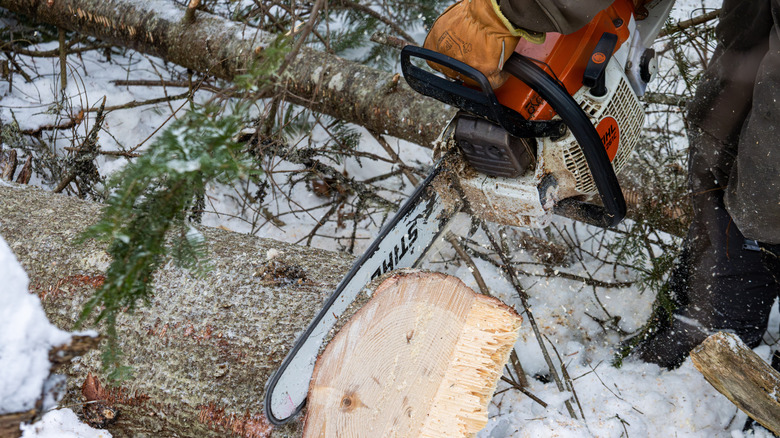

Among the major manufacturers in the consumer chainsaw market, Stihl is a brand that regularly finds itself ranked among the best you can buy. Throughout the company’s five-decade existence, pro cutters and DIYers alike have revered the chainsaws for their blend of premium build, power, and durability.
Like many cutting tools from other notable chainsaw makers like the comparable Husqvarna brand, those that bear the distinctive Stihl logo also feature innovative design elements, like the so-called “summer/winter mode” switching. As the name implies, that function does indeed allow users to alter the way their cutter functions based on seasonal conditions, ensuring the device performs at maximum capacity in almost any weather. The function is controlled by a small orange shutter in the chainsaw’s engine, which can be removed and rotated based on seasonal needs.
The reasoning behind the function is simple, as chainsaws may be prone to carburetor icing in winter months and overheating in the summer months. Both of these issues can result in the cutter underperforming, over-idling, and even outright failing. Switching to winter mode in cold weather by opening a small shutter vent actually utilizes heat from the engine itself to warm the cutter’s carburetor. Similarly, closing the shutter in summer protects the carburetor from engine heat and ensures cooling outside air is contained around it. Thankfully, switching modes on your Stihl chainsaw is a relatively simple task.
Here’s how to switch from summer to winter mode on your Stihl chainsaw
Not every chainsaw from the family-owned Stihl company is equipped with summer/winter mode. If you’re unsure about yours, consult the device’s user manual to confirm. Assuming it does, you will need to remove the cutter’s engine cover to access the shutter, which you can do either with the combination wrench that likely came with your Stihl chainsaw or a larger flat-head screwdriver. With that tool in hand, follow these instructions to switch between season modes on your chainsaw.
- Using the flat-head tool, remove the fasteners securing the chainsaw’s engine casing and place them in a secure spot.
- With the fasteners gone, remove the engine cover.
- Once the cover is removed, look for the orange shutter that controls the summer/winter mode function. It should be located in the vicinity of the saw’s air filter.
- Use the flathead tool to remove the shutter from its slide-in slot.
- There should be markings on the shutter — either a sun for summer or a snowflake for winter — to tell you which way it needs to be inserted for summer or winter modes. Insert the shutter back into its slot based on your seasonal needs, which, again, should be open for winter and closed for summer.
Once the shutter is in the correct position and the engine cover is secured, you’re ready to get cutting. It is vital, however, that you switch the shutter to the correct position for every season, as failure to do so could severely damage the chainsaw’s engine.
Using your Stihl chainsaw in cold weather requires extra maintenance
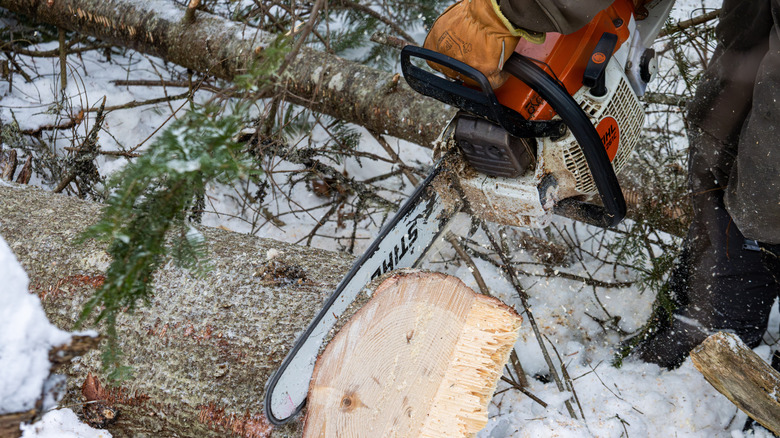
If you’re curious about when, exactly, the change from summer to winter mode needs to be made with your Stihl chainsaw, the company recommends doing so when the outside temperatures dip below 40 degrees Fahrenheit. If you are set on cutting fallen trees or limbs in prolonged cold weather conditions, there are additional precautions you should consider taking to properly maintain your Stihl chainsaw even after making the summer/winter shutter switch.
First and foremost, it is important to keep the device’s sprocket guard — the protective plate on the side of the chainsaw — clean and free from sawdust and debris. This is to ensure those materials do not freeze on the chain or blade along with collected ice and moisture, as this can directly affect the cutter’s performance and potentially even damage the chain brake. To that end, if your cutter is equipped with a chain brake, you’ll want to ensure it is regularly cleaned in the winter months as well to ensure it is properly functioning.
When working in the snow, you’ll also want to keep the chainsaw components as dry as possible. This is because collected moisture and the potential for icing — particularly around areas like a fuel tank or throttle trigger — can lead to performance issues and engine failure. The same is true for any moisture, debris, and ice that collects around the air intake, as a lack of airflow could directly to the engine of your Stihl chainsaw overheating.

Stephan is the sports journalist for the Maple Grove Report.