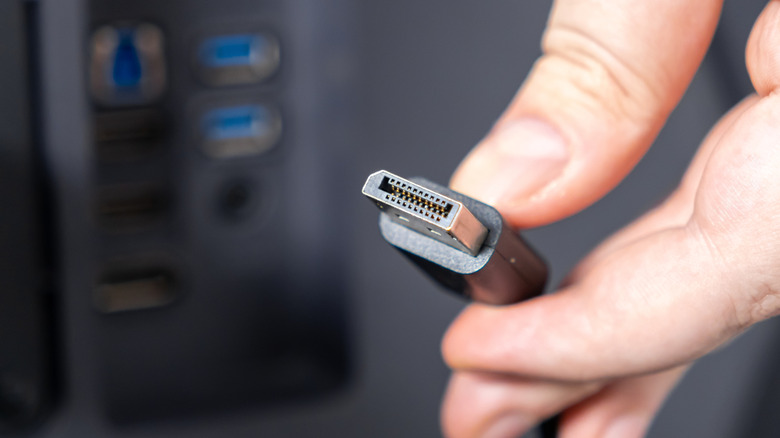
The PC market is a fast moving space, so any accompanying technologies have to keep up. Take DisplayPort, the HDMI-like video connector developed by VESA (the standards group behind most PC display tech), for one. As soon as monitors and graphics cards start pushing past what the older version carried, you get a new release. DisplayPort 1.4 was released back in 2016 and while it has served as the default for almost a decade, it’s now superseded by version 2.1, which landed in 2022. It’s actually the biggest upgrade the standard has gotten in a while, the most notable change being that it’s able to shove way more data than the earlier version.
For context, DP 1.4 tops out at 32.4 Gbps, though after overhead you’re left with roughly 25.92 Gbps to work with. Meanwhile, DP 2.1’s raw bandwidth climbs all the way up to 80 Gbps, with about 77.37 of that staying usable. It’s close to triple what the older version managed.
This matters because it singlehandedly decides almost everything your screen can pull off. Version 1.4’s ceiling was high, but while it could run 4K at 120Hz, going higher meant turning on compression to fit the signal through. Version 2.1 is a step up, allowing you to push 4K to 240Hz or 8K without compression.
How 2.1 moves so much more data
DP 2.1 features a significantly higher link rate per lane, allowing for those eye-watering bandwidths. At the same time, it also cuts down on the overhead by using a much more efficient encoding. Where the older 1.4 leans on a scheme called 8b/10b, which loses 20% of everything to overhead, the newer 2.1 switches over to 128b/132b instead, which sheds just 3%. Just keep in mind that the above numbers reflect the theoretical limits for DisplayPort standards, not the limits on real-world DisplayPort cables, which sit lower.
That said, despite their differences, the two do play nice together. So if you drop, say, a DP 2.1 graphics card into an older 1.4 monitor, it would work just fine, since both use the exact same connector shape. The only difference would be that the link would quietly fall back to the slower speed. As for whether you actually need 2.1, the thing is that 1.4 is far more capable than it may appear.
Do you actually need 2.1?
Danang Eko Novianto/Shutterstock
DisplayPort 1.4 is highly capable even today and already supports 4K at 120 Hz or 8K at 30 Hz without compression. With compression (DSC 1.2a), it can push 4K at 240Hz or even 8K at 60Hz. That said, VESA classifies DSC as visually lossless, and viewers reportedly can’t reliably tell the difference.
But 2.1 does come in handy for certain tasks. The thing is that while 1.4 can reach those higher resolutions, it’s spending nearly all of its bandwidth to get there. Meanwhile, 2.1 does so without breaking a sweat, so it can stack extras like 10-bit color, HDR, and very high refresh rates at the same time. It manages this without the link running out of road, so no compression is needed. Moreover, 2.1 is far more multi-monitor friendly. On 1.4, if you daisy-chain two or more displays on the same port, they quickly hit the wall at maxed out settings.
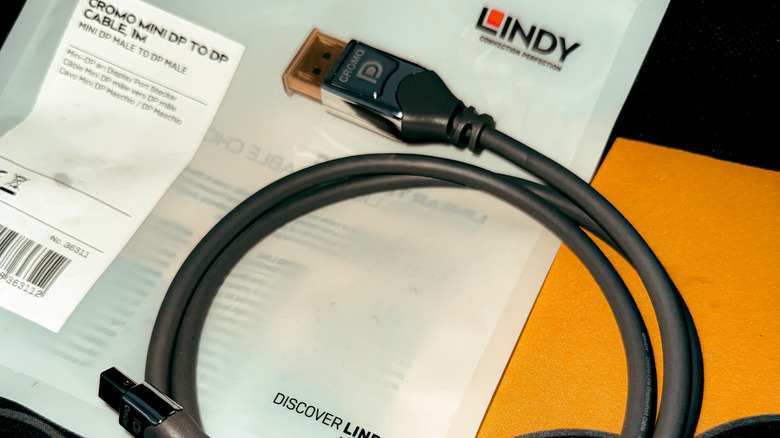
Today, 2.1 is also far more available than it used to be. NVIDIA’s RTX 50-series, which has its own set of pros and cons, now ships with it, and so does AMD’s RX 9000 line. Plenty of 4K 240Hz OLED panels also ship with it as standard. As for the cables, 2.1 does cost more. Where a basic 1.4 cable runs a few dollars, a VESA-certified DP80 cable that carries the full 80 Gbps sits closer to $20. However, the advantages may be worth the few extra bucks.
Anchorage is Alaska’s gateway city, with more enplanements than the rest of the state combined. Chances are, if you’re cruising Prince William Sound or Kenai Fjords, taking a bush plane to see bears at Katmai, riding the rails to Denali, or heading deep into the interior, you’re coming through Anchorage.
Last summer, we spent a full week in Anchortown between adventuring in McCarthy and cruising from Juneau. Looking to save a little money and curious how far we could push the idea, we decided to explore Anchorage completely car-free.
What we found was a city that quietly excels at “Only-in-Alaska” experiences without ever needing a rental car.
Stay Central
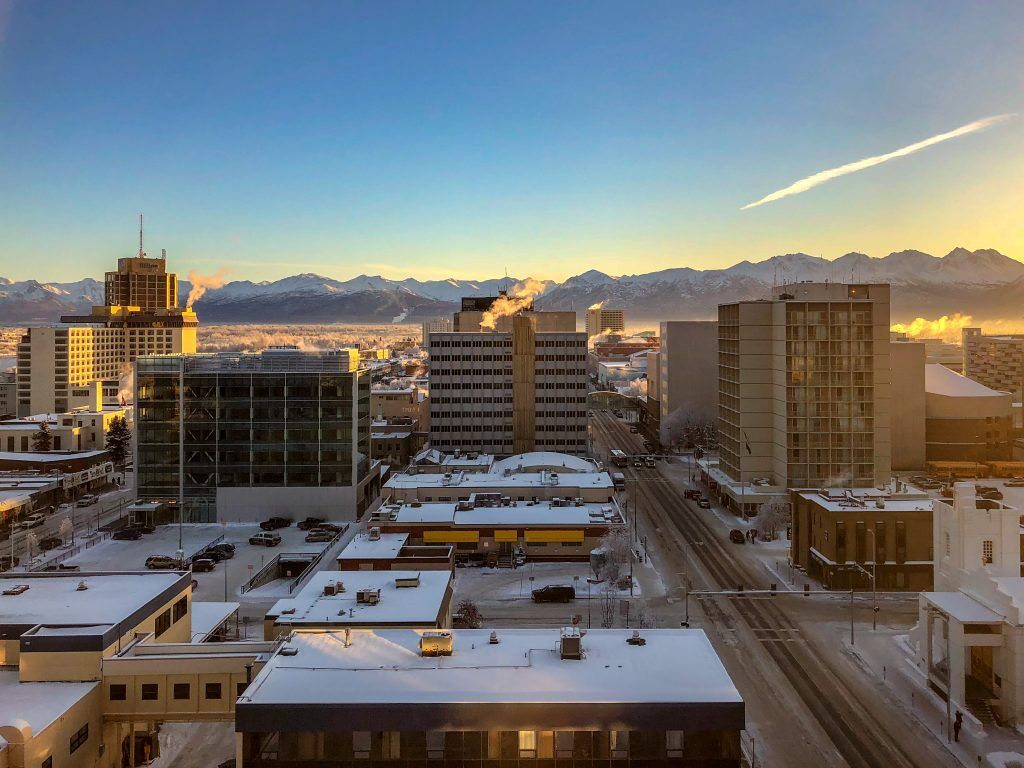
Anchorage is America’s third-largest city by area; bigger than Rhode Island and nearly the size of Delaware, yet home to just 290,000 residents. Instead of endless sprawl, it’s a surprisingly walkable downtown wrapped in parks, greenbelts, and mountain views.
If you’re planning a car-free visit, downtown is non-negotiable and the Hotel Captain Cook is the place to anchor yourself.
It’s Anchorage’s only Preferred Hotel, with five distinct in-house restaurants, rooms that overlook Cook Inlet or the Chugach Mountains, complimentary airport shuttles, and a location just a 15-minute walk from the Alaska Railroad Depot. It makes arriving, exploring, and leaving town effortless.
Dine Local
Downtown Anchorage has many restaurants within walking distance, but these stood out during our stay:
49th State Brewing A beloved Alaskan brewpub serving northern favorites like yak burgers. It’s popular for a reason! Call ahead and add your name to the waitlist.
Wild Scoops Alaska’s ice-cream scene is serious business, and Wild Scoops leads the charge with small-batch flavors made from local ingredients. Their Fort 49 patio location is dangerously convenient.
Simon & Seafort’s Saloon & Grill You don’t come to Alaska and skip the seafood, and nowhere beats the Cook Inlet views at Simon’s.
Ride the Rails
The Alaska Railroad is more than transportation; it’s an adventure. Better yet, the Anchorage Depot is only a 10–15 minute walk from the Hotel Captain Cook, making it one of the easiest car-free connections in the entire state.
From there, you can ride north to Denali and Fairbanks or hug the coast down to Whittier and Seward. The scenery is breathtaking, especially from the GoldStar Service cars with their glass-dome ceilings.
Interpretive guides narrate the journey, pointing out towering peaks, sprawling glaciers, and the stories of fortunes made and lost along Alaska’s iron highway. Some services even include whistle stops that allow you to step off the train and explore remote wilderness that cars simply can’t reach.
Blue Water Kayak on Spencer Glacier
Spencer Glacier is accessible only by train, and Chugach Adventures has an exclusive partnership with the Alaska Railroad for morning drop-offs.
We boarded the Coastal Classic Train in Anchorage, met our guides in Girdwood, and then bounced down a gravel road in a bus that looked like it came straight out of Into the Wild. At the lake, they outfitted us with kayaks, paddles, and life vests before sending us across mirror-still water, weaving through glowing blue icebergs toward the glacier itself.
After lunch, we boarded the Glacier Discovery Train, passing through Grandview and tunnel country before a whistle stop at Grandview Glacier—another short hike, another jaw-dropping view. By evening, we were back in Anchorage. Zero car keys required.
Flightsee to Knik Glacier
Trains aren’t the only way out of town.
Rust’s Flying Service has been operating from Lake Hood, adjacent to Ted Stevens Airport, for more than 50 years. They offer narrated seaplane flightseeing tours and provide shuttle service from downtown hotels.
Our flight to Knik Glacier included aerial views of Anchorage, the Chugach Mountains, and a smooth landing on a glacial lake. We spotted Dall sheep from the air and drifted beside ancient ice that had never once felt the heat of a road.
Go on a Guided Adventure
Guided tours remove the guesswork and open doors you didn’t even know existed. Many operators pick up from the Egan Center downtown, making them perfect for car-free travelers.
Lifetime Adventures runs mesmerizing multi-sport trips to Eklutna Lake, where the water glows an unreal shade of glacial blue.
Go Hike Alaska offers specialty hikes throughout the Chugach Mountains. We joined them on their Backcountry Eats & Foraging Treats trip, learning to identify edible fungi and berries before cooking a backcountry feast of mushroom risotto and fresh salmon. Educational, edible, unforgettable.
Ride the Tony Knowles Trail
The Tony Knowles Coastal Trail stretches 11 paved miles from downtown Anchorage to Kincaid Park, hugging the coastline with views of Denali on clear days and frequent moose sightings if luck is on your side.
We rented e-bikes from Pablo’s Bicycle Rentals near Elderberry Park and cruised past Westchester Lagoon, Earthquake Park, and up to Point Woronzof, where jets lift off right overhead. The gentle hills were effortless with pedal assist, though next time we might rent mountain bikes just to explore Kincaid’s forested trail maze.
Visit the Museums
Anchorage punches well above its weight when it comes to cultural institutions.
The Anchorage Museum blends art, science, and history to tell the story of life in the North. A short shuttle ride away, the Alaska Native Heritage Center offers immersive programs, traditional games, and powerful storytelling from Alaska Native communities.
The Heritage Center runs a free downtown shuttle every summer, making it easy to include without ever opening a car door.
Take the Trolley
Anchorage Trolley Tours is the perfect one-hour orientation to the city, covering highlights like:
Earthquake Park
Lake Hood Seaplane Base
The Alaska Railroad
Captain Cook Monument
Every ticket includes a coupon book with savings at 40+ nearby businesses, making it a smart first stop for maximizing a car-free stay.
Freedom From Car Keys
Anchorage surprised us, not because it was easy to visit without a car, but because it was better that way.
Moving through the city on foot, by bike, train, plane, and trolley slowed us down in all the right ways. We noticed more. Talked to more people. Let Alaska’s rhythms set the pace instead of a GPS.
And here’s our biggest takeaway: don’t treat Anchorage like a layover city.
Build in a few extra days at the beginning or end of your Alaska trip and use Anchorage as your adventure basecamp. From glacier kayaking and flightseeing to coastal bike rides and world-class museums, this city quietly delivers some of the most memorable experiences in the state, without ever opening a car door.
So leave the rental car line behind. Pack your walking shoes, trust the rails, and let the Last Frontier show you just how far you can go without ever turning a key.
Safeguard your digital information by using a VPN. We love NordVPN as it is superfast for streaming Netflix
Stay safe on the go and stay connected with an eSim card through AloSIM
OurPacking Favs:
We LOVE Matador Equipment for their innovative products and sustainability focus. Their SEG45 is a game changer when you need large capacity while packing light.
Travel in style with a suitcase, carry-on, backpack, or handbag from Knack Bags
Packing cubes make organized packing a breeze! We love these from Eagle Creek
Attractions/Activities:
Save on tickets to attractions, sightseeing tours, and more with Tiqets
Get Your Guide and Viator for guided tours/excursions, day trips, and activities
Want to learn a city from the ground up? Take a small group walking tour with Walks – 5-star rated with a Tripadvisor Certificate of Excellence
Want to book an epic adventure experience with top-notch companies like Intrepid Travel, G-Adventures, or Backroads? Check out Travelstride
Find information on local trails with the All Trails App.
Need something else to plan your perfect trip? Visit our Resources Page for more trusted partners
Like it? Pin it for later on Pinterest!
Hi! We are Jenn and Ed Coleman aka Coleman Concierge. In a nutshell, we are a Huntsville-based Gen X couple sharing our stories of amazing adventures through activity-driven transformational and experiential travel.
To provide the best experiences, we use technologies like cookies to store and/or access device information. Consenting to these technologies will allow us to process data such as browsing behavior or unique IDs on this site. Not consenting or withdrawing consent, may adversely affect certain features and functions.
Functional
Always active
The technical storage or access is strictly necessary for the legitimate purpose of enabling the use of a specific service explicitly requested by the subscriber or user, or for the sole purpose of carrying out the transmission of a communication over an electronic communications network.
Preferences
The technical storage or access is necessary for the legitimate purpose of storing preferences that are not requested by the subscriber or user.
Statistics
The technical storage or access that is used exclusively for statistical purposes.The technical storage or access that is used exclusively for anonymous statistical purposes. Without a subpoena, voluntary compliance on the part of your Internet Service Provider, or additional records from a third party, information stored or retrieved for this purpose alone cannot usually be used to identify you.
Marketing
The technical storage or access is required to create user profiles to send advertising, or to track the user on a website or across several websites for similar marketing purposes.