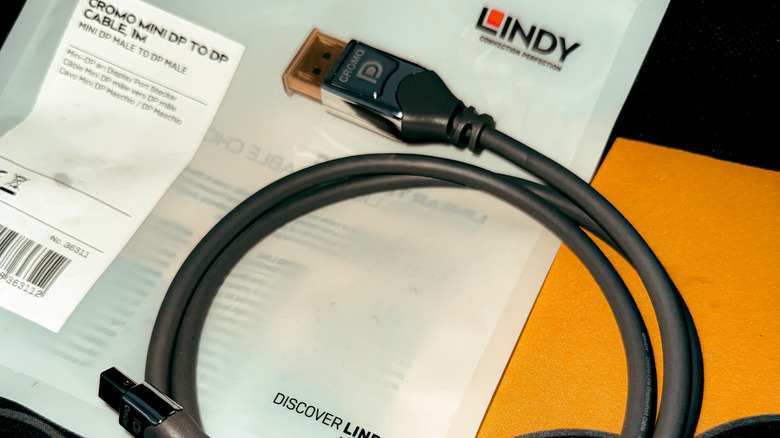
The PC market is a fast moving space, so any accompanying technologies have to keep up. Take DisplayPort, the HDMI-like video connector developed by VESA (the standards group behind most PC display tech), for one. As soon as monitors and graphics cards start pushing past what the older version carried, you get a new release. DisplayPort 1.4 was released back in 2016 and while it has served as the default for almost a decade, it’s now superseded by version 2.1, which landed in 2022. It’s actually the biggest upgrade the standard has gotten in a while, the most notable change being that it’s able to shove way more data than the earlier version.
For context, DP 1.4 tops out at 32.4 Gbps, though after overhead you’re left with roughly 25.92 Gbps to work with. Meanwhile, DP 2.1’s raw bandwidth climbs all the way up to 80 Gbps, with about 77.37 of that staying usable. It’s close to triple what the older version managed.
This matters because it singlehandedly decides almost everything your screen can pull off. Version 1.4’s ceiling was high, but while it could run 4K at 120Hz, going higher meant turning on compression to fit the signal through. Version 2.1 is a step up, allowing you to push 4K to 240Hz or 8K without compression.
How 2.1 moves so much more data
DP 2.1 features a significantly higher link rate per lane, allowing for those eye-watering bandwidths. At the same time, it also cuts down on the overhead by using a much more efficient encoding. Where the older 1.4 leans on a scheme called 8b/10b, which loses 20% of everything to overhead, the newer 2.1 switches over to 128b/132b instead, which sheds just 3%. Just keep in mind that the above numbers reflect the theoretical limits for DisplayPort standards, not the limits on real-world DisplayPort cables, which sit lower.
That said, despite their differences, the two do play nice together. So if you drop, say, a DP 2.1 graphics card into an older 1.4 monitor, it would work just fine, since both use the exact same connector shape. The only difference would be that the link would quietly fall back to the slower speed. As for whether you actually need 2.1, the thing is that 1.4 is far more capable than it may appear.
Do you actually need 2.1?
Danang Eko Novianto/Shutterstock
DisplayPort 1.4 is highly capable even today and already supports 4K at 120 Hz or 8K at 30 Hz without compression. With compression (DSC 1.2a), it can push 4K at 240Hz or even 8K at 60Hz. That said, VESA classifies DSC as visually lossless, and viewers reportedly can’t reliably tell the difference.
But 2.1 does come in handy for certain tasks. The thing is that while 1.4 can reach those higher resolutions, it’s spending nearly all of its bandwidth to get there. Meanwhile, 2.1 does so without breaking a sweat, so it can stack extras like 10-bit color, HDR, and very high refresh rates at the same time. It manages this without the link running out of road, so no compression is needed. Moreover, 2.1 is far more multi-monitor friendly. On 1.4, if you daisy-chain two or more displays on the same port, they quickly hit the wall at maxed out settings.
Today, 2.1 is also far more available than it used to be. NVIDIA’s RTX 50-series, which has its own set of pros and cons, now ships with it, and so does AMD’s RX 9000 line. Plenty of 4K 240Hz OLED panels also ship with it as standard. As for the cables, 2.1 does cost more. Where a basic 1.4 cable runs a few dollars, a VESA-certified DP80 cable that carries the full 80 Gbps sits closer to $20. However, the advantages may be worth the few extra bucks.
Luxury travel isn’t just about five-star hotels, first-class seats, or expensive excursions. True luxury is about knowing how to travel smarter, deeper, and better. It’s about unlocking experiences that feel exclusive not because they cost the most, but because they maximize comfort, access, and unforgettable moments.
After years of exploring everything from remote Alaskan wilderness lodges and African safaris to European winter escapes and luxury mountain resorts, we’ve learned that the difference between a good vacation and an extraordinary one often comes down to insider knowledge.
The truth is, many travelers unknowingly leave better rooms, VIP perks, smoother logistics, and richer experiences on the table simply because they don’t know what to ask for or when to act.
Whether you’re planning a bucket-list adventure, luxury getaway, or simply want to elevate your next trip, these are the travel secrets seasoned travelers consistently use to make every journey feel more seamless, rewarding, and memorable.
Book the Experience, Not Just the Destination
Photo Credit: Jenn Coleman.
Many travelers obsess over where they’re going but underestimate how they experience it.
For example, visiting Alaska can mean vastly different things depending on whether you’re on a crowded cruise ship, staying roadside, or flying into a remote lodge like those tucked deep inside a National Park. The same destination can feel ordinary or extraordinary based entirely on your approach.
Luxury travelers prioritize immersive access:
Small-ship expeditions over mega cruises
Boutique lodges over generic chains
Guided local expertise over self-guided guesswork
Shoulder season timing over peak crowds
In short, the framework of your trip often matters more than the location itself.
Shoulder Season Is Often the Sweet Spot
Photo Credit: Jenn Coleman.
One of the most overlooked travel strategies is avoiding peak season whenever possible.
The best luxury experiences often happen just outside the busiest travel windows, when:
Prices are lower
Crowds are thinner
Service is more personalized
Upgrades are easier to secure
Destinations feel more authentic
Think Québec City before the holiday rush, Deer Valley during summer operations, or safari destinations right before high-season demand spikes.
Frequent travelers know that perfect timing can create better experiences than simply booking the “most popular” dates.
Relationships Matter More Than Rewards Programs
Photo Credit: Jenn Coleman.
Points and miles are valuable, but relationships often open doors faster.
Building loyalty with:
Boutique hotels
Tourism boards
Tour operators
Local guides
Luxury travel advisors
can lead to unexpected perks like room upgrades, custom itineraries, private tours, and insider access.
A thoughtful email, repeat visit, or genuine connection can sometimes outperform elite status.
Luxury is often personal, and hospitality insiders remember thoughtful travelers.
Don’t Underestimate Regional Airports
Photo Credit: Jenn Coleman.
Major hubs aren’t always the smartest play.
Savvy travelers frequently leverage smaller airports to:
Avoid long security lines
Reduce delays
Gain easier access to final destinations
Improve overall travel flow
For example:
Flying to Los Angeles? Consider Ontario, Burbank, or John Wayne
Using regional Alaska airports for wilderness access
Considering alternative ski gateways for mountain destinations
Smaller airports can dramatically reduce logistical headaches while enhancing comfort.
Premium Economy Can Be the Hidden Winner
Photo Credit: Deposit Photos.
First class is wonderful, but premium economy often delivers the best value-to-comfort ratio.
On many international routes, premium economy offers:
More legroom
Better recline
Priority boarding
Improved meals
Significantly lower costs than business class
For travelers who want elevated comfort without overextending budgets, this can be one of the smartest upgrades available.
Luxury travel doesn’t always mean spending the most; it means spending strategically.
Travel Insurance Is a Luxury Tool, Not an Extra Expense
Photo Credit: Deposit Photos.
Many travelers treat insurance as optional until something goes wrong.
Frequent travelers know that comprehensive coverage can protect against:
Medical emergencies
Trip cancellations
Weather disruptions
Lost baggage
Supplier insolvency
Particularly for adventure travel, remote destinations, cruises, or international itineraries, travel insurance is less about fear and more about preserving investment.
Peace of mind is an underrated luxury.
Packing Functional Beats Packing Fashionable
Photo Credit: Deposit Photos.
Instagram may tempt travelers to prioritize aesthetics, but experienced travelers know function wins.
This means:
Layering strategically
Investing in weatherproof gear
Prioritizing footwear
Using compression packing cubes
Packing for destination realities, not photo fantasies
From Arctic excursions to European winters, being properly equipped enhances every experience.
Comfort unlocks confidence, spontaneity, and endurance.
Guided Experiences Often Deliver Better ROI
Photo Credit: Jenn Coleman.
Some travelers avoid tours assuming DIY saves money.
But expert-led experiences often provide:
Priority access
Historical depth
Logistical ease
Hidden gems
Time savings
Whether it’s glacier kayaking in Alaska, food tours in Québec City, or safari operations in Tanzania, guided experiences can dramatically elevate value.
The right guide transforms travel from sightseeing into storytelling.
Splurge Selectively
Photo Credit: Jenn Coleman.
Not every part of your trip requires maximum spending.
Frequent travelers often prioritize splurging on:
Exceptional accommodations
Unique excursions
Better transportation logistics
Prime location
while saving on:
Casual meals
Basic souvenirs
Overhyped tourist traps
Strategic spending creates luxury without unnecessary waste.
Social Media Can Be a Research Tool (If Used Correctly)
Photo Credit: Deposit Photos.
Platforms like Instagram, TikTok, and Pinterest can provide real-world destination insights beyond polished tourism campaigns.
Use them to evaluate:
Seasonal conditions
Crowd levels
Hidden experiences
Hotel room realities
Food quality
However, seasoned travelers cross-reference heavily to separate viral hype from authentic value.
Visual research can sharpen planning when used wisely.
Slow Travel Often Creates Richer Memories
Photo Credit: Jenn Coleman.
Trying to see everything often leads to burnout.
Luxury travelers increasingly embrace slower itineraries that allow:
Deeper cultural immersion
Reduced transit fatigue
Better spontaneity
More meaningful connections
Genuine relaxation
Sometimes spending four days in one remarkable place creates more lasting memories than racing through five cities.
Professional Photography Matters More Than You Think
Photo Credit: Jenn Coleman.
Exceptional destinations deserve more than rushed smartphone snapshots.
Whether through professional shoots, strategic self-photography, or content planning, preserving travel memories thoughtfully enhances long-term value.
For creators, brands, or even personal archives, documenting travel well can extend the experience far beyond the trip itself.
Food Is Often the Fastest Path to Authentic Culture
Photo Credit: Jenn Coleman.
Local cuisine often reveals more about a place than attractions alone.
Frequent travelers prioritize:
Regional specialties
Farmers markets
Local culinary tours
Family-owned establishments
Signature dishes
From Wisconsin’s evolving farm-to-table scene to Puerto Rican classics or Alaskan seafood, food often becomes one of the strongest emotional anchors of travel.
Flexibility Is the Ultimate Luxury
Photo Credit: Jenn Coleman.
Rigid itineraries can limit opportunity.
Leaving room for weather shifts, local recommendations, or unexpected adventures often leads to the best experiences.
Some of our most unforgettable moments happened because we stayed adaptable:
Wildlife encounters
Seasonal events
Last-minute upgrades
Unique excursions
The ability to pivot is often where true magic lives.
Luxury Is Ultimately About Access, Ease, and Meaning
Photo Credit: Jennifer Coleman.
At its best, luxury travel isn’t defined solely by price tags.
It’s about:
Better access
Greater comfort
Enhanced personalization
Deeper immersion
Smarter choices
The most memorable journeys aren’t always the most expensive, they’re the most intentional.
Final Thoughts
Photo Credit: Jenn Coleman.
Travel has never been more accessible, but truly exceptional travel still relies on knowledge, strategy, and experience.
The travelers who consistently create unforgettable journeys aren’t necessarily spending the most. They’re leveraging smarter timing, better logistics, deeper relationships, and a willingness to prioritize meaningful experiences over superficial ones.
Whether you’re dreaming of wilderness lodges in Alaska, luxury ski resorts, historic winter cities, or international adventures, these insider strategies can elevate nearly any journey.
Because in the end, the real luxury isn’t just where you go.
It’s how well you know how to experience it.
Hi! We are Jenn and Ed Coleman aka Coleman Concierge. In a nutshell, we are a Huntsville-based Gen X couple sharing our stories of amazing adventures through activity-driven transformational and experiential travel.
To provide the best experiences, we use technologies like cookies to store and/or access device information. Consenting to these technologies will allow us to process data such as browsing behavior or unique IDs on this site. Not consenting or withdrawing consent, may adversely affect certain features and functions.
Functional
Always active
The technical storage or access is strictly necessary for the legitimate purpose of enabling the use of a specific service explicitly requested by the subscriber or user, or for the sole purpose of carrying out the transmission of a communication over an electronic communications network.
Preferences
The technical storage or access is necessary for the legitimate purpose of storing preferences that are not requested by the subscriber or user.
Statistics
The technical storage or access that is used exclusively for statistical purposes.The technical storage or access that is used exclusively for anonymous statistical purposes. Without a subpoena, voluntary compliance on the part of your Internet Service Provider, or additional records from a third party, information stored or retrieved for this purpose alone cannot usually be used to identify you.
Marketing
The technical storage or access is required to create user profiles to send advertising, or to track the user on a website or across several websites for similar marketing purposes.