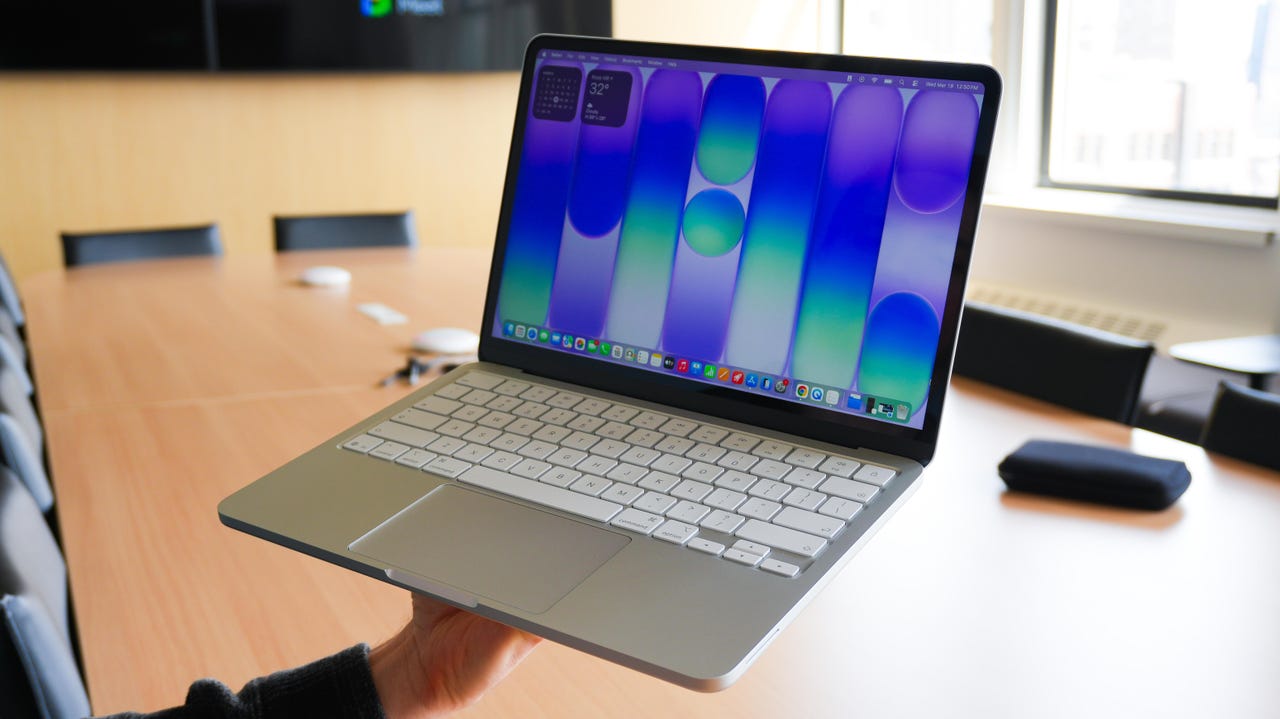
All MacBooks and iPads hit with surprise price hikes – even the Neo wasn’t safe


MacBook Neo

Kerry Wan/ZDNET

Follow ZDNET: Add us as a preferred source on Google.


ZDNET’s key takeaways

  • Apple has raised prices on its MacBook and iPad lineup.
  • You’ll now pay anywhere from 15% to 25% more.
  • Higher costs and shorter supply of memory chips are to blame.

Looking for a new MacBook or iPad? You’ll now have to shell out more money. On Thursday, Apple raised the prices on its entire MacBook and iPad lineup. Depending on the device you want, you’ll pay anywhere from 15% to 25% more than you would have yesterday.

Also: Why your RAM options cost 4X more now than last year – even legacy tech prices aren’t immune

You can see for yourself what you’ll now pay by visiting the online Apple Store, which was down earlier this morning as Apple updated it with the new prices. But here are a few examples:

  • A basic iPad with 128GB of storage now starts at $449, up from $349.
  • An iPad Air with 128GB of storage now starts at $749, up from $599.
  • An iPad Pro with 256GB of storage now starts at $1,199, up from $999.
  • A MacBook Air with ⁠512GB of storage now starts at $1,299, up from $1,099
  • A MacBook Pro with 1TB of storage now starts at $1,999, up from $1,699.
  • A MacBook Neo with 256GB of storage now starts at $699, up from $599.

You get the picture. So why has Apple raised prices so dramatically? Blame it on the memory chip market.

AI’s appetite for memory

AI companies have been scooping up much of the available stock of DRAM (dynamic random access memory) and NAND flash storage for their hungry systems and data centers. That’s led to a severe chip shortage for everyone else, triggering price increases on the remaining supplies.

Also, the three major memory manufacturers  — Samsung Electronics, SK Hynix, and Micron Technology — have shifted their limited resources and budgets toward higher-margin, enterprise components, leaving mere scraps for the consumer market.

Also: Best Amazon Prime Day tablet deals: Up to $300 off Samsung, Apple, and Microsoft

Companies like Apple try to anticipate higher costs by purchasing enough memory in advance. But as that supply dwindles, they eventually have to pass along the increases to customers in order to sustain their profit margins.

“The consumer electronics industry is facing an unprecedented challenge,” Apple said in a statement shared with CNBC. “The rapid expansion of AI data centers has created an extraordinary surge in demand for memory and storage. We have never seen a component price increase this much, this quickly.”

The company explained that it “reached a point where we need to begin raising prices on a number of products. We know this is not welcome news, and we are working tirelessly to find solutions.”

Apple CEO Tim Cook himself recently warned of impending price increases. In an interview with The Wall Street Journal, Cook confirmed that the company would raise prices on its products due to the shortage of memory and storage chips and their higher costs.

Also: Older iPhones have an unfixable security flaw – why it can’t be patched, and the models affected

“Unfortunately, price increases are unavoidable,” Cook told the WSJ. “We’re doing our best to mitigate the huge increases that are being passed to us, and we’ve been trying to shield our customers from the increases, but the situation has become unsustainable.”

What can you do if you are looking for a new MacBook or iPad? Here’s one option. Tomorrow marks the final day of this week’s Amazon Prime sale. Look for your desired Apple device on Amazon, and you should find the price a lot lower than at Apple.

For instance, I wanted to buy a basic iPad as a gift for someone. At Apple, I’d have to pay $449 for it. But with the current sale price at Amazon, I was able to snag it for just $299.

On the bright side, for now, the iPhone was spared from today’s price increases. That’s because this product is Apple’s cash cow and faces stiff competition from Android phones.

Also: Need a MacBook? Don’t buy it from Apple while these Amazon deals are still live

“Sparing the iPhone shows exactly where Apple’s priorities sit,” said Francisco Jeronimo, VP of Client Devices at market research firm IDC. “IDC forecasts the average selling price of the iPhone, excluding the expected iPhone foldable, at $1,157 in 2026, up 8.2% YoY (year over year), compared with $330 for Android, up 18.9% YoY, also excluding foldable devices. As the iPhone represents over 50% of Apple’s business, the company will protect iPhone volume while it works out how hard it can push prices on the September line-up, including a foldable expected at around $2,500.”

Still, with the ongoing pressure on the chip market, Apple may have little choice but to raise prices to some degree for the existing iPhone 17 and the upcoming iPhone 18 lineup.





Source link

Leave a Reply

Subscribe to Our Newsletter

Get our latest articles delivered straight to your inbox. No spam, we promise.

Recent Reviews


Google’s latest Android update takes aim at the growing problem of imposter scam calls. It also expands Circle to Search functions and AirDrop compatibility to more Android devices, and introduces safety features for kids. The new capabilities are starting to roll out now.

The update comes on the heels of a larger Android 17 update that Google unveiled last month, which bakes AI even deeper into the operating system. Called Gemini Intelligence, it’s designed to turn AI agents into true assistants that proactively lend a hand without needing to be asked.

This month’s Android updates are a bit less flashy but arguably more practical — especially as scam calls become more sophisticated. Here’s what’s in store.

Fake call detection

Android’s fake call detection feature, which is baked into the Phone app, will alert you if it appears someone is impersonating one of your contacts. For instance, if you get a call from “Mom” and the system flags it as a scam, you’ll see an alert reading, “This may not be Mom. Someone may be pretending to call from your contact’s number.” This can be an especially handy feature as AI makes it easier to replicate the voices of friends and family members, leading to more sophisticated — and detrimental — scams. 

Fake call detection works by conducting a real-time check of both phones to gauge whether the caller is who they say they are. When your actual mom is calling, for instance, her verified device will send an end-to-end encrypted private confirmation signal over RCS. But when the scammer impersonating your mom calls — likely using an internet spoofing dialer and an AI voice cloner — their device won’t have that confirmation signal. Your phone will then check with your mom’s phone to confirm she didn’t place the call. You’ll get the alert and a prompt to hang up. 

The feature is rolling out globally this month in Phone by Google on devices with Android 12 and higher, starting with Pixel devices. Both the contact and the person receiving the call need to be using Google’s Phone app. Fake call detection also requires RCS capability in Google Messages.

Watch this: Android’s Biggest AI Update: Everything to Know About Gemini Intelligence

Book Insights in Google Play Books

Another new feature called Book Insights helps you refresh your memory or dig up information about what you’re reading on Google Play Books. You can tap “Catch me up” to get a recap of where you left off (similar to the Story So Far feature on Amazon’s newer Kindle models). You can also highlight a passage to ask questions or dig deeper into specific themes or characters. Book Insights is rolling out in the Google Play Books app and is available on certain titles in English. 

AirDrop across more Android devices

Perhaps one of the most anticipated features to arrive in recent months is support for Apple’s AirDrop in Quick Share. Finally, it’s easy to seamlessly share photos, videos and other media across iPhones and Android phones with a few taps

AirDrop compatibility is already available on certain phones including the Google Pixel 9 and 10, and the Samsung Galaxy S26 series. Now, it’ll work on more Android devices, including the Galaxy Z Fold 7, Z Flip 7, Z TriFold, S24 series, Z Fold 6 and Z Flip 6. It’ll also be supported on the OnePlus 15, Xiaomi 17T Pro, Honor Magic V6 and Vivo X300 and X300 Pro.

See also: How to Use Apple’s AirDrop on Samsung Galaxy S26 Phones

Circle to Search’s outfit feature expands

Google’s Circle to Search feature quickly pulls up details about what’s on your device’s screen. It got a fashion-forward boost earlier this year with the addition of Find the Look, which, as the name suggests, helps you find an entire outfit from a photo or screenshot. You can also see how that outfit might look on you using an AI-powered virtual try-on feature. Find the Look is now available on all devices that support Android 14 and up with Circle to Search.

Sift through your own wardrobe in Google Photos

Another outfit-oriented feature lets you mix and match pieces you own and try them on virtually. Called Google Photos Wardrobe, it’ll catalog what you’re wearing throughout your photo library and turn those outfits into images you can sift through to piece together your next look. This is rolling out next week to certain users in the US, India and Brazil with Android 10 and up.

Kids can tap into Personal Safety app features

New safety features are arriving soon for kids under 13. They’ll be able to access features in the Personal Safety app such as displaying medical information and featuring emergency contacts on their lock screen. They can also turn on car crash detection, which automatically contacts emergency services and texts emergency contacts if there’s an accident. The Personal Safety app is available globally.  

Cook up some fun emoji combos

And lastly, you’ll be able to combine emoji to better match what you’re feeling. Emoji Kitchen in Gboard includes new sticker combinations, like a mouse with a pink heart, that you can send to your friends for a more creative and whimsical touch. 


Source link