Don’t make students choose between college or career


This story was originally published by The Hechinger Report.

If we want genuine, future-ready graduates, state policy and school curriculum decision-makers should start looking at the career technical education (CTE) playbook.

High schools have been working hard to expand and diversify prospects for students. Walk through any building and you’ll see a plethora of enriching experiences: students earning college credits, mastering technical skills and exploring careers. 

But these programs typically provide limited opportunities to integrate pivotal skills — too often the kids enrolled in them are tracked into two categories: “college” or “career.” 

Culturally, education has been focused on college pathways for decades; over the last few years, however, across the U.S., more schools have been adding career-oriented coursework. But academic knowledge and technical skills aren’t opposing forces; they’re complementary building blocks. Preparation for both is crucial. 

When those categories are treated as separate destinations, the opportunity to gain essential skills and experiences from both is lost. Students miss out on the power of combining the conceptual depth of advanced academics with the practical applications of CTE.

Systems surrounding these pathways make blending the principles they espouse even harder. In many states, “academic” and “career” courses live in separate directories, draw on different funding streams and are measured by different accountability metrics. 

This only furthers the polarization that leads to narrowing horizons. Even when coursework overlaps, some students earn college credits while others attain technical skills and industry credentials — when really it should be “both/and” instead of “either/or.”

The idea of merging college and career preparation is not new, yet a recent survey shows only around 1 in 6 educators connected to CTE find that they are seamlessly integrated in their schools. This is because the status quo has sent a quiet yet powerful message that academic success and technical skills are not equal. 

I’ve been in the CTE space long enough to know that career readiness and college readiness both demand skills and depth of knowledge built through critical thinking, project-based learning and authentic, performance-based assessment. While the education sector has been focused on building CTE momentum to benefit career-oriented learners, advanced academic students have just as much to gain when learning is anchored in real-world problems.

A persistent stigma around CTE courses leaves most students unaware of their options or uneasy about taking them. We must stop forcing students onto separate tracks and instead embrace the strengths that both paths offer.

In the early 1990s in Tennessee, I was deemed an advanced high schooler and placed on a college-bound track with a small, promising cohort of honors peers. I vividly remember our final project in physics, in which we were required to build an actual catapult capable of launching a projectile across the room.

I was flummoxed by the project; most of us were. We were a bright group of students who could talk endlessly about theory but could not put concepts into action. 

The only successful project belonged to a girl outside our cohort, a general education student whose catapult launched projectiles not only across the gym, but ultimately over the school.

Being “book smart,” I learned that day, is not the same as being prepared.

While education has evolved tremendously since then, some advanced academic programs are stuck in the same traditional practices that lack contextualized knowledge. Assessments based on timed tests, essays and multiple-choice questions may examine students’ discipline-specific knowledge, but authentic assessments that challenge students to show what they know and apply their skills to real-world scenarios make education relevant. 

At Cambridge International Education, where I work, we know it’s entirely possible to create assessments that marry the theoretical knowledge emphasis of traditional tests with the hands-on application of CTE. And we know that doing so improves student learning, autonomy and motivation. Contextualizing content beyond the classroom requires higher-order thinking, problem-solving and decision-making: skills known to boost engagement and career success, whether students are headed straight to the workforce or going to college first.

In a rapidly changing world in which technological advancements and labor market demands outpace higher education trends, having real-world experience, adaptability and essential skills such as communication, judgment and critical thinking foster early career success. 

There is no better time to instill those competencies than during the developmentally crucial years of high school. 

CTE courses by nature do this. Increasingly, national conversations — including from thought leaders at Advance CTE — are pushing more schools toward models that integrate academic and career-focused learning rather than treating them as separate tracks. And schools and states across the country are seeing success in that approach.

Those of us in the education and policymaking fields must actively acknowledge and reflect on how readiness isn’t one thing or another. It’s a blend of curiosity, skills and adaptability. 

Bringing this kind of learning to life takes courage, a willingness to make bold shifts in our perspective and a determination to take policy actions that allow for future-minded integration. 

State policymakers can start by recognizing rigorous, dual-purpose courses for both academic and CTE credit and removing the barriers that keep these programs siloed.

School administrators must be willing to rethink course codes and champion local examples showing how integrated learning boosts engagement and achievement.

When we teach students how to think and how to do, we prepare them not just for their first job but for a lifetime of learning, opportunity and growth. That’s what real readiness looks like. 

And that’s what every student deserves.


Source link

Leave a Reply

Subscribe to Our Newsletter

Get our latest articles delivered straight to your inbox. No spam, we promise.

Recent Reviews


There are places in the world where everything feels accounted for. The roads are smooth, the signs are clear, and the experience has been carefully arranged long before you arrive. Adventure exists, technically, but only within boundaries that make it predictable. Nothing unexpected happens. Nothing pushes back.

And then there are places that still feel wild.

Not reckless. Not uncomfortable. Just untamed enough that you feel like a guest rather than a consumer. Places where the land doesn’t bend to human schedules, where weather sets the tone for the day, and where nature isn’t something you observe from a distance — it’s something you move through, adapt to, and occasionally surrender to. Traveling somewhere that still feels wild changes you in quiet, persistent ways. It slows your thinking. Sharpens your senses. Reminds you how small you are — and how good that can feel.

Alaska is the clearest example we know. But the feeling itself, the pull toward the wild, extends far beyond one place on the map.

The Absence of Predictability Is the Point

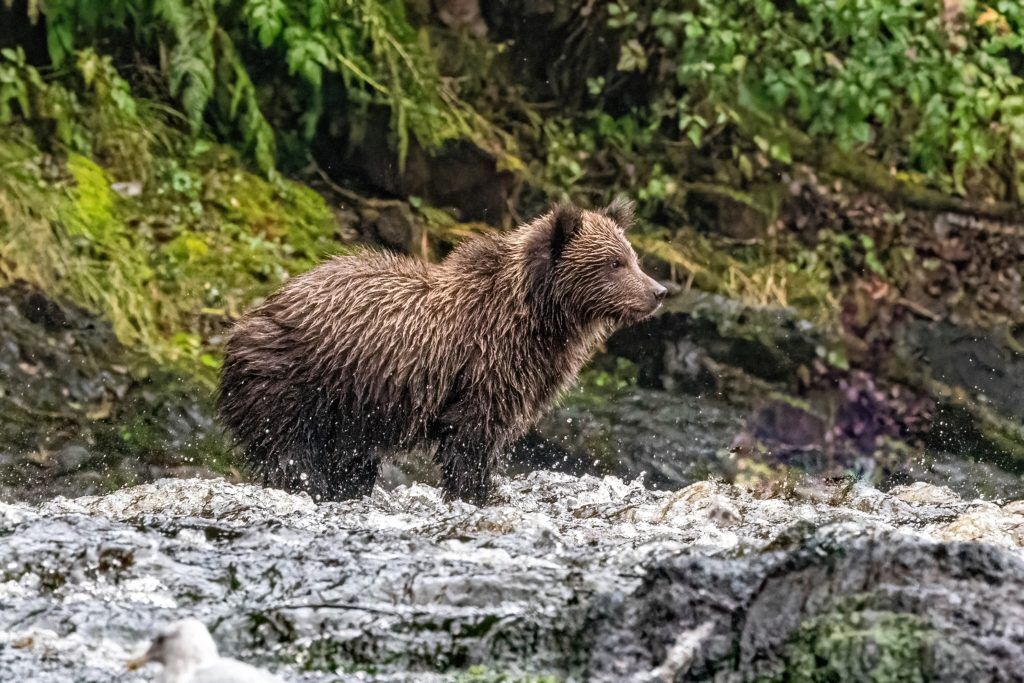
Baby bear Pavlovs Bay Alaska
Photo Credit: Jenn Coleman.

When you travel somewhere wild, certainty disappears almost immediately. Plans turn into loose outlines. Timelines soften. The assumption that you’re fully in control starts to fade — and that’s exactly where the experience opens up.

In Alaska, weather doesn’t politely cooperate. Flights wait. Boats adjust for tides. Trails change overnight. Wildlife appears on its own terms, not when you’re ready with a camera in hand. At first, this unsettles people. We’re trained to optimize travel, to squeeze value from every hour, to move efficiently from one highlight to the next.

Wild places resist that mindset. They force you to slow down and pay attention instead.

Instead of rushing, you find yourself watching clouds crawl across a mountain range or listening for the distant crack of shifting ice. You wait because someone has spotted a bear across the river, and suddenly waiting doesn’t feel like lost time — it feels like the entire point. In wild places, patience isn’t a virtue. It’s a requirement.

Nature Isn’t a Backdrop — It’s the Main Character

Endless Adventures Await-Moose - Alaska Glacier Lodge Palmer Alaska
Photo Credit: Jenn Coleman.

In many destinations, nature plays a supporting role. It’s something you admire between meals and museum visits, a scenic pause before moving on to the next activity.

In wild places, nature is the storyline.

In Alaska, the scale alone recalibrates your perspective. Mountains don’t rise politely in the distance; they loom. Glaciers don’t shimmer passively; they groan, fracture, and move. Rivers aren’t decorative — they’re powerful, cold, and very much alive. Wildlife isn’t something you visit. It’s something you encounter, often unexpectedly, and always on its own terms.

That reality changes how you move through the world. You speak more quietly. You scan the horizon. You learn to read the land not just for beauty, but for meaning — wind direction, cloud movement, water levels. You stop expecting nature to perform for you and start allowing it to lead.

Comfort Looks Different in the Wild

View from my room Homer Inn and Spa
Photo Credit: Jenn Coleman.

Traveling somewhere wild doesn’t mean giving up comfort, but it does redefine what comfort actually means. Luxury here isn’t about excess or polish. It’s about warmth after cold. Shelter after exposure. A solid meal after a long day outside.

Some of our most memorable places to stay in Alaska weren’t remarkable because of opulence, but because of where they were. Remote enough that silence felt complete. Close enough to the land that stepping outside meant being fully immersed — weather, wildlife, and all. Comfort in wild places is practical and intentional, and because of that, it feels deeply satisfying.

You notice and appreciate the basics more. Dry socks. Hot coffee. A sturdy roof during a storm. These aren’t assumed; they’re earned. And because you’re more present, they land differently. They feel grounding in a way that polished luxury sometimes doesn’t.

Your Senses Wake Up

Matanuska Glacier, Alaska
Photo Credit: Deposit Photos.

One of the quieter gifts of wild travel is how it reactivates your senses. In daily life, we filter relentlessly just to get through the day — noise, movement, light, information. Wild places strip that filter away.

You smell rain before it arrives. You hear ice shifting miles off. You notice how light changes minute by minute. In Alaska, even the air feels sharper, cleaner, alive. You become aware of your body in space — where you step, how fast you move, what’s happening around you.

This heightened awareness isn’t stressful. It’s calming. It pulls you into the present without effort or instruction. It’s mindfulness without the app, presence without performance.

You Remember What Adventure Actually Means

Hatcher Pass - Gold Cord Lake Trail Alaska
Photo Credit: Jenn Coleman.

Somewhere along the way, adventure became a marketing word. But real adventure, especially in wild places, isn’t about adrenaline or bragging rights. It’s about curiosity, humility, and uncertainty.

Adventure means not knowing exactly how the day will unfold. It means trusting guides and locals. It means adapting instead of controlling. In Alaska, that might look like hiking through mist, unsure if the clouds will lift. Kayaking through ice-dotted water where seals surface nearby. Boarding a small plane knowing weather could change everything.

And when things don’t go according to plan, that doesn’t diminish the experience — it becomes the story. Wild places remind you that the goal isn’t perfection. It’s participation.

Time Feels Different Out Here

Yllas Ski Resort Finland
Photo Credit: Jenn Coleman.

Wild destinations stretch time in ways that are hard to explain until you experience them. Days feel full without feeling rushed. Hours pass unnoticed when you’re fully engaged. Evenings arrive gently, not abruptly.

Without constant stimulation or packed schedules, your nervous system settles. You sleep more deeply. Wake earlier. Feel less urgency to check your phone. In Alaska, the light itself reshapes time, lingering late into the evening in summer, quietly reminding you that clocks are human inventions, not natural laws.

That shift doesn’t disappear when you leave. You return home more aware of how often urgency is manufactured — and more protective of your time because of it.

You Feel Like You’ve Earned the Experience

Kayaking Glacier Bay Alaska
Photo Credit: Jenn Coleman.

There’s a quiet satisfaction that comes from traveling somewhere that isn’t effortless. Wild places often require extra steps — small planes, ferries, long drives, patience. But effort creates investment.

When you arrive, you don’t feel like you stumbled into the experience. You chose it. And that choice creates respect — for the land, for the people who live there, and for the experience itself. In Alaska, simply reaching some destinations comes with stories before the stay even begins.

Wild travel doesn’t hand itself to you. It asks something in return.

Why We’re Drawn to the Wild Now More Than Ever

Waterfall Cove Alaska
Photo Credit: Jenn Coleman.

The pull toward wild places isn’t accidental. After years of constant connectivity, crowded destinations, and carefully curated experiences, many travelers are craving something real. Something grounding. Something that doesn’t ask them to perform.

Wild places offer perspective. They remind us that the world is bigger than our inboxes, that discomfort isn’t dangerous, and that awe still exists — no explanation required. Alaska sits at the heart of this longing, but it isn’t alone. You feel it in remote coastlines, high deserts, northern forests, and far-flung mountain towns around the world.

What unites them isn’t geography. It’s restraint. These places haven’t been overly softened or simplified. They still ask you to meet them where they are.

What You Take Home From a Wild Place

Hikers hiking, enjoying the view of Famous Patagonia Mount Fitz
Photo Credit: Deposit Photos.

You don’t return with just photos. You come back quieter, more observant, and more comfortable with uncertainty. You gain a clearer sense of what you actually need — and what you don’t.

Traveling somewhere that still feels wild recalibrates your sense of scale and self. It reminds you that not everything needs improvement, explanation, or monetization. Some things are powerful simply because they exist.

And once you’ve felt that — once you’ve stood somewhere that didn’t care whether you were there or not — it changes how you travel going forward. You start seeking places that ask something of you. Places that feel alive. Places that leave room for surprise.

Because wildness, in the end, isn’t something you conquer.

It’s something you experience — and carry with you long after you’ve left.

Hi! We are Jenn and Ed Coleman aka Coleman Concierge. In a nutshell, we are a Huntsville-based Gen X couple sharing our stories of amazing adventures through activity-driven transformational and experiential travel.


Source link