Drunk Toyota Supra Driver Learns The Hard Way That HP Isn’t A Good Legal Defense


Now, it can sometimes seem as though some owners of big, powerful rides think they rule the roads. The Toyota Supra is certainly one such ride, more than capable of throwing its weight around with as much as 368 lb-ft of torque and 386 horsepower (in the case of the ’26 GR Supra, as pictured here).  Funnily enough, though, no amount of horses gives you license to drink and speed (not that there was ever any doubt about that). Still, Siria Lopez, of Bonita Springs, FL, gave it a try anyway. As the below clip from Lee County Sheriff’s Office demonstrates, when pulled over for speeding and questioned about why she was driving so fast, she simply responded, “Honestly, it’s just because he has a Supra, and then I thought I was […] okay to go fast and everything.”

Now, the officers attending the incident have surely heard every sob story and excuse in the book, and this one probably wasn’t the best thought out. Lopez’s entreaty came to nothing, then, and she was arrested. Her passenger, unfortunately for the pair, was no more convincing. When the officer explained that they were pulled over because they were going 125 mph, he responded, “I’m not doing 125, she’s not doing 125.” 

The vehicle was clocked at 123 mph in the end (and not of its own accord). The sheriff’s office explained on Facebook that not only had its exhaust been modded, but Lopez “blew a 0.23, almost three times the legal limit.” It’s possible to get a speeding ticket when you’re not even driving the car in question, but that certainly wasn’t the case here. The whole incident earned high points for audacity, drinking, and speeding. So high in the latter case, in fact, that Lopez was legally super speeding.

When a Florida speeder becomes a super speeder
In the social media post, the Lee County Sheriff’s Office added that “in December 2024, the passenger in this video was cited for going 109mph ON THE SAME ROAD in THE SAME CAR.” We’ve established, then, that this particular Supra seems to have had the same need for speed as Dom’s iconic ’70 Dodge Charger R/T in the “Fast & Furious” franchise. Unfortunately for its drivers, though, Florida has a super speeder law, and this means that the penalties for really putting your foot down can be severe indeed.

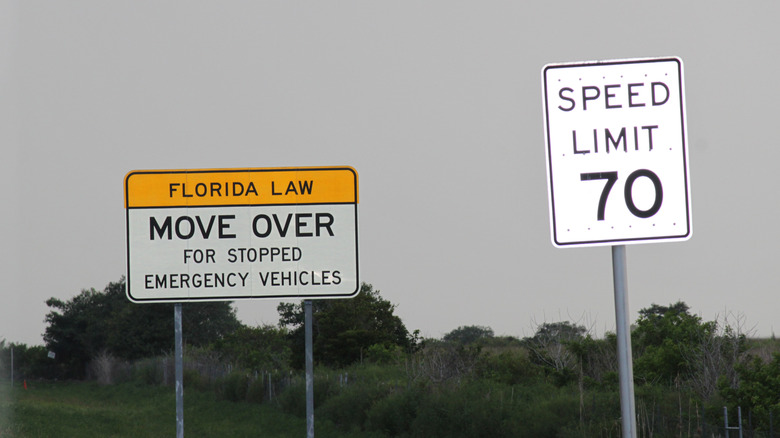
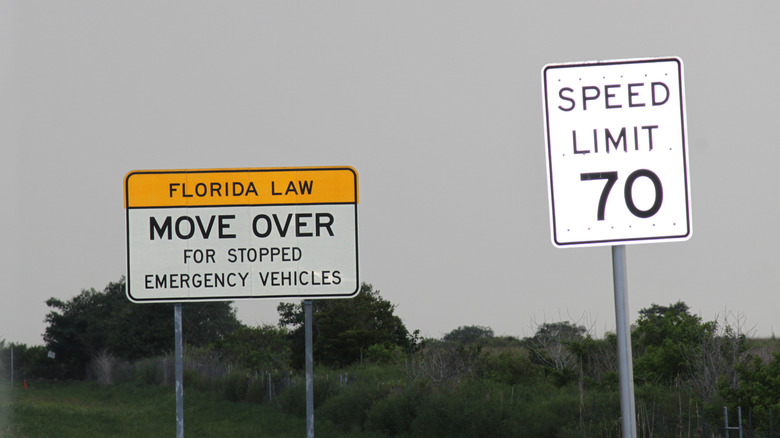
This law, beginning on July 1, 2025, is intended to harshly punish the most egregious speeding in the Sunshine State. Vehicles that are clocked at more than 50 mph above the limit on a given road, or topping 100 mph, are hit with 30 days in jail, a fine of $500, or both. That’s just the first time, too, as a second offense can double the fine and triple the jail time, particularly steep terms if sentenced to both. A driver can lose their license for up to a whole year if found guilty of repeated offenses within a certain span.

U.S. Toyota owners will be unsurprised to hear that perusing the Florida Statutes, or the speeding laws of any other state they happen to be driving in, will show that there’s no exception made for Supras. Yes, even though each generation of the Toyota Supra has had significant horsepower


Source link

Leave a Reply

Subscribe to Our Newsletter

Get our latest articles delivered straight to your inbox. No spam, we promise.

Recent Reviews


When evaluating the health of a small business, we typically focus on financial indicators: revenue, margins, expenses, and growth trajectory. But Xero’s Emotional Tax Return 2026 report highlights another critical metric – the psychological cost.

U.S. small business owners lose an average of 33 working days per year to stress. That’s more than a month of lost productivity, driven not only by market conditions but by the sustained mental load of managing cash flow, compliance, rising costs and daily financial decisions.

From a financial therapy perspective, this is not surprising. But what stands out most is how persistent this financial stress has become.

Why avoidance is common – and predictable

The report reveals a pattern many small business owners will recognize:

  • 73% have been caught off guard by a tax outcome
  • 34% fear making financial mistakes
  • Owners lose an average of eight hours per week to stress

Avoidance is often misunderstood as poor discipline. In reality, it is a common psychological response to perceived threat. When systems feel fragmented or unclear, financial tasks can trigger anxiety. Choosing to disengage reduces discomfort temporarily, but it allows the uncertainty to compound.

When financial visibility is low, stress increases. And when stress increases, decision-making quality declines. Reducing small business stress requires addressing that cycle directly. Stress, in this context, is not only a mental health issue. It is an operational constraint that affects small business productivity.

When financial stress becomes structural

According to the report:

  • 70% of owners say financial management is a major stressor
  • 81% say this fiscal year has been more stressful than previous years
  • 74% report stress negatively affects their professional performance

That strain shows up in missed opportunities (34%), slower decision-making (28%) and reduced creativity (30%).

In clinical practice, I often see how chronic financial stress narrows cognitive bandwidth. When uncertainty around cash flow, tax obligations or operating expenses becomes constant, the brain shifts into threat mode. Attention tightens. Working memory declines. Over time, this doesn’t just feel exhausting. It becomes limiting.

Financial visibility reduces perceived threat

One of the most effective stress-reduction strategies in financial therapy is increasing perceived control. Control does not mean eliminating uncertainty entirely. It means improving clarity within what can be managed.

This is where a platform like Xero plays a crucial role. Real-time dashboards, automated bank reconciliation, integrated reporting and digital receipt capture centralize financial data and reduce manual workload. Instead of chasing paperwork or reconciling transactions late at night, business owners can access up-to-date cash flow information in one place.

Eighty-seven percent of U.S. customers say Xero improves financial visibility. Ninety percent say it helps their business run more efficiently.

From a psychological standpoint, improved visibility reduces threat activation. When business owners can clearly see what’s coming in, what’s going out and what’s due, decision-making becomes proactive rather than reactive.

Bookkeeping automation protects mental bandwidth

The average small business owner spends 22 hours per month managing finances. That’s nearly three full workdays devoted to admin. Automation meaningfully reduces that burden. Businesses using Xero save an average of six hours per week on bill management alone.

Those hours add up. But more importantly, so does cognitive relief. Less manual data entry. Fewer surprises at tax time. Fewer last-minute reconciliations. The result is not just greater efficiency, but stronger cash flow management and better long-term planning.

When administrative friction decreases, small business productivity improves – and so does wellbeing.

Collaboration reduces isolation

Despite the documented impact of financial stress, only 9% of small business owners seek advice from an accountant or advisor as a coping strategy.

Isolation intensifies pressure. Collaboration diffuses it.

Real-time collaboration features allow business owners and advisors to work from the same live financial data. That reduces errors, improves forecasting and increases confidence. For the 34% who fear making financial mistakes, shared visibility offers both technical accuracy and emotional reassurance.

In my experience, financial clarity combined with trusted guidance is one of the most powerful antidotes to chronic financial stress. It transforms financial management from a solitary burden into a supported system.

Turning emotional tax into resilience

Forty percent of small business owners report having considered giving up their business. That statistic underscores the broader economic implications of sustained financial stress.

Entrepreneurship will always involve risk. But persistent, preventable financial stress does not need to be part of the model.

Reducing the Emotional Tax starts with structural shifts:

  1. Improve real-time financial visibility
  2. Automate repetitive bookkeeping and admin
  3. Collaborate proactively with financial advisors

When business owners can clearly see their numbers, anticipate obligations, and reduce manual workload, they regain more than time. They regain perspective.

The Emotional Tax is measurable. But so is the return when clarity replaces uncertainty.

And when clarity returns, confidence follows – not just in the numbers, but in the long-term health of the business itself.

Was this article helpful?

YesNo


Source link