FAQs About Menopause
The transitional phases of menopause are a natural part of aging for women. Still, the process can be frightening and overwhelming as the body undergoes these changes. Discovering the answers to common questions concerning menopause, such as typical symptoms experienced, treatment options, how long you can expect menopause to last, and other helpful guidance, can help you feel more comfortable and confident.
This type of menopause support is an important part of the journey. Knowing that, while menopause is a natural phase of life, you don’t have to “just deal with it” alone is essential to finding both reassurance and relief.
Learn more about menopause FAQs and available treatment options.
What Is Menopause?
When a woman no longer has a menstrual cycle for twelve consecutive months, she has begun menopause. Once menopause has commenced, she can no longer conceive as the menstrual cycle has permanently stopped. Certain surgeries or medical treatments, such as a hysterectomy, can trigger this phase of life. Most of the time, however, the process occurs due to the natural decline in ovarian function that comes with age.
What Are the Stages of Menopause?
Menopause can be divided into three different stages.
- Periomenopause – This initial stage begins approximately ten years before the total cessation of menstrual cycles. During this time, less estrogen is produced, and as a result, women may experience hot flashes, mood swings, and irregular menstrual cycles.
- Menopause – Marked by the year-long timeframe within which menstrual cycles no longer occur, menopause usually begins between the ages of 45 and 55. The body produces little estrogen at this time and does not release any eggs.
- Postmenopause – The symptoms of menopause gradually transition into the next stage, postmenopause. This stage continues for the rest of a woman’s life.
How Long Does Menopause Last?
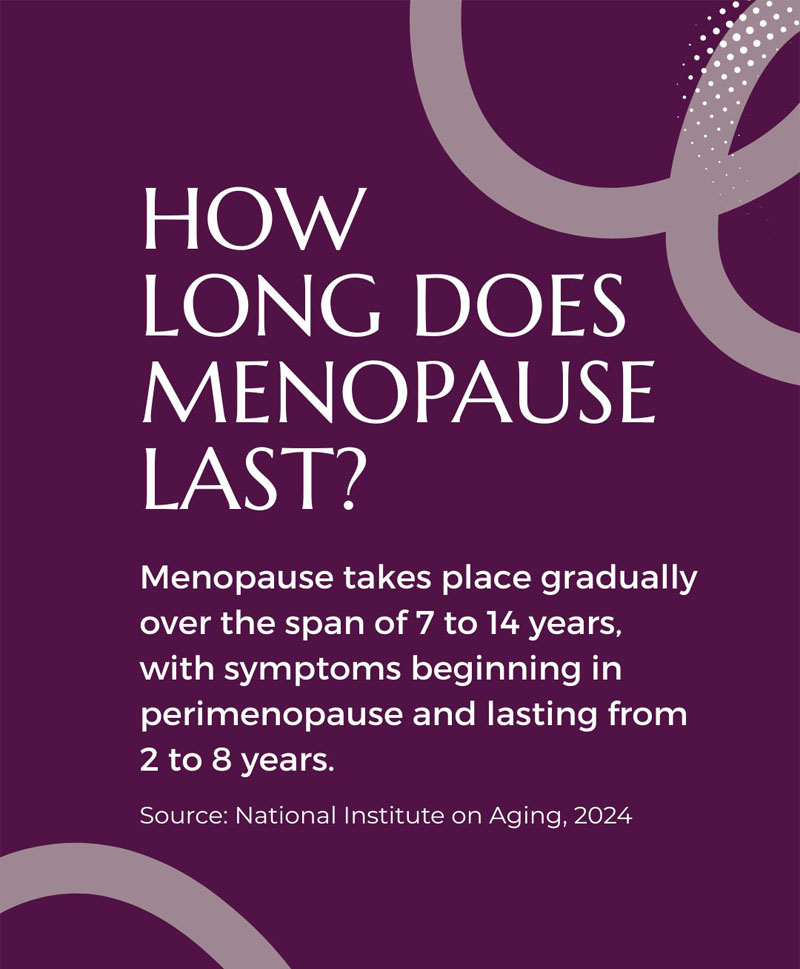
A common misconception is that “real menopause” lasts for a year or so immediately preceding the cessation of periods. However, when you consider perimenopause and the onset of menopause together, menopause occurs gradually over 7 to 14 years, with symptoms beginning in perimenopause and lasting 2 to 8 years (National Institute on Aging, 2024). Multiple factors can affect the timing and duration of menopause, such as a woman’s ethnicity, lifestyle, and even the environment.
At What Age Does Menopause Start?
As mentioned, numerous factors affect the onset of menopause, so every woman will have a different experience. According to the American College of Obstetricians & Gynecologists, the average age at menopause is 51 (American College of Obstetricians and Gynecologists, 2018). However, menopause can begin for many women in their 40s, with many experiencing peri-menopausal symptoms in their mid-40s. Premature menopause is menopause that begins before 40.
What Are the Most Common Symptoms of Menopause?
Many women associate menopause with symptoms like hot flashes and moodiness. While these are common symptoms, others may vary depending on the individual.
Some of the most common symptoms of menopause include:
- Hot Flashes and Night Sweats – This is a very common symptom of menopause, in which individuals experience sudden flashes of heat, usually in the face or neck. These flashes can disrupt sleep due to the discomfort of sweating and shivering.
- Sleep Disturbances – As women age, they may experience more difficulty getting a full night’s sleep. They may have trouble falling asleep or wake up several times during the night due to night sweats or frequent bathroom visits.
- Mood Swings or Irritability – Frequent mood swings or feeling irritable are common symptoms associated with menopause. While the cause is unknown, irritability may be related to stressors that arise later in life, such as caring for older children, aging parents, or reduced energy.
- Brain Fog or Memory Issues – Difficulty concentrating or focusing, or trouble remembering things, are also common symptoms of menopause.
- Vaginal Dryness or Discomfort During Sex – During menopause, the vagina can become dry, which may make sex painful or uncomfortable.
- Irregular or Heavy Periods – Common perimenopausal symptoms include irregular or heavier-than-normal periods. Both can signify that a woman is nearing menopause.
- Decreased Libido – Along with mood changes and dryness of the vagina, it is common for sexual desire to change. During menopause, it is common for a woman’s interest in sex to decrease.
- Anxiety or Depression – Significant life changes often cause anxiety, so it is understandable that women can experience anxiety during menopause when their bodies are going through many changes all at once. Mood swings, irritability, and bouts of depression can also occur.
- Joint Pain or Stiffness – Muscle loss may occur during menopause, leading to joints feeling stiff, achy, or weak.
- Weight Gain – Along with hormonal changes, the body may also change. This may involve gaining weight, especially around the waist.
- Hair Thinning and Skin Changes – Hormonal changes can affect hair, including thinning. Skin may also become noticeably drier and thinner.
- Other Symptoms – Many women experience worsening premenstrual syndrome (PMS) symptoms, frequent headaches, a racing heart rate, dry eyes and mouth, and breast tenderness.
Every woman experiences symptoms associated with menopause differently. Some symptoms may be mild and manageable with lifestyle changes, while others may require additional support. Symptoms typically fluctuate and become easier to manage over time. For personalized menopause support in Phoenix, Arizona, Gynecology Consultants offers menopause services.
How Can You Find Relief? Clinical and Holistic Options
Moderate to severe symptoms associated with menopause can greatly impact your quality of life. Thankfully, you don’t have to learn to live with it. Arizona Gynecology Consultants offers multiple treatment options:
Non-Hormonal Prescriptions
Nonhormonal treatments are a way of managing menopause naturally, including making significant lifestyle changes or taking nonhormonal medications.
Medications that can be prescribed include:
- Certain antidepressants, which may ease moodiness and hot flashes
- Birth control pills, which can aid in hormonal balancing
- Gabapentin, a type of seizure medication, may prevent hot flashes
Other medications intended for specific symptoms are also available. AZGYN offers professional and compassionate consultations to determine what may be right for you.
Lifestyle and Holistic Support

Certain lifestyle changes can help women manage the symptoms of menopause. For example, making dietary changes can positively affect your wellbeing, including reducing caffeine and spicy foods that may trigger hot flashes while increasing whole foods, fruits, and vegetables. Removing environmental triggers may also help prevent hot flashes, such as keeping the house cooler or wearing layers. Regular exercise also helps relieve symptoms.
Certain holistic menopause treatments may also ease severe symptoms. Managing stress with yoga, learning calming breathing techniques, practicing mindfulness and meditation, journaling, or seeking out a therapist can help make menopause more manageable. Acupuncture or massage treatments are other great ways to relieve stress and promote better health.
Managing menopause naturally may also involve taking supplements that support female health and ease symptoms. Some of the most commonly used supplements include black cohosh, magnesium, ashwagandha, and B vitamins. Before taking any supplement, always consult with your provider.
Vaginal Support Options
Women struggling with vaginal dryness and pain have options for vaginal support. For example, vaginal estrogen can prevent vaginal atrophy with low doses of estrogen delivered directly to vaginal tissue, either in the form of a ring, cream, or tablets. Moisturizers can promote rehydration, while lubricants help prevent friction, pain, and discomfort experienced during sex. Other ways to promote sexual wellness during menopause include undergoing pelvic floor therapy to strengthen the pelvic muscles, boost blood flow to the area, increase sensitivity, and decrease pain.
Hormone Replacement Therapy (HRT)
This kind of therapy is designed to restore the supply of hormones that have been lost due to hormonal changes that occur during menopause. Hormone replacement therapy (HRT) for women is commonly used as a treatment to replenish estrogen, easing unpleasant symptoms like flushing, hot flashes, or sweating during the night.
For those suffering from moderate to severe hot flashes, vaginal pain, or frequently needing to urinate, hormone therapy for menopause may be a good option. It is also helpful for those looking to prevent bone loss or broken bones, women with extremely low estrogen, and women who have begun menopause before the age of 45.
HRT is not right for everyone, and it may not be safe for certain people. For those who have had breast cancer, cervical cancer, another cancer sensitive to estrogen, liver disease, endometriosis, diabetes, obesity, high blood pressure, or trouble with blood clots, this therapy may not be recommended. Before starting HRT, consult a healthcare professional to determine whether it is right for you.
Finding Personalized Care
Personalized care is crucial for safe, effective relief of menopausal symptoms. To achieve this, schedule regular check-ups with a healthcare professional to monitor your progress and ensure the treatment is addressing the symptoms rather than causing further issues. Regularly scheduled preventative testings and screenings, such as mammograms, cancer screenings, and blood pressure monitoring, are also essential.
Finding support for managing symptoms of menopause looks different for every woman and is a personal decision. Some may choose to pursue only hormonal therapy, while others decide to try a combination of treatments and lifestyle changes. There is no one-size-fits-all approach, which is why a customized plan is key. To help you determine your best option, speak with the AZGYN team to discuss your medical and family history, the symptoms you are experiencing, and your preferences.
How AZGYN Supports You Through Menopause

Though menopause is a perfectly natural transition that women experience, it is important that they feel supported. This is why Arizona Gynecology Consultants offers a personalized approach to menopause care in Arizona, with treatments including hormonal therapy, natural remedies, and menopause support counseling.
To focus on whole-person wellness, rather than just the symptoms of menopause, we partner with an extensive network of trusted medical providers, including gynecologists, nurse practitioners, and specialists. Receive team-based care from medical providers with the medical knowledge to treat various issues related to menopause.
Arizona Gynecology Consultants offers advanced testing and hormonal level evaluations, using evidence-based guidelines to create personalized treatments. Once you have been tested and evaluated, our team can continually monitor the progression made during treatments, giving guidance on making wise nutritional choices and healthy lifestyle changes. Rest assured that at every stage of treatment, you are seen, heard, and supported.
When Should You Talk to a Provider?
Many women transition into menopause with milder symptoms, such as irregular menstrual cycles. However, symptoms can quickly become more serious, disrupting everyday life. Don’t struggle with moderate to severe menopause symptoms on your own.
Seek medical assistance if:
- The symptoms you are experiencing are interfering with your quality of life
- You are not certain whether your symptoms are normal
- You have had a hysterectomy or have early menopause
- You are wondering if hormone therapy is right for you
- You want to stop “powering through” and find relief
Other reasons to see a provider include experiencing heavier periods than before, periods that last longer than seven days, having more than one period in the span of 21 days, passing large blood clots, or bleeding after sexual intercourse.
Find the Support You Need Through Menopause and Beyond
Menopause is a natural phase of life, but you don’t need to approach it on your own. Safe and effective treatments are available to help you feel more like yourself again. Take control of your health and well-being with a customized treatment plan from Arizona Gynecology Consultants.
Learn more about our compassionate providers to help you find real relief that works for you. Contact our office to discover more about our Menopause Support Counseling or to schedule a visit.
*Editor’s Note: This article has been updated and combined from articles originally published April 12, 2017 and Oct 23, 2017.
Sources:
- American College of Obstetricians and Gynecologists. (2023). The menopause years. https://www.acog.org/womens-health/faqs/the-menopause-years
- Cleveland Clinic. (2022). Menopause. https://my.clevelandclinic.org/health/diseases/21841-menopause
- Mayo Clinic. (2023). Menopause hormone therapy: Is it right for you? https://www.mayoclinic.org/diseases-conditions/menopause/in-depth/hormone-therapy/art-20046372
- National Health Service. (2023). Who can and cannot take continuous combined hormone replacement therapy (HRT). https://www.nhs.uk/medicines/hormone-replacement-therapy-hrt/continuous-combined-hormone-replacement-therapy-hrt-tablets-capsules-and-patches/who-can-and-cannot-take-continuous-combined-hrt/
- National Institute on Aging. (2023). What is menopause? U.S. Department of Health & Human Services. https://www.nia.nih.gov/health/menopause/what-menopause
- National Institute on Aging. (2023). Menopause symptoms. U.S. Department of Health & Human Services. https://www.nia.nih.gov/health/menopause/what-menopause
- National Center for Biotechnology Information. (2021). Menopause. In StatPearls. https://www.ncbi.nlm.nih.gov/books/NBK493191/
The post FAQs About Menopause appeared first on AZGyn.