For these kids, the trauma from the ICE crackdown remains


COLUMBIA HEIGHTS, Minn. (AP) — The little girl approached the therapy dog outside the school library, reaching out to touch her fluffy blond coat. Social worker Nicole Herje leaned in.

“How does it feel when you pet Sage?” Herje said.

“I like it,” the girl said. “In Ecuador, I had a dog.”

A few months earlier, this girl and many of her classmates at Valley View Elementary were staying off the streets to avoid the immigration officers flooding their suburban Minneapolis community. Attendance plummeted as families kept their kids from school during the Trump administration’s enforcement surge.

Sage the goldendoodle is not just a cute diversion. She’s part of a broader strategy to address the psychological wounds of children who witnessed arrests, lost relatives to deportation or endured anxious weeks indoors. At least four students at the school were themselves detained, sent hundreds of miles away to a Texas family detention center.

Immigration officers made more than 4,000 arrests and shot multiple people, two fatally, before “Operation Metro Surge” wound down in February, leaving an imprint on the psyches of young children that could haunt them for years, mental health providers say.

immigration mental health trauma therapy dog Valley View Elementary
Kaleb, center, pets Sage, a therapy dog, at Valley View Elementary School on April 29, 2026, in Columbia Heights, Minn. Credit: Ellen Schmidt/MinnPost/CatchLight Local/Report for America

Columbia Heights Public Schools, like many other districts, offered virtual learning for children who remained at home during the crackdown, but online schooling ended after spring break, and with many back in class, the staff has been focused on their recovery.

“What we know about trauma is that our bodies hold on to the fear,” Herje said.

Sheltering at home, kids had shared feelings on Zoom

The children logged into Zoom in February from various parts of their homes: in living rooms and bedrooms where the curtains were drawn, beneath a rack of clothing in a closet, on a couch with a Mexican flag pinned on the wall behind. Few of the kindergartners could sit still. One stepped away and did cartwheels.

Fears lingered well after the thousands of immigration officers President Donald Trump deployed to the Twin Cities had come and gone. It did not help that one of their schoolmates, preschooler Liam Conejo Ramos, was detained by Immigration and Customs Enforcement when he arrived home from school, wearing his Spiderman backpack and a bright blue hat with bunny ears.

immigration mental health trauma therapy dog Valley View Elementary
Ian, right, and school social worker Nicole Herje pet Sage, a therapy dog, at Valley View Elementary School on April 29, 2026, in Columbia Heights, Minn. Credit: Ellen Schmidt/MinnPost/CatchLight Local/Report for America

That’s why, in the middle of their virtual school day, Herje led the kindergartners in a special class on emotions. They shared what made them happy and sad, calm and angry. They talked about missing their classmates and longing to return to school.

“When you’re happy, you laugh and jump and dance and play, and you want to share that feeling with everyone,” Herje said, reading from the children’s book “The Color Monster.” “Anyone want to raise your hand and tell us something that makes you feel happy?”

“When I’m happy, I want to go to school when I see my friends,” said one girl.

Herje followed up: What made them sad?

“When my grandma, she go (to) Ecuador,” another girl said.

All had lived through one of the most aggressive immigration crackdowns in history. There were the masked immigration agents patrolling in SUVs, followed by demonstrators blowing high-pitched whistles. There were the arrests of tearful and screaming immigrants, captured on video and played on endless loops across social media. In many cases, parents were taken away.

A growing body of research is illuminating the impact of trauma on children, even those too young to understand. Prolonged exposure to a high-stress environment can reshape a baby’s brain, explained Rebecca Parlakian, the senior director of programs at early childhood advocacy group Zero to Three.

“When a child is experiencing sustained and consistent traumatic experiences where they have lost the sense of basic safety, we see that the brain reorganizes itself for survival, which actually translates to structural anatomical changes in the brain,” Parlakian said.

Trauma signs include lack of appetite, fear of sleeping alone

The symptoms of trauma can vary widely depending on the child, their age and what they’ve witnessed or experienced. Robyn Tabibi, a family physician in St. Paul who often works with expectant parents, said she treated a 3-year-old who had lost several relatives to deportation and had to move homes with his mother to avoid being targeted.

“He gradually stopped eating, became listless, refused to play anymore,” Tabibi said. “He’s in this new space, and he is so traumatized.”

Children from families with no immigration concerns also developed anxiety.

Sarah Anikpo was born in the U.S., and her Liberian-born husband gained citizenship in 2020. So Anikpo, a psychiatric physician assistant, didn’t think to discuss the crackdown with their 9-year-old son Zeke, even as helicopters whirled over their South Minneapolis neighborhood.

Then an ICE officer fatally shot Renee Good, a U.S. citizen who had just dropped off her son at his elementary school. Protests erupted. Zeke’s district canceled classes for two days.

After that, Zeke couldn’t sleep in his own room. He told his parents of a “grey man” haunting his dreams, and grew anxious about flashing lights through his window. A classmate broke down crying, asking Zeke to pray for her mother and grandmother, who had returned to Mexico. It made him angry, and afraid.

“We couldn’t talk him out of it,” Anikpo said. “He definitely didn’t feel safe.”

The fear that courses through immigrant families — even those here legally — could have profound consequences for a generation of American schoolchildren, experts say. The Brookings Institute estimates 4.6 million U.S. citizen children live with a parent who is undocumented or has temporary legal status, and more than 200,000 have parents who were detained or deported during this Trump administration.

“Children in mixed-status families often live with chronic anticipatory anxiety that a loved one could be detained or deported,” a group of psychiatrists wrote in a special report for Psychiatric News. “These fears have been shown to lead to school absenteeism, academic disengagement, and heightened emotional distress.”

immigration mental health trauma Valley View Elementary
Media specialist Alison Kimble reads to her class at Valley View Elementary School on April 29, 2026, in Columbia Heights, Minn. Credit: Ellen Schmidt/MinnPost/CatchLight Local/Report for America

Valley View staff have identified students who may need extra help, including the two fifth-graders and a second-grader who, like Liam, had been detained at Dilley Detention Center in Texas, where court documents say children have lacked adequate food and medical care. Herje ran group therapy sessions alongside Sage the goldendoodle for these students.

Returning to school is what many really needed. Herje has witnessed joyful reunions between young friends who hadn’t seen each other in person for months.

Herje asked them back then what makes them feel loved. One girl piped up: “When I’m in love, I find my best friend.”

_____

Balingit reported from Washington for this story.

_____

The Associated Press’ education coverage receives financial support from multiple private foundations. AP is solely responsible for all content. Find AP’s standards for working with philanthropies, a list of supporters and funded coverage areas at AP.org.


Source link

Leave a Reply

Subscribe to Our Newsletter

Get our latest articles delivered straight to your inbox. No spam, we promise.

Recent Reviews


2026 has shaped up to be a big year for Milwaukee, and the company shows no signs of slowing down as it expands its product line. For example, it has announced that some solid new Milwaukee hand tools and organizers will be arriving throughout the summer, but that’s not all. At the end of the day, you need somewhere to put all of this stuff, and while the Milwaukee Packout storage system is deep and varied as is, the company will expand the line in the summer months.

More methods for organizing your tools are on the way, too, with the Milwaukee Packout line set to introduce some new entries this summer. They vary in size, purpose, and price point, but they’re all compatible with the wider Packout line. That means they can connect to each other, making transportation easier. In some cases, they’ll be able to help keep tools and other items secure and organized while on the move. Additionally, all of these new Packout products are covered by Milwaukee’s Limited Lifetime Warranty.

So, what new products does Milwaukee have to offer from its Packout line this summer? Here are the drops you can look forward to throughout June and July 2026.

Milwaukee compact crate

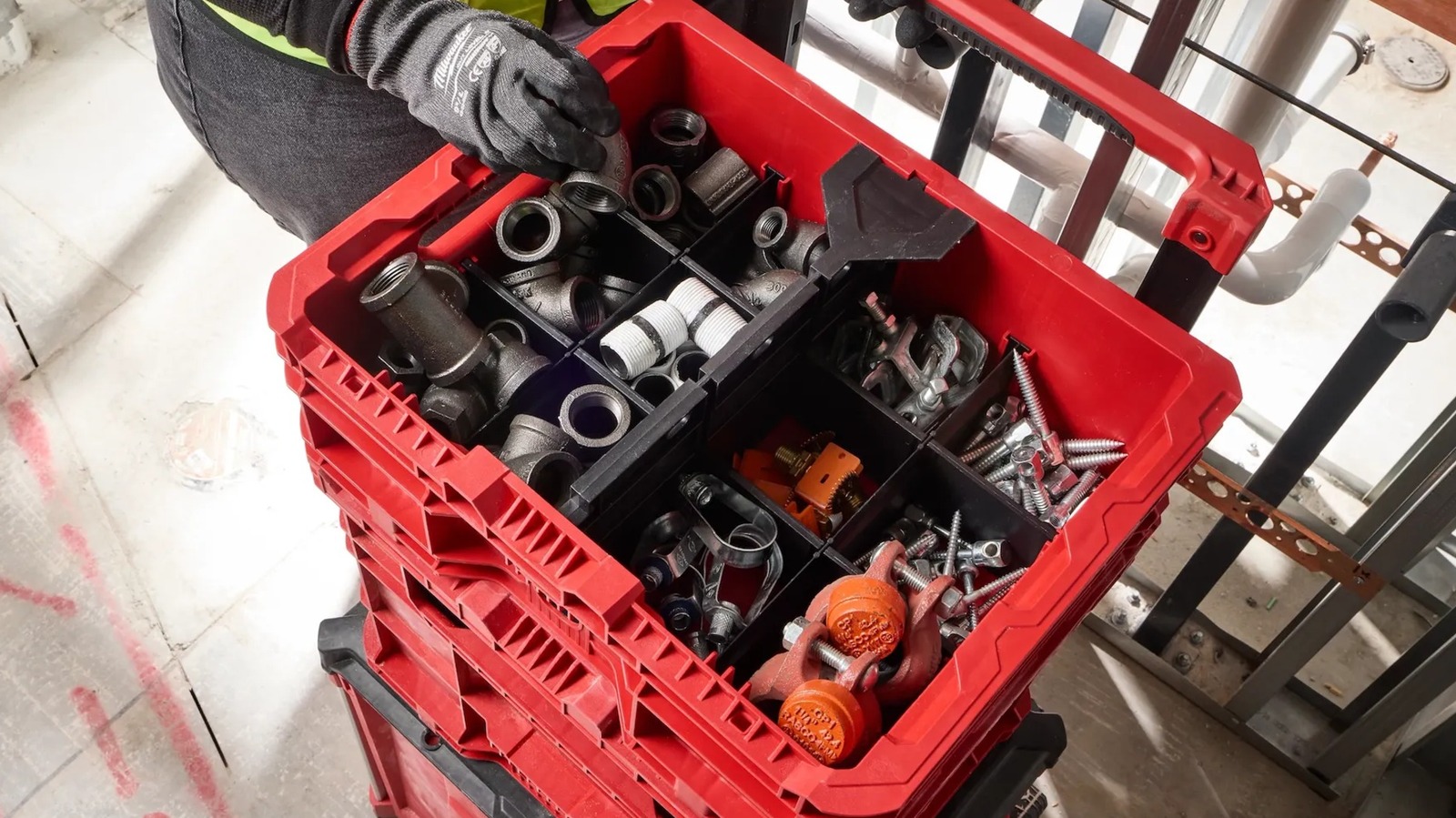
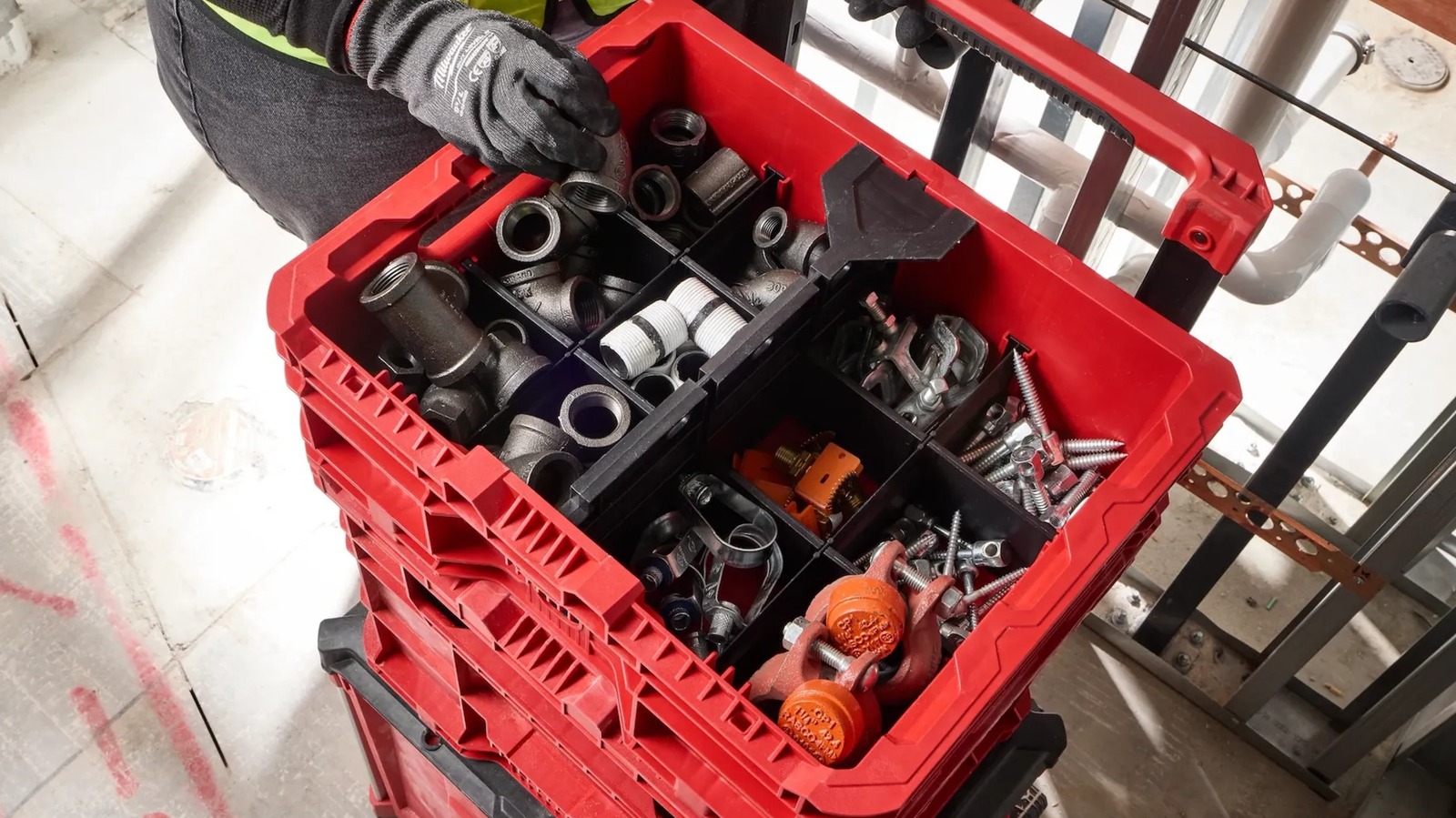
Sometimes, a massive Packout crate isn’t a necessity, which is why the line has its share of smaller options. Yet another will be coming to the Milwaukee catalog in the form of the Milwaukee Packout compact crate, which is set for a June 2026 release and will cost $39.97. It has a 30-pound weight capacity, comes in at 8.75 inches tall, 9.5 inches wide, 15.5 inches long, and 3.75 pounds, and includes two removable dividers to create up to three sections within the crate. The dividers can also be customized by cutting them to size along the pre-made score lines.

This compact crate features a wide front opening for easy access to its contents while on the job, as well as a metal top handle to carry it around on its own. Should you want to add it to your current Packout stack, you can use the connection points at the top and bottom of the crate. Speaking of durability, Milwaukee notes that it has an impact-resistant body along with weep holes to prevent water collection. At the same time, there is some nuance regarding the waterproof nature of Milwaukee Packout products, so keep that in mind before letting this crate get soaked.

Milwaukee Packout low-profile crate

A shorter but equally mighty Milwaukee Packout container is also on its way to customers this summer. The Milwaukee Packout low-profile crate is the shortest of the new releases at just 6.625 inches tall, though it makes up for what it lacks in height with a 15-inch length and an 18.625-inch width. Even though it’s slightly heavier than the compact crate at 4.85 pounds, it wins out in weight capacity with a 50-pound limit. It will be released in June 2026 and will cost $44.97.

For added modularity, the low-profile crate includes three different divider types: eight short, two long, and one for the middle of the container. When combined, they form up to 12 individual sections for tool and accessory organization. In terms of connecting to other Packout containers, it can do so from the top and bottom. Alternatively, built-in side handles are integrated into the design to make it easier to carry the crate on its own. The crate has weep holes for water drainage and an impact-resistant body.

Milwaukee Packout XL crate

Moving on to one of the larger upcoming Milwaukee Packout releases — even if it ultimately lands somewhere in the middle of the smallest and largest Packout containers for sale — there’s the aptly-named Milwaukee Packout XL crate. This release will hit shelves in June 2026 and comes with a $69.97 price tag. The 8.03-pound crate can take on some serious tools with its 75-pound weight capacity. It measures 15 inches tall, 15.75 inches long, and 18.625 inches wide. Despite its size, it can be hung up on a wall like most other Packout containers.

While some may hang this crate in their workshop, many will use it as part of their mobile Packout stack. You can connect it to your existing setup via the top and bottom connection points. It can also be used with Milwaukee toolbox attachments to hold smaller tools and batteries with connection points on the sides. Alternatively, you can move the crate around using its built-in side handles. It’s advertised as having an impact-resistant body along with anti-water collection weep holes. Suffice to say, there’s more to this seemingly simple crate than initially meets the eye.

Milwaukee Packout Wire Pulling XL Crate

For the most part, the Milwaukee Packout line is so popular because of its versatility. While most entries can be used for just about anything, there are those that come with a specialized function. Case in point, the forthcoming Milwaukee Packout Wire Pulling XL crate, which is designed for dispensing wire. This involves inserting and locking in spools of the user’s needed material, threading the wire through the wire retention slots, and using the fold-down panel to keep the end of the wire from rolling back into the box.

Overall, this crate has the same dimensions and weight capacity as the previously covered Packout XL crate, though it is the heavier of the two at 9.85 pounds. It can accommodate up to six spools, can be stacked onto other Packout containers or hung up, and has an impact-resistant body. This is the most expensive of the new Packout releases at a hefty $119.97, and it’s set to release during July 2026. Alongside the best Milwaukee power tools for electrical work, this crate seems like a vital piece for any Milwaukee-enthusiast electrician’s kit.

New Milwaukee Packout inserts are coming, too

That’s it for the new Milwaukee Packout containers set to debut this summer, but there are more new releases yet to cover. To pair with some of these containers and improve their levels of organization and function, come two new insert sets. First is the divider for the Milwaukee Packout XL crate, which splits the container into two sections. It simply slides down the middle of the crate and fits snugly into place, while retaining its ability to connect with smaller Packout attachments. It will be released in July 2026 for $29.97.

Alongside the Packout XL crate divider is the set of Packout wire pulling inserts for the XL crate. You’ll need these if you end up buying an XL crate and later want to use it as a wire-pulling crate. These inserts allow you to convert it instead of having to buy a new designated wire pulling crate. They attach to two of the inner sides of the crate via T-25 screws and include wire puller guards as well. The Milwaukee product listing says these inserts are meant for 1/2-inch EMT conduit. This insert set also comes out in July and will cost $49.97. 


Source link