
Follow ZDNET: Add us as a preferred source on Google.
ZDNET’s key takeaways
- The new Googlebook looks promising, but questions remain to justify their cost.
- Chromebooks had a clearly defined use case that reflected a real consumer need.
- The brand I most expected to see was absent from Google’s announcement.
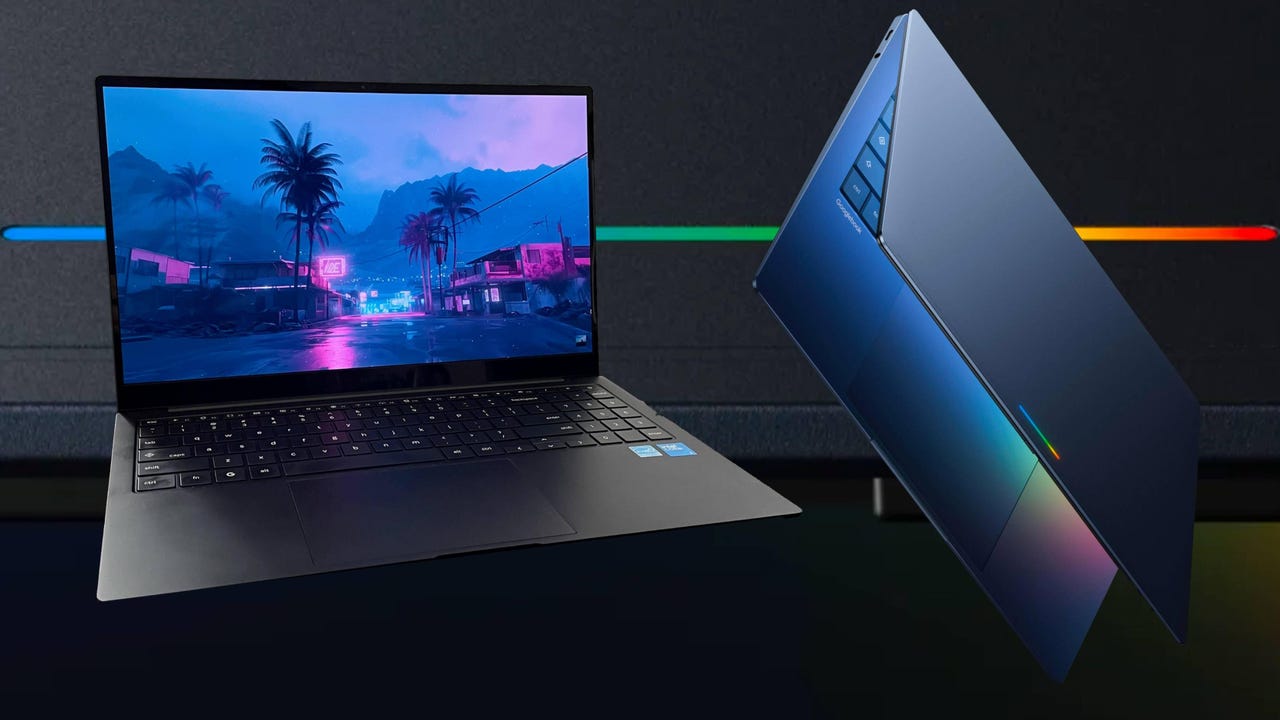
Google just announced a new product line: the Googlebook, marketed as the successor to the Chromebook with more capable hardware and a compelling promise: the merging of Android and ChromeOS into something better.
This as-yet unnamed operating system has been cited as “AluminumOS” through various leaks, but has not yet been officially announced by Google. Details on the devices themselves are also sparse, but Google says they will be a more premium product with higher-end hardware.
Also: First look at Googlebook: A premium Chromebook alternative for Android users
So far, Google has shown off a limited set of features, but one of the primary is a re-imagining of the mouse cursor. On the Googlebook, wiggling it opens up contextual menus on whatever’s on your screen powered by Gemini Intelligence, the on-device AI.
Another feature we saw is the ability to use apps from your Android smartphone directly on the Googlebook with no additional downloads required. In the demo, it showed the user opening Duolingo in a window that looked a lot like MacOS’ Phone Mirroring. This is ostensibly the tip of the iceberg when it comes to deeper integration between the smartphone and Googlebook; but if that’s the case, I have one big question.
Big shoes to fill
A big reason Chromebooks were so successful was their well-defined niche: affordable hardware with a snappy OS that excelled at everyday tasks in Google’s ecosystem. Even the most premium Chromebooks didn’t break the $1,000 price ceiling (except the HP Dragonfly, but that was a unique device); more importantly, you could nab Chromebooks for the absolute lowest prices around.
This Acer Chromebook 315, for example, will run you $179 at Walmart. Sure, you’re working with less RAM than your smartphone, but it’s still a laptop with a full-sized keyboard and an Intel processor that works for kids or seniors.
So, Chromebooks were cheaper and a little more restricted, but what they COULD do, they did well — and mirrored a real consumer need. With the introduction of the Googlebook, this price edge becomes a lot more hazy. For $1,500, what exactly are we getting? So far, Google has been tight-lipped about the details.
A notable absence
Google confirmed all five major PC manufacturers will be releasing their own Googlebooks later this fall: HP, Acer, Lenovo, Dell, and Asus. Within those five brands, we can expect a range of devices with different sizes and prices. For example, Lenovo released the Chromebook Plus 14 last year, featuring an OLED display and 16GB of RAM (the most of any Chromebook to date) so it makes sense to see that brand follow up with a similarly-specced Googlebook.
Lenovo wasn’t the only brand with a premium-tier device, however. Samsung released the Galaxy Chromebook Plus in the fall of 2024 and it was a solid device. It had a 15.6-inch AMOLED full HD (1080p) display, Intel Core 3 100U (14th Gen, Raptor Lake-R) processor, 8GB of RAM, and 256GB of storage in a 2.5-pound, 0.4-inch thick chassis. I went hands-on with it and cited it as the sleekest Chromebook I had ever tested.
So where is Samsung? If the Googlebook is for Android power users, a lot of those folks are going to be on Galaxy devices. Wouldn’t it make sense to have a device that combined native features for both the Android and Samsung ecosystems?
Also: Chromebook vs. Googlebook: How I’m deciding which laptop to upgrade to next
This is one of those scenarios that highlights the underlying issue of the Android ecosystem: there will always be multiple competing partners with their own products to sell. If Samsung doesn’t release a Googlebook, it wouldn’t necessarily be a loss for the product line, but a well-designed, highly-integrated premium Samsung Googlebook with native Galaxy integrations seems like a massive win. Add in some flashy hardware like an AMOLED display, haptic touchpad, and sleek build, and you’ve got yourself a truly competitive device.
More questions remain
With Google’s I/O developer conference next week, we can expect Google to release additional details around the Googlebook, its hardware, and software capabilities. As it stands now, there is not a whole lot to support the premium price beyond the promise of a unified OS and a handful of Gemini Intelligence features.
Also: The best Chromebooks for students: Expert tested and reviewed
There’s also the question of Windows app emulation, as this has potential to be a huge improvement over the Chromebook, and part of an overarching justification for access to this new, more powerful operating system.