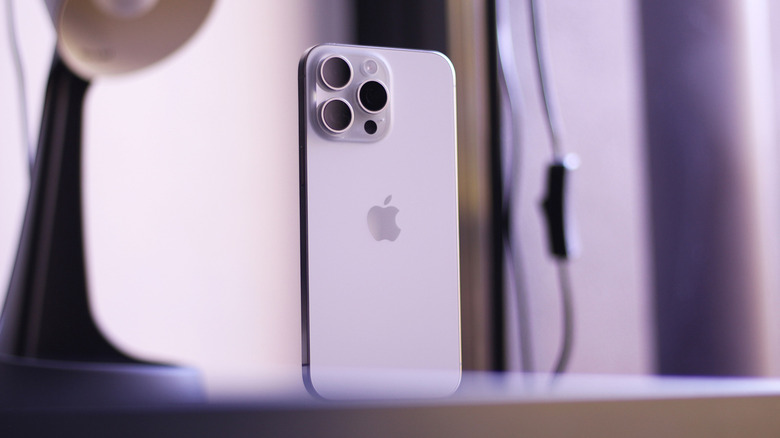
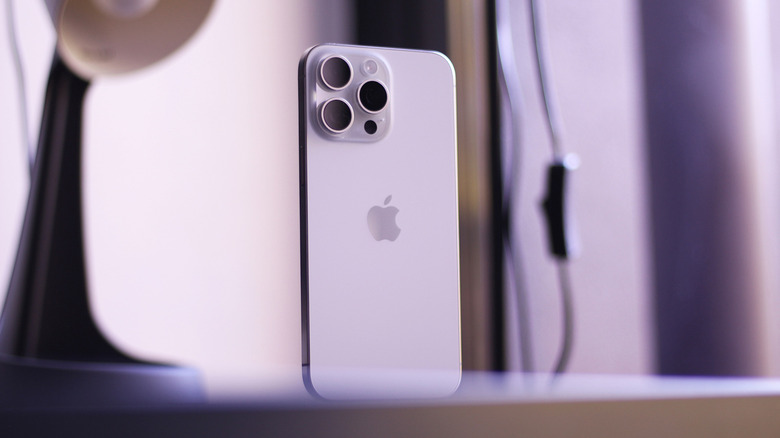
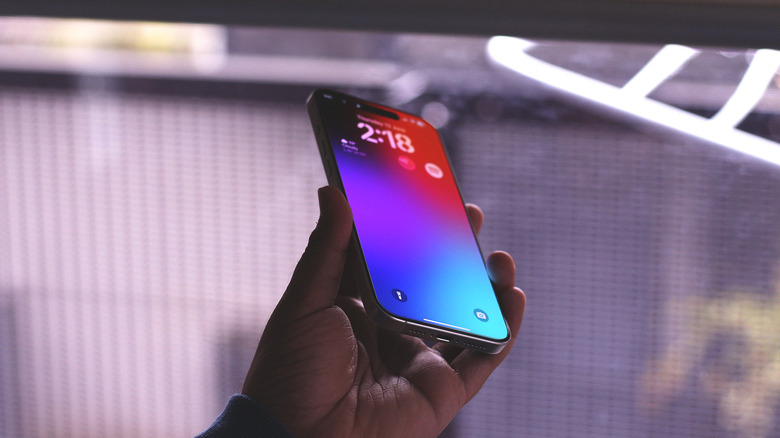
Apple seldom makes design changes to its products, so the introduction of a titanium frame with the iPhone 15 Pro lineup marked an interesting shift. Even the marketing around the iPhone 15 Pro series was heavily centered on the new material. The previous few generations shipped with stainless steel frames, which looked spectacular but added quite a bit of heft, especially on the larger Pro Max models. Titanium is not only durable but also lighter than stainless steel. The iPhone 15 Pro Max was nearly 20 grams lighter than the outgoing iPhone 14 Pro Max.
The iPhone 16 Pro models continued the trend, but Apple switched to an aluminum unibody design for the iPhone 17 Pro and Pro Max. Apple hasn’t publicly commented on why it has made the switch except for mentioning that the new “design is crafted with a lightweight aerospace-grade 7000-series aluminum alloy to deliver the best-ever thermal performance in an iPhone.” Overheating was a common complaint iPhone 15 Pro users had — our model also runs uncomfortably hot sometimes.
That said, Apple hasn’t completely ditched titanium. The thin-and-light iPhone Air that we reviewed is wrapped in a grade 5 titanium frame. In fact, the titanium is probably why the device turned out to be one of the most durable phones you can buy. The iPhone Air surpassed all expectations in JerryRigEverything’s brutal durability test, where it withstood a three-point bending test with a load of 200 pounds (90 kilograms) before failing.
The pros and cons of Apple ditching titanium
Adnan Ahmed/SlashGear
Aluminum has high thermal conductivity, which makes it a better material for heat dissipation. This is why most premium laptops rely on aluminum chassis to get heat away from the processor as quickly as possible. Apple also equipped the iPhone with a vapor chamber for the very first time. Stress testing conducted by The Mac Observer reveals that the iPhone 17 Pro Max maintains higher sustained performance than the iPhone 16 Pro Max and achieves better stability scores.
We can only speculate why Apple switched to using aluminum in its still-expensive iPhones. Lower procurement costs, ease of manufacturing, and better thermal performance are plausible explanations. Aluminum is also easier to work with when it comes to surface treatments like anodization or painting, which explains why the bright orange colorway is available on the iPhone 17 Pro models.
If an iPhone Air 2 is in Apple’s plans, it would make sense for the device to continue using titanium for its strength. The rest of the lineup, however, will likely stick with aluminum despite it being a less premium material. Samsung had also jumped on the bandwagon when it switched to a titanium frame for the Galaxy S24 Ultra we reviewed, but is now back to aluminum on its latest flagship. Perhaps the brief fascination with titanium on smartphones was more of an experimental thing than a permanent shift.
Gemini can suggest Drive file moves and new folders.
Organize My Files requires Workspace or Google AI access.
The tool is useful but still feels limited and unfinished.
I’m an Apple person. I’ve owned an iPhone since 2007 and a Mac since before that, so of course I’m also a longtime user of iCloud Photos and iCloud Drive. I pay $10 a month for the 2TB iCloud+ plan because I have 488GB of data sitting there, including nearly 40,000 photos. Don’t judge me. The real problem is that I’m also a heavy Google user, specifically Workspace apps.
After 14 years of using Google Drive, I have 340GB of data stored there from all the Google Docs, Sheets, Slides, and Gmail messages I’ve created, not to mention file uploads. So I pay $20 a month for Google AI Pro, which gives me 5TB of storage and access to Gemini AI. And because, apparently, I need all the subscriptions, I also pay $20 a month for ChatGPT Plus.
I need to cut subscriptions
I know… I need to cut subscription costs somewhere. I’ve wondered whether I should cancel ChatGPT or somehow, some way, reduce my Google usage enough to stop paying for extra Drive storage. Realistically, I do not think I could ever get my data down to the 15GB Google gives me for free. My Drive has become so daunting that I’ve mostly stopped trying to manage it.
The funny part is that I am hyper-organized. My pantry has coordinated glass jars with labels. My daughter’s toy room has a place for everything. My Google Drive, though? A dumping ground. What can I say? Pre-parenthood Elyse was not so organized.
Because my Drive has never been in a good place, I have let files, photos, screenshots, PDFs, tax documents, drafts, downloads, and random digital debris accumulate with no real oversight for years. I keep putting off cleaning it.
Recently, I had the idea that some AI service could connect to my Drive and help me quickly organize it with a few clicks. Then I remembered my Drive includes things like my house deed, a copy of my will, and my LLC business details, and suddenly giving a random third-party company broad access to my personal data felt like too much to bear.
So here we are. My Drive is still messy, and my subscriptions are still multiplying. Joy. I sure do love that in this economy.
Can ‘Organize My Files’ declutter my Drive?
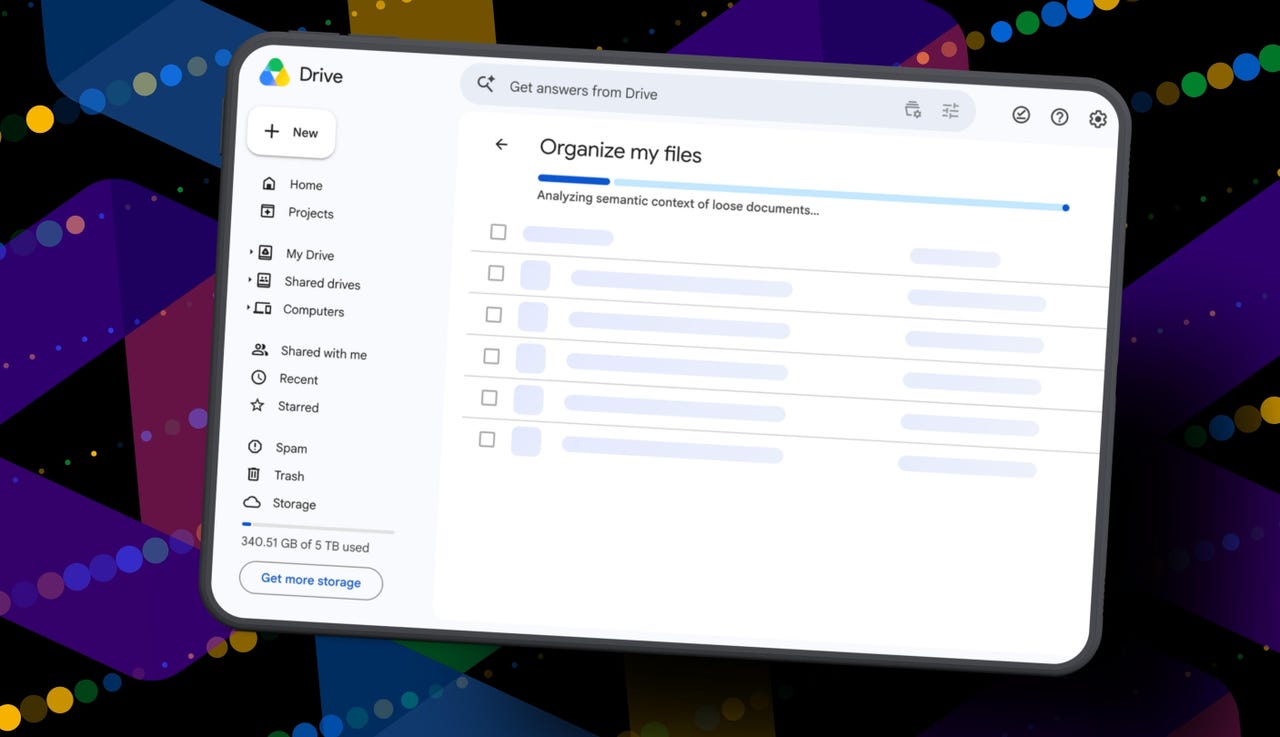
But today I spotted a quiet little launch from Google: its “Organize My Files” feature is now available. Can Gemini actually, truly help me declutter, organize, and simplify my Drive now? Apparently, it uses Gemini AI to suggest moving loose files in Drive into existing folders or creating new folders for related files. And I get to review everything before anything moves.
If this works, maybe one day I can move my data out of Drive and cancel my Google AI Pro plan for good. Maybe. One day.
How Organize My Files works
What you’ll need: A Google account with a messy-as-hell Drive. Oh, and Google’s “Organize My Files” feature is currently limited to Google Workspace and Google AI subscribers. Workspace smart features must also be enabled for it to appear in Drive.
Elyse Betters Picaro / ZDNET
Look toward the top of the file and folder list in My Drive for a new button called “Suggest File Moves.” Google said it will appear in My Drive as well as in parent folders in Drive.
Clicking Suggest File Moves opens a new Organize My Files window, where Gemini will begin analyzing loose files and suggesting ways to clean them up.
It’s time to use the checkboxes to select or deselect any file or folder that Gemini served up.
Also, if a suggested folder name is weird, just rename it. Check destinations for folders, too. If they aren’t right, change the target. Once the suggestions do look right and you’re happy, approve the changes.
Gemini will then perform the file or folder moves in one batch and return to My Drive.
After all that, Gemini suggested 19 moves for me. Nineteen. And it mostly surfaced recent files I had created or uploaded.
Some of the suggestions made sense. Gemini wanted to move my resume and a couple of resumes I had helped family members create into an existing resume folder. It also suggested creating a new Family and Real Estate folder for house deed documents, plus a Travel Planning folder for upcoming summer trip itineraries I have stored in Drive. But one of the files it grouped under Travel Planning was literally called “Delete,” because it’s a doc I want to delete. Gemini did not realize that, nor did it suggest deleting it.
To be clear, I have hundreds of gigabytes of data and years of clutter sitting in Google Drive.
Still, I approved the changes Gemini recommended. For the heck of it, I ran the tool again. In about 30 seconds, it suggested the same thing: the same file moves, the same new folders, and the same changes it had just made. This feels half-baked.
It’s not at all the sweeping cleanup assistant for Drive that I was hoping for and need. Maybe it will get better over time. It did just come out of beta, and it’s possible Google will improve how Gemini scans Drive, prioritizes older files, recognizes obvious trash, and surfaces deeper organization suggestions. I just don’t want to have to click it 500 times, hoping it finds something new each time.
Looks like I’m still stuck with a messy Drive and a $20 AI Pro subscription… for now.
To provide the best experiences, we use technologies like cookies to store and/or access device information. Consenting to these technologies will allow us to process data such as browsing behavior or unique IDs on this site. Not consenting or withdrawing consent, may adversely affect certain features and functions.
Functional
Always active
The technical storage or access is strictly necessary for the legitimate purpose of enabling the use of a specific service explicitly requested by the subscriber or user, or for the sole purpose of carrying out the transmission of a communication over an electronic communications network.
Preferences
The technical storage or access is necessary for the legitimate purpose of storing preferences that are not requested by the subscriber or user.
Statistics
The technical storage or access that is used exclusively for statistical purposes.The technical storage or access that is used exclusively for anonymous statistical purposes. Without a subpoena, voluntary compliance on the part of your Internet Service Provider, or additional records from a third party, information stored or retrieved for this purpose alone cannot usually be used to identify you.
Marketing
The technical storage or access is required to create user profiles to send advertising, or to track the user on a website or across several websites for similar marketing purposes.