
Follow ZDNET: Add us as a preferred source on Google.
ZDNET’s key takeaways
- The Apple Watch is one of Tim Cook’s biggest successes.
- The device dramatically changed the wearables market.
- During Cook’s tenure, Apple boosted its health offerings and research.
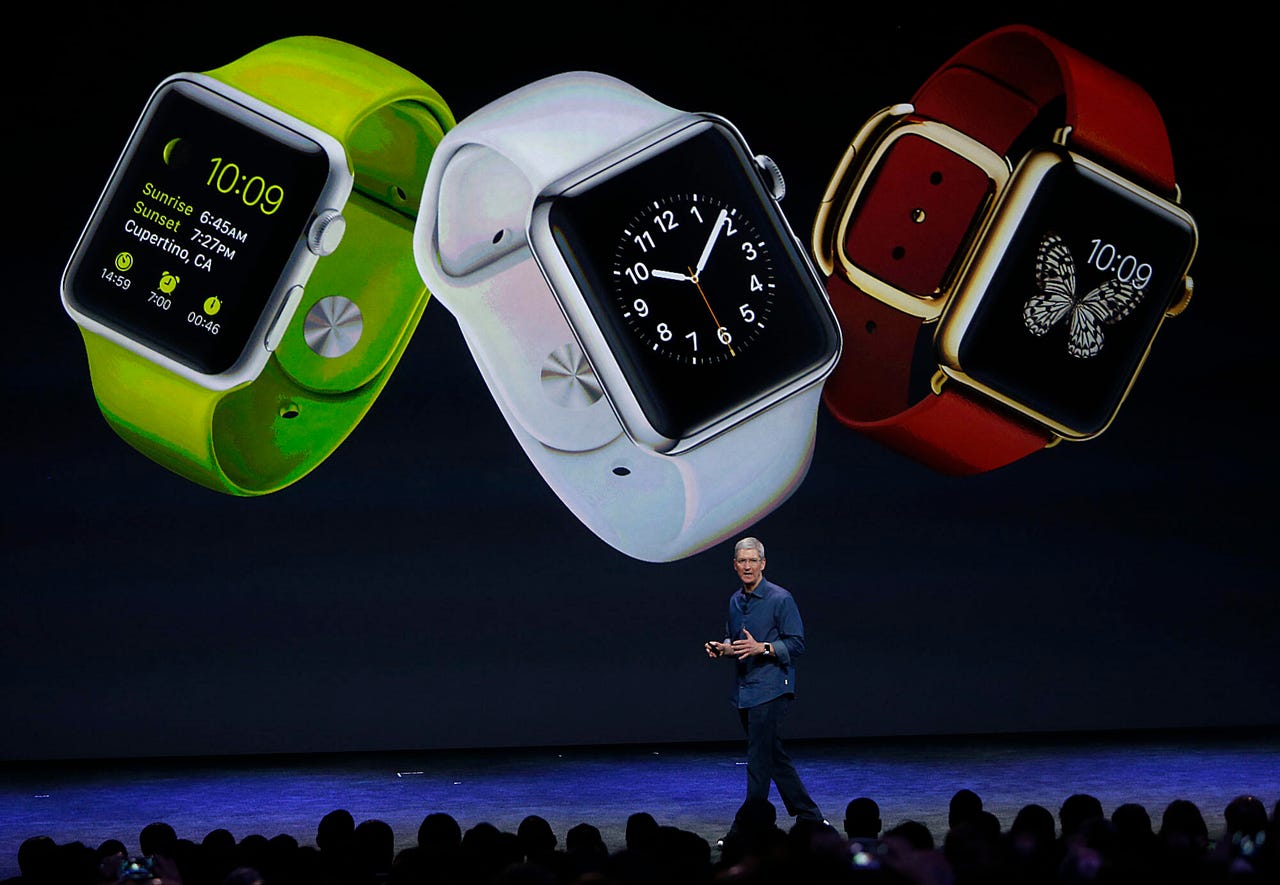
When Tim Cook unveiled the first Apple Watch in 2014, he called it the most personal product Apple had developed. He might not have predicted that the smartwatch could detect hypertension, catch atrial fibrillation, or save lives a decade later.
A few years into the Apple Watch’s existence, though, Cook’s vision for the device, Apple’s health agenda, and its connected ecosystem was fully formed. His tenure is marked by a legacy that leaves no aspect of present-day health technology untouched.
Apple’s CEO of nearly 15 years will step down in September, closing a chapter of exponential revenue growth, some of Apple’s most iconic product launches to date, and strides in consumer health tech in the company’s 50-year history.
“If you zoom out into the future, and you look back, and you ask the question, ‘What was Apple’s greatest contribution to mankind,’ it will be about health,” Cook said to CNBC in 2019. This is a bold statement from the CEO of a company known for its smartphones.
The next great healthcare advancement could come from a tech company — not a healthcare company.
Here’s how Cook built one of the most formidable forces in health technology and why it will have a lasting impact across consumers and companies alike.
Early days for the Apple Watch
Before the Apple Watch, there were devices like the Fitbit and Nike’s FuelBand. These screenless pedometers turned step tracking into a social activity. On a daily basis, people began caring about hitting a step goal — and they finally had a device to prove it. Quantity of data, rather than quality, prevailed.
When Cook unveiled the Apple Watch in 2014, it debuted with a Workout app for logging various activities and a Fitness app that collected and displayed activity history. It was by no means an exercise device. The first-generation Apple Watch was simply an extension of the iPhone around your wrist, Ranjit Atwal, Gartner’s research director, said in an interview with ZDNET. It flirted with the idea of being a fashion statement (which failed) before moving in a health- and medical-minded direction several years later.
Also: Want a free Apple Watch? T-Mobile will give you the SE 3 – how to get yours today
Cook’s goal was to build Apple’s ecosystem through the iPhone, MacBook, Apple Watch, and AirPods, and get these products into as many hands as possible, Atwal said. Once enough people were wearing the smartwatch, Apple began rolling out safety and health features, like fall and car crash detection, and atrial fibrillation detection.
“Eventually Apple [figured] out that, because the Apple Watch was on the skin and closer to your body, that it could start monitoring these health functions,” Atwal said.
Apple’s research approach
There’s nothing that special about the hardware behind your favorite wearable. Most smartwatches and smart rings share practically the same sensors. The most valuable aspect of these devices is the algorithm behind the hardware, Safoora Khosravi, senior research associate for medical devices and diagnostics at Lux Research, said in an interview with ZDNET.
To be accurate, that algorithm must be trained on an extensive dataset. Apple quickly cracked the code on getting these robust datasets through its unconventional research initiatives.
Conducting a research study involving hundreds of thousands of participants across the country is costly, time-intensive, and near impossible for research institutions to carry out. These institutions need to pay participants and not only have a physical location for every participant to visit, but also have medical staff on site.
By getting consent from its users and tracking health data through these devices, conducting studies virtually through an app, Apple significantly reduced the upfront costs of research and development. This was huge for the company — and medical research — at the time, Khosravi explained. No other rival had done this with its smartwatch.
Apple spearheaded several studies whose data would eventually be used to create new health features. In 2018, Apple partnered with the Stanford University School of Medicine and conducted the Apple Heart Study through the use of an Apple Watch, app, and digital survey. It was an unprecedented virtual study that tracked longitudinal data across a large pool of Americans.
“The results of the Apple Heart Study highlight the potential role that innovative digital technology can play in creating more predictive and preventive health care,” said Lloyd Minor, dean of the Stanford School of Medicine, in a Stanford news article.
Also: Your next Apple Watch or AirPods could have life-changing features thanks to this new initiative
With more than 400,000 participants across 50 states, the study collected data on Apple Watch users with irregular heartbeats and notified them of possible atrial fibrillation. A year later, Apple launched its first FDA-cleared health feature, the ECG app, on Apple Watch Series 4. At the time, it was the first direct-to-consumer product that could take an electrocardiogram from a user’s wrist, Apple said in its announcement.
This research model helped Apple outpace its competitors, Khosravi said. “Apple was the first company that actually blurred the line between consumer wearables and medical devices.”
Apple launched several other studies and its Research app since then. These include the Apple Women’s Health Study, the Apple Heart and Movement Study, and the Apple Hearing Study. The latter resulted in the FDA-cleared hearing loss detection feature on the AirPods Pro 2.
Getting FDA clearance increases the device’s accuracy and credibility, while also allowing these companies to charge a little bit extra for a premium, medically validated device, Atwal explained.
Apple’s bet on medically validated features gave it an early and valuable edge in the wearables market. Khosravi has found that consumers are willing to pay more for greater accuracy in wearable technology.
Influencing the broader industry
The reverberations of this product- and feature-development model (get a health tracker into the hands of as many people as possible, offer opt-in research opportunities, collect findings, validate the data, and ship new features) can be found across the consumer health technology industry today.
Some of Oura Ring’s best features emerged from similar studies it launched with research institutions. These include Symptom Radar, a feature I have written about at length, because it actually works in detecting when I’m about to get sick. The feature was developed through a study called TemPredict with the University of California, San Francisco, in 2020.
The study enrolled more than 63,000 participants who used the smart ring to monitor the onset of, duration of, and recovery from COVID-19. The results showed that the Oura Ring, using biometric signals, like heart rate, heart rate variability, respiratory rate, body temperature, and activity, could detect illness around two days before participants got diagnostic testing.
Also: 7 ways health tech promises to improve your life in 2026
Many of the newest employees at buzzier consumer health tech rivals started at Apple. Oura’s chief medical officer, Ricky Bloomfield, worked as Apple’s clinical and health informatics lead for eight years under Cook before switching roles in 2025. Maz Brumand spent nine years at Apple, also under Cook, before joining metabolic health company Levels, then becoming Oura’s VP of product shortly after. Even healthcare companies are poaching Apple employees to make their products more palatable to members.
Consumer health technology is more ambitious than ever. Smart rings and fitness bands are replacing watches. Some companies really want your blood now. They also want to track your urine through toilet sensors and your blood sugar through glucose monitors, whether you’re diabetic or not.
With the right software and crowdsourced research strategy that Apple helped pioneer, these newer products and form factors could reveal impactful health solutions and potentially detect disease. These devices have also created a host of questions around data privacy and security.
Some of these product promises will solve a real problem (maybe we’ll finally get noninvasive glucose monitoring, as Apple’s late CEO, Steve Jobs, once dreamed of), and others will capitalize on a billion-dollar hype cycle.
The health products du jour may change, but their ethos, operation model, and potential health solutions owe much to Cook’s Apple Watch.
“It’s a dedication to a long-term vision and persistence as much as anything,” Ranjit said. Apple, through its research and development model, ushered in an entirely new wearable market. “Apple has created a mindset that the wearables market is one others can come into. That’s one thing you can credit it for — it has created a new market that it, to a large extent, dominates.”