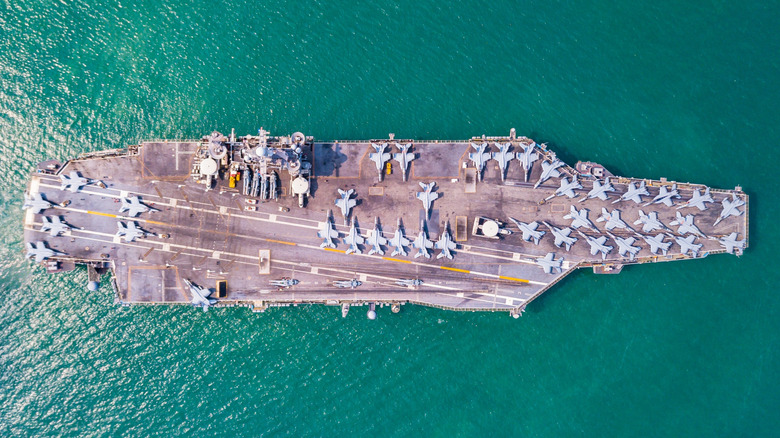

The modern aircraft carrier is a vessel unlike anything that’s ever sailed the seas. From their advanced nuclear power plants to their massive crews and wide-ranging combat capabilities, there are a whole lot of fascinating characteristics that make carriers stand out. A carrier’s vast flight deck is, of course, one of the most impressive things about the ship, and indeed, the whole ship’s primary reason for existing.
But beyond the deck’s sheer size and high-tech equipment such as catapults and arresting gear systems, the flight deck’s construction is a wonder unto itself. From a distance, a carrier deck might look like it uses the same sort of concrete or asphalt construction you see at traditional airfields on land. Looks can be deceiving, though, as the modern carrier deck is actually made of all steel.
It’s not just any steel that these carriers use, though. Instead, it’s a Naval-grade, high-strength steel designed for both battle scenarios and the rigors of daily flight operations. Beyond that, the steel on the flight deck is also specially prepared and coated to withstand intense heat and to provide a grippy, non-slip surface for both the carrier’s aircraft and the sailors who keep the ship running.
From wood to armored steel
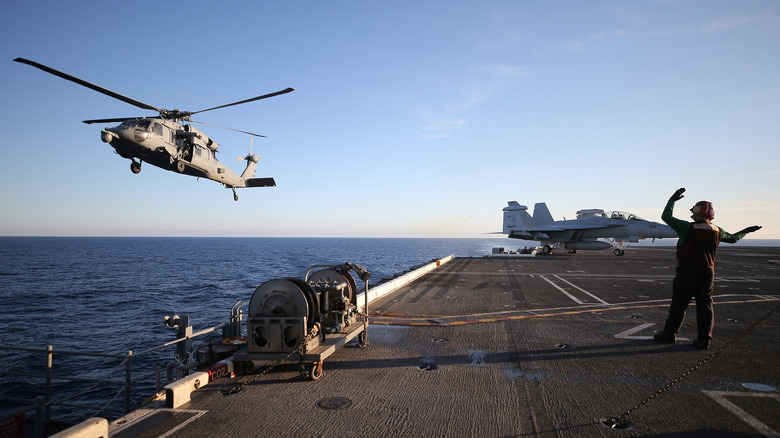
When it comes to modern aircraft carrier operations, the complex catapult system is by far one of the most crucial pieces of equipment on the flight deck. That said, the importance of the deck structure itself should not be overlooked. In the early days of naval aviation, many carriers used a wooden-planked flight deck over a steel structure, but armored steel carrier decks would become the standard starting in World War II.
Not only did steel flight decks protect the ship and the aircraft stored below on the hangar deck during enemy attacks, but the high-strength steel could also be used as part of the ship’s structure itself. The thickness of a carrier’s steel deck varies from ship to ship, with exact specifications generally classified due to its importance to the ship’s survival, but the heavy-duty construction ensures that both the flight deck and the carrier itself are strong and well-protected in battle.
The steel deck’s thickness and structural role are just one part of the picture, though. Shipbuilders also take extra steps to ensure the deck can endure the rigors of the sea, as well as safely launch and recover aircraft in all conditions.
Safety meets strength
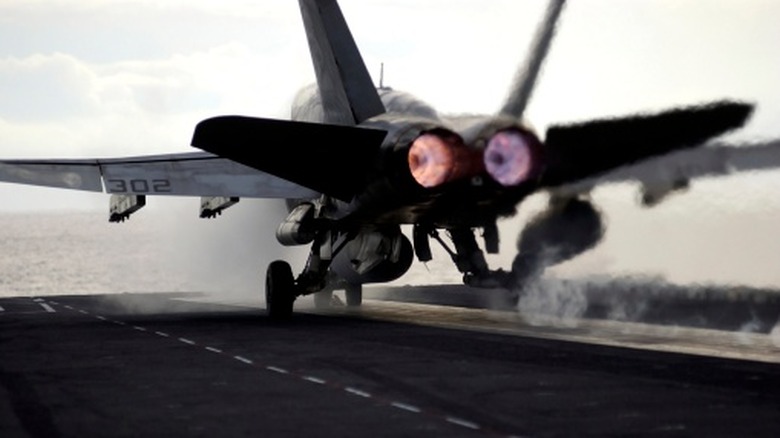
To say that aircraft carrier decks take a beating would be a huge understatement. You’ve got rubber from tires, the force of the planes hitting the arresting wires, the heat from afterburners, jet-wash, liquid jet fuels, and hydraulic fluids. Then you’ve got the wind, waves, and other environmental elements that all ships deal with at sea. With all that, it’s no surprise that a carrier flight deck can be a very dangerous place.
To handle all of this, the steel flight decks are covered with an anti-skid coating. The coating doesn’t just help protect the deck’s structure from extreme heat and other abuses; it adds a high-friction surface that helps keep aircraft, vehicles, and personnel from sliding around — or, in the worst case, falling overboard during operations.
Anti-skid coating needs to be reapplied after a certain amount of use, and how long it lasts depends on the type of coating used and what it’s exposed to. In 2025, the USS Gerald R. Ford had its non-skid coatings replaced and upgraded for the first time since being commissioned in 2017, with the job taking three weeks in total. Beyond aircraft carriers, anti-skid thermal coating is used on many types of ships, and given its importance, the Navy is regularly looking for more efficient ways to use and apply it. On a modern carrier, the anti-skid is every bit as important as the steel it covers, and a massively important part of the flight deck’s construction.

Stephan is the sports journalist for the Maple Grove Report.