To judge the size of military spending, we can start by comparing it to the growth of the world economy.
Although the world economy has been way ahead, I suspect we’ve reversed the trend.
Military Spending
The World Economy
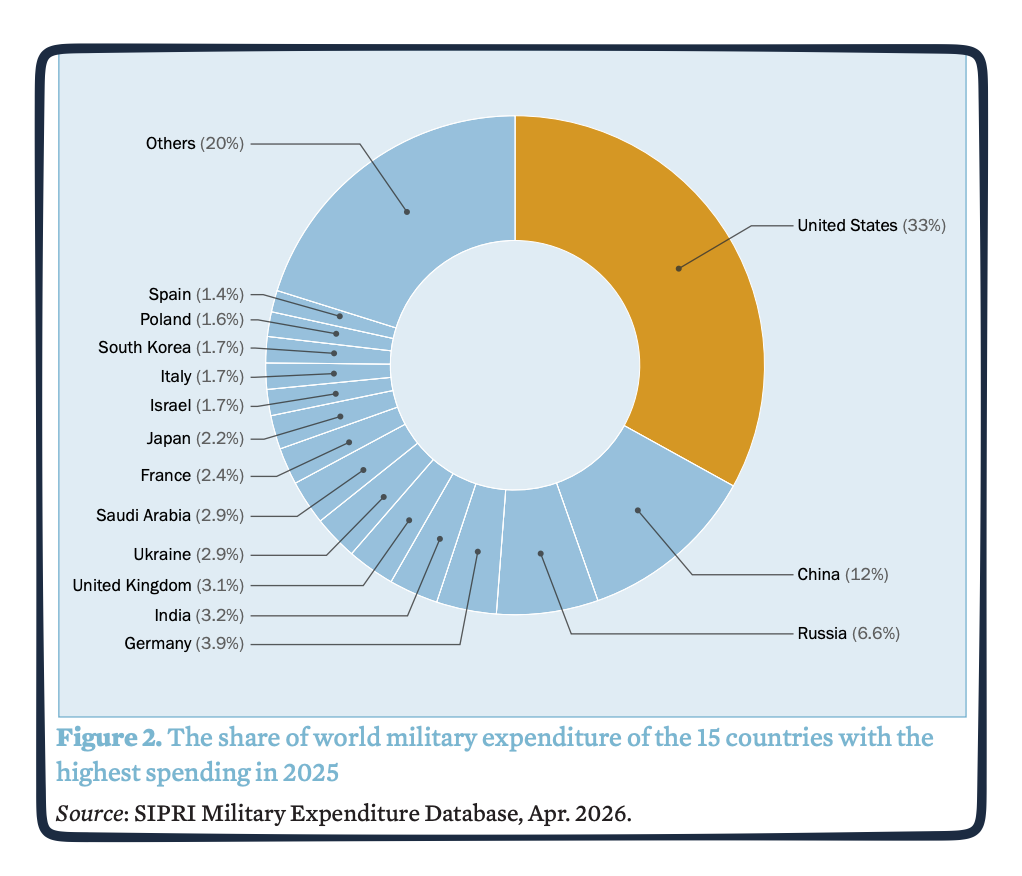
During the past 30 years, the world economy grew by 180% while military spending increased 120%. Looking more closely though, we would see that 80% of all military spending came from 15 nations and the regions varied. With Europe and China spending more, the Americas pretty much plateaued.
Below, You can see a recent rise in European military spending:
Dominated by the United States, spending was concentrated among 15 nations:
The United States
U.S. defense spending is at a new high. Although from 2024 to 2025, our spending did dip because of the Ukraine cutback. But then, the FY 2027 $1.5 trillion defense allocation was a whopper of a surge. According to the Center For Strategic & International Studies, that $1.5 trillion is close to a 40% uptick from 2026 when adjusted for inflation. Record breaking, it exceeded World War II defense spending peaks.
Our Bottom Line: The U.S. Budget
Remaining with the United States, in addition to history, we can judge defense through a federal budget lens. Becoming an increasingly larger slice of U.S. spending, in FY 2020 it was 10% while by 2027, the defense piece of the budget pie climbed to an 18% slice. And Iran was not even included.
Correspondingly, the increase in military spending has outpaced economic growth. With military spending a 3% piece of the GDP from 2022 to 2026, for FY 2027 its projection is 3.7%.
So, whether we judge defense spending by comparing it to economic growth, by contrasting what different nations spend on defense, or by looking at history, it always returns us to tradeoffs. Remembering that “Choosing is refusing,” spending more on defense, we have less for safety net programs, disaster response, and medical research.
Please note that our featured image is the Eurocopter Tiger, an attack helicopter that can add $73 million to a defense budget if you buy only one that is fully equipped. Also, I’ve interchanged defense and military as synonyms.
Travel isn’t just about where you go, it’s about how it feels when you get there.
For neurodiverse travelers, that feeling matters even more. The right destination can inspire curiosity and joy, but the right accommodations can be the difference between thriving and just getting through the trip. Too much noise, too many unknowns, or the wrong environment can turn even the best itinerary into something overwhelming.
North Alabama, however, offers something rare: a region where stimulation and decompression exist side by side. You can spend the morning launching rockets (at least metaphorically), the afternoon hiking through quiet forests, and the evening exactly the way you need—whether that’s in a structured, predictable hotel or a one-of-a-kind retreat built around a special interest.
As north Alabama residents, and neurodiverse ourselves, we designed this guide to help you choose not just where to stay, but how to stay, so your trip works for you, not against you.
Brand Name Hotels vs Boutique Accommodations
Photo Credit: Jenn Coleman.
Before you choose where you want to stay, you have to choose how you want to stay. Your two basic options are brand-name hotels or boutique accommodations, and each offers distinct advantages for neurodiverse travelers.
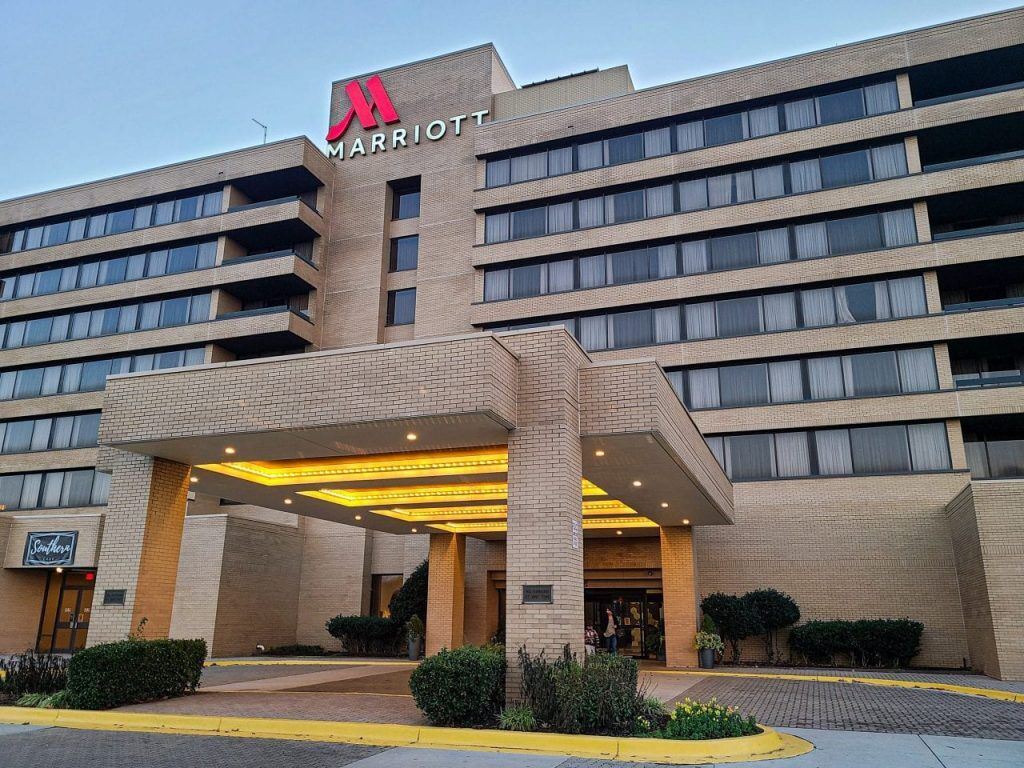
Brand-name hotels bring consistency. They’re typically centrally located, follow predictable layouts, and operate under established standards that reduce uncertainty. All of the brand-name hotels we recommend have completed Tourism ALL-a-Bama partner training, meaning they are more autism- and sensory-aware than the average property.
Boutique accommodations sit at the other end of the spectrum. Often more remote and highly themed, they offer control, privacy, and the ability to shape your environment. They’re especially valuable if decompression is a priority where you spend more time in, less time out, and opt to cook instead of navigating restaurants. When a property aligns with a special interest, it doesn’t just support the trip, it can become the reason for it.
Huntsville Accommodations
Photo Credit: Jenn Coleman.
Huntsville isn’t just the largest city in North Alabama; it’s the largest in all of Alabama by size and population. Despite its size, or maybe because of it, a trip to Huntsville has an astounding blend of stimulation and decompression that helps keep everyone regulated.
For stimulation, Huntsville delivers in a big way. The U.S. Space & Rocket Center launches STEM-focused special interests to the Moon. Lowe Mill celebrates creativity and individuality, while Campus 805 transforms a former middle school into a playground for teens and adults alike.
When it’s time to decompress, Huntsville shifts gears just as easily. Big Spring Park anchors downtown with space to spread out, walk, rent bikes, feed ducks, or simply sit and reset. Dining is equally flexible, ranging from elevated Southern chic to tasty tacos and basic burgers, with plenty of outdoor and picnic-friendly options.
Because Big Spring Park offers such a wide sensory range, our top hotel pick is the AC Hotel Huntsville Downtown. We’ve stayed here multiple times, especially during conferences, and its direct skybridge connection to the Von Braun Center complex removes logistical friction entirely. Step outside, and you’re already in the park: no traffic, no crossings, no guesswork.
For outdoor-minded travelers, Huntsville’s access to nature is exceptional. With over 60 miles of hiking and biking trails across Monte Sano State Park and Monte Sano Nature Preserve, plus commercial kayaking on the Flint, it’s easy to dial up or down your sensory input. Trailheads are minutes away, and full immersion, via camping or cabins, is always an option.
The full list of Huntsville ALL-a-Bama hotels is:
Decatur Accommodations
Photo Credit: Jenn Coleman.
Decatur was larger than Huntsville in the early 20th century, before the space race began. As such, it has its own tourism identity, including the Cook’s Natural Science Museum, Princess Theatre, and Point Mallard Waterpark, along with a small, walkable downtown lined with restaurants.
It’s still close enough to Huntsville that you can easily mix and match experiences. For example, it only takes 15 minutes longer to reach the U.S. Space & Rocket Center from Decatur than from downtown Huntsville. Our choice hotel here is the DoubleTree by Hilton Hotel Decatur Riverfront, thanks to its scenic location and proximity to downtown.
Decatur also offers natural decompression spaces, many tied to the name “Wheeler.” Wheeler Lake stretches along the Tennessee River, connecting Joe Wheeler State Park upstream to Wheeler National Wildlife Refuge downstream. The state park is a hotspot for boating and guided eco tours, while the refuge is famous for winter birdwatching, especially sandhill and whooping cranes. Much like Huntsville you can also opt to stay in the state park if you want maximum decompression.
The full list of Decatur ALL-a-Bama hotels is:
Florence Accommodations
Photo Credit: Visit North Alabama.
Florence is best known for its musical roots at FAME Studios and the Swamper sound, but its appeal extends well beyond music. Boating and fishing on Wilson Lake, hiking and biking on the TVA Muscle Shoals Trail Complex, and events like the Alabama Renaissance Faire make it a diverse and engaging destination, especially for the lords and ladies who share that special interest.
For a more immersive stay, Florence’s proximity to the Tennessee River and Bankhead National Forest opens the door to standout boutique accommodations. Doublehead Lakeside Cabins offers a family-friendly resort experience with fishing, pickleball, trails, and a pool, all within 20 minutes of downtown.
For something more unique, Rattlesnake Saloon and Seven Springs Lodge offer a truly different environment. The saloon is a family-friendly restaurant that sits beneath a natural rock bluff, while the lodge spans 20,000 acres with horseback trail rides and even glamping in converted grain silos. Nearby, Dismal Canyon offers guided tours to see bioluminescent glow worms lighting up the canyon walls like a natural starfield in the spring and fall.
Scottsboro / Guntersville Accommodations
Photo Credit: Jenn Coleman.
Scottsboro and Guntersville are two cities on the 75-mile-long Lake Guntersville. Scottsboro’s tagline is “Where the Mountains Meet the Lakes,” but that moniker applies regionally as the topology rises from the Tennessee River over 1000’ into the Alabama high country. You’ll find a thriving lake culture here with boating, fishing, waterfront dining, and unique attractions like Unclaimed Baggage (the nation’s only retailer of lost luggage) and Cathedral Caverns (the world’s widest entrance to a commercial cave).
Guntersville State Park is just across the river from Guntersville and offers cabins, boat rentals, and access to one of the South’s largest bald eagle populations, along with the aptly named Screaming Eagle zipline.
Cabin rentals are also available at Cathedral Caverns State Park and lakeside at Jackson County Park. Even though it’s “just a county park”, the cabins are modern, with two separate bedrooms and walking distance away from boat docks, boat rentals, and BBQ. A more upscale glamping option is ReTreet Glamping Resort, which offers luxurious tiny house cabins and glamping tents with full kitchens and private hot tubs.
Mentone / Fort Payne / Gadsden Accommodations
Photo Credit: Jenn Coleman.
This region represents the “mountains” side of North Alabama, where Lookout Mountain and Sand Mountain create dramatic landscapes filled with waterfalls, canyons, and outdoor adventure.
I-59 runs between the two ridgelines, providing access and corporate hotels and restaurants, but you have to go down to Gadson before you find a pair of ALL-a-Bama-trained Hampton Inns (Gadsden/Attalla I-59 and Gadsden). We had difficulty finding adequate grocery stores once we left the I-59 corridor because the country stores had sights and smells that were triggering and a poor selection. That said, there’s a brand-new Food City in Fort Payne that is very nice, or we would bring our own food from home.
Highlights include DeSoto State Park, Little River Canyon (the deepest canyon east of the Mississippi), and the North Alabama Waterfall Trail. Lake Weiss anchors the lower elevations, known as the Crappie Fishing Capital of the World. Near the lake are Horse Pens 40 and Cherokee Village climbing areas, which have some rocks that are just fun to scramble around on if you aren’t into technical climbing. A little farther south is one of our favorite spots, Terrapin Creek, which we thought was the most challenging commercially run “flat water” kayaking in Alabama.
What this region lacks in hotels, it more than makes up for in boutique accommodations. Starlight Haven is a glamping resort on Weiss Lake that offers luxurious domes, charming A-frames, and complimentary kayaks to paddle around the headwaters of the lake. We have a sensory note about the domes. The main bed is fantastic, but the kids’ housing is upstairs, where the heat gathers. There’s also al fresco dining lakeside at Decks and Docks on Weiss Lake and A&B Creekside Dining in Cave Springs.
On the subject of Cave Springs, it’s a cute and very quiet town, just across the state line in Georgia, with a small cave you can visit with water so pure that many townspeople still collect it at the springhead for home use. The spring run fills a large outdoor swimming pool, with lots of splashing and water fun available between the cave and the pool. This complex is a wonderful sensory escape on a hot summer day, complete with two ice cream parlors.
You can also select cabins that are closer to the mountains, such as the Forever View Cabin we stayed in near Little River Canyon or De Soto State Park.
Cullman Accommodations
Photo Credit: Jenn Coleman.
Cullman sits between Huntsville and Birmingham but feels worlds away in pace. It’s one of the quietest destinations in the region, making it an excellent choice for travelers seeking a slower experience. The city is large enough to have some walkable shopping and dining districts, such as the Downtown Commercial Historic District and Warehouse District. It’s enough to anchor a weekend trip, especially if you find accommodations that speak to you.
Local attractions include WildWater, North Alabama’s newest water park, and the Ave Maria Grotto, a century old collection of miniature religious structures. Smith Lake, one of the cleanest lakes in the country, offers exceptional fishing and a highly irregular shoreline that creates endless exploration opportunities.
Cullman currently has no ALL-a-Bama-trained hotels, but it makes up for it with strong boutique options. Adult travelers might enjoy the Flying Fifty which offers a retro 1950s-themed stay with remote check-in, while the Flying Carpet Moroccan Treehouse provides an immersive, globally inspired escape.
Families may prefer Firetower Camp’s unique replica fire cabins or lakeside stays at Smith Lake Park, both offering space, privacy, and easy access to nature.
Designing a Trip That Actually Works
Photo Credit: Jenn Coleman.
At the end of the day, the best trip isn’t the one that looks the most impressive on paper. It’s the one that feels right while you’re living it, especially for the neurodiverse.
North Alabama makes that easier than most places. Few destinations offer this kind of flexibility, where you can move seamlessly between high-energy experiences and quiet, restorative spaces without ever feeling like you have to choose one or the other.
The key is intention.
Choose a brand-name hotel when predictability and ease matter most. Choose a boutique stay when environment and immersion take priority. Build in time to decompress just as deliberately as you plan your activities. And don’t be afraid to let a special interest guide the itinerary, that’s often where the most meaningful travel moments begin.
When you get the balance right, something shifts. The trip stops being about managing variables and starts becoming what travel is supposed to be: engaging, restorative, and genuinely enjoyable for everyone involved.
Ready to Book Your Trip? These Links Will Make It Easy:
Airfare:
Car Rental:
OurPacking Favs:
We LOVE Matador Equipment for their innovative products and sustainability focus. Their SEG45 is a game changer when you need large capacity while packing light.
Travel in style with a suitcase, carry-on, backpack, or handbag from Knack Bags
Packing cubes make organized packing a breeze! We love these from Eagle Creek
Safeguard your digital information by using a VPN. We love NordVPN as it is superfast for streaming Netflix
Stay safe on the go and stay connected with an eSim card through AloSIM
Like it? Pin it for later on Pinterest!
Hi! We are Jenn and Ed Coleman aka Coleman Concierge. In a nutshell, we are a Huntsville-based Gen X couple sharing our stories of amazing adventures through activity-driven transformational and experiential travel.
To provide the best experiences, we use technologies like cookies to store and/or access device information. Consenting to these technologies will allow us to process data such as browsing behavior or unique IDs on this site. Not consenting or withdrawing consent, may adversely affect certain features and functions.
Functional
Always active
The technical storage or access is strictly necessary for the legitimate purpose of enabling the use of a specific service explicitly requested by the subscriber or user, or for the sole purpose of carrying out the transmission of a communication over an electronic communications network.
Preferences
The technical storage or access is necessary for the legitimate purpose of storing preferences that are not requested by the subscriber or user.
Statistics
The technical storage or access that is used exclusively for statistical purposes.The technical storage or access that is used exclusively for anonymous statistical purposes. Without a subpoena, voluntary compliance on the part of your Internet Service Provider, or additional records from a third party, information stored or retrieved for this purpose alone cannot usually be used to identify you.
Marketing
The technical storage or access is required to create user profiles to send advertising, or to track the user on a website or across several websites for similar marketing purposes.