
We may receive a commission on purchases made from links.
While a chainsaw is generally considered an important tool in a homeowner’s arsenal, it may not be one you use very often. However, when you find yourself looking at downed limbs in your yard after a storm, you’ll no doubt wish you had one. Ditto if you’re looking to remove small trees or heavy shrubs on your property. Luckily, when those scenarios arise, you can likely rent a good powered cutter from one of several home improvement outlets.
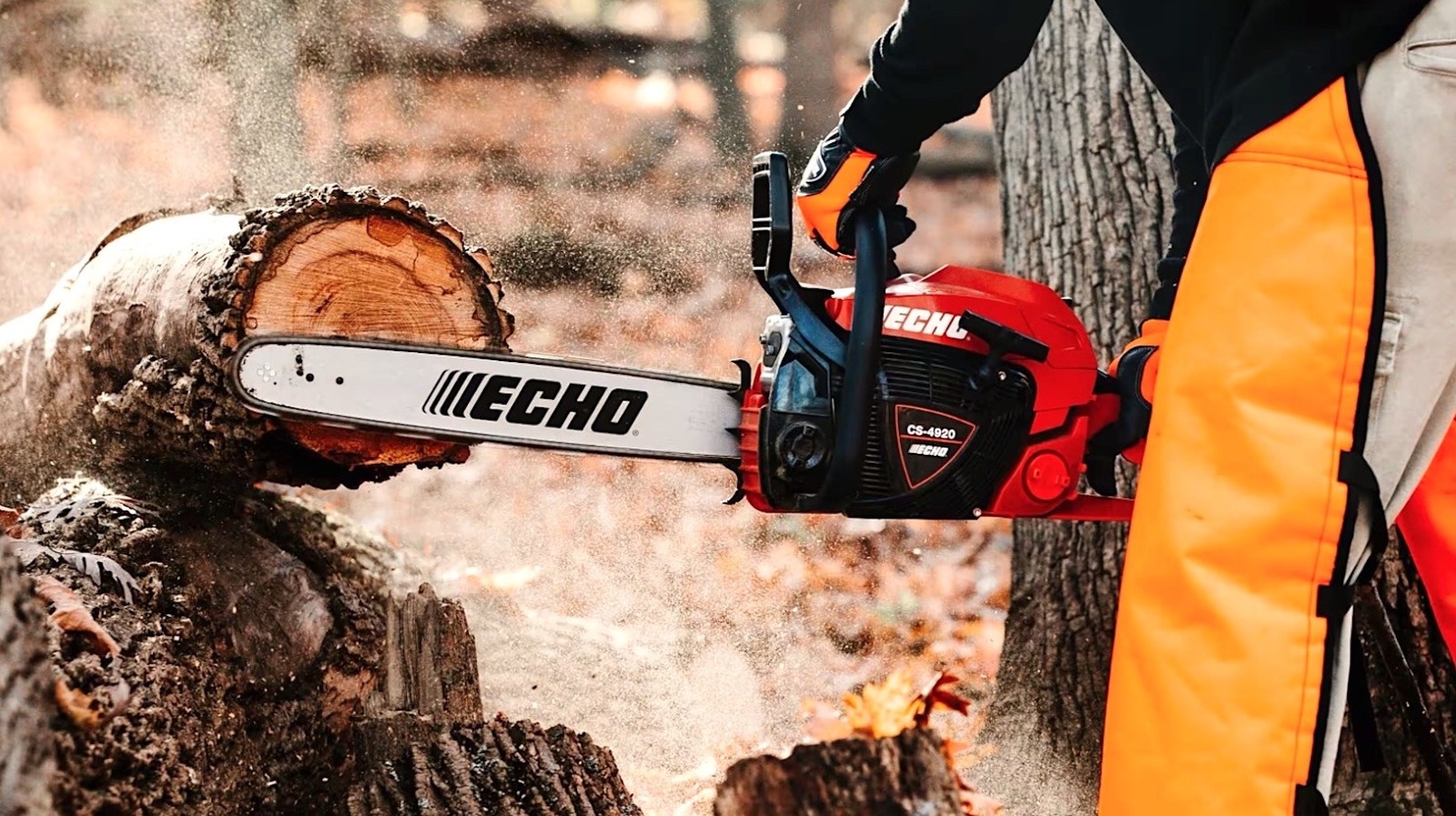
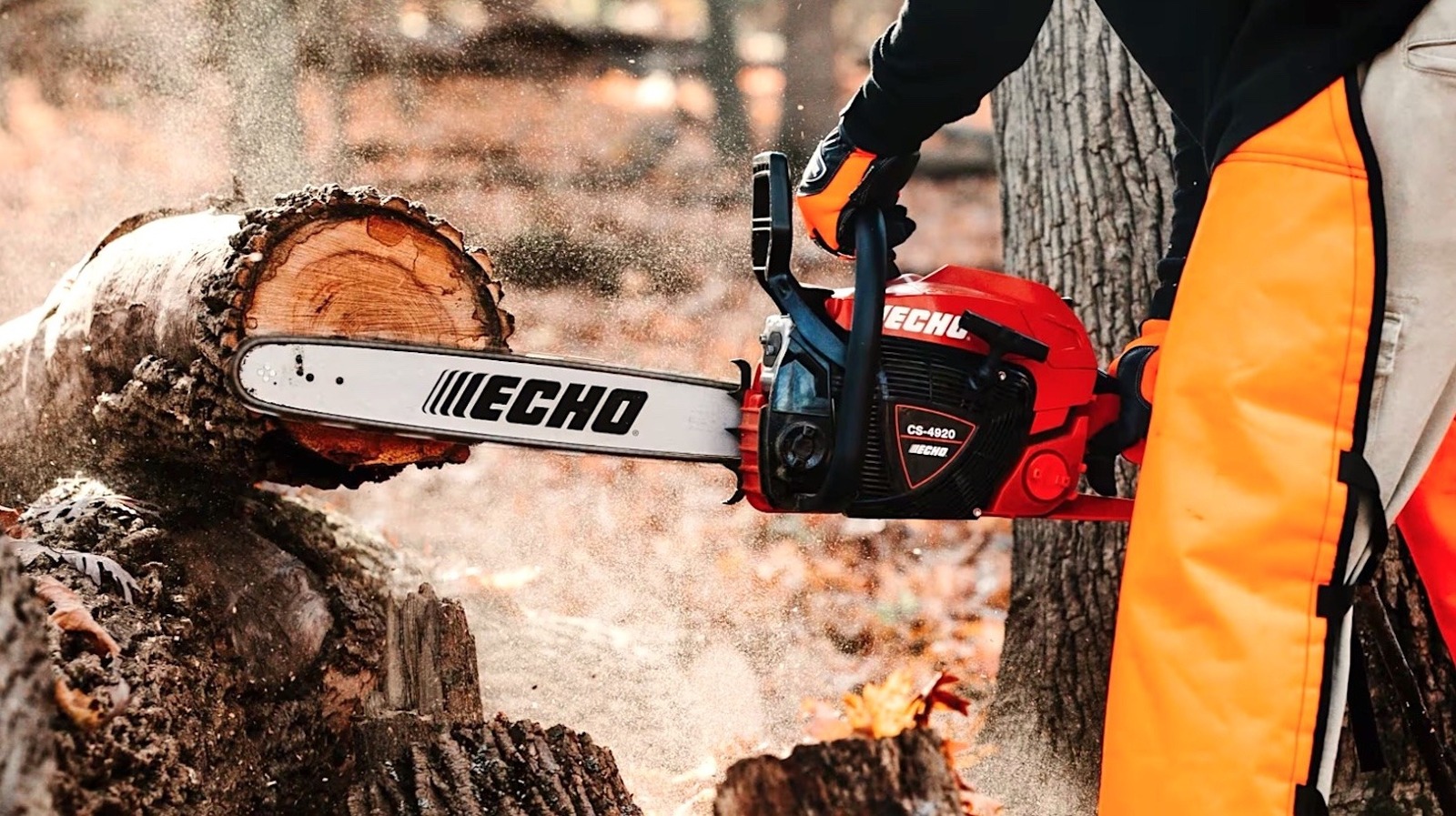
That list includes fan-favorite home improvement stores like The Home Depot and Lowe’s, which offer rentals on heavy duty equipment like tractors and boom lifts. They also rent out power tools like chainsaws from major manufacturers like Husqvarna, Makita, and Echo. The hourly rates for a 16-inch gas-powered chainsaw are competitive from both stores, with The Home Depot charging $45 for a four-hour rental. Lowe’s, on the other hand, charges $43 for the same time.
If you’re looking for a battery-powered option, The Home Depot offers such a cutter at $45 for four hours, while Lowe’s features a pair of options at $43 each. Both retail chains also feature corded electric cutters. If you’re renting from The Home Depot, one of these tools will set you back $38 for four hours, while Lowe’s will cost just $36. All in all, Lowe’s looks to be the cheaper of the two options across the board if cost is the primary point of concern for your chainsaw rental.
Other things to consider before renting a chainsaw
It’s worth considering that four hours may not be enough time to accomplish your task. And yes, the cost will be greater if you need the 16-inch gas-powered cutter for an entire day. The Home Depot charges $64 for a full, 24-hour rental, while Lowe’s sets the daily rental price at $61. If you need the cutter for longer, renting a 14-inch cordless saw from Lowe’s over a week costs $244, while the Home Depot charges $256. Per month, they’ll run you $610 and $768, respectively.
As the rental cost rises, it may become cheaper to simply purchase a chainsaw. For instance, a 14-inch cordless chainsaw from the independently-owned Makita could cost as little as $469, and that includes two batteries with a charger. Similarly, Lowe’s is selling a 14-inch cordless Husqvarna cutter with one battery and charger for $399.99. So, if you think you’ll need the chainsaw more than a day, or past a week or month-long window, outright buying one might be the smarter play.
Apart from those factors, safety gear is an important consideration, too. Lowe’s includes chaps and a helmet with the rental, but not gloves and eyewear. The Home Depot does not appear to include any safety equipment with its rental. Both rental locations will also require a few things from customers at the point of rental, including a valid identification, method of payment, and a deposit.

Stephan is the sports journalist for the Maple Grove Report.