How Much Does The World’s First Cordless Hammer Chisel Cost?


We may receive a commission on purchases made from links.

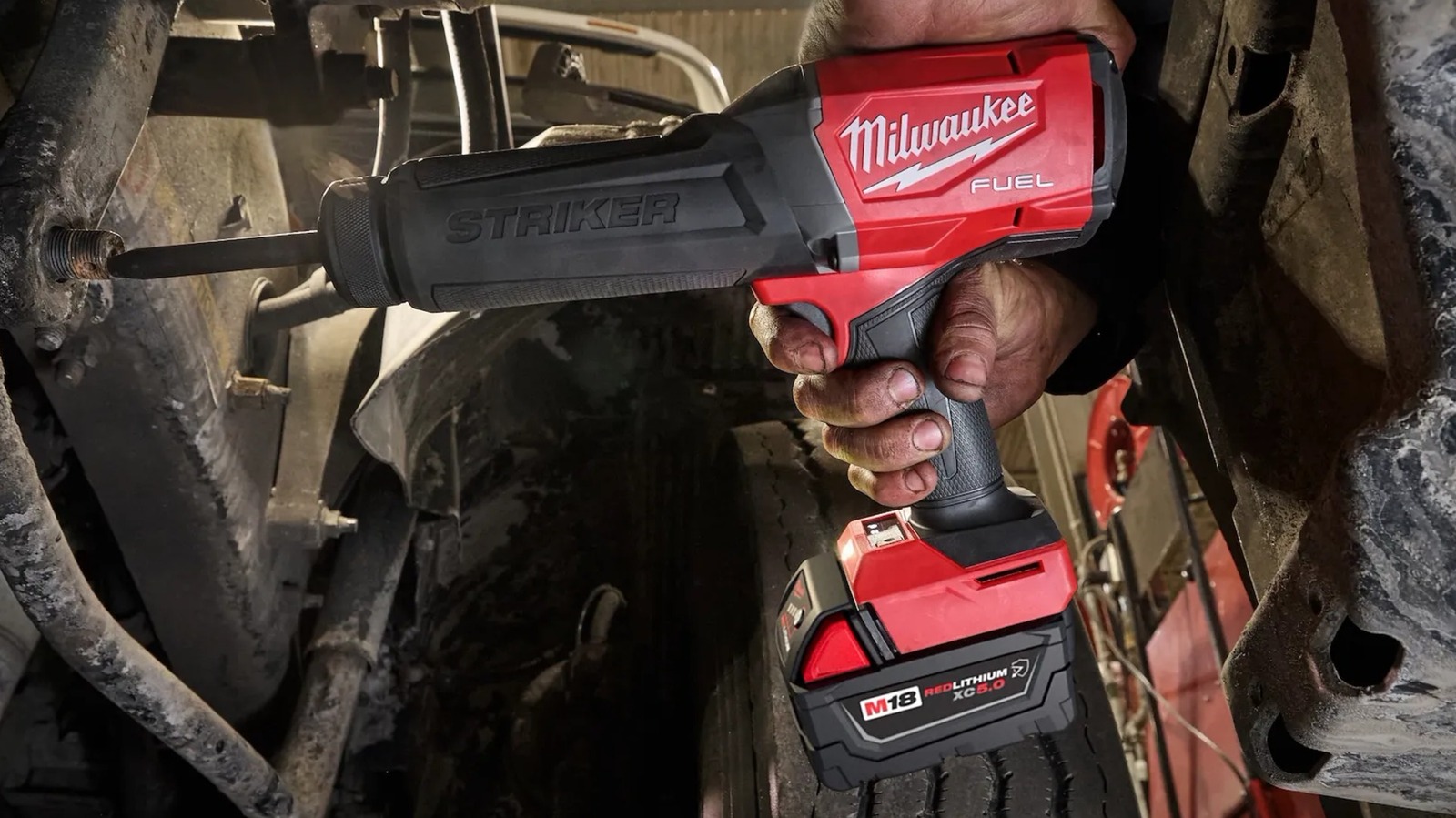
Like most other major power tool brands, Milwaukee has gone almost entirely cordless. While there are still some corded Milwaukee tools out there, most of its modern offerings rely on battery power — even some that feel like they shouldn’t be able to run effectively without wall power. A heavy-duty tool like a hammer chisel, for example, seems like it would need to draw power from the wall. However, Milwaukee has seemingly cracked the code and is releasing the M18 Fuel Striker Hammer Chisel, which it claims is the first cordless hammer chisel ever created.

Unfortunately, getting in on this piece of tool history comes at a hefty cost. The Milwaukee Striker will have a price tag of $599.00, just for the tool itself. On top of that, customers have to pay $49.00 for the protective chisel boot and $129.97 for the five-piece chisel set to get the full experience. That’s a whopping $777.97, which has the potential to increase even more if you don’t already have an M18 battery hanging around to power it. Those aren’t cheap, either; even a smaller unit like the M18 Fuel 2.0 Ah battery will run you around $120.

With such a high price, the Milwaukee Striker is a serious tool investment that only those who really need it are likely to buy. It also needs to deliver on the performance front, given how much Milwaukee is asking for it.

The stats behind the Milwaukee Striker

The Milwaukee cordless hammer drill has a brushless motor that the company says generates 7 joules of striking force, which it claims is equivalent to the 145 PSI pressure delivered by similar pneumatic hammer chisel models. There are also three different speed modes: 0 to 2,500, 0 to 3,000 BPM, and a mode that gradually increases the speed from 0 to 3,000 BPM when users fully depress the trigger. Said trigger is a variable-speed unit to provide the user with additional speed control.

As the M18 Fuel branding indicates, this tool is compatible with the entire Milwaukee M18 battery line. Additionally, it has a battery isolation system to reduce vibration and prevent battery pack movement in use, while Milwaukee’s RedLink Plus technology combats overheating and over-discharging. An LED work light on the front improves visibility on the job. Milwaukee stands behind the tool with its standard three-year warranty. If anything goes wrong and you didn’t do any of the things that immediately void a Milwaukee warranty, the company will repair or replace the tool free of charge.

Milwaukee continues to expand its product catalog, and the Milwaukee Striker manages to take a place of prominence as the first tool of its kind. Time will tell if this world’s first cordless hammer chisel lives up to its promise or ends up as an overpriced novelty that leaves much to be desired.


Source link

Leave a Reply

Subscribe to Our Newsletter

Get our latest articles delivered straight to your inbox. No spam, we promise.

Recent Reviews


There are certain engine configurations that are known even to those whose interest in engines is minimal. For instance, most people will know what makes a V-engine a V-engine, and even the differences between an in-line and flat engine

One engine design trait that’s perhaps less well-known is also related to the engine block, but not to with how the cylinders are arranged in the engine, rather with how they’re supported and cooled. When looking at this aspect of engine design, there are really three main types of engine block to look at. At the extremes are closed-deck and open-deck engine blocks, with some modern engines taking a halfway house approach with a semi-closed design. 

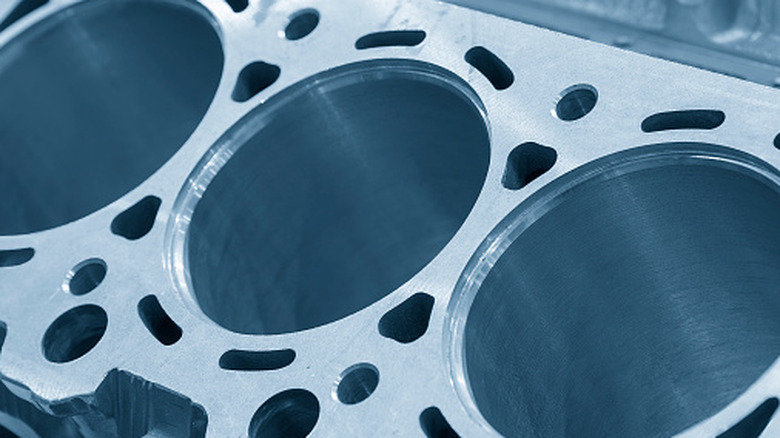
Let’s start by defining what an engine deck is. Essentially, the engine deck is that part of the block that the head gasket sits on, and the engine head attaches to. This means that an inline engine with a single line of cylinders will have one deck, whereas a V-configuration with two banks of cylinders will have two decks. 

Now that we understand that, we can begin to discuss the differences between closed-deck and open-deck engine blocks. In an open-deck engine, there is open space around the top of the cylinders that allows the coolant to circulate more freely. In a closed-deck design, in case you haven’t guessed it by now, the deck features extra material that offers less in the way of cooling, but it does support the cylinders more rigidly. Let’s pop the cylinder head off and have a closer look at these engine block types and why they matter more than you may think. 

Open-deck engines are cool, but flawed

For engine makers, there are definite advantages to open-deck designs — they cost less to manufacture when compared to closed-deck engines, and keep the engine cooler by exposing more of the surface area of the cylinder to the cooling liquid. 

However, all this open space around the cylinders is all very well and good when looking at cooling and manufacturing complexity — but cracks start to appear (sometimes literally) when we look at other aspects of closed-deck engine blocks. While it’s unfair to call open-deck engines unreliable and leave it at that, there are trade-offs in the design, and these become more noticeable in high-performance situations.

Essentially, the lack of material at the top of the engine deck means the engine is less structurally rigid right at the point where it meets some of the most extreme forces engines have to cope with — the combustion point at the top of the cylinder.

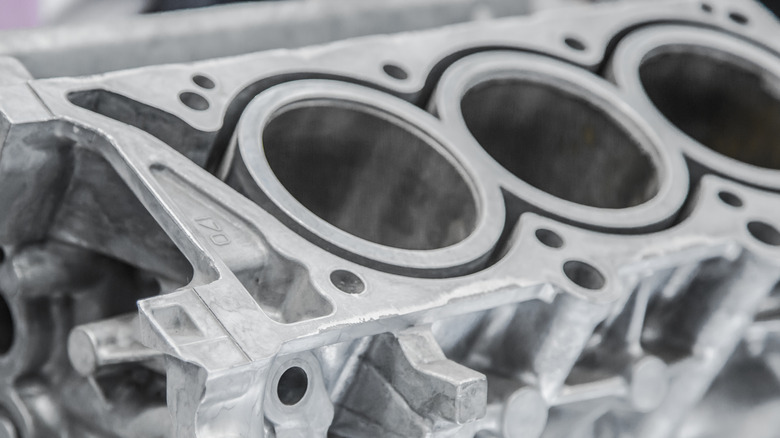
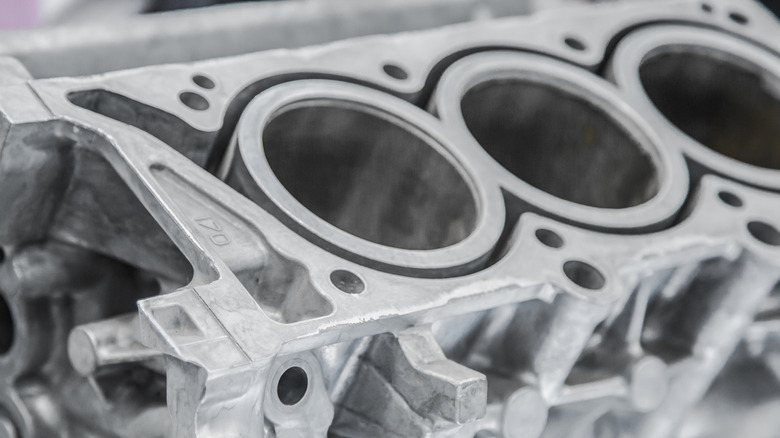
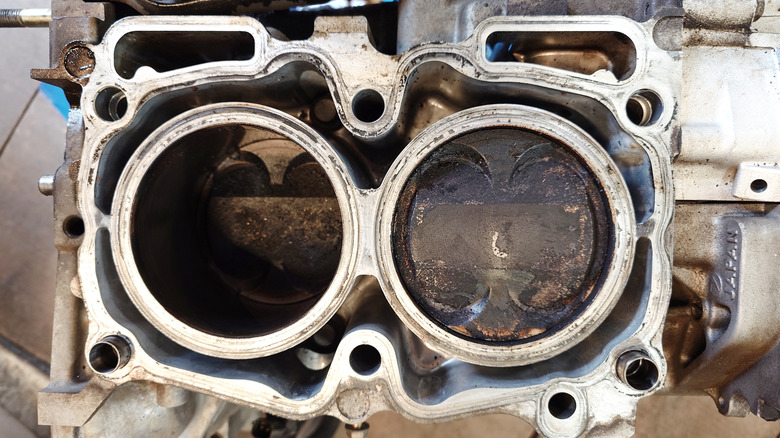
If you removed the head from an open-deck design and look down at the deck, this structural weakness is visible. From this viewpoint, the cylinders look separate from the rest of the engine block, with the gap between the two being used for coolant, as some open-deck designs have limited support at either end of the cylinder bank. While this gives more space for coolant to move freely, the downside is that it also does the same for the cylinder. Over time, even the limited movements of cylinders can weaken the head gasket and bring all the associated troubles that follow such a failure. 

Why some engines use closed- and semi-closed deck designs

Open-deck engine blocks are optimized for cooling and manufacturing efficiency. However, incorporate such a configuration in a high-revving, turbocharged brute of an engine and, well, it could end very badly. This is why such engines will usually use a closed-deck configuration. 

In a closed-deck engine, the open spaces around the cylinders of an open deck are filled with additional material. Obviously, the removal of such space and the flexibility it gives to the cylinders substantially strengthens the engine block. This is why some people fill engine blocks with concrete — it removes the flexibility afforded by the presence of cooling chambers. This is especially important for high-performance engines, but to call it overkill for the family runabout is not overstating the case. 

However, and the more observant among you will be there by now, filling an engine’s cooling cavities with material may add strength — but at the expense of cooling efficiency. This is why many modern turbocharged engines or higher-performance engines use a halfway house design in the form of semi-closed decks. 

Semi-closed decks are a compromise design that offers more rigidity to the cylinders by adding more support points. These supports are usually at the top of the cylinder. For instance, while there are pros and cons to Subaru’s EJ20 engine, the company released a version with a semi-closed deck with four additional support points, which should make it less prone to bore distortion. Ultimately, open-deck and closed-deck engine blocks represent design decisions based on the demands the engine is expected to handle. 


Source link