I Asked Experts Why Dishwashers Fail. A Simple Step You’re Skipping Was the Top Answer


Home Tips

When compiling and analyzing our list of the best dishwashers, every appliance professional I spoke with pointed to the same culprit behind most repair calls and warranty claims.

While burnt motors, failing hardware and general loss of cleaning power are inevitable for any machine after enough reps, one overlooked bit of maintenance is responsible for the bulk of dishwasher issues: a dirty filter. 

So how often should you actually clean that dishwasher filter? More often than most people think. Here’s why your filter matters, how frequently to clean it and the best way to do it.

Your dishwasher filter matters

person holding dishwasher filter in hand

A dirty filter could be causing your dishwasher to underperform. 

Natalia Rusanova/Getty Images

An effective dishwasher filter has three benefits: It keeps the water cleaner, protects the water pump and prevents food debris from clogging spray nozzles and drainage lines. As a result, the dishwasher requires less effort to run, and you’ll eliminate wildcards that can damage your expensive kitchen appliance.

In contrast, my ancient Maytag PDC3600AWX portable dishwasher lacks any sort of filter. This means I need to be very diligent about scraping and pre-cleaning when loading to keep it running smoothly.

How to clean your dishwasher filter

person removing dishwasher filter

The filter is your dishwasher’s secret weapon.

Brizmaker/Getty Images

Even if you regularly run a self-clean cycle on your dishwasher with a product like Affresh, solid food debris won’t disappear unless you empty the filter. Here’s a quick guide to cleaning your dishwasher filter.

  1. Pull out the lower rack to access the filter assembly at the bottom of your dishwasher. You may also need to move the wash arm slightly to access the filter.
  2. Rotate the filter to unlock it before removing it. Keep in mind that your filter might have two parts: an inner cylindrical filter and a flat outer screen. You should clean both of these.
  3. Rinse the filter with clean water in your kitchen sink. If food debris and hard water remain, you may need to scrub with a soft brush (abrasive scrubbing can damage the filter mesh) and soapy water.
  4. Some brands suggest drying the filter assembly before putting it back in your dishwasher. However, you should be fine reinstalling it before it’s dry, as the lingering moisture is unlikely to cause issues for a product that constantly deals with water and dishwashing chemicals.
  5. Don’t forget to turn the filter to lock everything back in place.

How often should you clean your dishwasher filter?

person putting wine glass in dishwasher

Keep things simple by scraping your dishes before loading and setting a monthly cleaning schedule.

aire images/Getty Images

In the absence of unified manufacturer guidance, I recommend checking your dishwasher filter at least once a month. If it’s clean, your job is already done. If not, then it’s time to clean it.

Best of all, it’s as easy as putting a reminder on your phone, calendar or chore wheel to check and clean the dishwasher filter. However, you should also stay on top of any decline in performance or foul odors in your dishwasher, which might mean it’s time to clean the filter ahead of schedule.

You can also simplify the scheduling (and cleaning) process by always scraping food scraps into the trash. This one habit easily turns filter cleaning into a monthly task at most — even with two daily wash cycles — rather than something to dread twice a week without any scraping.

For context, some brands provide detailed filter cleaning schedules based on how often you run your dishwasher and how much you pre-clean (scraping and rinsing) dishes before loading. Scraping is easily the deciding factor in preventing frequent filter clogs.

LG Dishwasher Cleaning Schedule

It’s far easier to scrape your dishes than to figure out a complex schedule like this one from LG. Also, pre-washing your dishes before loading isn’t an efficient use of water.

John Carlsen/CNET

Normally, I’d defer to manufacturers on how often to clean your dishwasher filter, but the advice in the user manuals for our best dishwasher picks is inconsistent. For example, Bosch (PDF) and LG recommend checking and cleaning filters after every dishwashing cycle. In contrast, brands like Samsung (PDF), Midea (PDF), KitchenAid (PDF) and Frigidaire (PDF) give vague instructions about cleaning periodically or as needed.

Close-up hand filling dishwasher with gloss liquid into the dishwasher box.

Always remember to reinstall your dishwasher filter after cleaning it — you shouldn’t run any cycles without it.

Miguel Tamayo Diaz/Getty Images

Even companies like Whirlpool (PDF) and Maytag (PDF), which recommend cleaning your dishwasher filter every one to three months, muddy the waters by stating that the frequency depends on your usage. I mean, technically, they’re not wrong. Someone like me, who uses a dishwasher once a week, may not need to clean the filter more than once every few months, compared to busy households that run multiple loads daily.

Even with a relatively dirty dishwasher filter, you’re unlikely to need more than 10 minutes to finish the cleaning process. Now you can enjoy a fresher, more effective dishwasher.


Source link

Leave a Reply

Subscribe to Our Newsletter

Get our latest articles delivered straight to your inbox. No spam, we promise.

Recent Reviews


It kind of makes no sense that literally every new car sold these days can go twice the regular speed limit in most countries. Even a Toyota Prius tops out at 115 mph, and reaching that speed in 99% of the world can easily land you in jail, or at least with a large dent in your bank account from a truly massive speeding ticket. Meanwhile, supercars can easily blow a Prius out of the water — for example, the Chevrolet Corvette ZR1 can hit speeds more than double that.

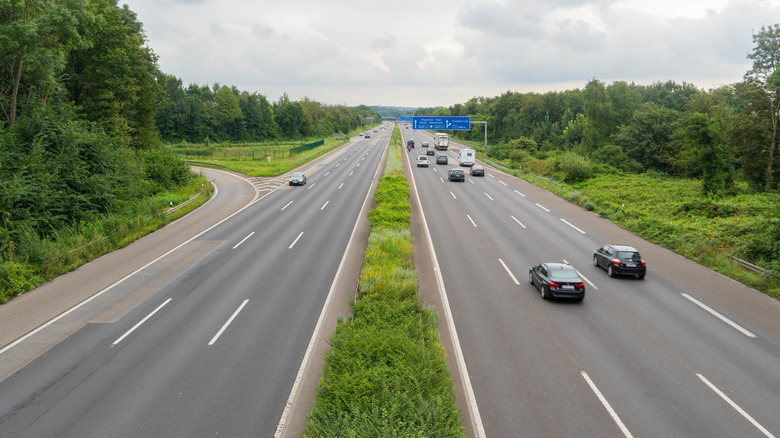
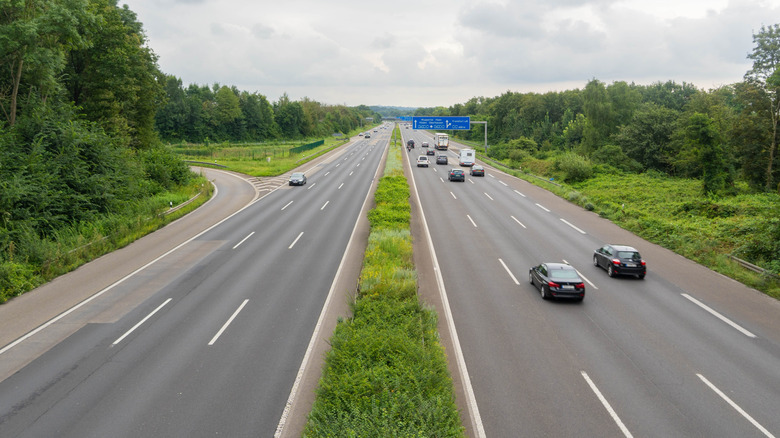
Either way, top speeds are merely hypothetical and completely off-limits for 99% of the world. Yet no matter if you own a ZR1 or a Prius and you want to test that top speed claim, there are public roads where you can try. The most obvious choice is the German Autobahn, which has certain sections with no speed limits. This means that, if it is safe to do so, you can theoretically chase that top speed.

Besides the German Autobahn, the roadways on the Isle of Man — known for the Isle of Man TT — also has sections with no speed limits. About a decade and a bit ago, you were also able to max out your car on certain locations of the Australian Northern Territory, specifically the Stuart Highway. However, speed limits were reinstated in the interest of public safety in 2016. Besides the Isle and the Autobahn, if you want to max out your car, public roads simply aren’t an option.

Limitations and dangers on no-speed-limit roads

Although reaching the top speed on the Autobahn is possible, it is not as simple as merging and hitting the gas. For example, the A9 near Bayreuth, A20 in Mecklenburg, and parts of A24 between Berlin and Hamburg are without speed limits in certain sections. In total, around 70% of German autobahns don’t have a capped speed limit. Even on those unrestricted sections, German law sets a recommended speed of 130 km/h called the Richtgeschwindigkeit.

Exceeding it is not a criminal offense, but if you are involved in an accident above that threshold, it can affect your legal liability for the incident. German law also prohibits driving at any speed where your stopping distance exceeds your line of sight, which effectively puts a practical ceiling on how fast you can legally go based on road conditions. The AutoTopNL YouTube channel serves as a good educational basis for how one ought to approach high speed driving on the autobahn.

If Germany is too far away and you want a more rural experience while driving at ten-tenths, the Isle of Man is your only other option. Outside of towns you can press on, but keep in mind that these roads are much narrower and less protected, leaving no room for error. The best example is likely the Isle of Man’s TT Race, which the BBC called “the world’s most dangerous road race.” The Isle of Man TT and the Manx Grand Prix, held on the same roads that you can max out your car on, are races so dangerous that they have taken a collective 270 lives since inception.

Where do automakers actually test top speed claims?

For decades past, we’ve seen automakers advertising hypercars going over 250 mph, but not many people know the places where these tests are commonly carried out. For example, the fastest street-legal car on record, the Bugatti Chiron Super Sport 300+, reached its top speed of more than 300 mph on the Volkswagen Ehra-Lessien test track in 2019. This facility has 60 miles of private roads with a single straight that is 5.4 miles long.

There is also the Papenburg test facility, which features a 7.6-mile-long oval track banked at 50 degrees. This is where the Yangwang U9 Xtreme set the all-time production car top speed record at 308 mph in 2025, and where in 2023 the Rimac Nevera drove 171 mph backwards — not something you can do on the German autobahn. Italy’s Nardò Ring is a 7.8-mile circular track built by Fiat in 1975 and now owned by Porsche. It is so large it is visible from space, and so well-banked that a car traveling at 149 mph in the outer lane doesn’t need to be steered and can simply be driven straight. This last test track is perhaps best known from the 2012 Top Gear episode where Jeremy Clarkson, Richard Hammond, and James May pushed a Lamborghini Aventador, a Noble M600, and a McLaren MP4-12C to their limits. 

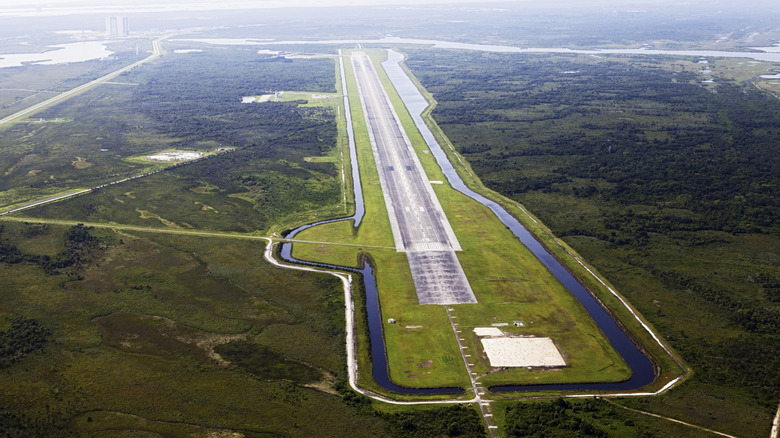
America’s equivalent is the former Space Shuttle Landing Facility at Kennedy Space Center, now operating as the Johnny Böhmer Proving Grounds. The 3.2-mile runway is where the SSC Tuatara hit 295 mph in 2022. Although these aren’t typically open for public joyriding, they are a few of a very limited number of places where top speeds are actually tested.


Source link