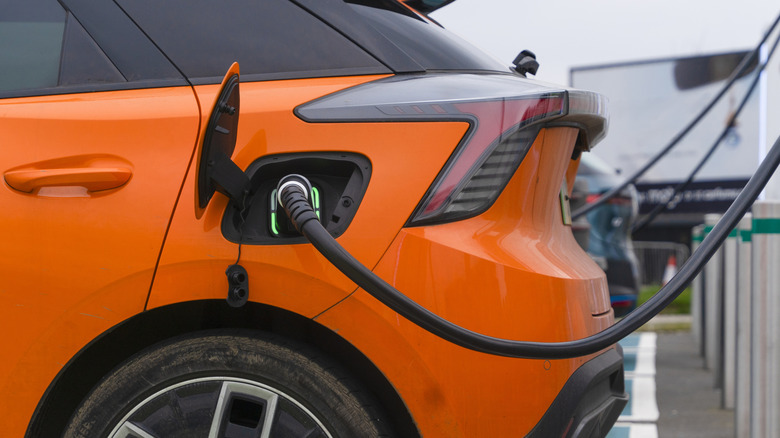

Many electric vehicles (EVs) only take electricity from the grid, but an increasingly growing technology is slowly becoming more prevalent on EVs: bidirectional charging. As opposed to unidirectional (one-way) charging, bidirectional charging allows for electricity to flow in two directions –- in the case of EVs, between the EV and a power source or load. Bidirectional charging effectively turns certain EVs into mobile power banks, allowing owners to use them as a backup generator or even sell excess energy back to the grid with EV power export (EVPE) applications like V2G (Vehicle-To-Grid).
There’s a two-pronged problem (pun intended) with bidirectional charging, though. First, bidirectional charging and EVPE applications, despite growing interest, are still catching on. Automakers like Tesla, Nissan, Volkswagen, and GM all offer a mix of EVPE applications through bidirectional charging, while other EV makers are coming around. Other manufacturers are expected to ramp up production of models with bidirectional charging tech, and General Motors is working towards making it standard across all of its EV models by model year 2026.
Then there’s the issue of battery life, and how bidirectional charging may adversely affect the long-term health of the electric car’s expensive battery. Assessing battery degradation is nuanced, but the consensus is that the extra charge/discharge cycles does slightly increase wear on the battery, according to a study conducted by RWTH Aachen University. But, the overall impact on the battery depends on several factors.
Bidirectional charging includes V2H, V2G, V2L, and V2X
Bidirectional charging consists of three different types: V2H (Vehicle-to-Home), V2L (Vehicle-to-Load), and V2G (Vehicle-to-Grid). Vehicle-to-Everything (V2X) is a blanket term that refers to all of the methods. The presence of these features is determined by the car maker, but they all function just as they sound. V2H allows an EV to supply power to a home’s electrical system, and could save owners up to 90% of charging costs. V2L lets the EV function as a mobile power bank for external loads (laptops, appliances, etc.), while V2G allows the EV to supply energy directly to the power grid, and in turn be compensated for it.
V2G is perhaps the most interesting of the three, as it incentivizes EV owners to contribute to the overall stability and demand of the grid when the car is parked and not in use. The earning potential with V2G varies depending on the program and the utility rates; a study by The University of Delaware shows a passenger EV can make as much as $3,359/year. Other estimates aren’t far off, reporting earning potential at over $3,000/year. A study by the University of Rochester also showed the potential for EV owners to save as much as $150/year on their electric bill while participating in V2G programs.
This, of course, depends on the availability of V2G programs. Texas, California, Connecticut, and Maryland are all leading the way in testing the scalability of V2G through pilot programs.
Bidirectional charging does increase wear on the battery, but it’s complicated …
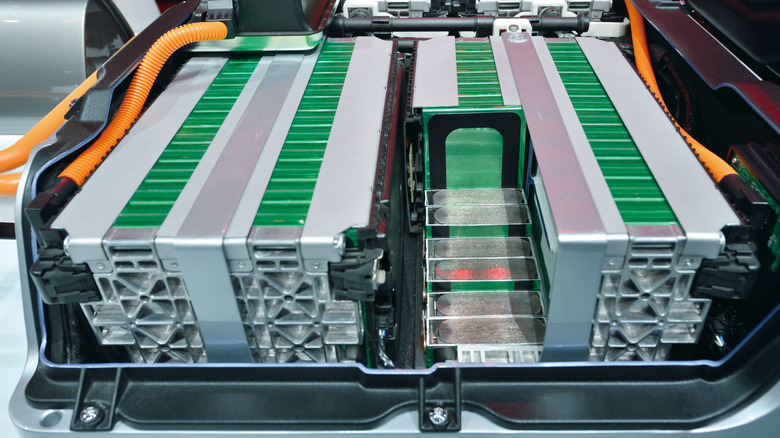
There’s no getting around the fact that increasing the amount of cycles a lithium-ion battery goes through increases the wear and ageing of the battery. The same is true with EV batteries and bidirectional charging. However, there’s cycle aging, and then there’s calendar aging –- increasing one doesn’t necessarily increase the other.
Environmental factors, thermal management, and the conditions in which V2G is being used are important variables when weighing value against battery degradation. Evidence shows that shallow discharge cycles can greatly mitigate degradation, and an IEEE study found that while bidirectional charging can lead to a decrease in battery capacity, heat was the biggest factor.
A study published in Applied Energy shows that over the course of 10 years, cycle age is decreased by 15% under normal EV conditions, whereas it decreased by 25% with V2G application. That same study also showed an average compensation rate of €132/MWh (about $150) for V2G participation. While V2X applications could potentially cost you in the long run, it could also pay for itself, especially if you’re properly maintaining the EV’s battery.
Battery warranty is perhaps the bigger question, as many OEM warranties do not explicitly state warranty coverage for bidirectional charging applications like V2G. While warranty policy is still catching up, some EV manufacturers are slowly updating their warranty language to include some level of bidirectional charging. Both Ford and Nissan have begun to support bidirectional charging, albeit under certain conditions; Ford limits the application to V2H with approved hardware, and Nissan supports specific V2G pilot programs. BYD has agreed to warranty a number of batteries in a V2G trial in Australia. Others, like General Motors, have begun to fully embrace bidirectional charging.

Stephan is the sports journalist for the Maple Grove Report.