
JD Power Just Named Its Most Dependable Midsize Car Of 2026


When shopping for a new car, many people immediately look at the comfort of the vehicle first. Color, style, and safety features are also on the list, and all of these together can often help narrow down the search pretty quickly. However, reliability is also a very important factor to consider; when it comes to midsize cars, JD Power found a 8th generation Toyota Camry to be the most dependable overall.

JD Power’s findings are for its 2026 Vehicle Dependability Study (VDS), published in February of that year. While the Camry was the most dependable in the Midsize Car category, the Honda Civic got the nod for the Compact Car segment. The Lexus IS was named the most dependable Compact Premium Car and the most dependable model overall. It’s not the first time that the Toyota Camry performed well in JD Power’s study, as it was also the most dependable midsize car in 2006, 2011, 2014, and 2016. The Camry was also named the most dependable overall in 2014.

JD Power collected data from owners of 2023 model-year vehicles to generate its findings. That feedback consisted of reported problems during the first three years of ownership, with dependability being measured using a problems-per-100 vehicles score. A number of common issues across different categories were analyzed in the system, including driving experience, interior quality, vehicle performance, and more. The fewer problems a vehicle experienced, the higher it ranked for reliability.

Camry problems, recalls, and a class-action lawsuit
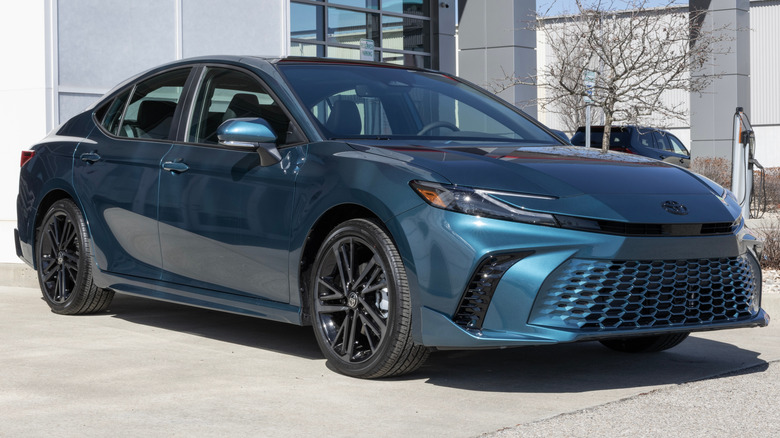
While JD Power has ranked the Toyota Camry high in the 2026 Vehicle Dependability Study, owners have experienced some common problems. As an example, though Consumer Reports finds the Camry to be more dependable than other vehicles, reliability data shows that the 2025 model has issues in certain areas. Owners report problems that include electrical accessories, interior electronics, and other system components as well.

In fact, certain 2025-2026 Camry models were recalled in December of 2025. The Corolla Cross Hybrid was also included in the recall, which affected around 55,000 vehicles in the US. The problem was an inverter bolt in the hybrid powertrain, which could become loose and cause a sudden loss of power. The issue could also result in a potential fire. At the time of the recall, Toyota stated that all affected owners would be notified and that the necessary repairs would be done free of charge.

Toyota is also facing a class-action lawsuit over alleged transmission defects, an issue that affects certain Camry models, among other vehicles. The lawsuit was filed in Texas in December of 2025, and alleges that the automaker continued to sell vehicles despite knowing about their various mechanical and software problems. Those problems could lead to increased wear and tear, in addition to putting undue stress on some transmission components.


Source link

Leave a Reply

Subscribe to Our Newsletter

Get our latest articles delivered straight to your inbox. No spam, we promise.

Recent Reviews


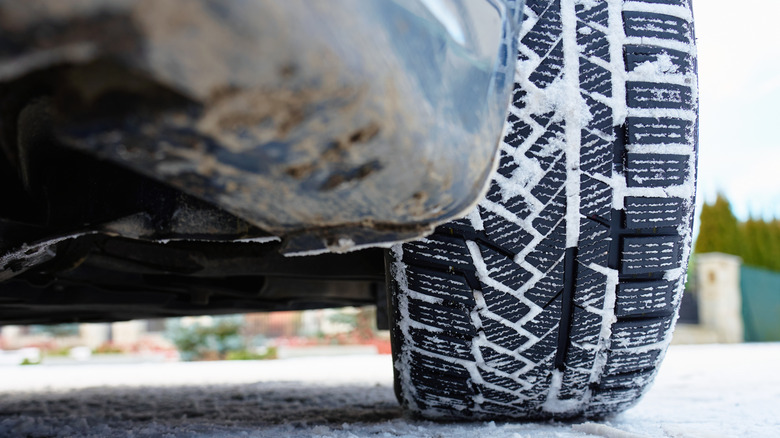
Staying safe in the winter months means being prepared for icy conditions, as winter weather sees a spike in vehicle pileups. It’s also about using the right kind of tires, which is where the 7-7 rule comes into play. This rule says that when the outside temperature drops below 7 degrees Celsius, or 45 degrees Fahrenheit, for 7 consecutive days, you should change your everyday tires to a winter model.

Extended cold snaps are a problem for regular seasonal tires because of how they’re designed. The rubber these tires contain becomes harder and less flexible in colder weather. When this happens, your tires’ ability to actually grip the road is reduced, which can become very dangerous in snow and ice. In contrast, winter tires are built with rubber that stays softer in cold temperatures, as well as deeper tread, which gives you better traction, and improved stopping ability. This means you have more control, which can ultimately keep you safer.

What makes winter tires ideal in cold temperatures can have the opposite effect in non-winter weather. This means that once the cold months have ended, you should switch back. If not, the tread on your winter tires will begin to wear down as the heat impacts the softer rubber. So, even with deep tread, your tires’ ability to properly grip the road can be impacted. If you’d rather not worry about the 7‑7 rule, you could use all-weather or all-terrain tires that work year-round instead.

Winter tire best practices

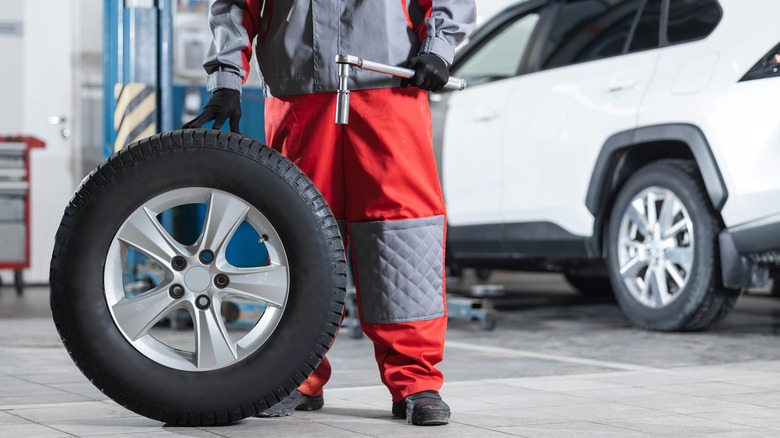
It’s important to safely store your everyday tires after they’ve been replaced by a winter set. If you’re storing them outside, Goodyear recommends protecting them in waterproof bags аnd kept off the ground. Otherwise, they should be indoors, in a cool and dry place, away from direct sunlight. If the tires are off the rim, they should be kept off the floor and stacked flat on top of each other. If the tires are on the rim, they can be stored the same way, or hung by the wheel on wall hooks.

When installing your snow tires, it’s best to use a full set. That’s because having only a pair of winter tires on the drive wheels could reduce your stability on the road. Additionally, if you’re using winter tires that don’t have the special mountain/snowflake symbol on the sidewall, you might want to consider getting new ones. The Three-Peak Mountain Snowflake symbol confirms that your tires meet industry standards for snow traction.

Even then, simply using the right tires isn’t enough, as you’ll need to check your air pressure regularly. Temperature drops can decrease tire pressure, causing you to lose your grip on the road. It can also cause uneven tread wear, which is why you should be monitoring tread depth regularly as well. Be sure to keep your tires properly rotated, and above all, be careful on the road. Winter tires can help keep you safe, but it’s up to you to drive cautiously.


Source link